Faculty of Health, Social Care and Medicine, Edge Hill University, Ormskirk, United Kingdom.
UQO, Département de Sciences Infirmières, Québec, Canada.
PLoS One. 2021 Feb 10;16(2):e0246405. doi: 10.1371/journal.pone.0246405. eCollection 2021.
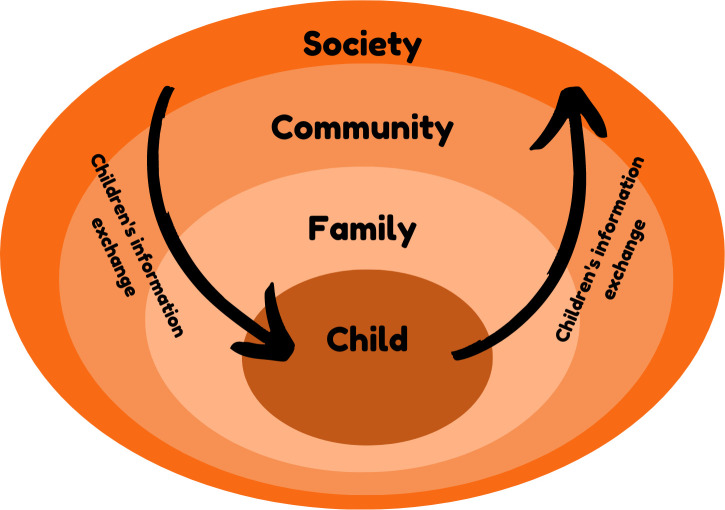
The aim of this study was to examine aspects of children's health literacy; the information sources they were accessing, their information preferences, their perceived understanding of and their reported information needs in relation to COVID-19. An online survey for children aged 7-12 years of age and parent/caregivers from the UK, Sweden, Brazil, Spain, Canada and Australia was conducted between 6th of April and the 1st of June 2020. The surveys included demographic questions and both closed and open questions focussing on access to and understanding of COVID-19 information. Descriptive statistics and qualitative content analysis procedures were conducted. The findings show that parents are the main source of information for children during the pandemic in most countries (89%, n = 347), except in Sweden where school was the main source of information. However, in many cases parents chose to shield, filter or adapt their child's access to information about COVID-19, especially in relation to the death rates within each country. Despite this, children in this study reported knowing that COVID-19 was deadly and spreads quickly. This paper argues for a community rather than individual approach to addressing children's health literacy needs during a pandemic.
本研究旨在探讨儿童健康素养的各个方面;他们正在访问的信息来源、他们的信息偏好、他们对 COVID-19 的理解程度以及他们报告的信息需求。2020 年 4 月 6 日至 6 月 1 日,在英国、瑞典、巴西、西班牙、加拿大和澳大利亚对 7-12 岁的儿童及其父母/照顾者进行了在线调查。调查问卷包括人口统计学问题以及侧重于获取和理解 COVID-19 信息的封闭和开放式问题。进行了描述性统计和定性内容分析程序。调查结果表明,在大多数国家(89%,n=347),父母是儿童在大流行期间的主要信息来源,而在瑞典,学校是主要信息来源。然而,在许多情况下,父母选择屏蔽、过滤或调整孩子获取有关 COVID-19 的信息,尤其是与每个国家的死亡率有关的信息。尽管如此,本研究中的儿童报告说他们知道 COVID-19 是致命的,传播速度很快。本文主张在大流行期间,采取社区而不是个人的方法来满足儿童的健康素养需求。