Institute of Virology, Freiburg University Medical Center, Faculty of Medicine, University of Freiburg, Freiburg, Germany.
Institute of Virology and Immunology, Bern & Mittelhäusern, Switzerland, and Department of Infectious Diseases and Pathobiology, Vetsuisse Faculty, University of Bern, Bern, Switzerland.
Nat Commun. 2021 Nov 4;12(1):6405. doi: 10.1038/s41467-021-26602-3.
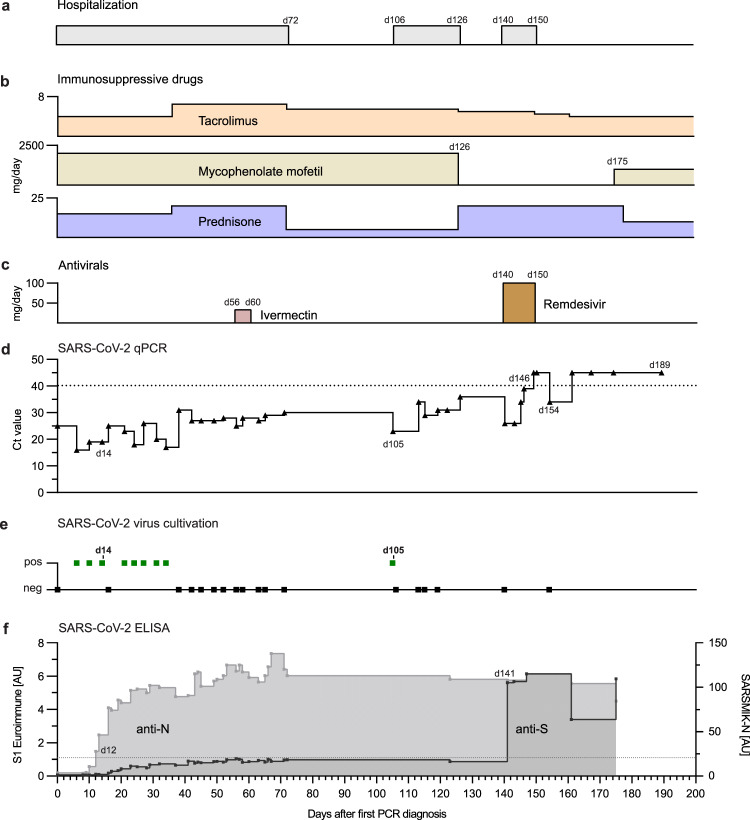
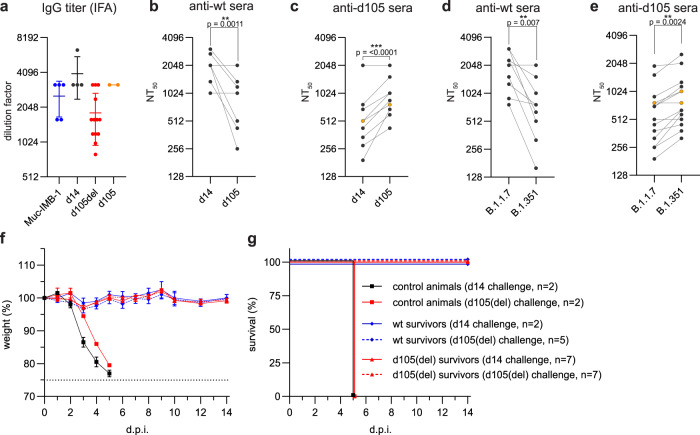
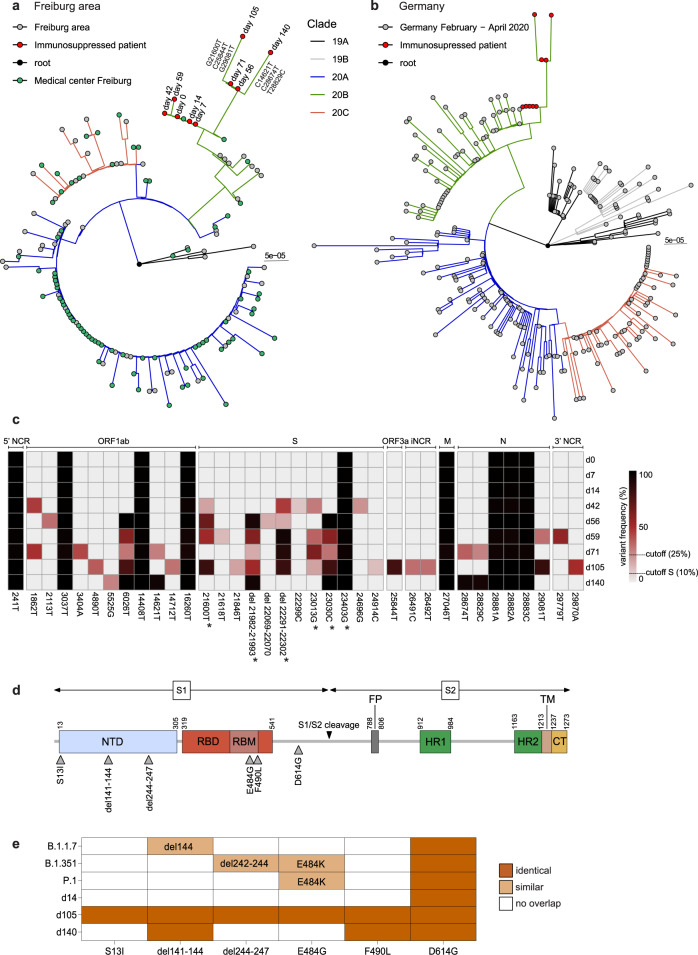
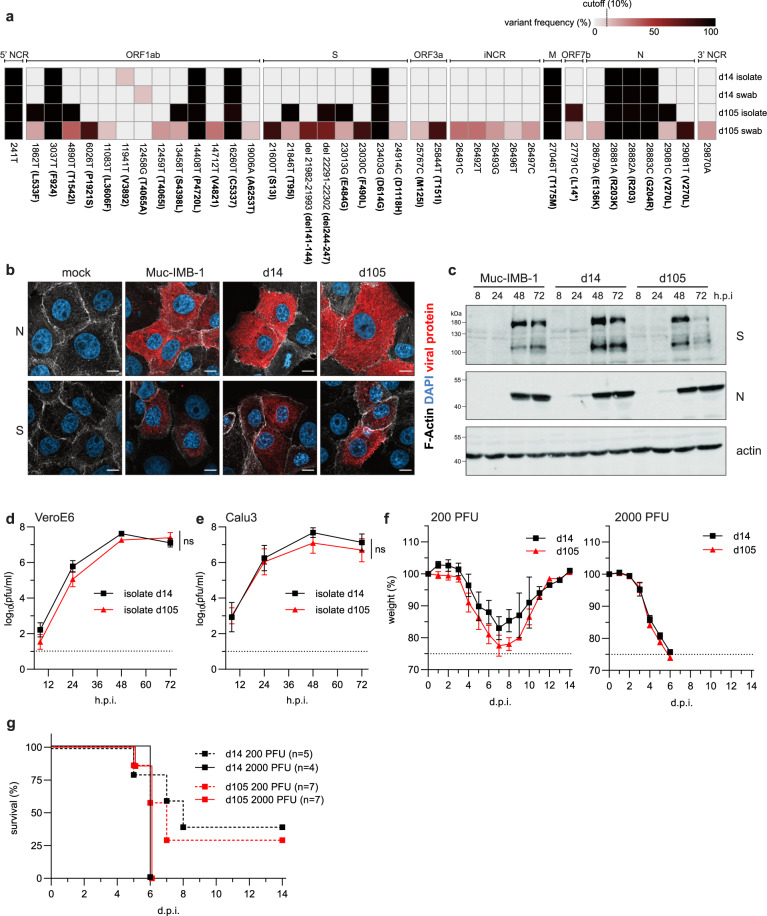
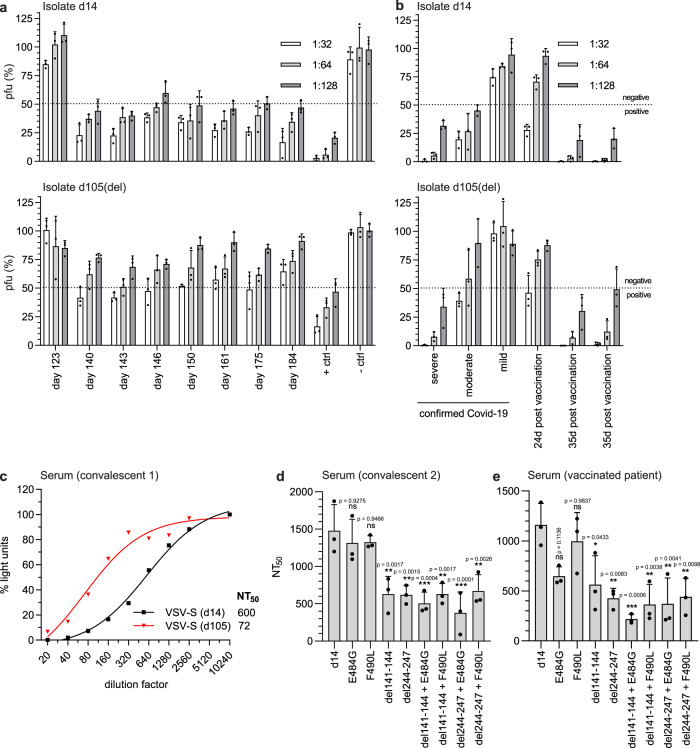
The origin of SARS-CoV-2 variants of concern remains unclear. Here, we test whether intra-host virus evolution during persistent infections could be a contributing factor by characterizing the long-term SARS-CoV-2 infection dynamics in an immunosuppressed kidney transplant recipient. Applying RT-qPCR and next-generation sequencing (NGS) of sequential respiratory specimens, we identify several mutations in the viral genome late in infection. We demonstrate that a late viral isolate exhibiting genome mutations similar to those found in variants of concern first identified in UK, South Africa, and Brazil, can escape neutralization by COVID-19 antisera. Moreover, infection of susceptible mice with this patient's escape variant elicits protective immunity against re-infection with either the parental virus and the escape variant, as well as high neutralization titers against the alpha and beta SARS-CoV-2 variants, B.1.1.7 and B.1.351, demonstrating a considerable immune control against such variants of concern. Upon lowering immunosuppressive treatment, the patient generated spike-specific neutralizing antibodies and resolved the infection. Our results suggest that immunocompromised patients could be a source for the emergence of potentially harmful SARS-CoV-2 variants.
SARS-CoV-2 关注变异株的起源仍不清楚。在这里,我们通过对一名免疫抑制性肾移植受者持续性感染过程中的 SARS-CoV-2 长期感染动态进行研究,检测病毒在宿主体内的进化是否可能是一个促成因素。通过对连续呼吸道标本进行 RT-qPCR 和下一代测序(NGS)分析,我们在感染后期鉴定出病毒基因组中的多个突变。我们证明,一种晚期病毒分离株具有与在英国、南非和巴西首次发现的关注变异株中发现的相似基因组突变,能够逃避 COVID-19 抗血清的中和。此外,用该患者的逃逸变异株感染易感小鼠,可针对亲本病毒和逃逸变异株的再次感染产生保护免疫,以及对 alpha 和 beta SARS-CoV-2 变异株、B.1.1.7 和 B.1.351 产生高中和滴度,表明对这些关注变异株具有相当大的免疫控制作用。在降低免疫抑制治疗后,该患者产生了刺突特异性中和抗体并清除了感染。我们的研究结果表明,免疫功能低下的患者可能是潜在有害 SARS-CoV-2 变异株出现的源头。