Zhang Yu, Zhang Xin, Jin Zhuoyi, Chen Huiyan, Zhang Chenjing, Wang Wangyue, Jing Jiyong, Pan Wensheng
Department of Clinical Medicine, Medical College of Soochow University, Suzhou, 215006, People's Republic of China.
Department of Gastroenterology, Zhejiang Provincial People's Hospital, People's Hospital of Hangzhou Medical College, Hangzhou, People's Republic of China.
J Inflamm Res. 2021 Oct 20;14:5403-5417. doi: 10.2147/JIR.S331010. eCollection 2021.
Colorectal cancer (CRC) can develop via a hypermutagenic pathway characterized by frequent somatic DNA base-pair mutations. Alternatively, the immunogenicity of tumor cells themselves may influence the anticancer activity of the immune effector cells. Impaired DNA repair mechanisms drive mutagenicity, which then increase the neoantigen load and immunogenicity. However, no studies have analyzed immune checkpoint protein expression, particularly programmed death-1 (PD-1)/programmed death-ligand 1 (PD-L1), in adenoma-carcinoma progression and its relationship with the emergence of other DNA repair gene mutation.
We investigated mutations of 10 genes involved in DNA repair function: , and . We performed sequencing to determine mutations and immunohistochemistry of immune checkpoints in clinical samples and determined changes in expression during progression through the adenoma-carcinoma pathway. We further investigated the prognostic associations of gene according to the expression, mutational profile, and immune profile using The Cancer Genome Atlas-colon adenocarcinoma (TCGA-COAD) dataset.
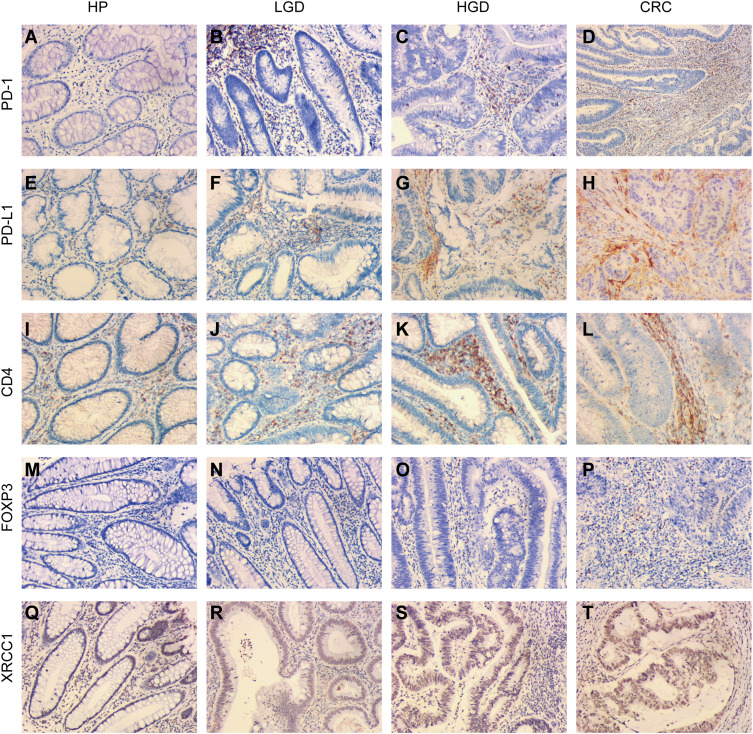
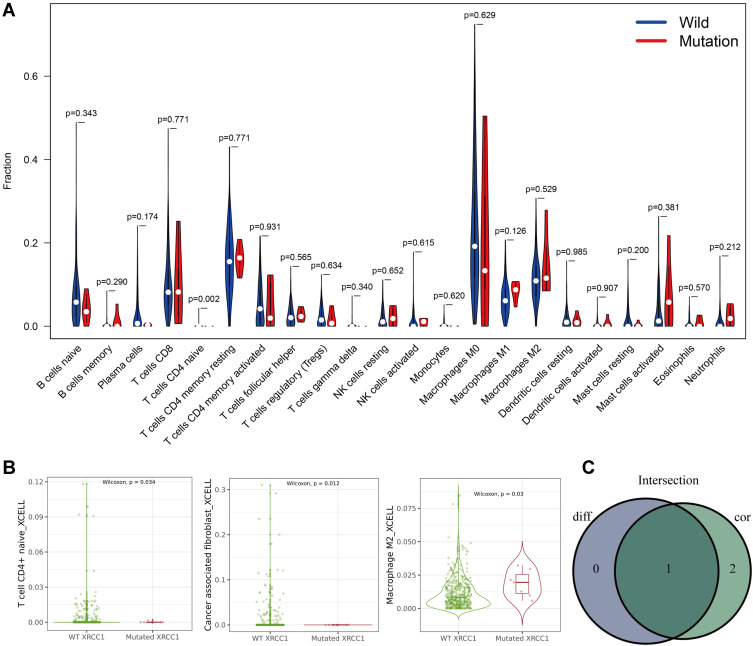
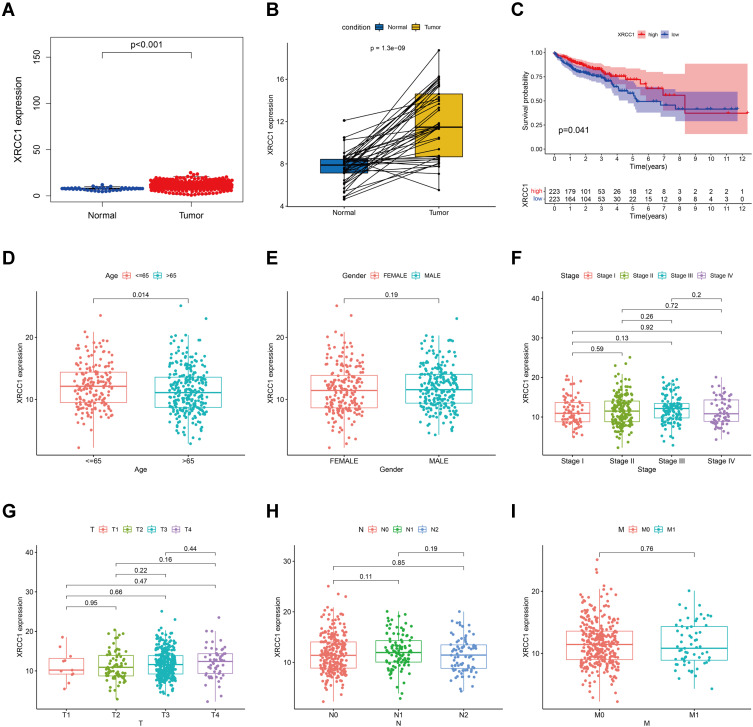
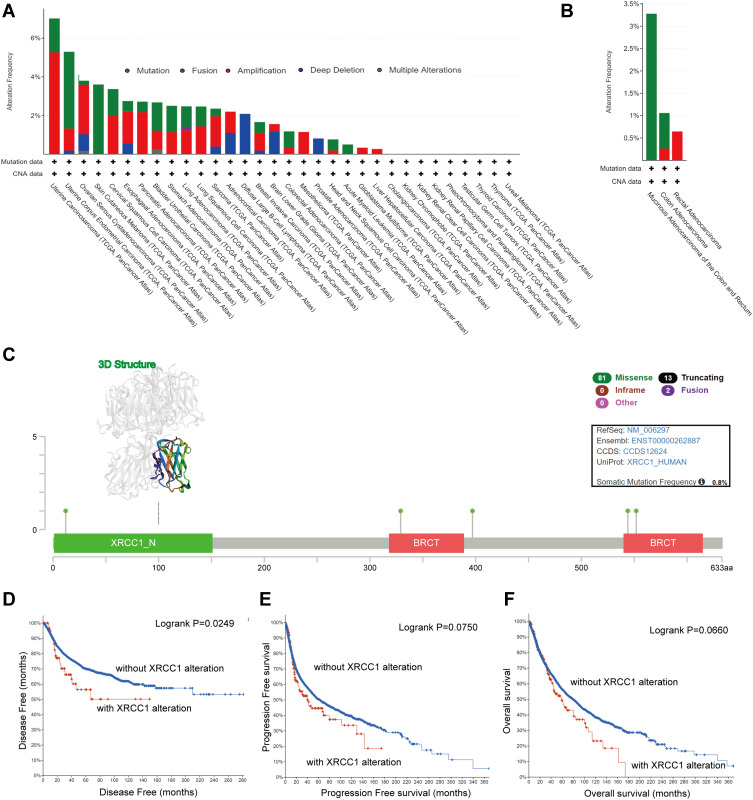
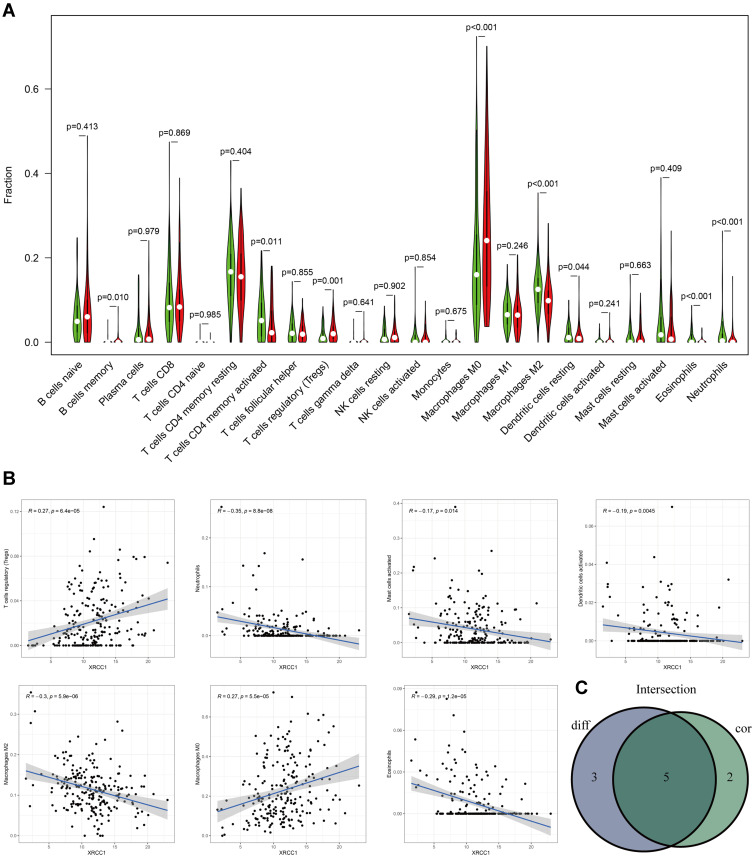
From clinical samples, mutation demonstrated the strongest association with adenomas with a mutation frequency of 56.2% in adenomas and 34% in CRCs (p =0.016). XRCC1 was abnormally expressed and altered by mutations contributing to adenoma carcinogenesis. High expression of XRCC1, CD4, FOXP3, and PD-1/PD-L1 showed an overall upward trend with increased lesion severity (all p < 0.01). PD-1/PD-L1 expression and CD4+ intraepithelial lymphocytes (IELs) correlated with cytological dysplasia progression, specifically in patients with wild-type (all p < 0.01), whereas FOXP3 expression was independently associated with adenoma-carcinoma progression. From TCGA-COAD analysis, expression was associated with patients survival, tumor-infiltrating lymphocytes and immune marker expression.
Increased IEL density and PD-1/PD-L1 expression correlate with cytological dysplasia progression and specifically with the mutation status in CRC. Our findings support a stepwise dysplasia-carcinoma sequence of adenoma carcinogenesis and an hypermutated phenotypic mechanism of lesions.
结直肠癌(CRC)可通过一种以频繁体细胞DNA碱基对突变为特征的高突变途径发展而来。另外,肿瘤细胞自身的免疫原性可能会影响免疫效应细胞的抗癌活性。受损的DNA修复机制会驱动致突变性,进而增加新抗原负荷和免疫原性。然而,尚无研究分析免疫检查点蛋白表达,尤其是程序性死亡蛋白1(PD-1)/程序性死亡配体1(PD-L1)在腺瘤-癌进展过程中的表达情况及其与其他DNA修复基因突变出现的关系。
我们研究了10个参与DNA修复功能的基因的突变情况: ,以及 。我们对临床样本进行测序以确定突变情况,并对免疫检查点进行免疫组化分析,同时确定在腺瘤-癌进展过程中 表达的变化。我们还使用癌症基因组图谱-结肠腺癌(TCGA-COAD)数据集,根据 基因的表达、突变谱和免疫谱进一步研究其预后相关性。
从临床样本来看, 突变与腺瘤的相关性最强,在腺瘤中的突变频率为56.2%,在结直肠癌中的突变频率为34%(p = 0.016)。XRCC1表达异常且因突变而改变,这些突变促成了腺瘤的癌变。XRCC1、CD4、FOXP3和PD-1/PD-L1的高表达总体上呈现出随着病变严重程度增加而上升的趋势(所有p < 0.01)。PD-1/PD-L1表达和CD4 + 上皮内淋巴细胞(IELs)与细胞学发育异常进展相关,特别是在 野生型患者中(所有p < 0.01),而FOXP3表达与腺瘤-癌进展独立相关。从TCGA-COAD分析来看, 表达与患者生存率、肿瘤浸润淋巴细胞和免疫标志物表达相关。
IEL密度增加和PD-1/PD-L1表达与细胞学发育异常进展相关,特别是与结直肠癌中的 突变状态相关。我们的研究结果支持腺瘤癌变的逐步发育异常-癌序列以及病变的 高突变表型机制。