Laboratorio de Oncoinmunología y Citómica, Centro de Investigación Biomédica de Oriente, Instituto Mexicano del Seguro Social Delegación Puebla, Puebla, Mexico.
Departamento de Biomedicina Molecular, Centro de Investigación y de Estudios Avanzados (CINVESTAV), Mexico City, Mexico.
Front Immunol. 2021 Oct 19;12:746492. doi: 10.3389/fimmu.2021.746492. eCollection 2021.
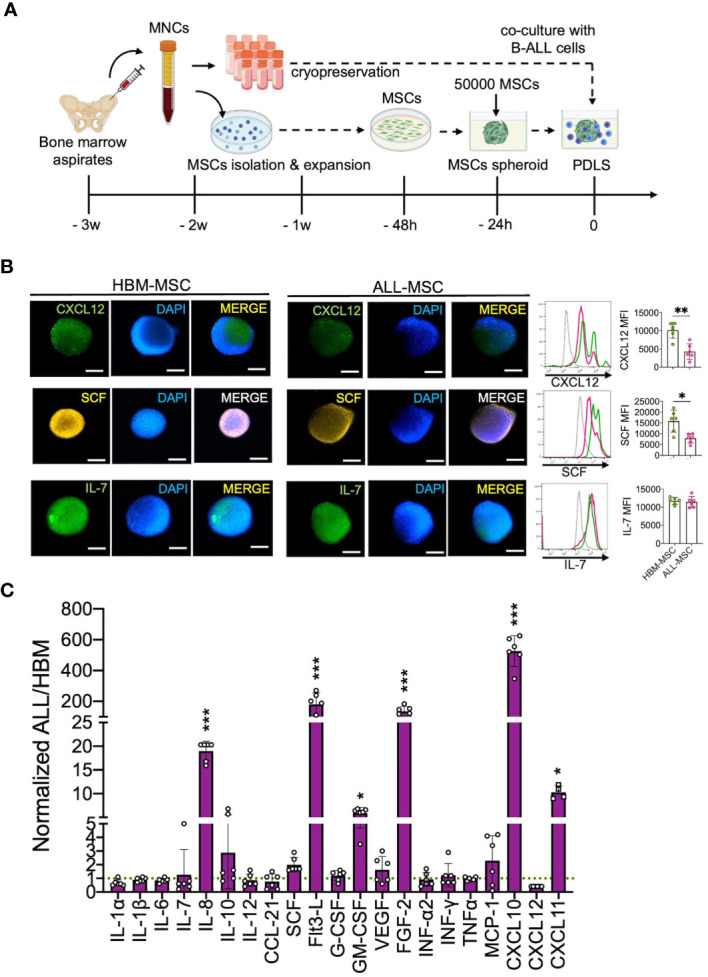
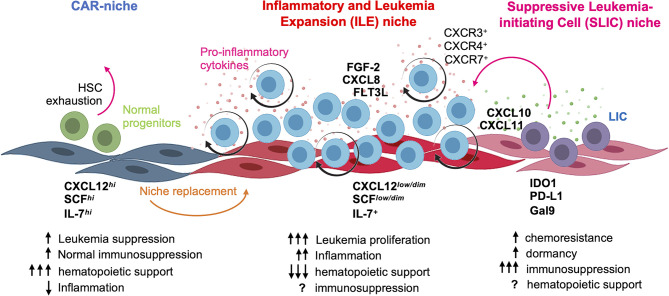
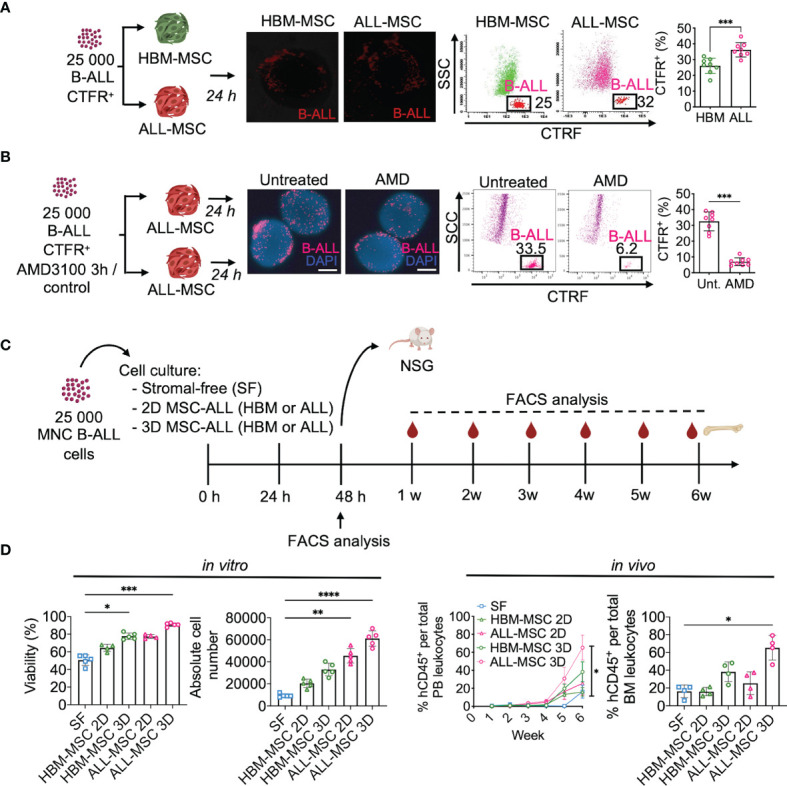
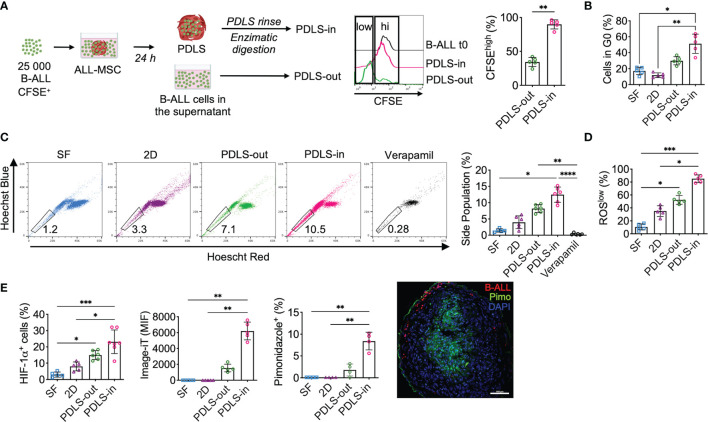
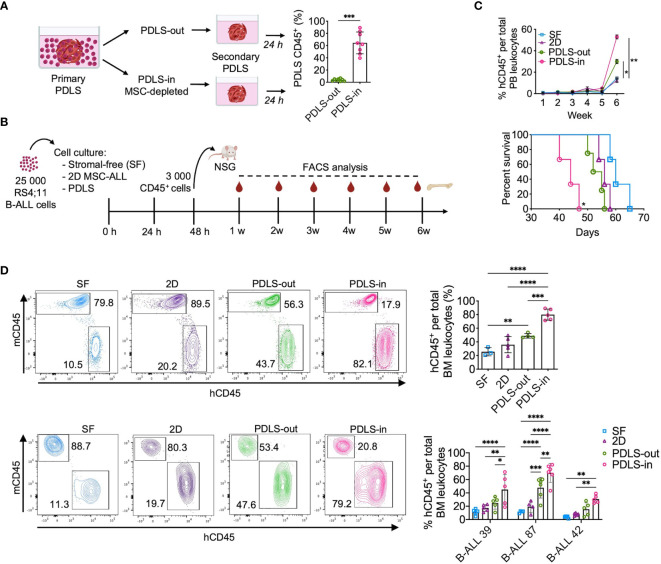
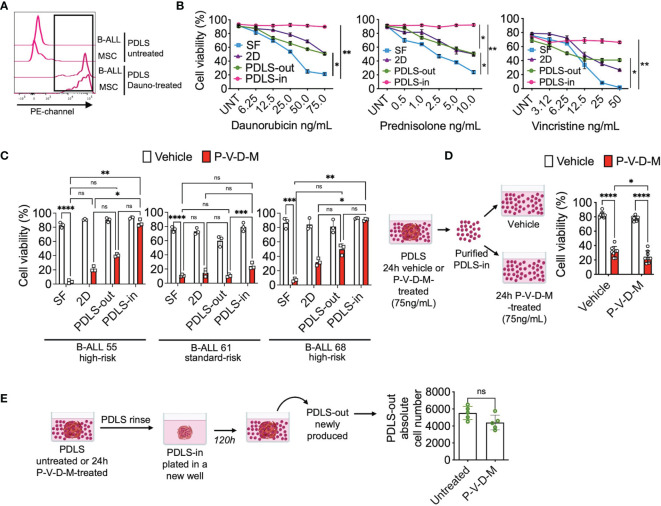
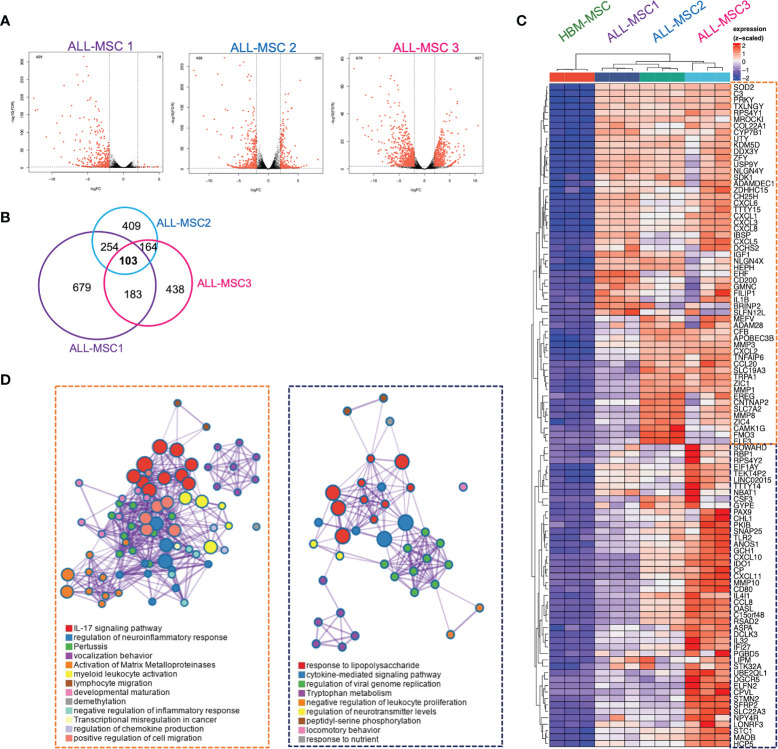
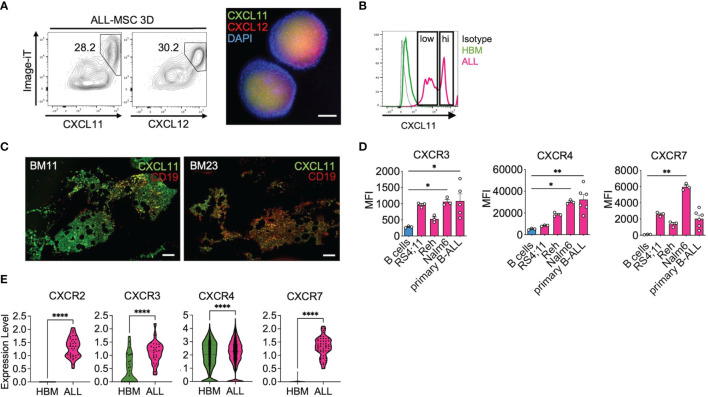
B-cell acute lymphoblastic leukemia (B-ALL) results from the expansion of malignant lymphoid precursors within the bone marrow (BM), where hematopoietic niches and microenvironmental signals provide leukemia-initiating cells (LICs) the conditions to survive, proliferate, initiate disease, and relapse. Normal and malignant lymphopoiesis are highly dependent on the BM microenvironment, particularly on CXCL12-abundant Reticular (CAR) cells, which provide a niche for maintenance of primitive cells. During B-ALL, leukemic cells hijack BM niches, creating a proinflammatory milieu incompetent to support normal hematopoiesis but favoring leukemic proliferation. Although the lack of a phenotypic stem cell hierarchy is apparent in B-ALL, LICs are a rare and quiescent population potentially responsible for chemoresistance and relapse. Here, we developed novel patient-derived leukemia spheroids (PDLS), an avatar model, from mesenchymal stromal cells (MSCs) and primary B-ALL cells, to mimic specialized niche structures and cell-to-cell intercommunication promoting normal and malignant hematopoiesis in pediatric B-ALL. 3D MSC spheroids can recapitulate CAR niche-like hypoxic structures that produce high levels of CXCL10 and CXCL11. We found that PDLS were preferentially enriched with leukemia cells displaying functional properties of LICs, such as quiescence, low reactive oxygen species, drug resistance, high engraftment in immunodeficient mice, and long-term leukemogenesis. Moreover, the combination of PDLS and patient-derived xenografts confirmed a microenvironment-driven hierarchy in their leukemic potential. Importantly, transcriptional profiles of MSC derived from primary patient samples revealed two unique signatures (1), a (ILE)-like niche, that likely supports leukemic burden, and (2) a (SLIC)-like niche, where LICs are likely sustained. Interestingly, the CXCL11 hypoxic zones were recapitulated within the PDLS that are capable of supporting LIC functions. Taken together, we have implemented a novel PDLS system that enriches and supports leukemia cells with stem cell features driven by CXCL11 MSCs within hypoxic microenvironments capable of recapitulating key features, such as tumor reemergence after exposure to chemotherapy and tumor initiation. This system represents a unique opportunity for designing personalized avatars for B-ALL patients to evaluate their own LIC pathobiology and drug sensitivity in the context of the tumor microenvironment.
B 细胞急性淋巴细胞白血病(B-ALL)是骨髓(BM)中恶性淋巴样前体细胞的扩增所致,造血龛位和微环境信号为白血病起始细胞(LIC)提供了生存、增殖、发病和复发的条件。正常和恶性淋巴发生高度依赖于 BM 微环境,尤其是 CXCL12 丰富的网状(CAR)细胞,为维持原始细胞提供了龛位。在 B-ALL 中,白血病细胞劫持 BM 龛位,形成一种促炎微环境,无法支持正常造血,但有利于白血病增殖。尽管 B-ALL 中明显缺乏表型干细胞层次结构,但 LIC 是一种罕见的静止细胞群体,可能导致化疗耐药和复发。在这里,我们从间充质基质细胞(MSCs)和原发性 B-ALL 细胞中开发了新型患者来源的白血病球体(PDLS),即一种模拟专门龛位结构和细胞间通讯的模型,以促进儿科 B-ALL 中的正常和恶性造血。3D MSC 球体可以重现类似于 CAR 龛位的低氧结构,产生高水平的 CXCL10 和 CXCL11。我们发现,PDLS 优先富集具有 LIC 功能特性的白血病细胞,如静止、低活性氧、耐药性、在免疫缺陷小鼠中的高植入性和长期白血病发生。此外,PDLS 和患者来源的异种移植的组合证实了其白血病潜力的微环境驱动的层次结构。重要的是,从原发性患者样本中分离出的 MSC 的转录谱揭示了两个独特的特征(1)一个类似 ILE 的龛位,可能支持白血病负担,和(2)一个类似 SLIC 的龛位,其中 LIC 可能持续存在。有趣的是,在能够支持 LIC 功能的 PDLS 中重现了 CXCL11 低氧区。总之,我们已经实施了一种新型 PDLS 系统,该系统可以在能够重现关键特征的低氧微环境中富集和支持具有干细胞特征的白血病细胞,例如在化疗暴露后肿瘤的重新出现和肿瘤的起始。该系统为设计针对 B-ALL 患者的个性化化身提供了独特的机会,以评估他们自己的 LIC 病理生物学和在肿瘤微环境中的药物敏感性。