Li Qian, Qiu Zhaoyan, Wang Yan, Guo Chunyan, Cai Xu, Zhang Yandong, Liu Li, Xue Hongkun, Tang Jintian
Key Laboratory of Particle and Radiation Imaging, Ministry of Education, Department of Engineering Physics, Tsinghua University, Beijing 100084, P.R. China.
Department of General Surgery, The First Medical Center, Chinese PLA General Hospital, Beijing 100853, P.R. China.
Exp Ther Med. 2021 Dec;22(6):1473. doi: 10.3892/etm.2021.10908. Epub 2021 Oct 22.
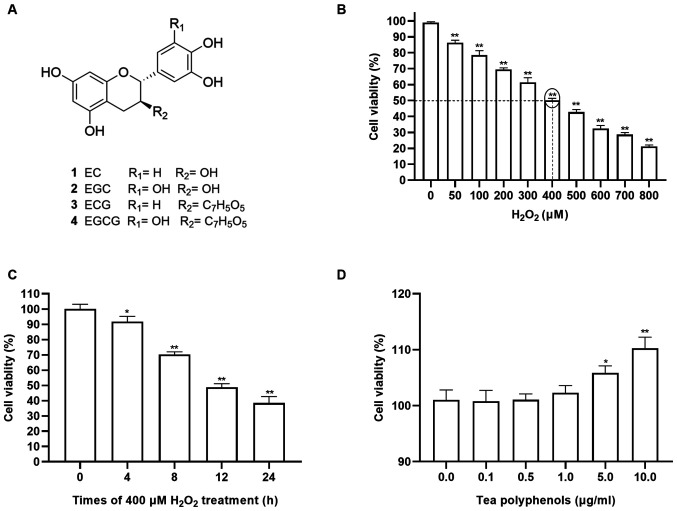
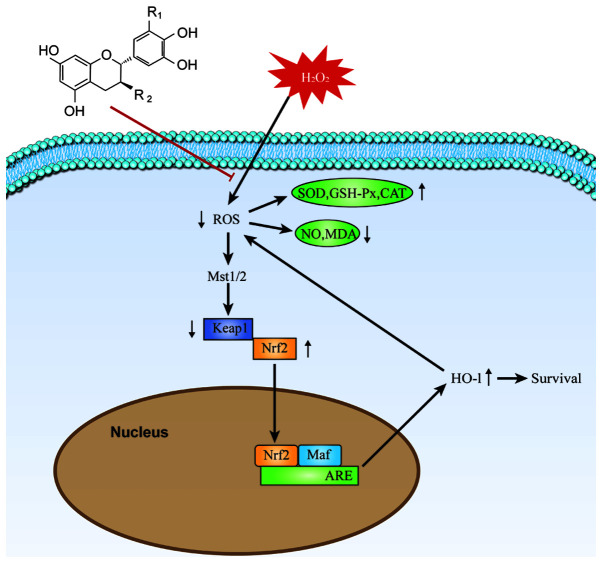
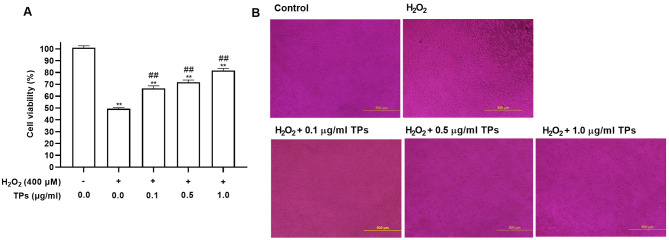
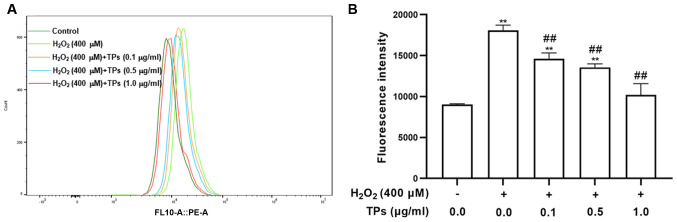
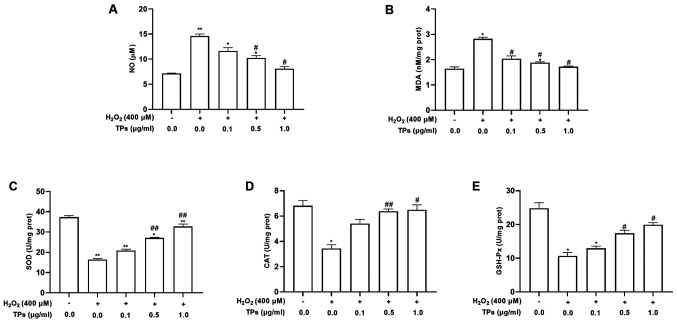
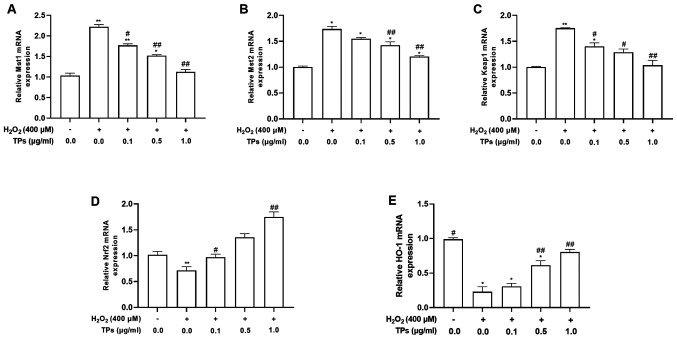
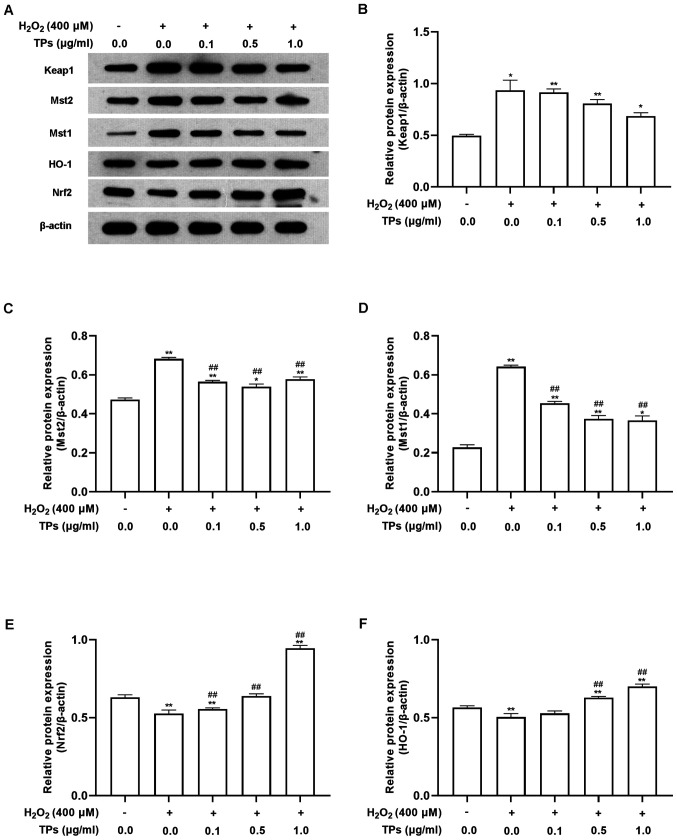
Tea polyphenols (TPs) are the major bioactive extract from green tea that have been extensively reported to prevent and treat oxidative stress damage. In previous studies, TPs have been demonstrated to protect cells against oxidative injury induced by hydrogen peroxide (HO). However, the underlying mechanism remains unclear. The aim of the current study was to investigate whether the protective and regulatory effects of TPs on oxidative stress damage were dependent on the mammalian STE20-like protein kinase (Mst)/nuclear factor (erythroid-derived 2)-like 2 (Nrf2) axis and the Kelch-like ECH-associated protein 1 (Keap1)/Nrf2/heme oxygenase 1 (HO-1) pathway in RAW264.7 cells, a murine macrophage cell line. Maintaining a certain range of intracellular reactive oxygen species (ROS) levels is critical to basic cellular activities, while excessive ROS generation can override the antioxidant capacity of the cell and result in oxidative stress damage. The inhibition of ROS generation offers an effective target for preventing oxidative damage. The results of the present study revealed that pretreatment with TPs inhibited the production of intracellular ROS and protected RAW264.7 cells from HO-induced oxidative damage. TPs was also demonstrated to attenuate the production of nitric oxide and malondialdehyde and increase the levels of antioxidant enzymes (superoxide dismutase, catalase and glutathione peroxidase). In addition, following TPs treatment, alterations in Mst1/2 at the mRNA and protein level inhibited the production of ROS and promoted the self-regulation of antioxidation. TPs-induced Keap1 gene downregulation also increased the expression of Nrf2 and HO-1. Collectively, the results of the present study demonstrated that TPs provided protection against HO-induced oxidative injury in RAW264.7 cells.
茶多酚(TPs)是绿茶中的主要生物活性提取物,已有大量报道称其可预防和治疗氧化应激损伤。在先前的研究中,TPs已被证明能保护细胞免受过氧化氢(HO)诱导的氧化损伤。然而,其潜在机制仍不清楚。本研究的目的是探讨TPs对氧化应激损伤的保护和调节作用是否依赖于哺乳动物STE20样蛋白激酶(Mst)/核因子(红细胞衍生2)样2(Nrf2)轴以及RAW264.7细胞(一种小鼠巨噬细胞系)中的kelch样ECH相关蛋白1(Keap1)/Nrf2/血红素加氧酶1(HO-1)途径。维持一定范围内的细胞内活性氧(ROS)水平对基本细胞活动至关重要,而过量的ROS生成会超过细胞的抗氧化能力并导致氧化应激损伤。抑制ROS生成是预防氧化损伤的有效靶点。本研究结果显示,用TPs预处理可抑制细胞内ROS的产生,并保护RAW264.7细胞免受HO诱导的氧化损伤。TPs还被证明可减少一氧化氮和丙二醛的产生,并提高抗氧化酶(超氧化物歧化酶、过氧化氢酶和谷胱甘肽过氧化物酶)的水平。此外,TPs处理后,Mst1/2在mRNA和蛋白质水平的改变抑制了ROS的产生并促进了抗氧化的自我调节。TPs诱导的Keap1基因下调也增加了Nrf2和HO-1的表达。总的来说,本研究结果表明TPs可保护RAW264.7细胞免受HO诱导的氧化损伤。