Zhang Shizhe, Lin Xueyan, Hou Qiuling, Hu Zhiyong, Wang Yun, Wang Zhonghua
Key Laboratory of Ruminant Nutrition and Physiology, College of Animal Science and Technology, Shandong Agricultural University, No. 61, Daizong Street, Tai'an, Shandong, China.
Anim Nutr. 2021 Dec;7(4):1009-1023. doi: 10.1016/j.aninu.2021.05.003. Epub 2021 Sep 14.
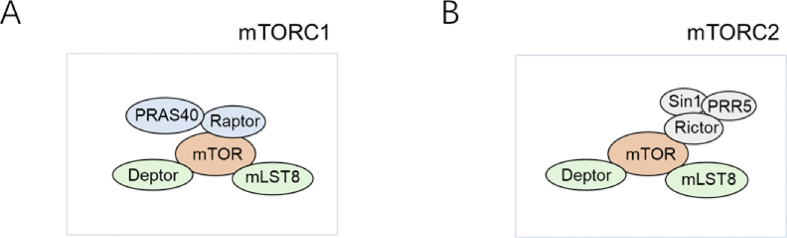
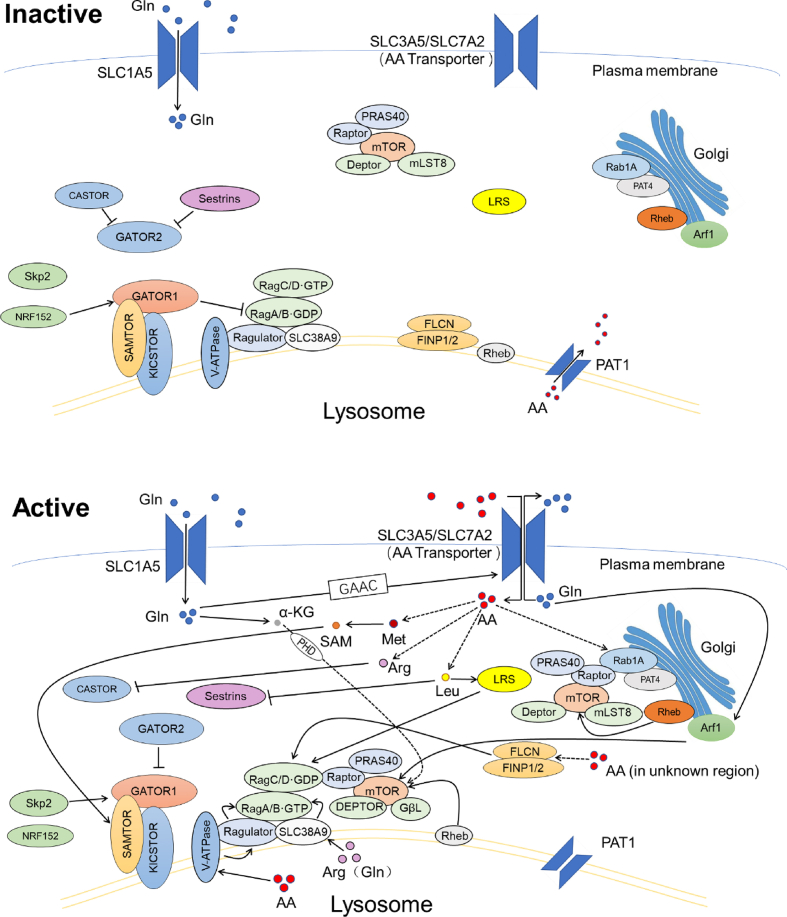
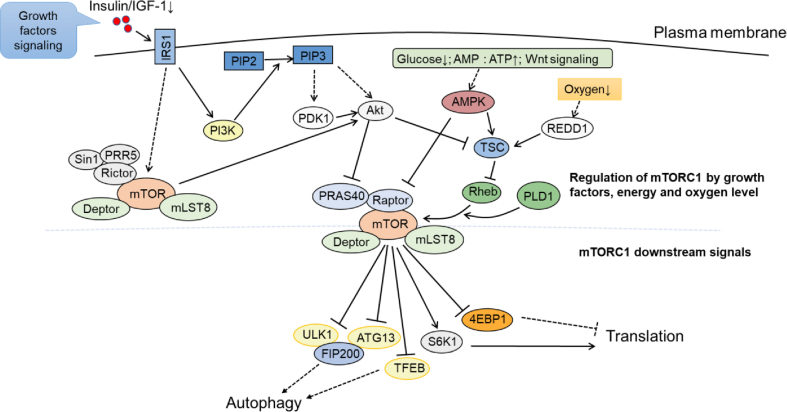
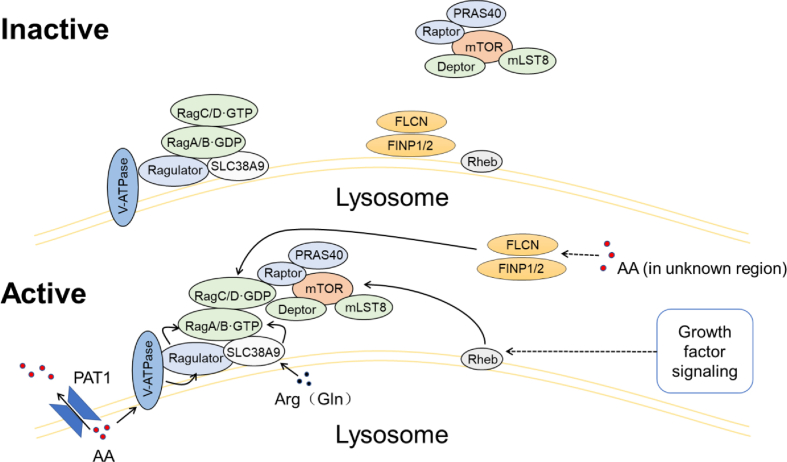
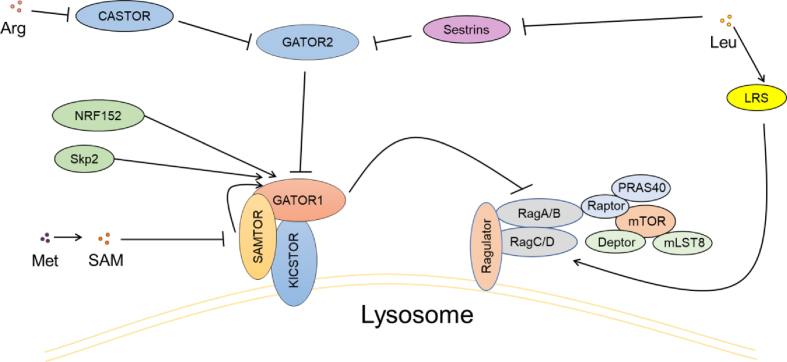
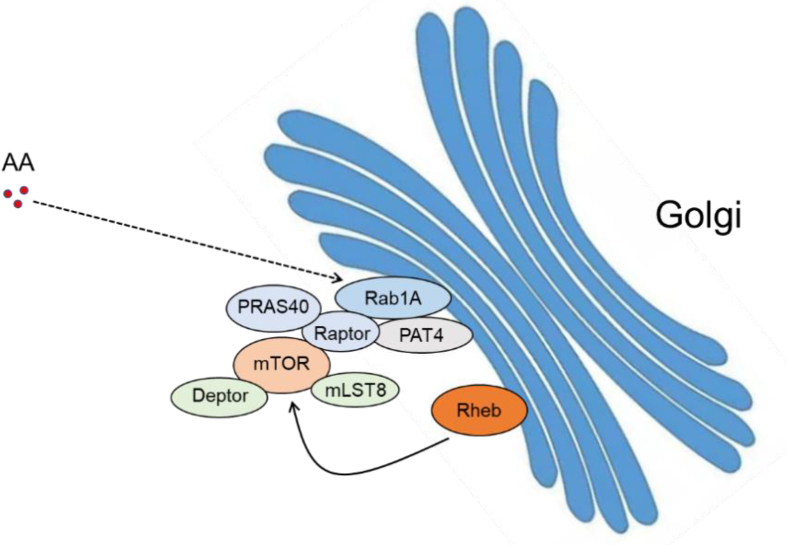
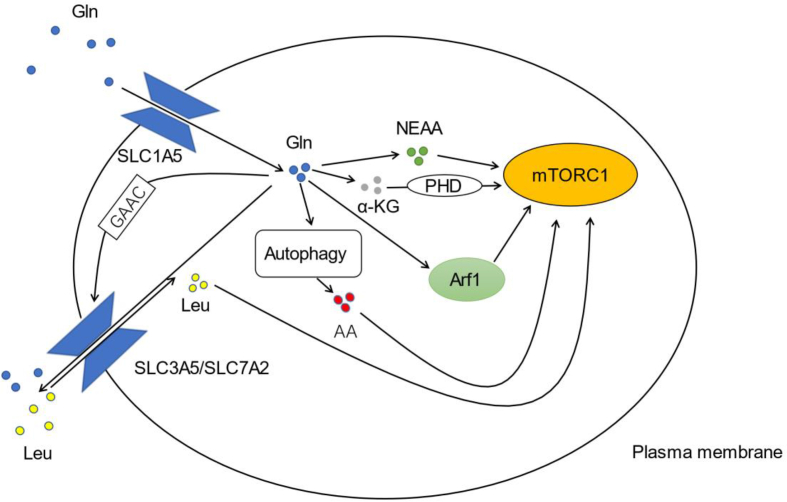
The mechanistic target of rapamycin complex 1 (mTORC1) integrates various types of signal inputs, such as energy, growth factors, and amino acids to regulate cell growth and proliferation mainly through the 2 direct downstream targets, eukaryotic translation initiation factor 4E-binding protein 1 (4EBP1) and ribosomal protein S6 kinase 1 (S6K1). Most of the signal arms upstream of mTORC1 including energy status, stress signals, and growth factors converge on the tuberous sclerosis complex (TSC) - Ras homologue enriched in brain (Rheb) axis. Amino acids, however, are distinct from other signals and modulate mTORC1 using a unique pathway. In recent years, the transmission mechanism of amino acid signals upstream of mTORC1 has been gradually elucidated, and some sensors or signal transmission pathways for individual amino acids have also been discovered. With the help of these findings, we propose a general picture of recent advances, which demonstrates that various amino acids from lysosomes, cytoplasm, and Golgi are sensed by their respective sensors. These signals converge on mTORC1 and form a huge and complicated signal network with multiple synergies, antagonisms, and feedback mechanisms.
雷帕霉素靶蛋白复合物1(mTORC1)整合多种类型的信号输入,如能量、生长因子和氨基酸,主要通过两个直接下游靶点——真核翻译起始因子4E结合蛋白1(4EBP1)和核糖体蛋白S6激酶1(S6K1)来调节细胞生长和增殖。mTORC1上游的大多数信号通路,包括能量状态、应激信号和生长因子,都汇聚于结节性硬化复合物(TSC)-脑中富集的Ras同源物(Rheb)轴。然而,氨基酸与其他信号不同,它通过独特的途径调节mTORC1。近年来,mTORC1上游氨基酸信号的传递机制已逐渐阐明,一些单个氨基酸的传感器或信号传递途径也已被发现。借助这些发现,我们提出了近期进展的总体情况,表明来自溶酶体、细胞质和高尔基体的各种氨基酸由各自的传感器感知。这些信号汇聚于mTORC1,形成一个具有多种协同、拮抗和反馈机制的庞大而复杂的信号网络。