Institute of Protein Biochemistry, Ulm University, 89081, Ulm, Germany.
Institute of Stochastics, Ulm University, 89081, Ulm, Germany.
Nat Commun. 2021 Nov 5;12(1):6434. doi: 10.1038/s41467-021-26553-9.
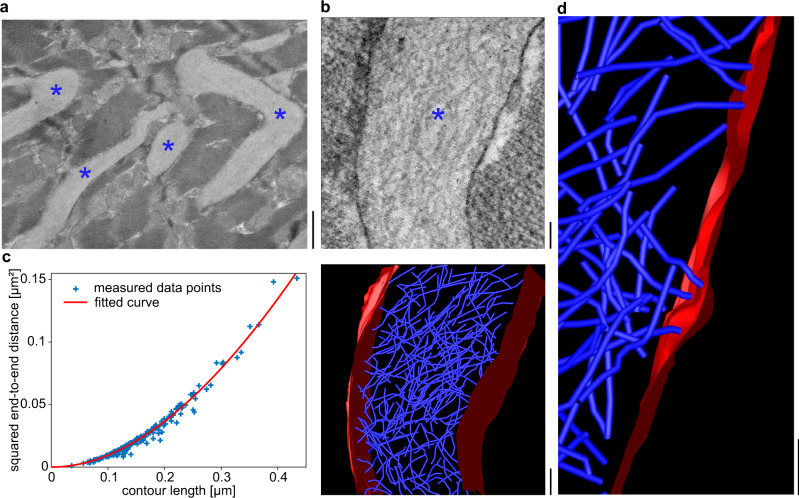
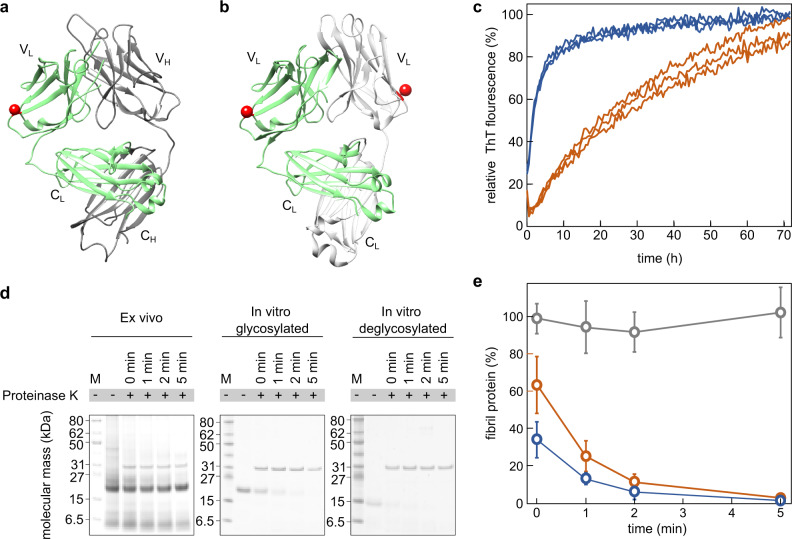
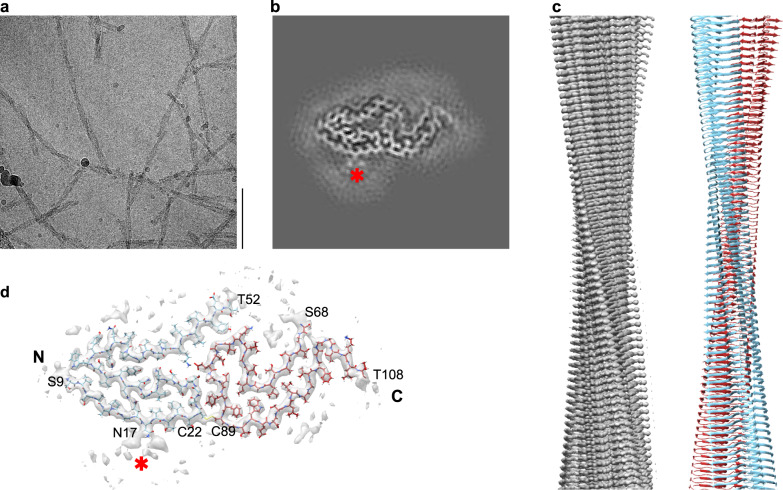
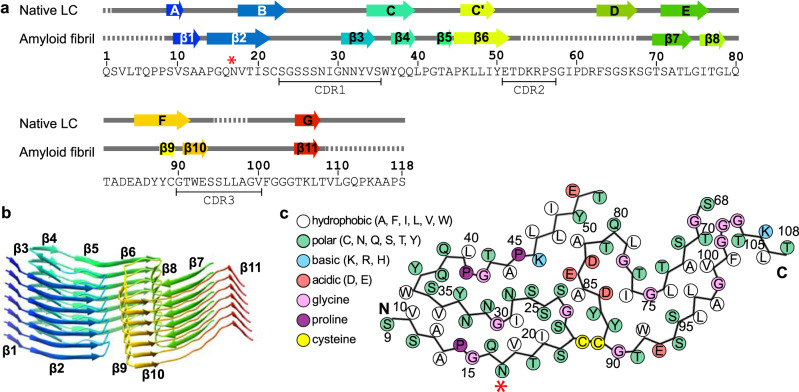
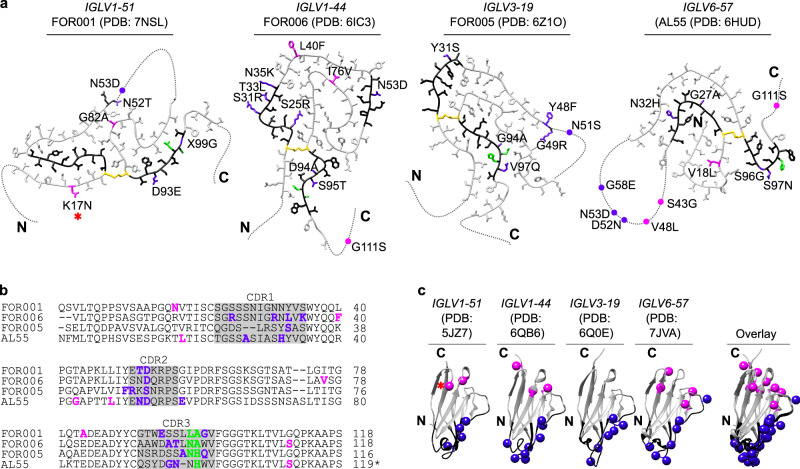
Systemic AL amyloidosis is a rare disease that is caused by the misfolding of immunoglobulin light chains (LCs). Potential drivers of amyloid formation in this disease are post-translational modifications (PTMs) and the mutational changes that are inserted into the LCs by somatic hypermutation. Here we present the cryo electron microscopy (cryo-EM) structure of an ex vivo λ1-AL amyloid fibril whose deposits disrupt the ordered cardiomyocyte structure in the heart. The fibril protein contains six mutational changes compared to the germ line and three PTMs (disulfide bond, N-glycosylation and pyroglutamylation). Our data imply that the disulfide bond, glycosylation and mutational changes contribute to determining the fibril protein fold and help to generate a fibril morphology that is able to withstand proteolytic degradation inside the body.
系统性淀粉样变是一种罕见疾病,由免疫球蛋白轻链(LC)错误折叠引起。在这种疾病中,淀粉样形成的潜在驱动因素是翻译后修饰(PTMs)和体细胞高频突变插入 LC 中的突变改变。在这里,我们展示了一种体外λ1-AL 淀粉样纤维的低温电子显微镜(cryo-EM)结构,其沉积物破坏了心脏中有序的心肌细胞结构。与原始序列相比,纤维蛋白含有六个突变改变,以及三种翻译后修饰(二硫键、糖基化和焦谷氨酸化)。我们的数据表明,二硫键、糖基化和突变改变有助于确定纤维蛋白折叠,并有助于产生一种能够在体内抵抗蛋白水解降解的纤维形态。