Department of Fisheries and Environmental Sciences, Faculty of Natural Resources and Earth Sciences, Shahrekord University, 8818634141, Shahrekord, Iran.
Department of Natural Resources and Environmental Engineering, School of Agriculture, Shiraz University, 71441-13131, Shiraz, Iran.
Sci Rep. 2021 Nov 5;11(1):21721. doi: 10.1038/s41598-021-00567-1.
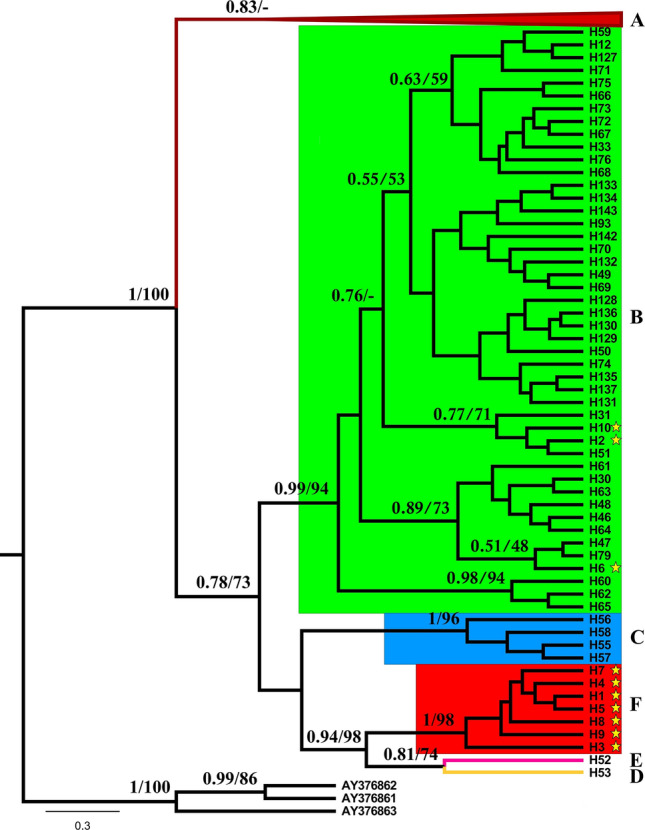
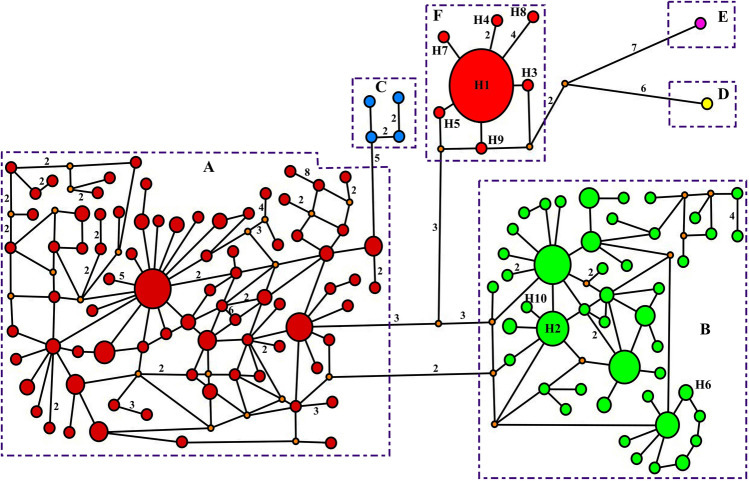
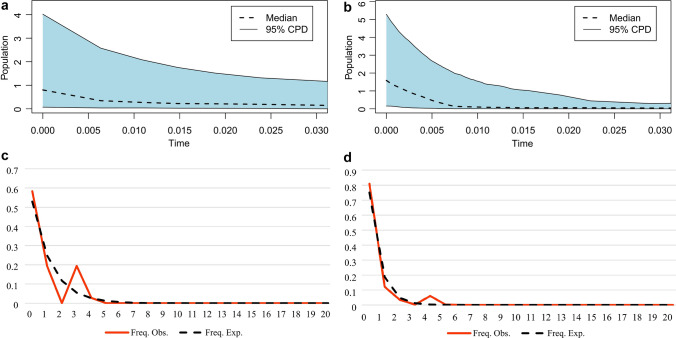
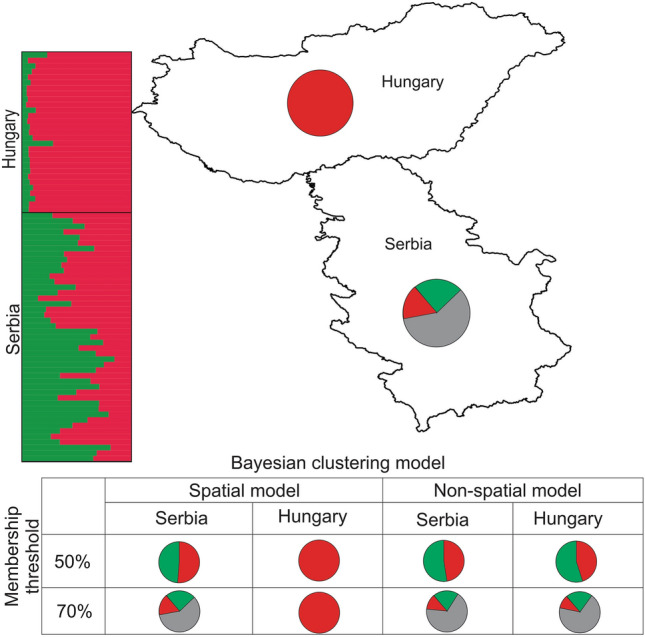
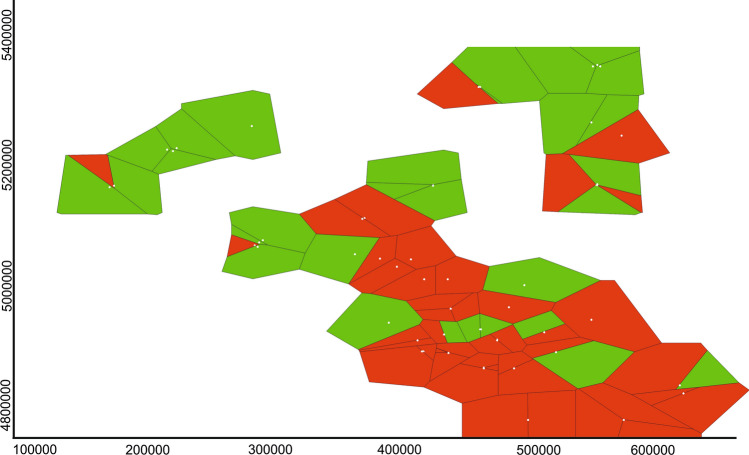
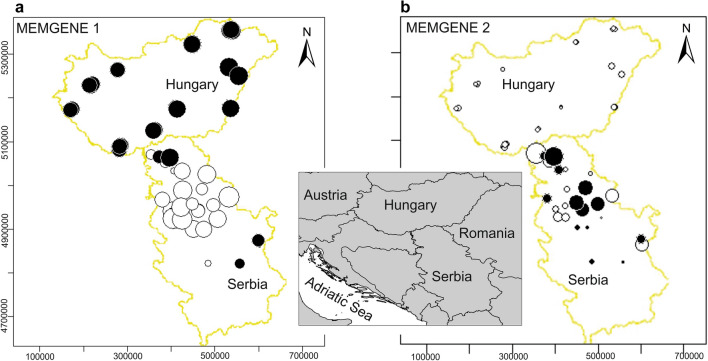
The common pheasant, a game species widely introduced throughout the world, can be considered as an ideal model to study the effects of introduction events on local adaptations, biogeographic patterns, and genetic divergence processes. We aimed to assess the origin, spatial patterns of genetic variation, and demographic history of the introduced populations in the contact zone of Central and Southeast Europe, using mitochondrial DNA control region sequences and microsatellite loci. Both types of molecular markers indicated relatively low to moderate levels of genetic variation. The mtDNA analyses revealed that common pheasants across the study area are divided into two distinct clades: B (mongolicus group) and F (colchicus group). Analyses of the microsatellite data consistently suggested a differentiation between Hungary and Serbia, with the pheasant population in Hungary being much more genetically homogeneous, while that of Serbia has much more genetic mixture and admixture. This cryptic differentiation was not detected using a non-spatial Bayesian clustering model. The analyses also provided strong evidence for a recent population expansion. This fundamental information is essential for adequate and effective conservation management of populations of a game species of great economic and ecological importance in the studied geographical region.
普通雉鸡是一种广泛引入世界各地的狩猎物种,可以被视为研究引种事件对当地适应性、生物地理格局和遗传分化过程影响的理想模型。我们旨在使用线粒体 DNA 控制区序列和微卫星位点评估中东南欧接触区引入种群的起源、遗传变异的空间格局和种群历史。这两种分子标记都表明遗传变异程度相对较低至中等。mtDNA 分析表明,研究区域内的普通雉鸡分为两个不同的分支:B(mongolicus 组)和 F(colchicus 组)。微卫星数据分析一致表明匈牙利和塞尔维亚之间存在分化,匈牙利的雉鸡种群遗传同质性更高,而塞尔维亚的种群遗传混合程度更高。这种隐性分化在非空间贝叶斯聚类模型中未被检测到。分析还为近期种群扩张提供了有力证据。这些基本信息对于在研究地理区域内具有重要经济和生态意义的狩猎物种种群的适当和有效保护管理至关重要。