Centro de Investigacão em Biodiversidade e Recursos Genéticos (CIBIO)/InBio Laboratório Associado, Universidade do Porto, R. Monte-Crasto, Vairão, Portugal.
Departamento de Biologia, Faculdade de Ciências da Universidade do Porto (FCUP), Porto, Portugal.
PLoS One. 2019 Jan 8;14(1):e0210282. doi: 10.1371/journal.pone.0210282. eCollection 2019.
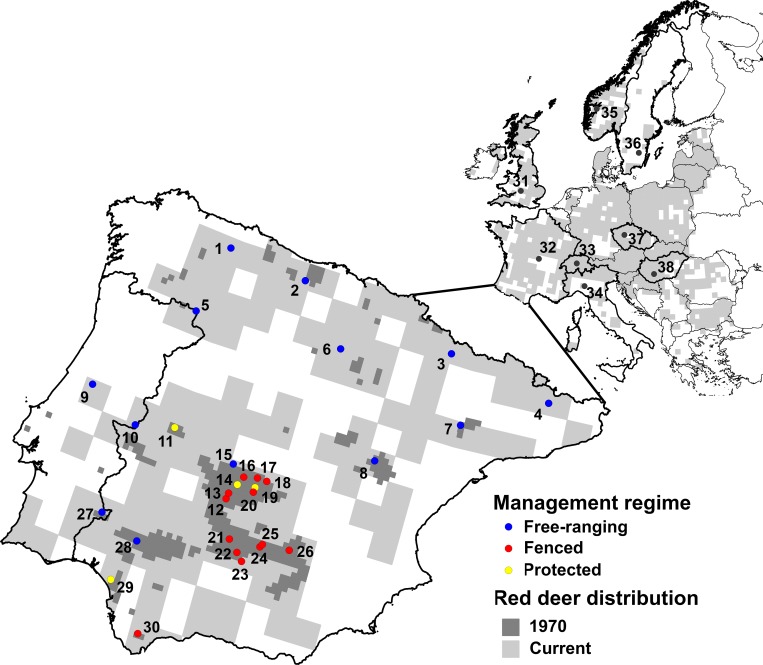
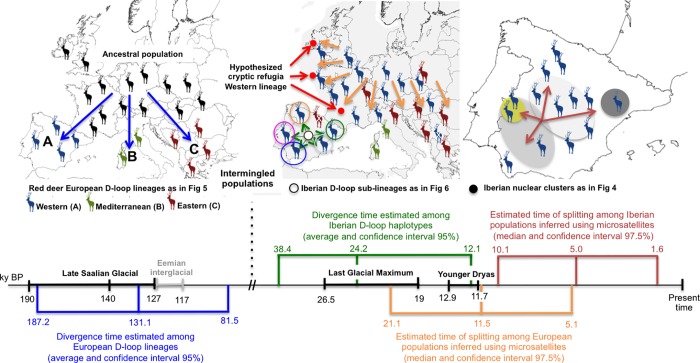
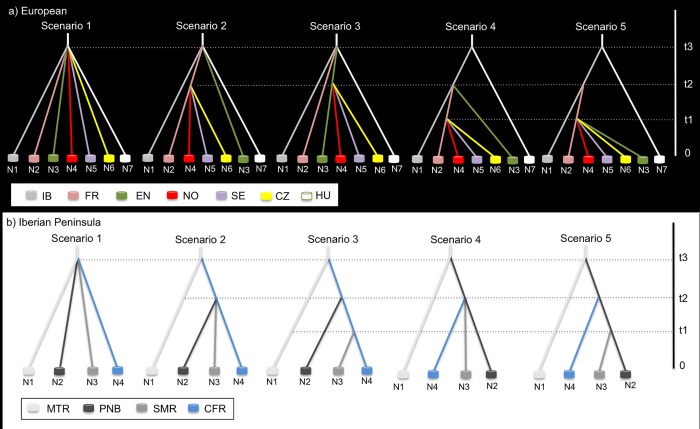
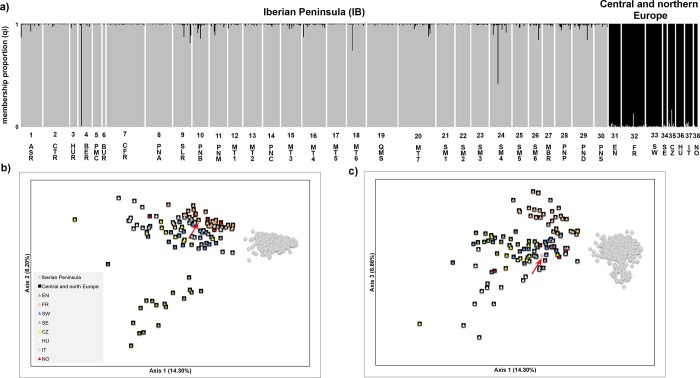
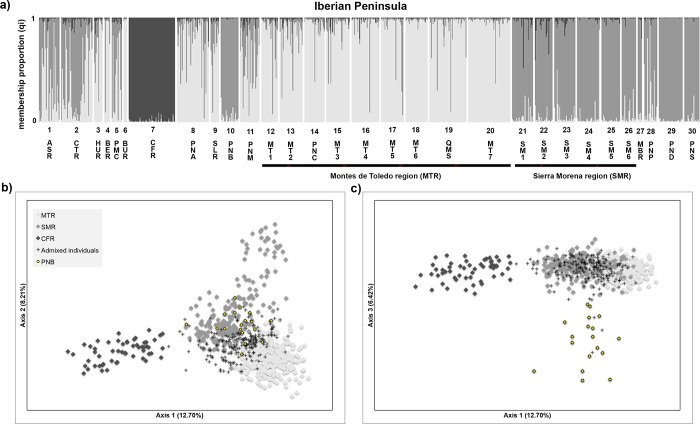
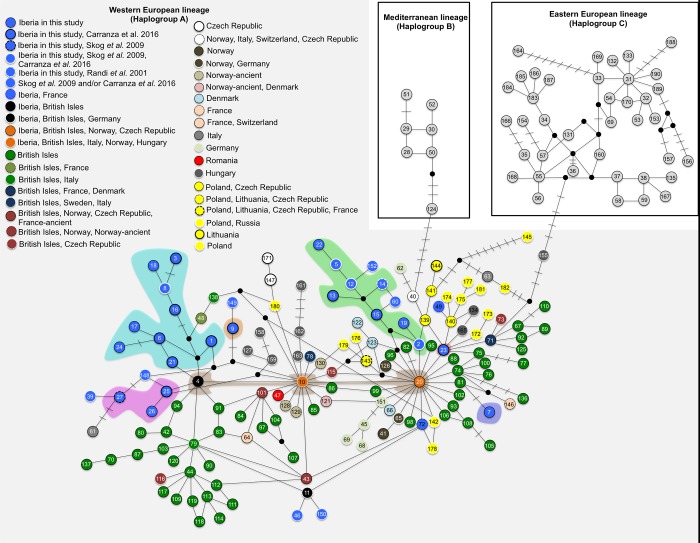
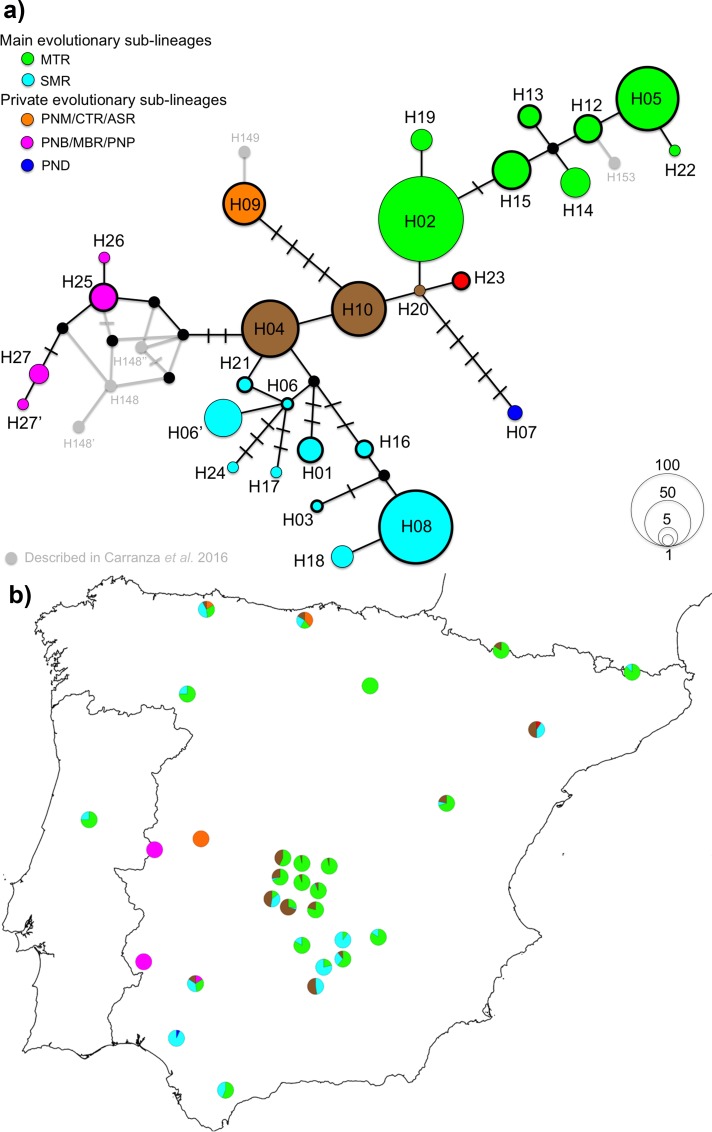
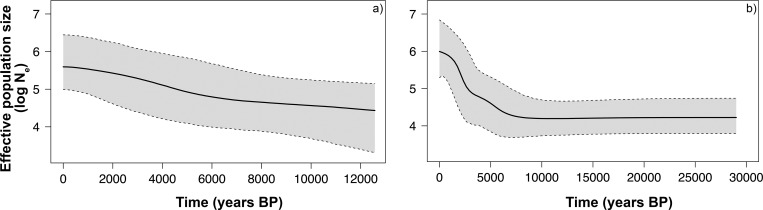
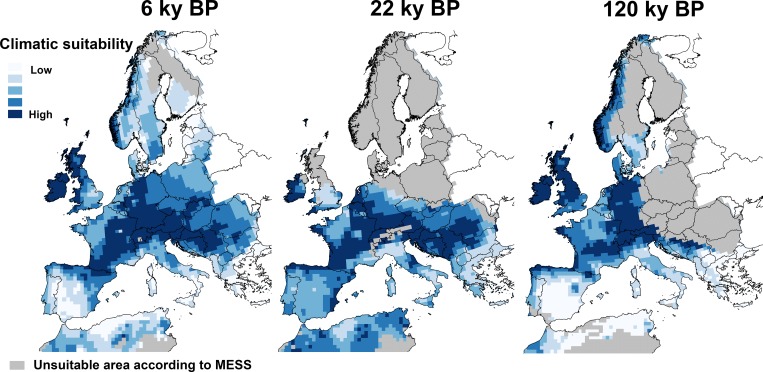
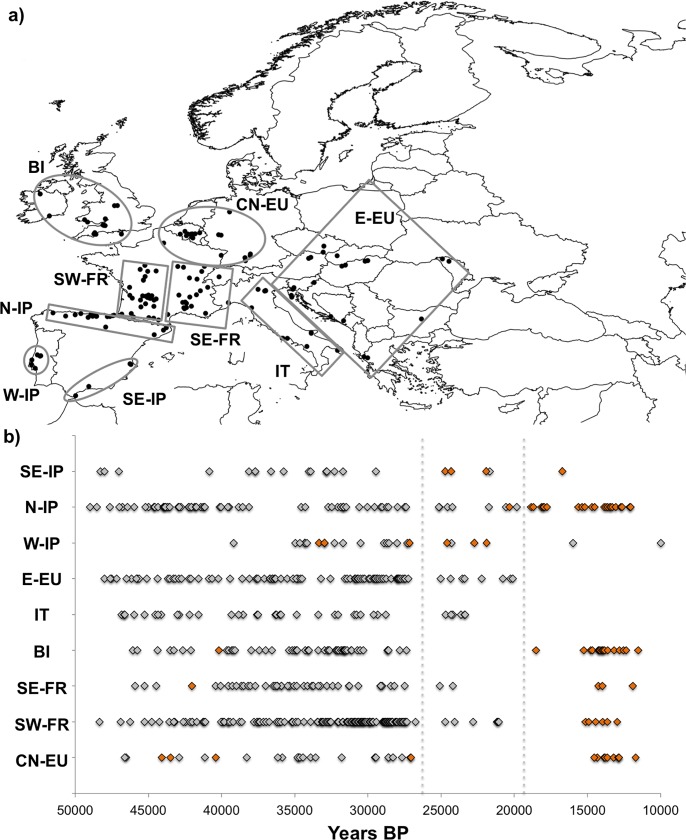
The red deer (Cervus elaphus) is a widespread wild ungulate in Europe that has suffered strong anthropogenic impacts over their distribution during the last centuries, but also at the present time, due its economic importance as a game species. Here we focus on the evolutionary history of the red deer in Iberia, one of the three main southern refugial areas for temperate species in Europe, and addressed the hypothesis of a cryptic refugia at higher latitudes during the Last Glacial Maximum (LGM). A total of 911 individuals were sampled, genotyped for 34 microsatellites specifically developed for red deer and sequenced for a fragment of 670 bp of the mitochondrial (mtDNA) D-loop. The results were combined with published mtDNA sequences, and integrated with species distribution models and historical European paleo-distribution data, in order to further examine the alternative glacial refugial models and the influence of cryptic refugia on European postglacial colonization history. Clear genetic differentiation between Iberian and European contemporary populations was observed at nuclear and mtDNA levels, despite the mtDNA haplotypes central to the phylogenetic network are present across western Europe (including Iberia) suggesting a panmictic population in the past. Species distribution models, fossil records and genetic data support a timing of divergence between Iberian and European populations that overlap with the LGM. A notable population structure was also found within the Iberian Peninsula, although several populations displayed high levels of admixture as a consequence of recent red deer translocations. Five D-loop sub-lineages were found in Iberia that belong to the Western European mtDNA lineage, while there were four main clusters based on analysis of nuclear markers. Regarding glacial refugial models, our findings provide detailed support for the hypothesis that red deer may have persisted in cryptic northern refugia in western Europe during the LGM, most likely in southern France, southern Ireland, or in a region between them (continental shelf), and these regions were the source of individuals during the European re-colonization. This evidence heightens the importance of conserving the high mitochondrial and nuclear diversity currently observed in Iberian populations.
马鹿(Cervus elaphus)是一种广泛分布于欧洲的野生有蹄类动物,在过去几个世纪中,由于其作为狩猎物种的经济重要性,它们在分布过程中受到了强烈的人为影响,但在当前也面临着这种影响。在这里,我们关注的是马鹿在伊比利亚的进化历史,伊比利亚是欧洲三个主要的南部温带物种避难所之一,并且探讨了在末次冰期最大值(LGM)期间存在高纬度隐秘避难所的假说。总共采集了 911 个个体样本,这些个体被特异性地针对马鹿开发的 34 个微卫星进行了基因分型,并对线粒体(mtDNA)D-环的 670bp 片段进行了测序。结果与已发表的 mtDNA 序列相结合,并与物种分布模型和欧洲古分布数据相结合,以进一步检验替代的冰川避难所模型以及隐秘避难所在欧洲后冰期殖民历史中的影响。尽管在网络中存在中心的 mtDNA 单倍型在整个西欧(包括伊比利亚)都有发现,但在核和 mtDNA 水平上,仍观察到伊比利亚和欧洲当代种群之间的明显遗传分化,这表明过去存在一个广泛混合的种群。物种分布模型、化石记录和遗传数据支持伊比利亚和欧洲种群之间的分化时间与 LGM 重叠。此外,还在伊比利亚半岛内发现了明显的种群结构,尽管由于最近的马鹿迁移,几个种群显示出高水平的杂交。在伊比利亚发现了 5 个属于西欧 mtDNA 谱系的 D-环亚谱系,而基于核标记分析则发现了 4 个主要的聚类。关于冰川避难所模型,我们的研究结果为马鹿可能在 LGM 期间在西欧隐秘的北部避难所中得以生存的假说提供了详细的支持,最有可能是在法国南部、爱尔兰南部,或者在它们之间的一个地区(大陆架),这些地区是欧洲重新殖民化期间个体的来源。这一证据提高了保护伊比利亚种群目前观察到的高线粒体和核多样性的重要性。