Laboratory of Chemical Analysis, Department of Translational Physiology, Infectiology and Public Health, Ghent University, Salisburylaan 133, 9820, Merelbeke, Belgium.
KidZ Health Castle, Universitair Ziekenhuis Brussel, Vrije Universiteit Brussel, Laarbeeklaan 101, 1090, Brussel, Belgium.
Mol Med. 2021 Nov 6;27(1):145. doi: 10.1186/s10020-021-00394-0.
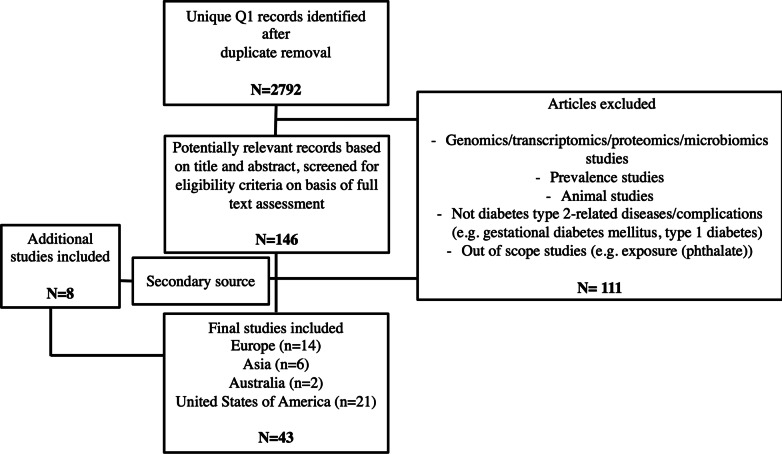
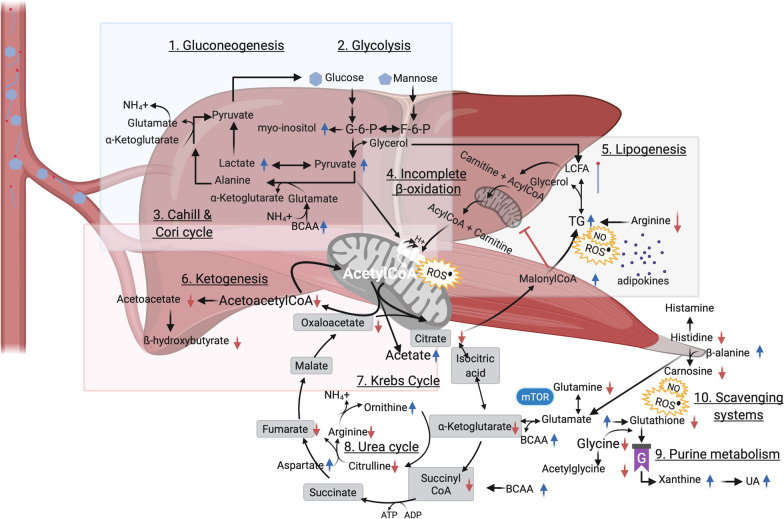
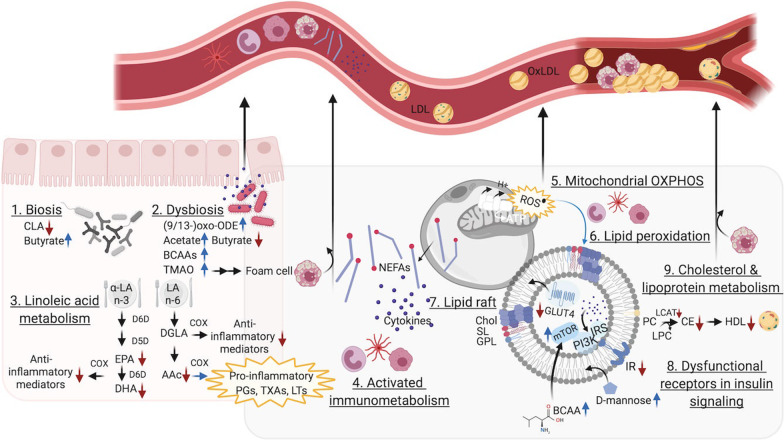
The alarming trend of paediatric obesity deserves our greatest awareness to hinder the early onset of metabolic complications impacting growth and functionality. Presently, insight into molecular mechanisms of childhood obesity and associated metabolic comorbidities is limited. This systematic review aimed at scrutinising what has been reported on putative metabolites distinctive for metabolic abnormalities manifesting at young age by searching three literature databases (Web of Science, Pubmed and EMBASE) during the last 6 years (January 2015-January 2021). Global metabolomic profiling of paediatric obesity was performed (multiple biological matrices: blood, urine, saliva and adipose tissue) to enable overarching pathway analysis and network mapping. Among 2792 screened Q1 articles, 40 met the eligibility criteria and were included to build a database on metabolite markers involved in the spectrum of childhood obesity. Differential alterations in multiple pathways linked to lipid, carbohydrate and amino acid metabolisms were observed. High levels of lactate, pyruvate, alanine and acetate marked a pronounced shift towards hypoxic conditions in children with obesity, and, together with distinct alterations in lipid metabolism, pointed towards dysbiosis and immunometabolism occurring early in life. Additionally, aberrant levels of several amino acids, most notably belonging to tryptophan metabolism including the kynurenine pathway and its relation to histidine, phenylalanine and purine metabolism were displayed. Moreover, branched-chain amino acids were linked to lipid, carbohydrate, amino acid and microbial metabolism, inferring a key role in obesity-associated insulin resistance.
This systematic review revealed that the main metabolites at the crossroad of dysregulated metabolic pathways underlying childhood obesity could be tracked down to one central disturbance, i.e. impending insulin resistance for which reference values and standardised measures still are lacking. In essence, glycolytic metabolism was evinced as driving energy source, coupled to impaired Krebs cycle flux and ß-oxidation. Applying metabolomics enabled to retrieve distinct metabolite alterations in childhood obesity(-related insulin resistance) and associated pathways at early age and thus could provide a timely indication of risk by elucidating early-stage biomarkers as hallmarks of future metabolically unhealthy phenotypes.
儿科肥胖的惊人趋势引起了我们的高度关注,以阻止早期代谢并发症的发生,这些并发症会影响生长和功能。目前,对儿童肥胖症及其相关代谢合并症的分子机制的了解有限。本系统评价旨在通过搜索三个文献数据库(Web of Science、Pubmed 和 EMBASE),审查过去 6 年来(2015 年 1 月至 2021 年 1 月)报道的与年轻时表现出的代谢异常相关的假定代谢物的研究结果。对儿科肥胖症进行了全局代谢组学分析(多种生物基质:血液、尿液、唾液和脂肪组织),以实现全面的途径分析和网络映射。在筛选出的 2792 篇 Q1 文章中,有 40 篇符合入选标准,并被纳入一个涉及儿童肥胖症谱的代谢物标志物数据库。观察到与脂质、碳水化合物和氨基酸代谢相关的多种途径的差异改变。肥胖儿童的乳酸、丙酮酸、丙氨酸和乙酸水平升高,表明缺氧状态明显,与脂质代谢的明显改变一起,表明生命早期发生的菌群失调和免疫代谢异常。此外,还显示出几种氨基酸的异常水平,特别是色氨酸代谢物包括犬尿氨酸途径及其与组氨酸、苯丙氨酸和嘌呤代谢的关系。此外,支链氨基酸与脂质、碳水化合物、氨基酸和微生物代谢有关,暗示其在肥胖相关胰岛素抵抗中起关键作用。
本系统评价揭示了儿童肥胖症中失调代谢途径的主要代谢物可能可以追溯到一个中心干扰,即即将发生的胰岛素抵抗,而对于这种干扰,仍然缺乏参考值和标准化措施。从本质上讲,糖酵解代谢被证明是驱动能量的来源,与受损的克雷布斯循环通量和β-氧化有关。应用代谢组学可以在早期获得儿童肥胖症(相关胰岛素抵抗)及其相关途径的独特代谢物改变,从而通过阐明早期生物标志物作为未来代谢不健康表型的特征,及时提供风险指示。