Department of Laboratory Medicine and Pathology, University of Alberta, Edmonton, Alberta, Canada.
Public Health Laboratories (ProvLab), Alberta Precision Laboratories (APL), Calgary, Alberta, Canada.
Sci Total Environ. 2022 Mar 15;812:151434. doi: 10.1016/j.scitotenv.2021.151434. Epub 2021 Nov 4.
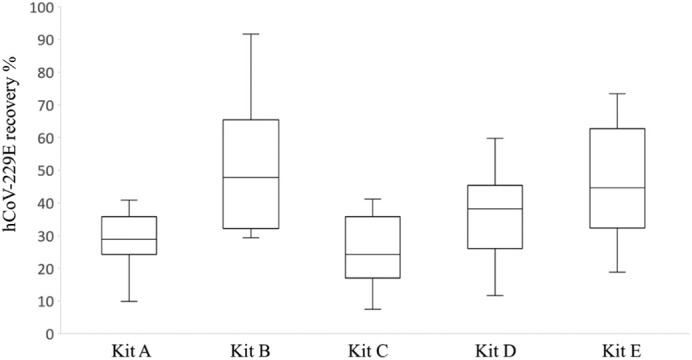
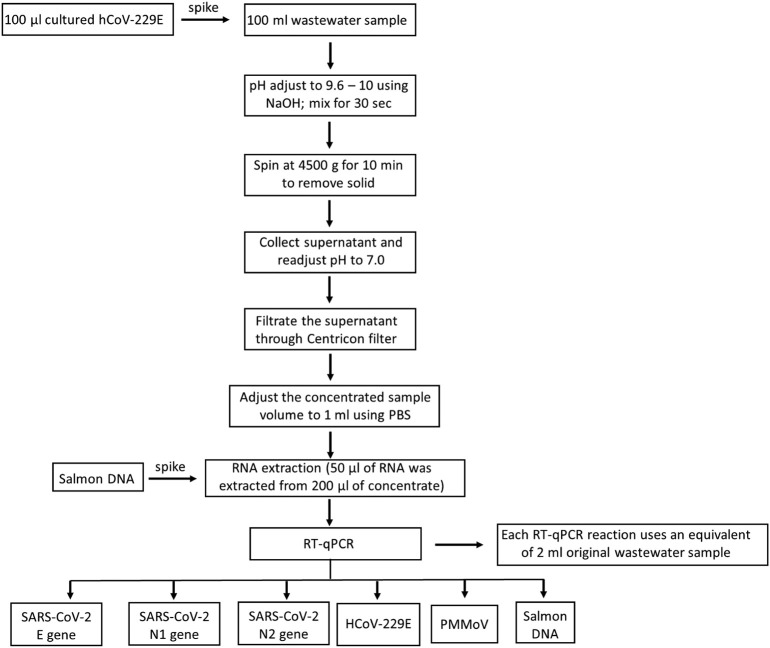
Wastewater surveillance of SARS-CoV-2 has become a promising tool to estimate population-level changes in community infections and the prevalence of COVID-19 disease. Although many studies have reported the detection and quantification of SARS-CoV-2 in wastewater, remarkable variation remains in the methodology. In this study, we validated a molecular testing method by concentrating viruses from wastewater using ultrafiltration and detecting SARS-CoV-2 using one-step RT-qPCR assay. The following parameters were optimized including sample storage condition, wastewater pH, RNA extraction and RT-qPCR assay by quantification of SARS-CoV-2 or spiked human coronavirus strain 229E (hCoV-229E). Wastewater samples stored at 4 °C after collection showed significantly enhanced detection of SARS-CoV-2 with approximately 2-3 PCR-cycle threshold (Ct) values less when compared to samples stored at -20 °C. Pre-adjustment of the wastewater pH to 9.6 to aid virus desorption followed by pH readjustment to neutral after solid removal significantly increased the recovery of spiked hCoV-229E. Of the five commercially available RNA isolation kits evaluated, the MagMAX-96 viral RNA isolation kit showed the best recovery of hCoV-229E (50.1 ± 20.1%). Compared with two-step RT-qPCR, one-step RT-qPCR improved sensitivity for SARS-CoV-2 detection. Salmon DNA was included for monitoring PCR inhibition and pepper mild mottle virus (PMMoV), a fecal indicator indigenous to wastewater, was used to normalize SARS-CoV-2 levels in wastewater. Our method for molecular detection of SARS-CoV-2 in wastewater provides a useful tool for public health surveillance of COVID-19.
污水监测 SARS-CoV-2 已成为估计社区感染和 COVID-19 疾病流行率的人群水平变化的一种很有前途的工具。尽管许多研究报告了污水中 SARS-CoV-2 的检测和定量,但方法学上仍存在显著差异。在这项研究中,我们使用超滤浓缩病毒,并使用一步法 RT-qPCR 检测 SARS-CoV-2,对分子检测方法进行了验证。通过定量 SARS-CoV-2 或添加的人冠状病毒株 229E(hCoV-229E)优化了以下参数:样品储存条件、污水 pH 值、RNA 提取和 RT-qPCR 检测。与储存于-20°C 的样品相比,收集后在 4°C 下储存的污水样品可显著提高 SARS-CoV-2 的检测,大约减少 2-3 个 PCR 循环阈值(Ct)值。预调节污水 pH 值至 9.6 以辅助病毒解吸,然后在固体去除后将 pH 值调回中性,可显著提高添加的 hCoV-229E 的回收率。在评估的五种市售 RNA 分离试剂盒中,MagMAX-96 病毒 RNA 分离试剂盒显示出最佳的 hCoV-229E 回收率(50.1±20.1%)。与两步法 RT-qPCR 相比,一步法 RT-qPCR 提高了 SARS-CoV-2 检测的灵敏度。在监测 PCR 抑制时加入鲑鱼 DNA,并用污水中固有的粪便指示物胡椒轻斑驳病毒(PMMoV)来对污水中 SARS-CoV-2 水平进行归一化。本研究中用于污水中 SARS-CoV-2 的分子检测方法为 COVID-19 的公共卫生监测提供了有用的工具。