Institut de Ciències del Mar (CSIC), Passeig Marítim de la Barceloneta 37-49, 08003 Barcelona, Catalonia, Spain.
Institut de Ciències del Mar (CSIC), Passeig Marítim de la Barceloneta 37-49, 08003 Barcelona, Catalonia, Spain.
Sci Total Environ. 2022 Mar 15;812:151443. doi: 10.1016/j.scitotenv.2021.151443. Epub 2021 Nov 4.
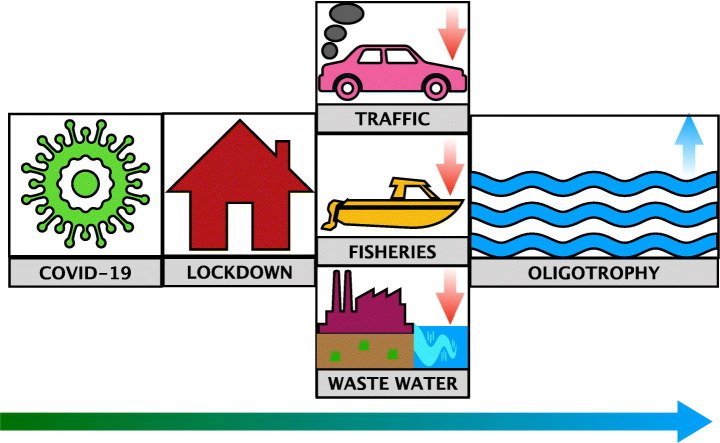
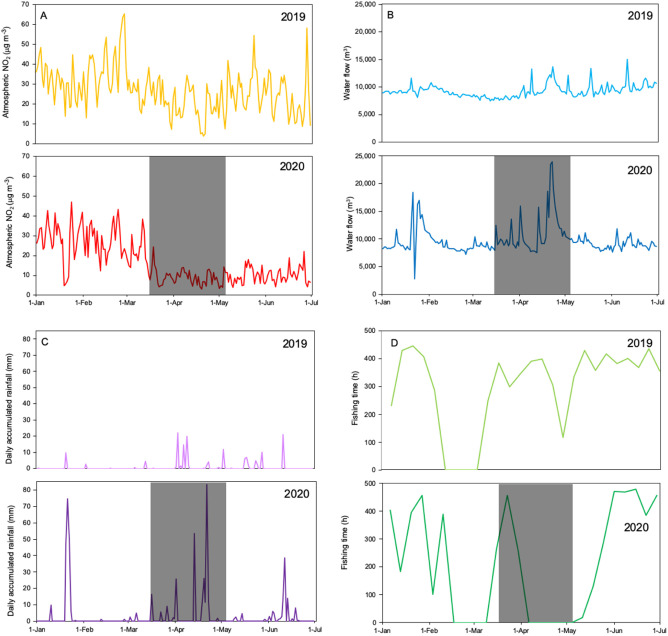
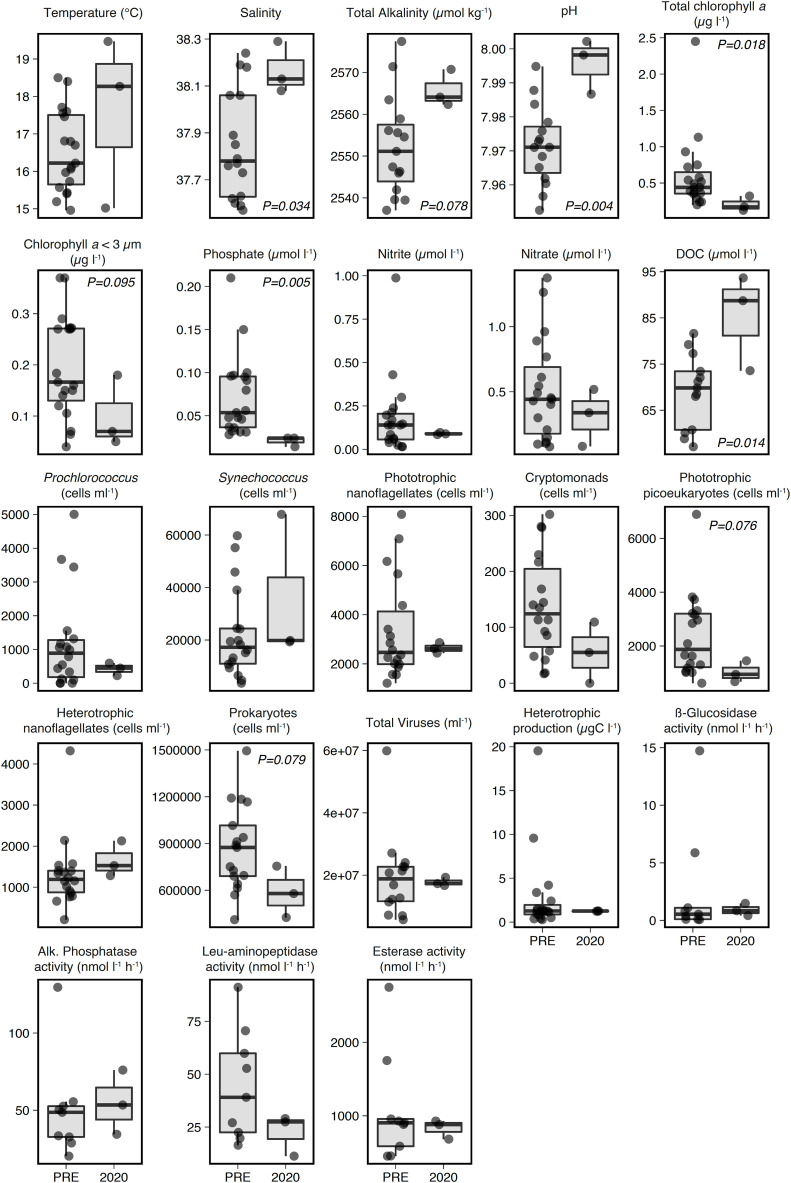
COVID-19 has led to global population lockdowns that have had indirect effects on terrestrial and marine fauna, yet little is known on their effects on marine planktonic communities. We analysed the effect of the spring 2020 lockdown in a marine coastal area in Blanes Bay, NW Mediterranean. We compared a set of 23 oceanographic, microbial and biogeochemical variables sampled right after the strict lockdown in Spain, with data from the previous 15 years after correcting for long-term trends. Our analysis shows a series of changes in the microbial communities which may have been induced by the combination of the decreased nitrogen atmospheric load, the lower wastewater flux and the reduced fishing activity in the area, among other factors. In particular, we detected a slight decrease beyond the long-term trend in chlorophyll a, in the abundance of several microbial groups (phototrophic nanoflagellates and total prokaryotes) and in prokaryotic activity (heterotrophic prokaryotic production and β-glucosidase activity) which, as a whole, resulted in a moderate increase of oligotrophy in Blanes Bay after the lockdown.
COVID-19 导致了全球人口封锁,这对陆地和海洋动物群产生了间接影响,但人们对其对海洋浮游生物群落的影响知之甚少。我们分析了 2020 年春季西班牙严格封锁期间地中海西北布兰卡湾(Blanes Bay)海洋沿海地区的情况。我们将在西班牙严格封锁后立即采集的一组 23 个海洋学、微生物和生物地球化学变量与经过长期趋势校正后的前 15 年的数据进行了比较。我们的分析表明,微生物群落发生了一系列变化,这可能是由于氮大气负荷减少、废水通量降低以及该地区捕鱼活动减少等因素共同作用的结果。特别是,我们发现叶绿素 a 的长期趋势略有下降,一些微生物群体(光养微鞭毛虫和总原核生物)的丰度以及原核生物活性(异养原核生物生产力和β-葡萄糖苷酶活性)也有所下降,总的来说,在封锁之后,布兰卡湾的贫营养化程度略有增加。