Hepatology and Gastroenterology, MedicineIndiana UniversityIndianapolisIndianaUSA.
Department of MovementHuman and Health SciencesDivision of Health SciencesUniversity of Rome "Foro Italico,"RomeItaly.
Hepatology. 2022 Apr;75(4):797-813. doi: 10.1002/hep.32233. Epub 2021 Nov 24.
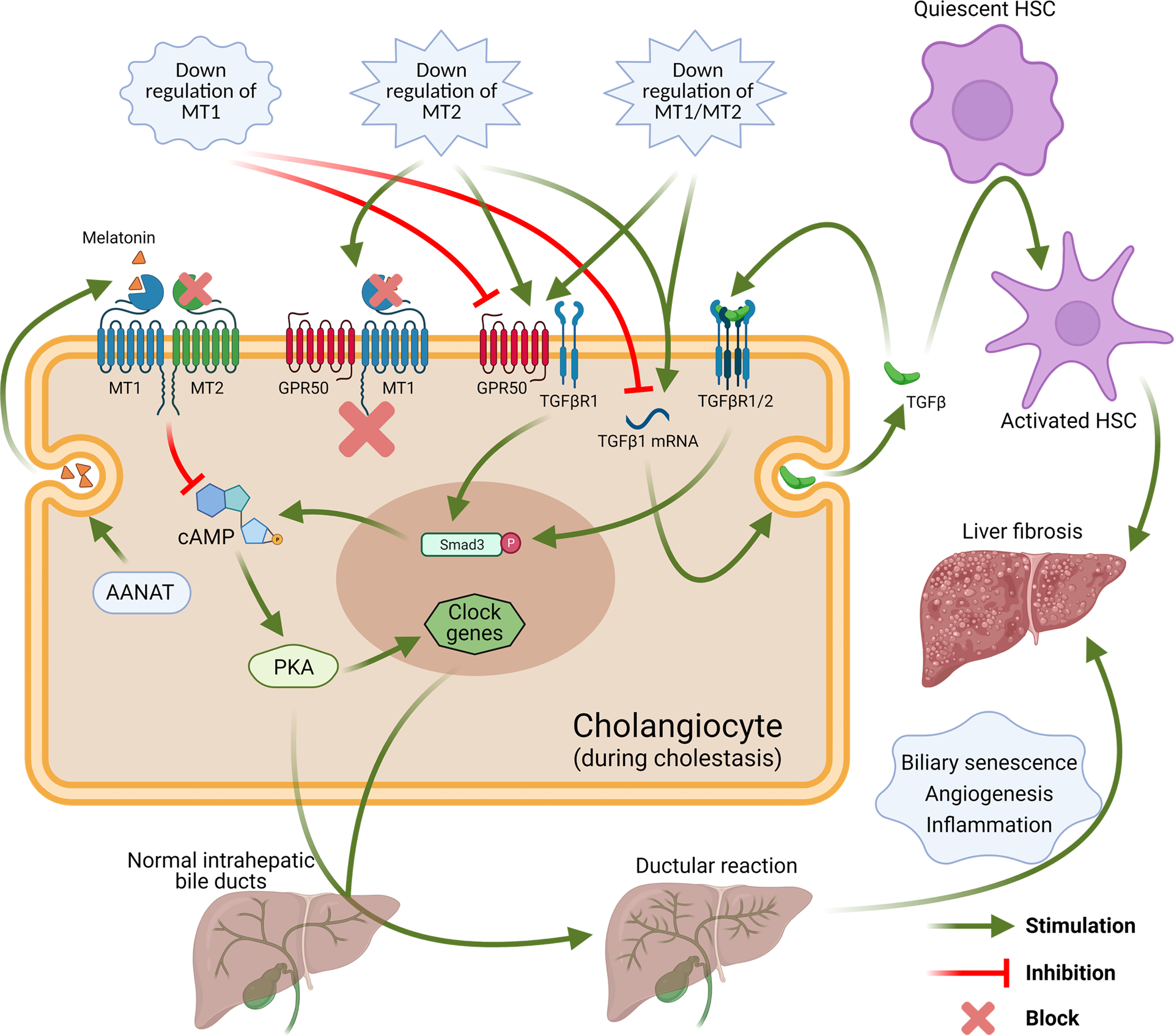
Melatonin reduces biliary damage and liver fibrosis in cholestatic models by interaction with melatonin receptors 1A (MT1) and 1B (MT2). MT1 and MT2 can form heterodimers and homodimers, but MT1 and MT2 can heterodimerize with the orphan receptor G protein-coupled receptor 50 (GPR50). MT1/GPR50 dimerization blocks melatonin binding, but MT2/GPR50 dimerization does not affect melatonin binding. GPR50 can dimerize with TGFβ receptor type I (TGFβRI) to activate this receptor. We aimed to determine the differential roles of MT1 and MT2 during cholestasis.
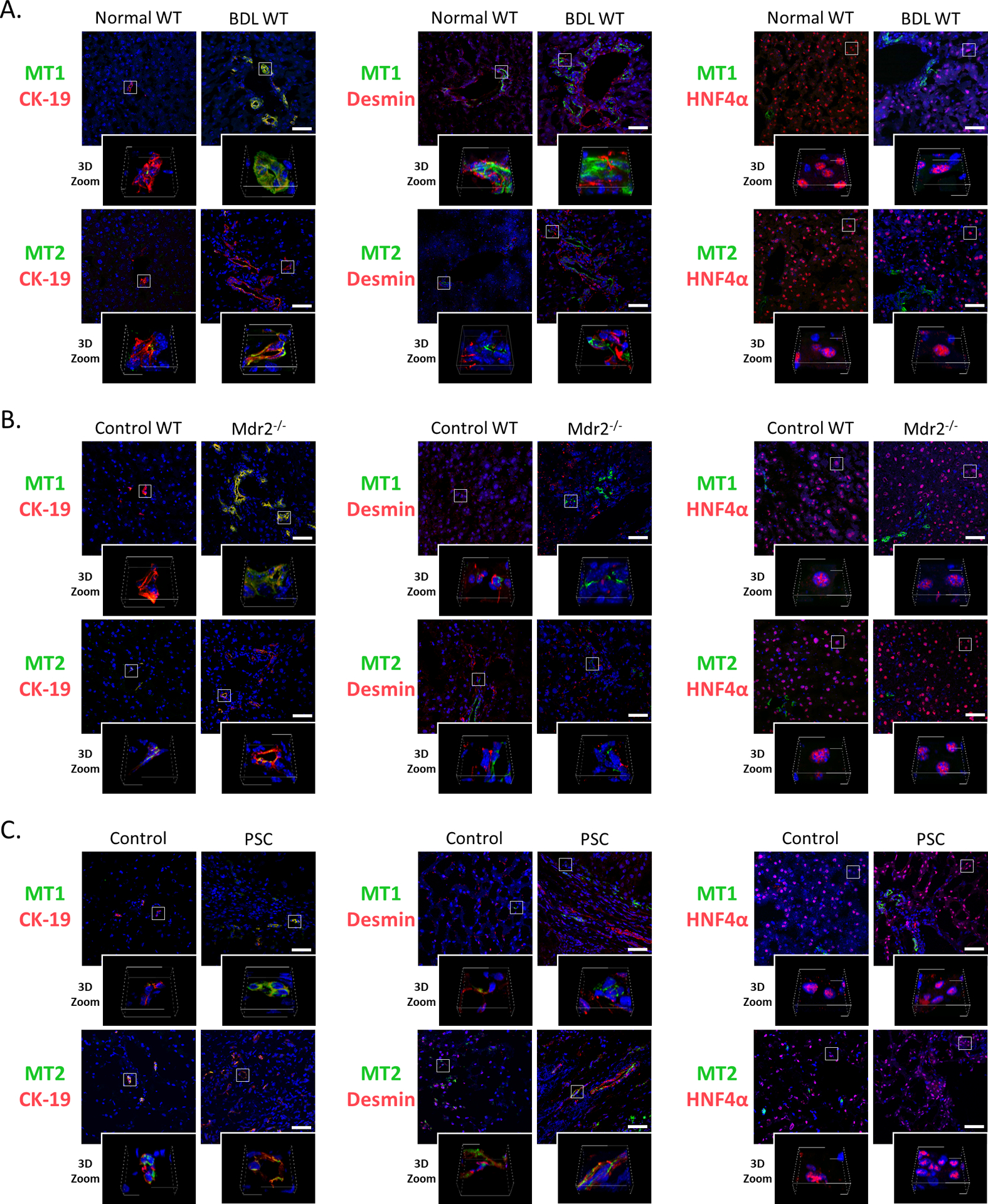
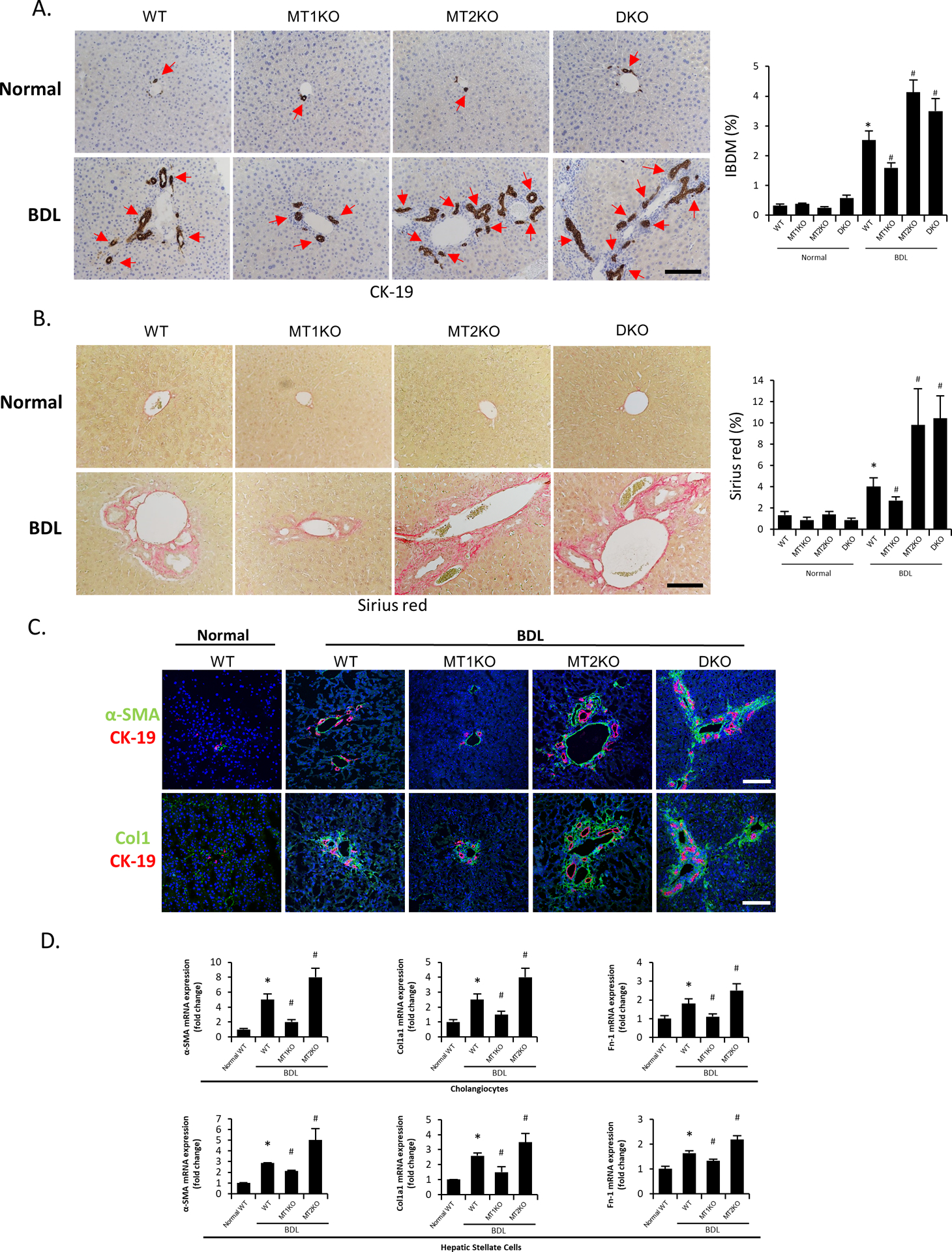
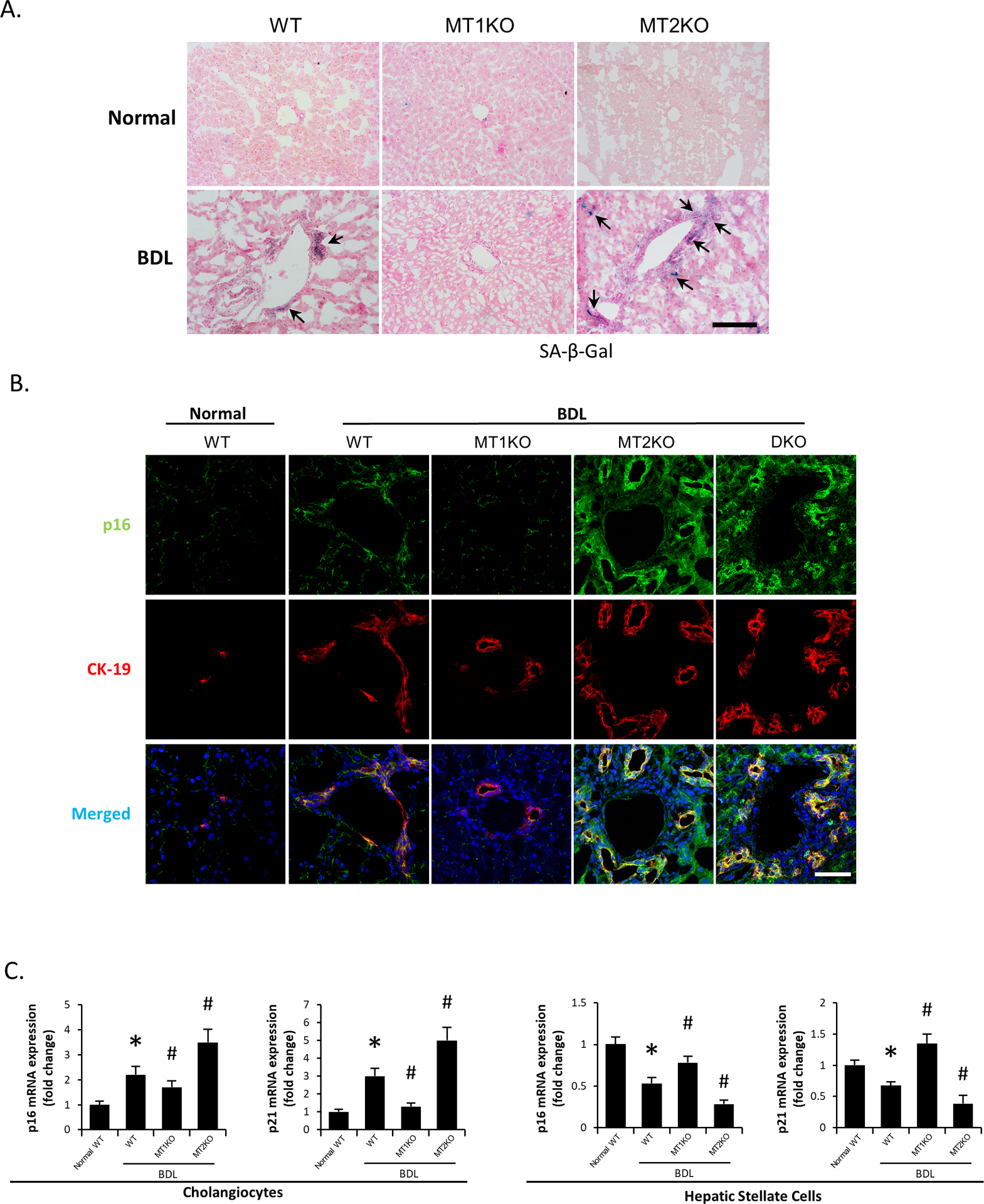
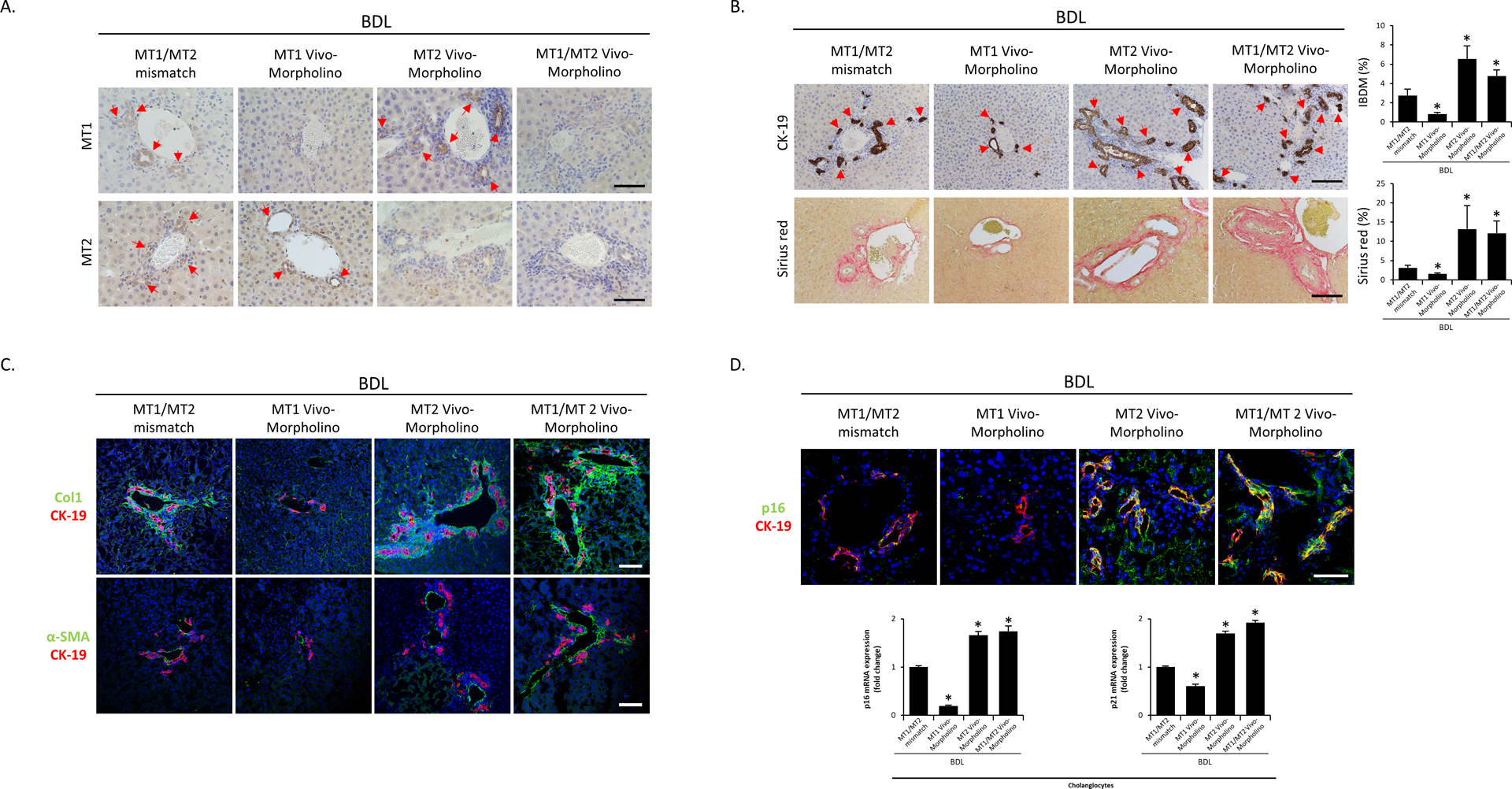
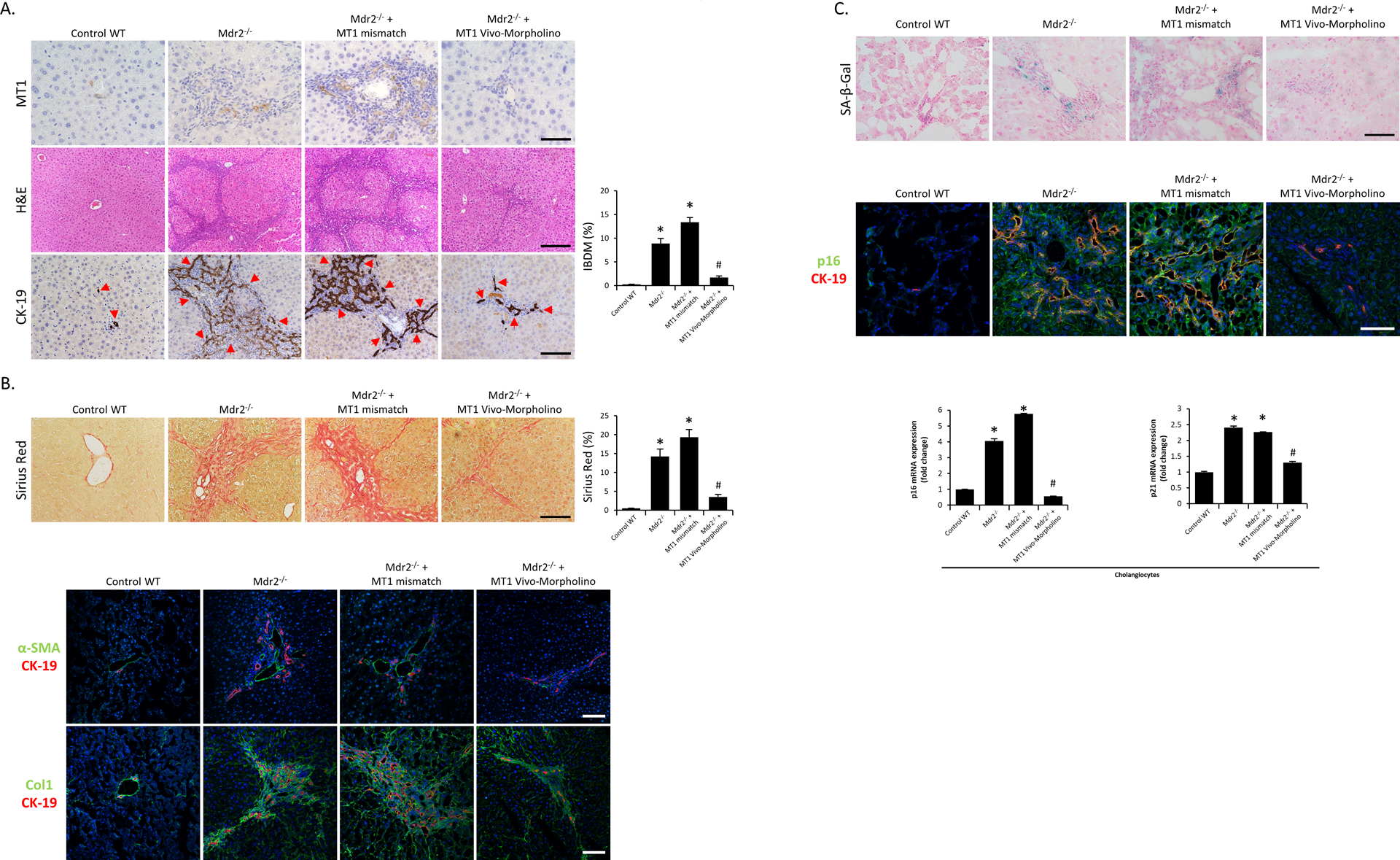
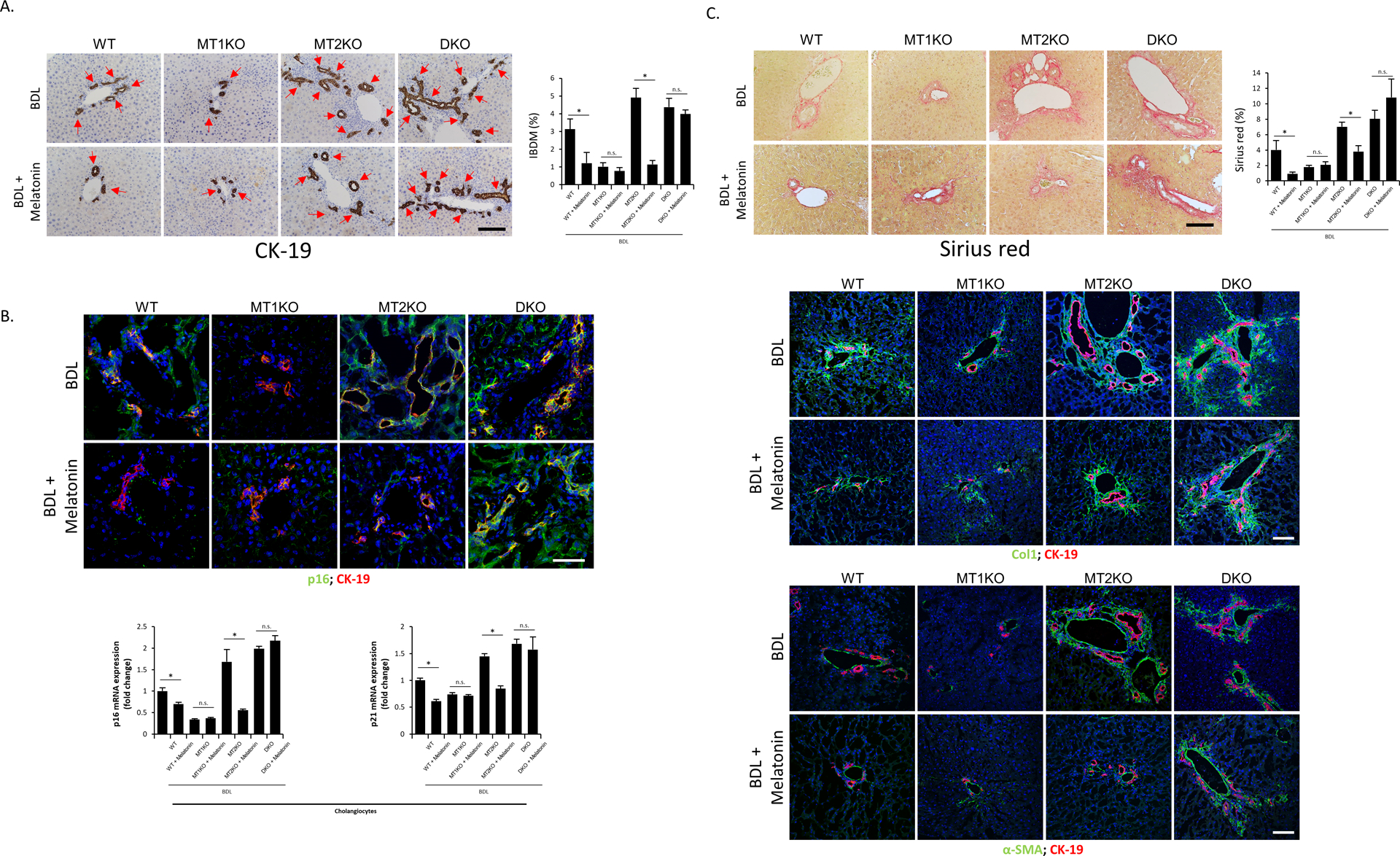
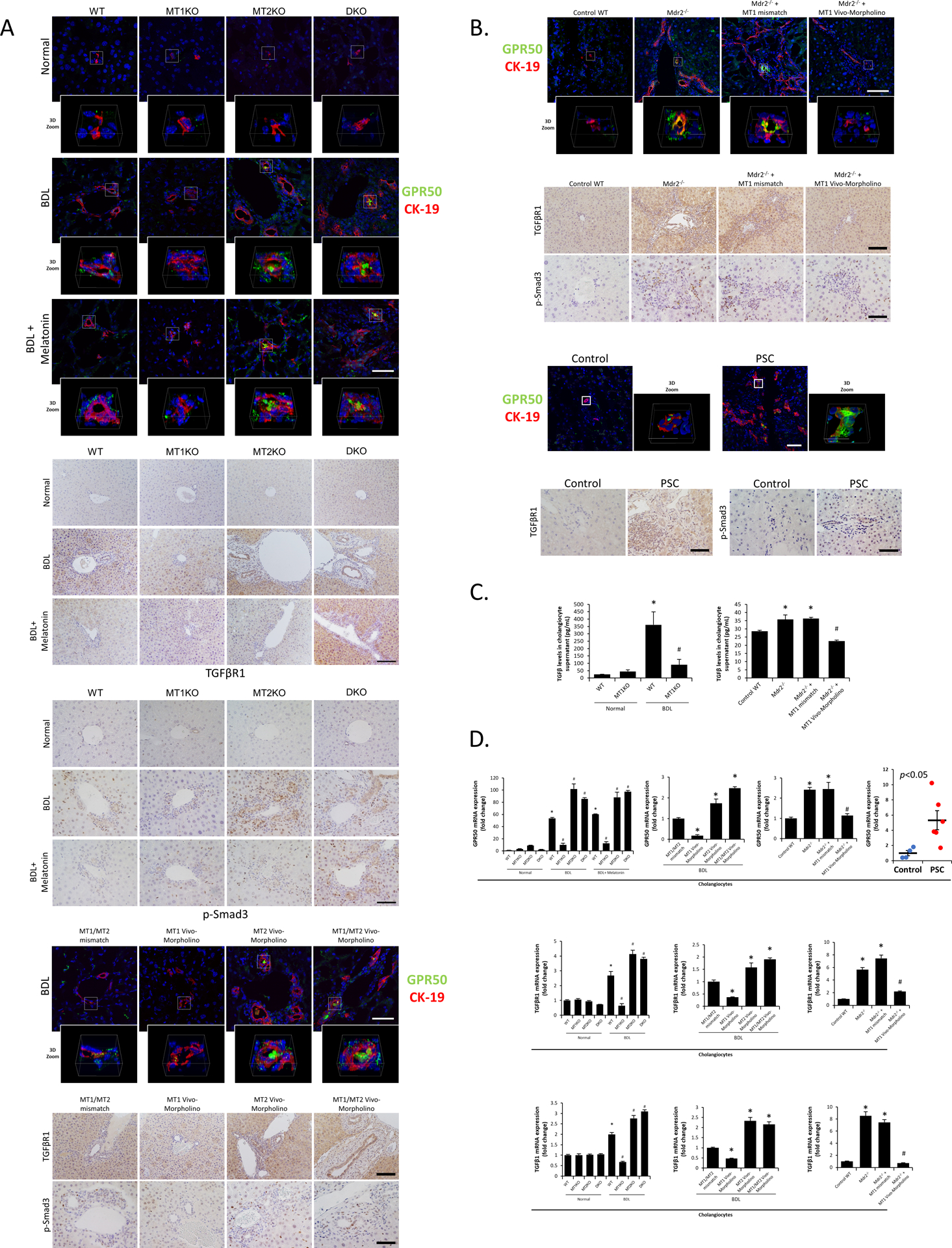
Wild-type (WT), MT1 knockout (KO), MT2KO, and MT1/MT2 double KO (DKO) mice underwent sham or bile duct ligation (BDL); these mice were also treated with melatonin. BDL WT and multidrug resistance 2 KO (Mdr2 ) mice received mismatch, MT1, or MT2 Vivo-Morpholino. Biliary expression of MT1 and GPR50 increases in cholestatic rodents and human primary sclerosing cholangitis (PSC) samples. Loss of MT1 in BDL and Mdr2 mice ameliorated biliary and liver damage, whereas these parameters were enhanced following loss of MT2 and in DKO mice. Interestingly, melatonin treatment alleviated BDL-induced biliary and liver injury in BDL WT and BDL MT2KO mice but not in BDL MT1KO or BDL DKO mice, demonstrating melatonin's interaction with MT1. Loss of MT2 or DKO mice exhibited enhanced GPR50/TGFβR1 signaling, which was reduced by loss of MT1.
Melatonin ameliorates liver phenotypes through MT1, whereas down-regulation of MT2 promotes liver damage through GPR50/TGFβR1 activation. Blocking GPR50/TGFβR1 binding through modulation of melatonin signaling may be a therapeutic approach for PSC.
褪黑素通过与褪黑素受体 1A(MT1)和 1B(MT2)相互作用,减少胆汁淤积模型中的胆汁损伤和肝纤维化。MT1 和 MT2 可以形成异二聚体和同二聚体,但 MT1 和 MT2 可以与孤儿 G 蛋白偶联受体 50(GPR50)形成异二聚体。MT1/GPR50 二聚化会阻止褪黑素结合,但 MT2/GPR50 二聚化不会影响褪黑素结合。GPR50 可以与转化生长因子β受体 I(TGFβRI)二聚化以激活该受体。我们旨在确定 MT1 和 MT2 在胆汁淤积过程中的差异作用。
野生型(WT)、MT1 敲除(KO)、MT2KO 和 MT1/MT2 双敲除(DKO)小鼠接受假手术或胆管结扎(BDL);这些小鼠还接受了褪黑素治疗。BDL WT 和多药耐药 2 敲除(Mdr2)小鼠接受错配、MT1 或 MT2 Vivo-Morpholino。胆汁淤积啮齿动物和人原发性硬化性胆管炎(PSC)样本中 MT1 和 GPR50 的表达增加。BDL 和 Mdr2 小鼠中 MT1 的缺失改善了胆汁和肝脏损伤,而 MT2 的缺失和 DKO 小鼠中这些参数增强。有趣的是,褪黑素治疗减轻了 BDL WT 和 BDL MT2KO 小鼠的 BDL 诱导的胆汁和肝脏损伤,但对 BDL MT1KO 或 BDL DKO 小鼠没有影响,表明褪黑素与 MT1 相互作用。MT2 的缺失或 DKO 小鼠表现出增强的 GPR50/TGFβR1 信号,而 MT1 的缺失则降低了这种信号。
褪黑素通过 MT1 改善肝脏表型,而 MT2 的下调通过 GPR50/TGFβR1 激活促进肝脏损伤。通过调节褪黑素信号阻断 GPR50/TGFβR1 结合可能是 PSC 的一种治疗方法。