Department of Pharmacology, School of Pharmacy, China Medical University, Shenyang, 110122, People's Republic of China.
Liaoning Key Laboratory of Molecular Targeted Anti-Tumor Drug Development and Evaluation; Liaoning Cancer Immune Peptide Drug Engineering Technology Research Center; Key Laboratory of Precision Diagnosis and Treatment of Gastrointestinal Tumors, Ministry of Education; China Medical University, Shenyang, 110122, People's Republic of China.
J Hematol Oncol. 2021 Nov 7;14(1):188. doi: 10.1186/s13045-021-01204-0.
Accumulating evidence shows that N6-methyladenine (mA) modulators contribute to the etiology and progression of colorectal cancer (CRC). However, the exact mechanisms of mA reader involved in glycolytic metabolism remain vague. This article aimed to crosstalk the mA reader with glycolytic metabolism and reveal a new mechanism for the progression of CRC.
The relationship between candidate lncRNA and mA reader was analyzed by bioinformatics, ISH and IHC assays. In vivo and in vitro studies (including MTT, CFA, trans-well, apoptosis, western blot, qRT-PCR and xenograft mouse models) were utilized to explore the biological functions of these indicators. Lactate detection, ATP activity detection and ECAR assays were used to verify the biological function of the downstream target. The bioinformatics, RNA stability, RIP experiments and RNA pull-down assays were used to explore the potential molecular mechanisms.
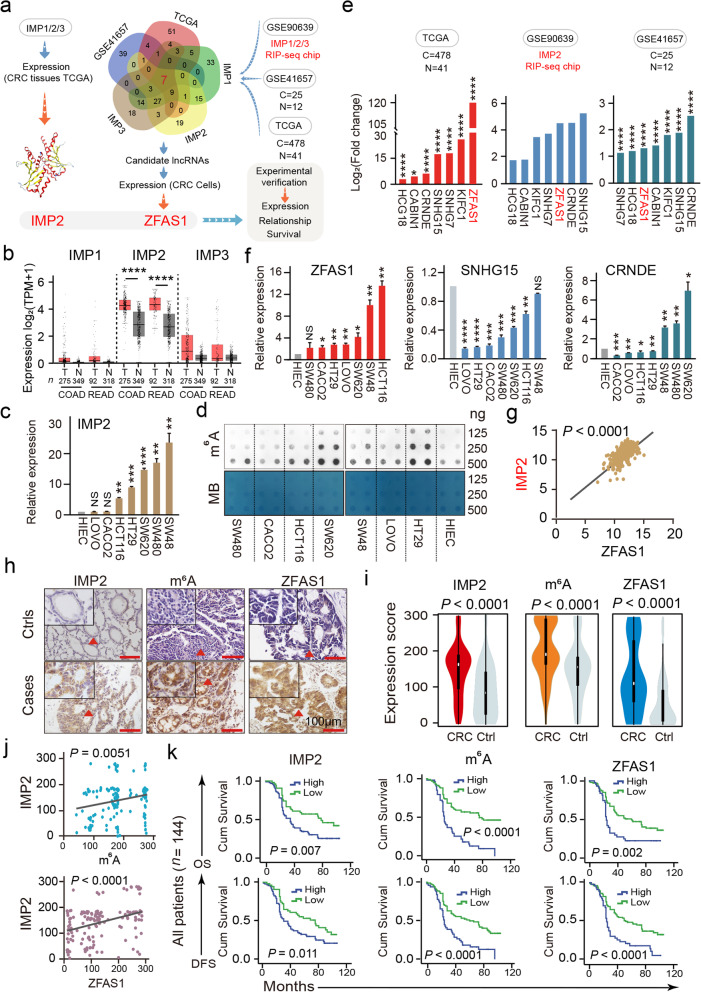
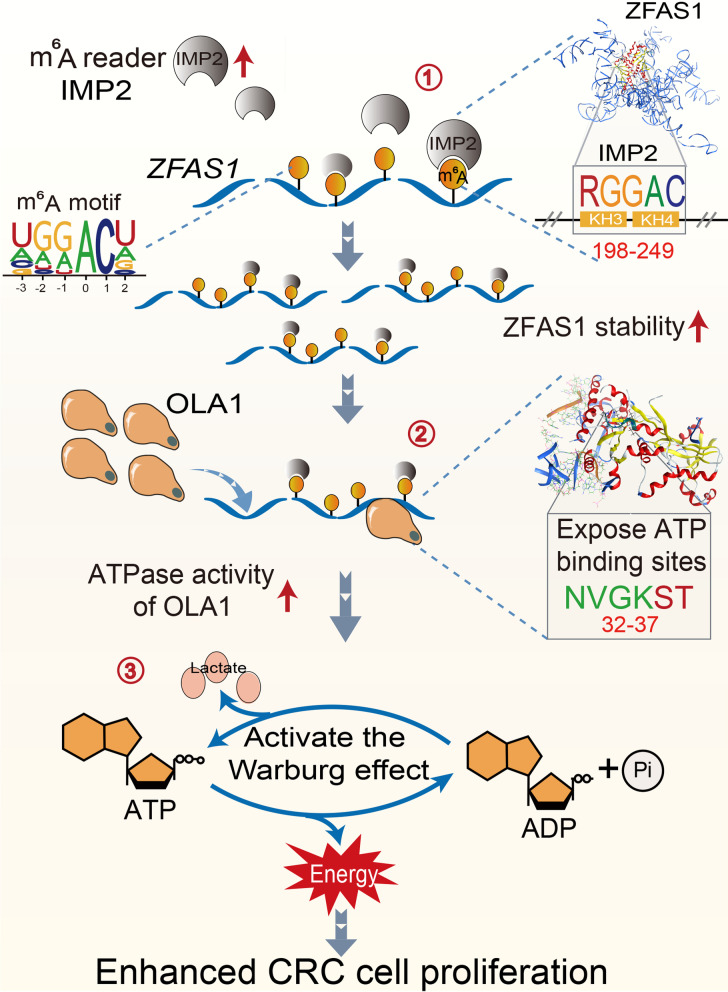
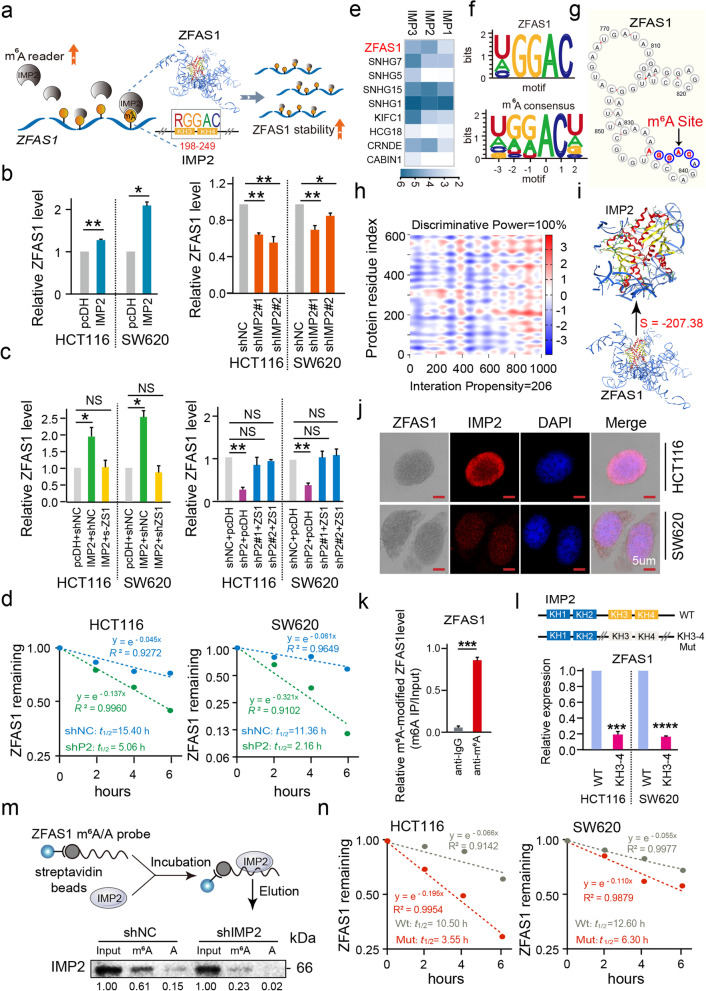
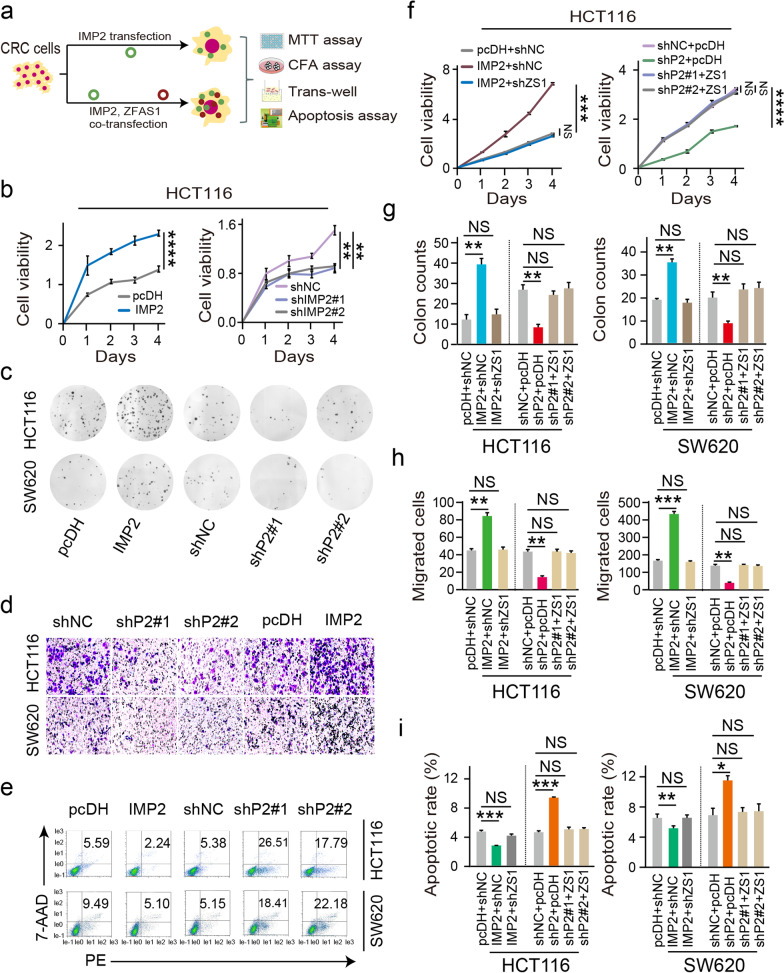
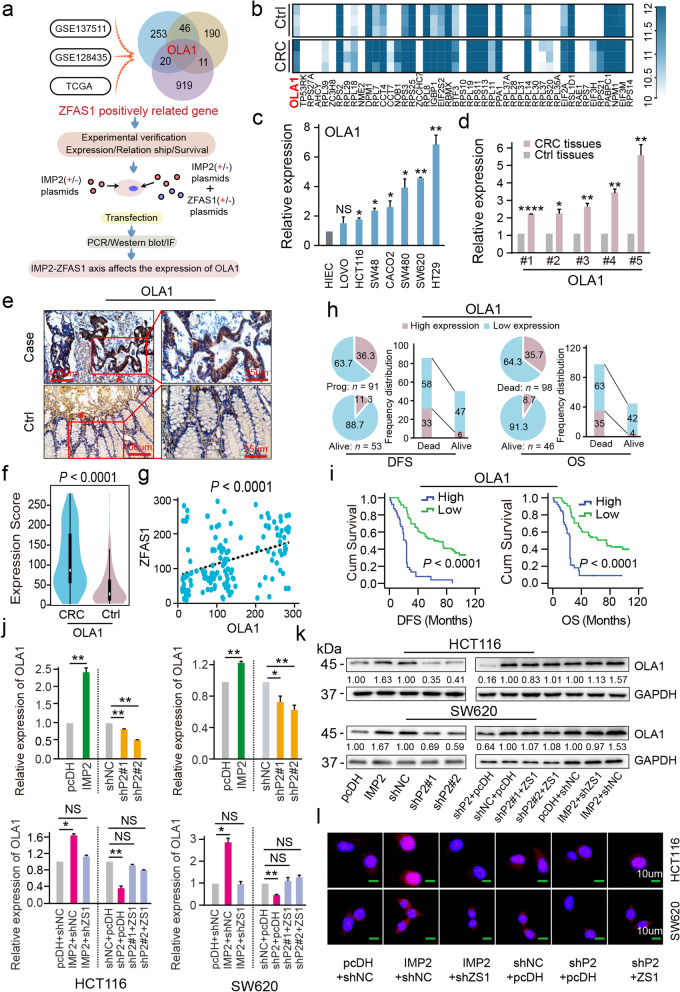
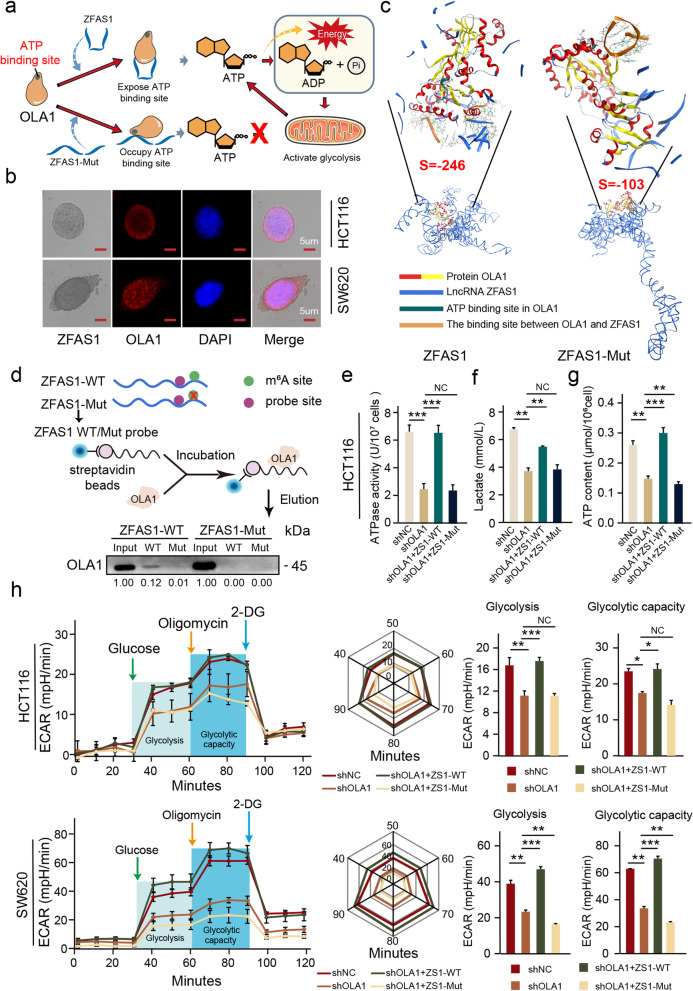
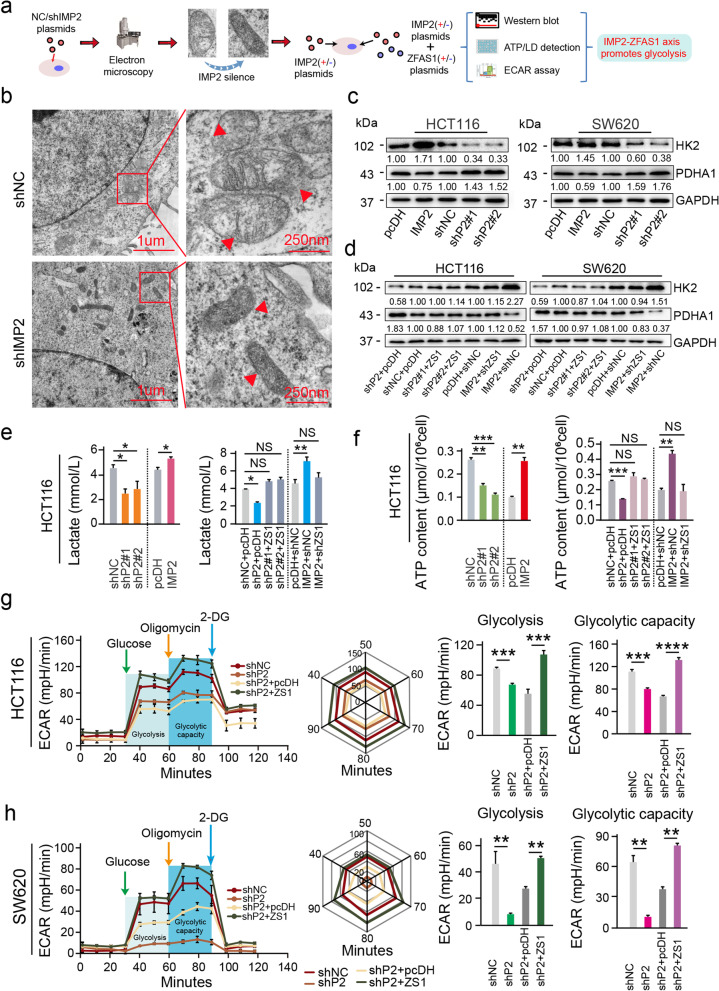
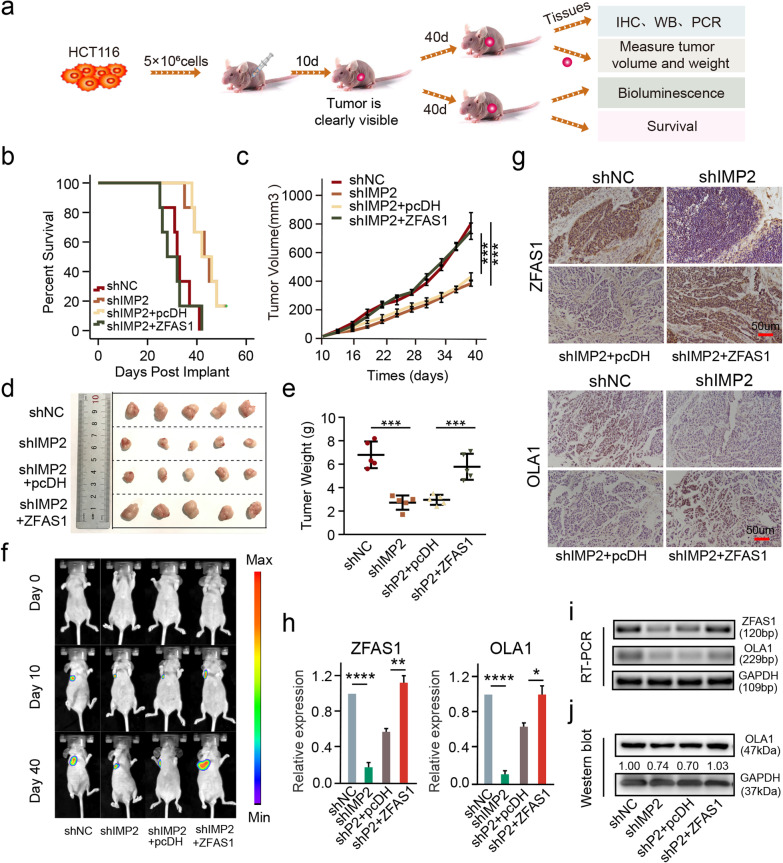
We identified that the crosstalk of the mA reader IMP2 with long-noncoding RNA (lncRNA) ZFAS1 in an mA modulation-dependent manner, subsequently augmented the recruitment of Obg-like ATPase 1 (OLA1) and adenosine triphosphate (ATP) hydrolysis and glycolysis during CRC proliferation and progression. Specifically, IMP2 and ZFAS1 are significantly overexpressed with elevated mA levels in CRC cells and paired CRC cohorts (n = 144). These indicators could be independent biomarkers for CRC prognostic prediction. Notably, IMP2 regulated ZFAS1 expression and enhanced CRC cell proliferation, colony formation, and apoptosis inhibition; thus, it was oncogenic. Mechanistically, ZFAS1 is modified at adenosine +843 within the RGGAC/RRACH element in an mA-dependent manner. Thus, direct interaction between the KH3-4 domain of IMP2 and ZFAS1 where IMP2 serves as a reader for mA-modified ZFAS1 and promotes the RNA stability of ZFAS1 is critical for CRC development. More importantly, stabilized ZFAS1 recognizes the OBG-type functional domain of OLA1, which facilitated the exposure of ATP-binding sites (NVGKST, 32-37), enhanced its protein activity, and ultimately accelerated ATP hydrolysis and the Warburg effect.
Our findings reveal a new cancer-promoting mechanism, that is, the critical modulation network underlying mA readers stabilizes lncRNAs, and they jointly promote mitochondrial energy metabolism in the pathogenesis of CRC.
越来越多的证据表明 N6-甲基腺嘌呤(mA)调节剂参与结直肠癌(CRC)的发生和发展。然而,mA 读码器在糖酵解代谢中的确切机制仍不清楚。本文旨在探讨 mA 读码器与糖酵解代谢的相互作用,并揭示 CRC 进展的新机制。
通过生物信息学、ISH 和 IHC 检测分析候选 lncRNA 与 mA 读码器的关系。利用体内和体外研究(包括 MTT、CFA、trans-well、凋亡、western blot、qRT-PCR 和异种移植小鼠模型)探讨这些指标的生物学功能。利用乳酸检测、ATP 活性检测和 ECAR 检测验证下游靶点的生物学功能。通过生物信息学、RNA 稳定性、RIP 实验和 RNA 下拉实验探索潜在的分子机制。
我们发现,mA 调节依赖性的 mA 读码器 IMP2 与长非编码 RNA(lncRNA)ZFAS1 相互作用,随后在 CRC 增殖和进展过程中增强了 Obg 样 ATP 酶 1(OLA1)的募集和三磷酸腺苷(ATP)水解以及糖酵解。具体来说,IMP2 和 ZFAS1 在 CRC 细胞和配对的 CRC 队列(n=144)中均显著过表达,mA 水平升高。这些指标可以作为 CRC 预后预测的独立生物标志物。值得注意的是,IMP2 调节 ZFAS1 的表达并增强 CRC 细胞的增殖、集落形成和凋亡抑制,因此具有致癌性。机制上,ZFAS1 在 mA 依赖性方式内在 RGGAC/RRACH 元件中的腺苷+843 处被修饰。因此,IMP2 的 KH3-4 结构域与 ZFAS1 之间的直接相互作用,其中 IMP2 作为 mA 修饰的 ZFAS1 的读码器并促进 ZFAS1 的 RNA 稳定性,对于 CRC 的发展至关重要。更重要的是,稳定的 ZFAS1 识别 OLA1 的 OBG 功能域,促进其 ATP 结合位点(NVGKST,32-37)的暴露,增强其蛋白活性,最终加速 ATP 水解和沃伯格效应。
我们的研究结果揭示了一种新的促进癌症的机制,即 mA 读码器的关键调节网络稳定 lncRNA,并共同促进 CRC 发病机制中线粒体能量代谢。