Department of Radiotherapy, Peking University International Hospital, Beijing, China.
College of Chemistry and Molecular Engineering, Peking University, Beijing, 100871, China.
Radiat Oncol. 2021 Nov 7;16(1):216. doi: 10.1186/s13014-021-01939-7.
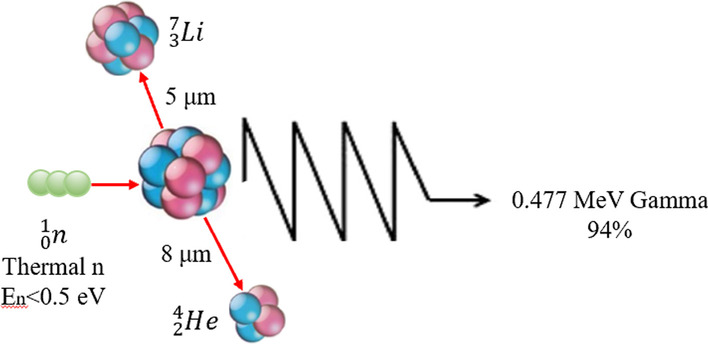
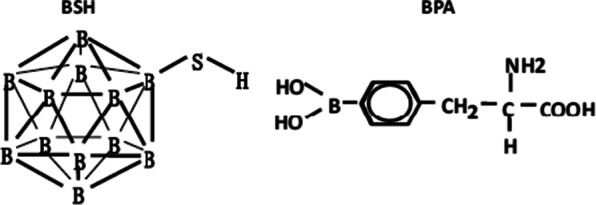
Boron neutron capture therapy (BNCT) was first proposed as early as 1936, and research on BNCT has progressed relatively slowly but steadily. BNCT is a potentially useful tool for cancer treatment that selectively damages cancer cells while sparing normal tissue. BNCT is based on the nuclear reaction that occurs when B capture low-energy thermal neutrons to yield high-linear energy transfer (LET) α particles and recoiling Li nuclei. A large number of B atoms have to be localized within the tumor cells for BNCT to be effective, and an adequate number of thermal neutrons need to be absorbed by the B atoms to generate lethal B (n, α)Li reactions. Effective boron neutron capture therapy cannot be achieved without appropriate boron carriers. Improvement in boron delivery and the development of the best dosing paradigms for both boronophenylalanine (BPA) and sodium borocaptate (BSH) are of major importance, yet these still have not been optimized. Here, we present a review of this treatment modality from the perspectives of radiation oncology, biology, and physics. This manuscript provides a brief introduction of the mechanism of cancer-cell-selective killing by BNCT, radiobiological factors, and progress in the development of boron carriers and neutron sources as well as the results of clinical study.
硼中子俘获治疗(BNCT)早在 1936 年就被首次提出,其研究进展相对缓慢但稳定。BNCT 是一种有潜力的癌症治疗工具,它可以选择性地损伤癌细胞,同时保护正常组织。BNCT 基于 B 捕获低能热中子以产生高线性转移能量(LET)α粒子和反冲 Li 核的核反应。为了使 BNCT 有效,必须将大量的 B 原子定位在肿瘤细胞内,并且必须有足够数量的热中子被 B 原子吸收以产生致命的 B(n,α)Li 反应。没有合适的硼载体,就无法实现有效的硼中子俘获治疗。硼的传递的改善以及硼苯丙氨酸(BPA)和硼替佐米(BSH)的最佳剂量方案的开发都非常重要,但这些仍未得到优化。在这里,我们从放射肿瘤学、生物学和物理学的角度对这种治疗方式进行了综述。本文简要介绍了 BNCT 选择性杀伤癌细胞的机制、放射生物学因素以及硼载体和中子源的发展进展以及临床研究结果。