Cesarini Gianmario, Antonelli Mario, Anulli Fabio, Bauce Matteo, Biagini Maria Enrica, Blanco-García Oscar R, Boscolo Manuela, Casaburo Fausto, Cavoto Gianluca, Ciarma Andrea, Collamati Francesco, Daout Cyril, Li Voti Roberto, Variola Alessandro
I.N.F.N. Sezione di Roma, Piazzale Aldo Moro 2, 00185 Rome, Italy.
Dipartimento di Scienze di Base ed Applicate per l'Ingegneria, Sapienza Università di Roma, Via Antonio Scarpa 16, 00161 Rome, Italy.
Int J Thermophys. 2021;42(12):163. doi: 10.1007/s10765-021-02913-x. Epub 2021 Sep 3.
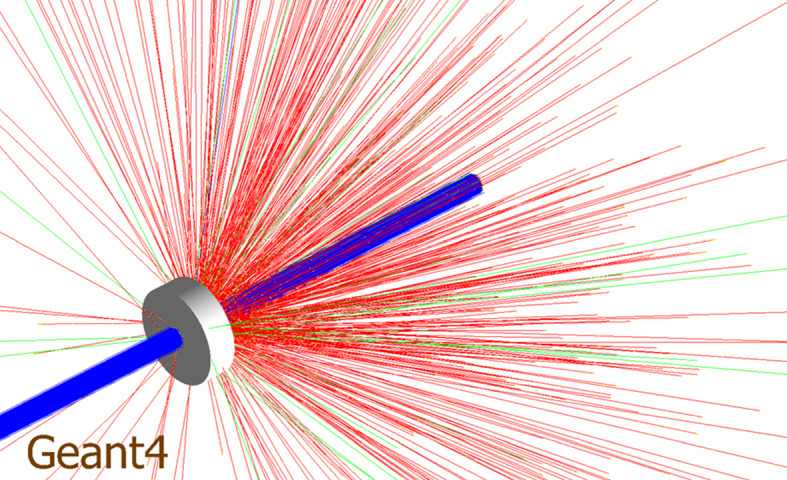
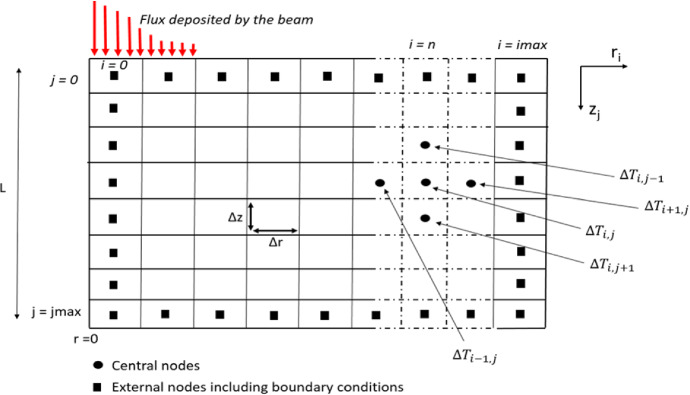
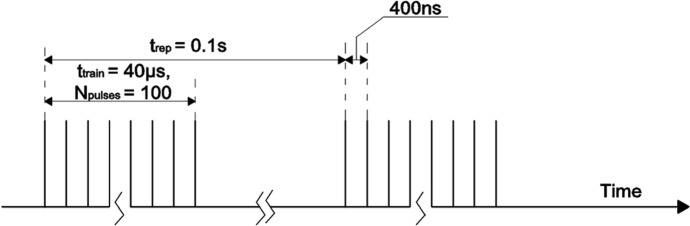
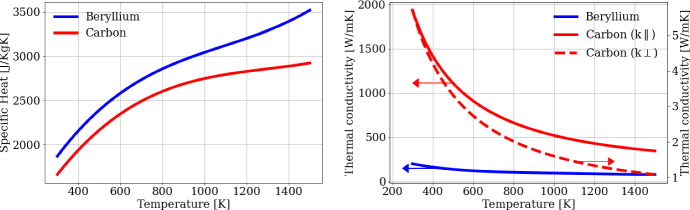
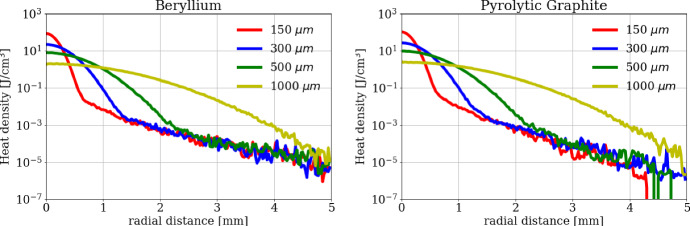
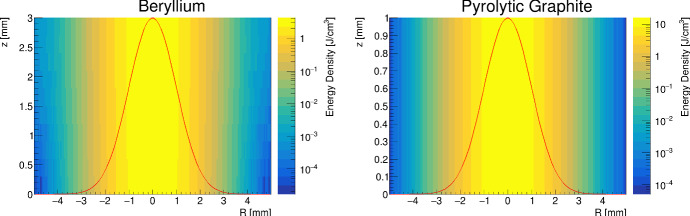
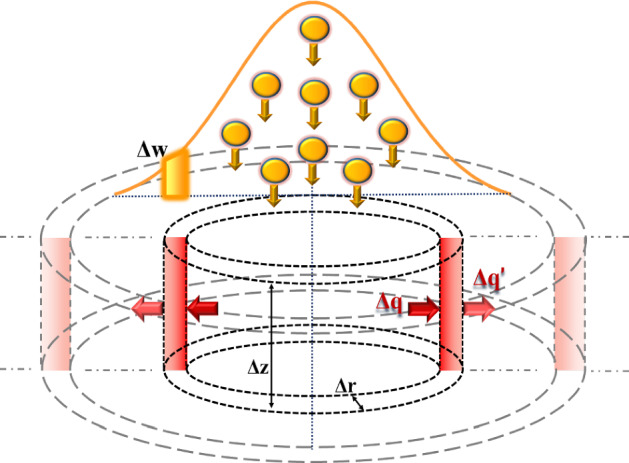
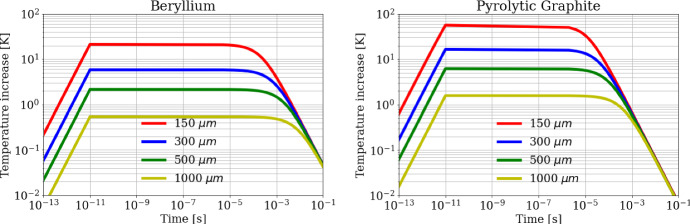
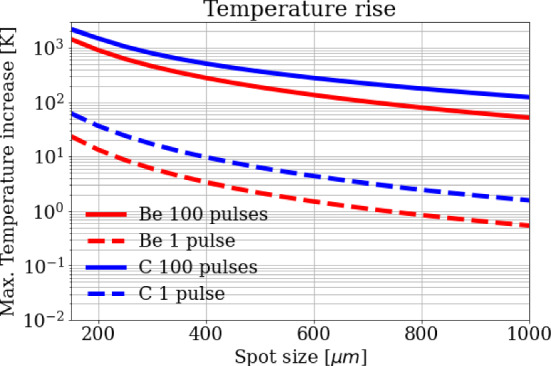
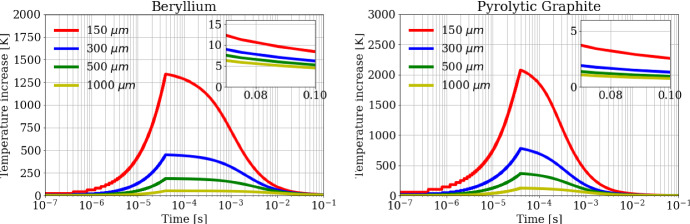
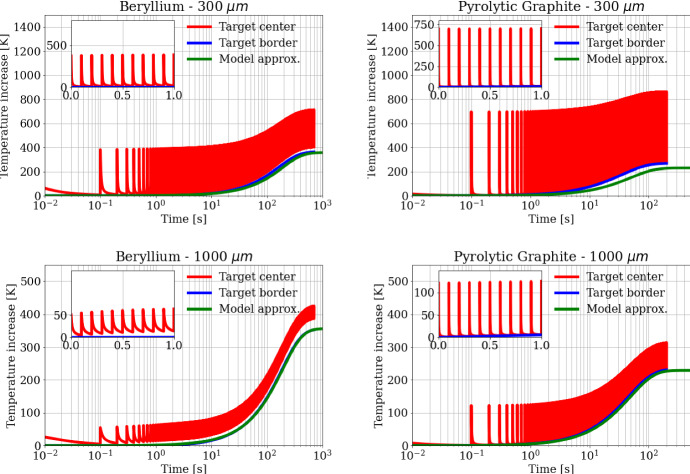
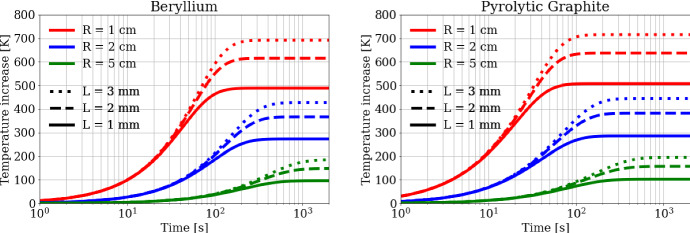
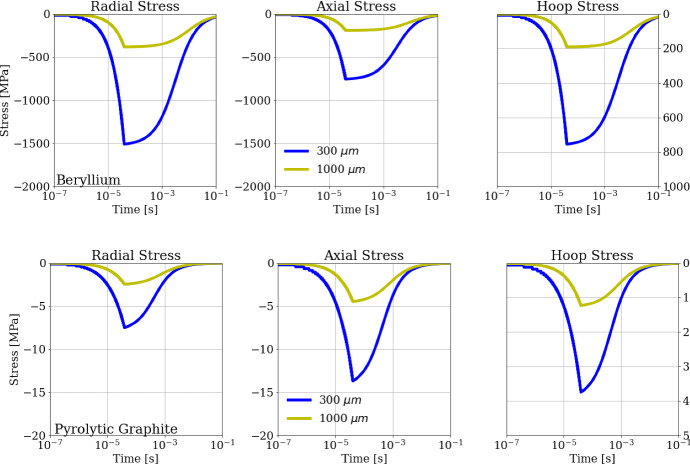
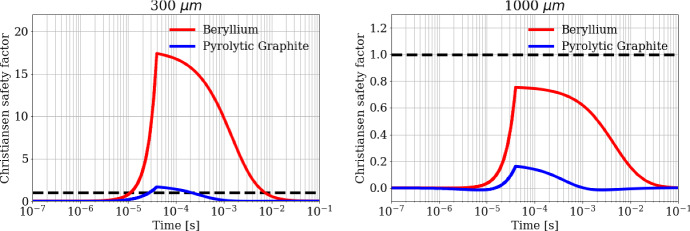
A future multi-TeV muon collider requires new ideas to tackle the problems of muon production, accumulation and acceleration. In the Low EMittance Muon Accelerator concept a 45 GeV positron beam, stored in an accumulation ring with high energy acceptance and low angular divergence, is extracted and driven to a target system in order to produce muon pairs near the kinematic threshold. However, this scheme requires an intensity of the impinging positron beam so high that the energy dissipation and the target maintenance are crucial aspects to be investigated. Both peak temperature rises and thermomechanical shocks are related to the beam spot size at the target for a given material: these aspects are setting a lower bound on the beam spot size itself. The purpose of this paper is to provide a fully theoretical approach to predict the temperature increase, the thermal gradients, and the induced thermomechanical stress on targets, generated by a sequence of 45 GeV positron bunches. A case study is here presented for Beryllium and Graphite targets. We first discuss the Monte Carlo simulations to evaluate the heat deposited on the targets after a single bunch of 3 × 10 positrons for different beam sizes. Then a theoretical model is developed to simulate the temperature increase of the targets subjected to very fast sequences of positron pulses, over different timescales, from ps regime to hundreds of seconds. Finally a simple approach is provided to estimate the induced thermomechanical stresses in the target, together with simple criteria to be fulfilled (i.e., Christensen safety factor) to prevent the crack formation mechanism.
未来的多太电子伏特μ子对撞机需要新的思路来解决μ子产生、积累和加速的问题。在低发射度μ子加速器概念中,将一束45 GeV的正电子束存储在一个具有高能量接受度和低角散度的积累环中,然后将其引出并驱动至一个靶系统,以便在运动学阈值附近产生μ子对。然而,该方案要求入射正电子束的强度极高,以至于能量耗散和靶的维护成为需要研究的关键方面。对于给定的材料,峰值温度升高和热机械冲击都与靶上的束斑尺寸有关:这些方面为束斑尺寸本身设定了下限。本文的目的是提供一种完全理论化的方法,以预测由一系列45 GeV正电子束团产生的靶上的温度升高、热梯度以及诱导的热机械应力。本文给出了铍靶和石墨靶的一个案例研究。我们首先讨论蒙特卡罗模拟,以评估在不同束斑尺寸下,一束3×10个正电子轰击后沉积在靶上的热量。然后建立一个理论模型,以模拟在从皮秒量级到数百秒的不同时间尺度上,靶在极快速的正电子脉冲序列作用下的温度升高。最后,提供了一种简单的方法来估计靶中诱导的热机械应力,以及为防止裂纹形成机制需要满足的简单标准(即克里斯滕森安全系数)。