De Rosa Stefania, Colantoni Elisabetta, Branchini Paolo, Orestano Domizia, Passeri Antonio, Bussetti Gianlorenzo, Centofante Lisa, Corradetti Stefano, Marsotto Martina, Battocchio Chiara, Riccucci Cristina, Tortora Luca
LASR3 Surface Analysis Laboratory Roma Tre, via della Vasca Navale 84, Rome, Italy.
INFN, Roma Tre, via della Vasca Navale 84, Rome, Italy.
Heliyon. 2024 Jun 8;10(12):e32718. doi: 10.1016/j.heliyon.2024.e32718. eCollection 2024 Jun 30.
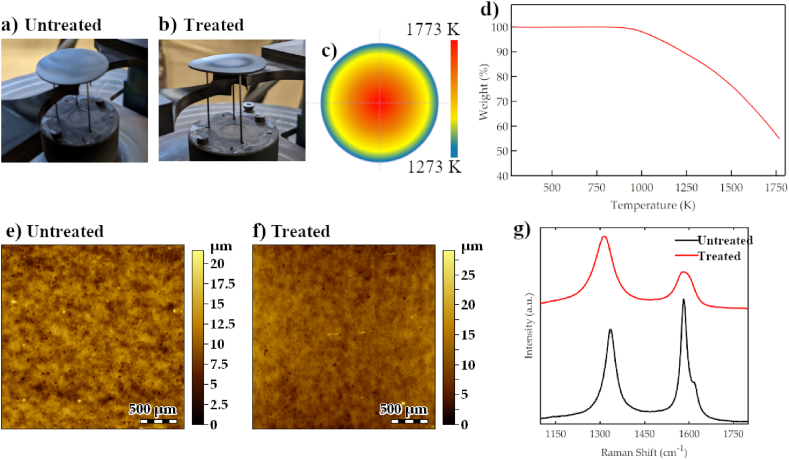
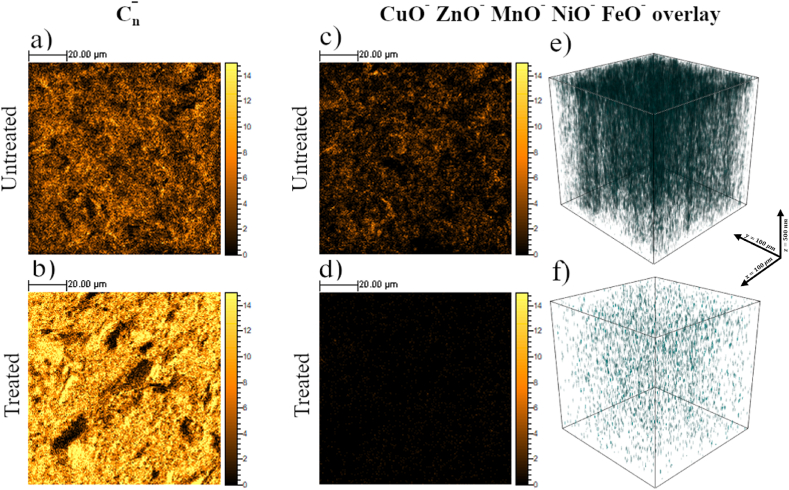
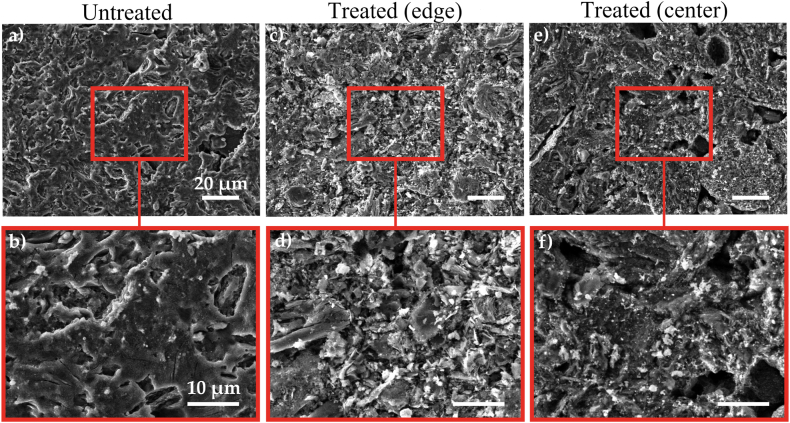
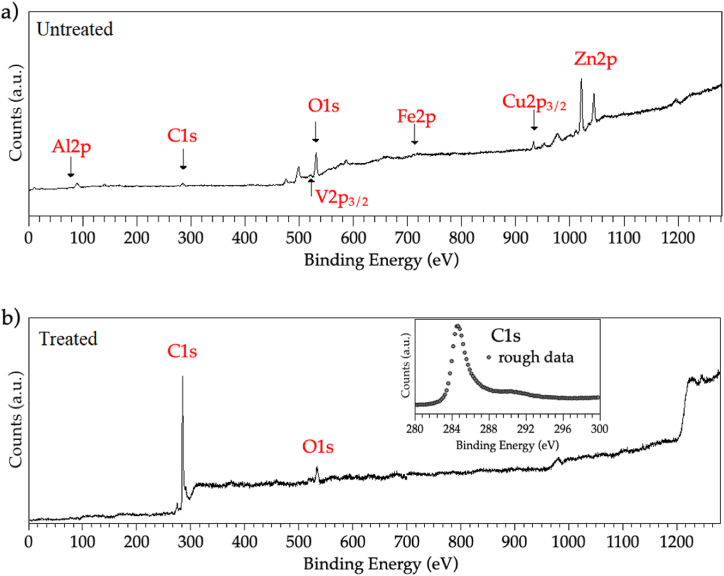
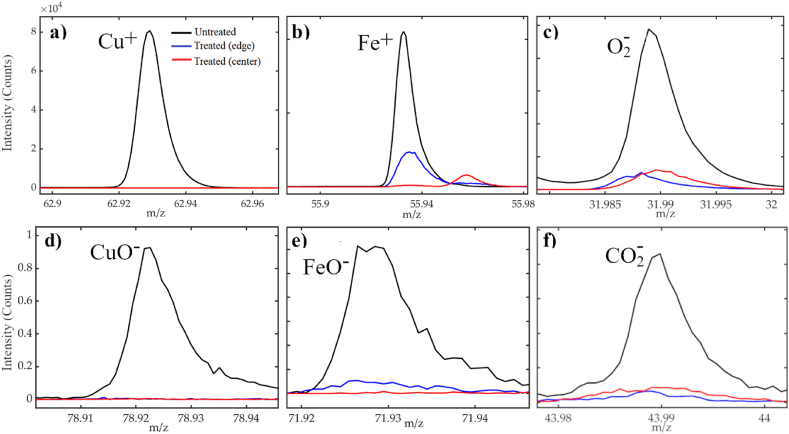
Nuclear-grade graphite is a high-efficiency material, widely used for vacuum applications in nuclear reactors and accelerators as targets facing particle beams. In these contexts, graphite is often exposed to extreme thermal stresses altering its physical and chemical properties. The thermal-induced release of volatile contaminants from targets and the damage of structural components are critical issues that can affect the safety and operation efficiency of beamline facilities. Here, we provide for the first time a detailed picture of the chemical and morphological changes occurring in a nuclear-grade graphite target, obtained through Electrical Discharge Machining (EDM), when exposed in vacuum to high temperatures. The radial temperature gradient induced by the impact of a pulsed energetic (MeV- GeV range) focused particle beams was reproduced by cyclically heating, in the 1300-1800 K temperature range, a disc-shaped graphite target in a vacuum setup. An accurate surface and in-depth chemical analysis of the graphite target was obtained thanks to the high sensitivity (ppm/ppb) of the Time-of-Flight Secondary Ion Mass Spectrometry (ToF-SIMS) technique. The chemical maps clearly show the presence of several metal oxides and impurities in the surface and subsurface regions of the untreated sample. Such contaminants were removed because of the thermal treatment in vacuum more or less efficiently, as demonstrated by Thermogravimetric analysis (TGA), X-ray Photoelectron Spectroscopy (XPS), and ToF-SIMS. However, Raman spectroscopy and SEM-EDS revealed that the high-temperature treatment induces a decrease in the crystallite size of the graphite as well as changes in the target surface porosity with the appearance of microvoids, leading the graphite target to be more prone to the breakage.
核级石墨是一种高效材料,广泛用于核反应堆和加速器的真空应用中,作为面向粒子束的靶材。在这些情况下,石墨经常会受到极端热应力的影响,从而改变其物理和化学性质。靶材中挥发性污染物的热致释放以及结构部件的损坏是可能影响束线设施安全性和运行效率的关键问题。在此,我们首次详细描绘了通过电火花加工(EDM)获得的核级石墨靶材在真空中高温暴露时发生的化学和形态变化。通过在真空装置中在1300 - 1800 K温度范围内循环加热圆盘形石墨靶材,再现了由脉冲高能(MeV - GeV范围)聚焦粒子束冲击引起的径向温度梯度。由于飞行时间二次离子质谱(ToF - SIMS)技术的高灵敏度(ppm/ppb),获得了对石墨靶材准确的表面和深度化学分析。化学图谱清楚地显示了未处理样品的表面和次表面区域中存在几种金属氧化物和杂质。热重分析(TGA)、X射线光电子能谱(XPS)和ToF - SIMS表明,由于真空热处理,这些污染物或多或少被有效去除。然而,拉曼光谱和扫描电子显微镜 - 能谱分析(SEM - EDS)表明,高温处理导致石墨微晶尺寸减小以及靶材表面孔隙率发生变化并出现微孔,使得石墨靶材更容易破碎。