Ludwig Alexandra Annemarie, Meuret Sylvia, Battmer Rolf-Dieter, Schönwiesner Marc, Fuchs Michael, Ernst Arne
Section of Phoniatrics and Audiology, Department of Otorhinolaryngology, University Hospital of Leipzig, Leipzig, Germany.
Faculty of Life Sciences, University of Leipzig, Leipzig, Germany.
Front Psychol. 2021 Oct 21;12:753339. doi: 10.3389/fpsyg.2021.753339. eCollection 2021.
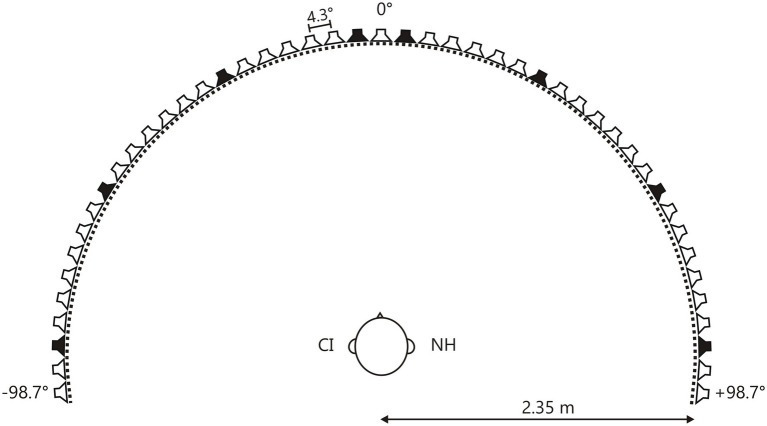
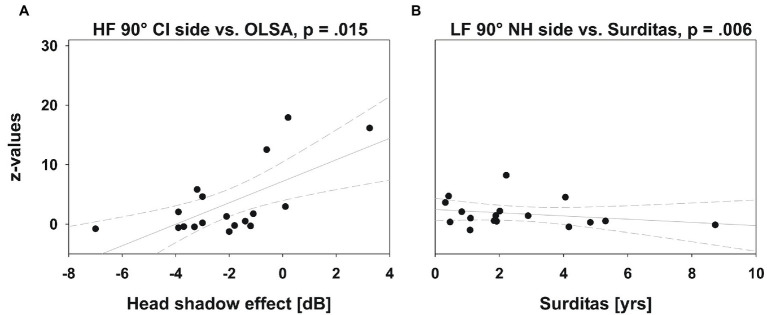
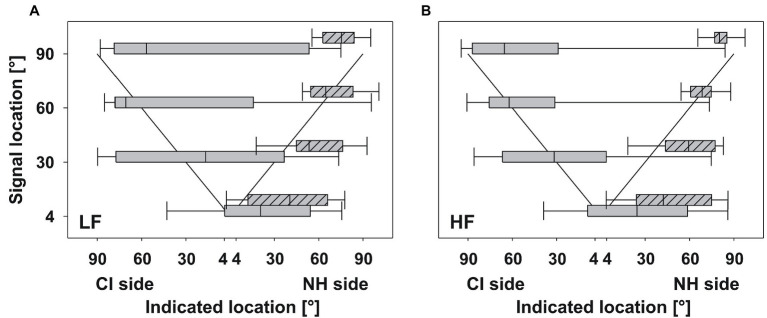
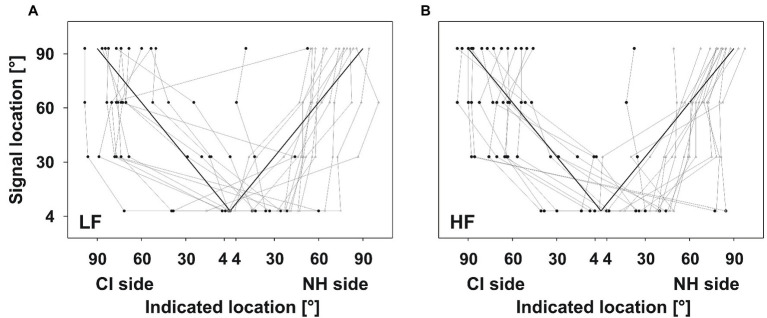
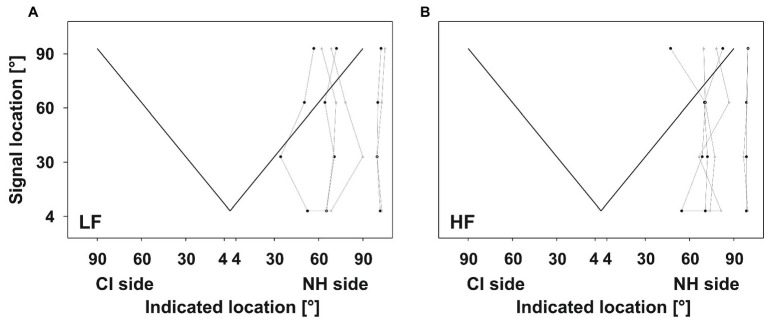
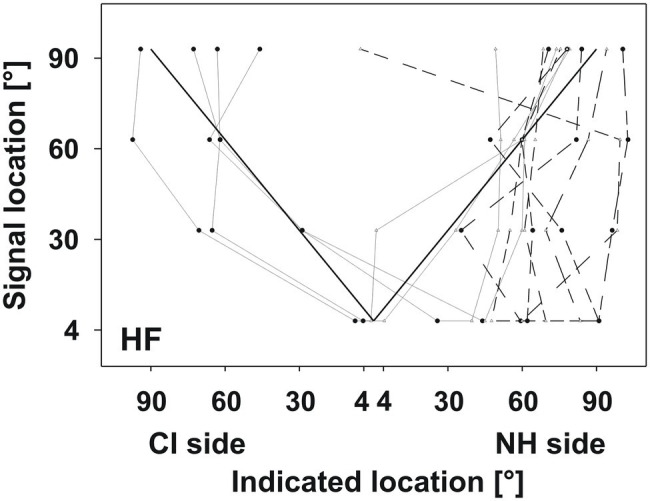
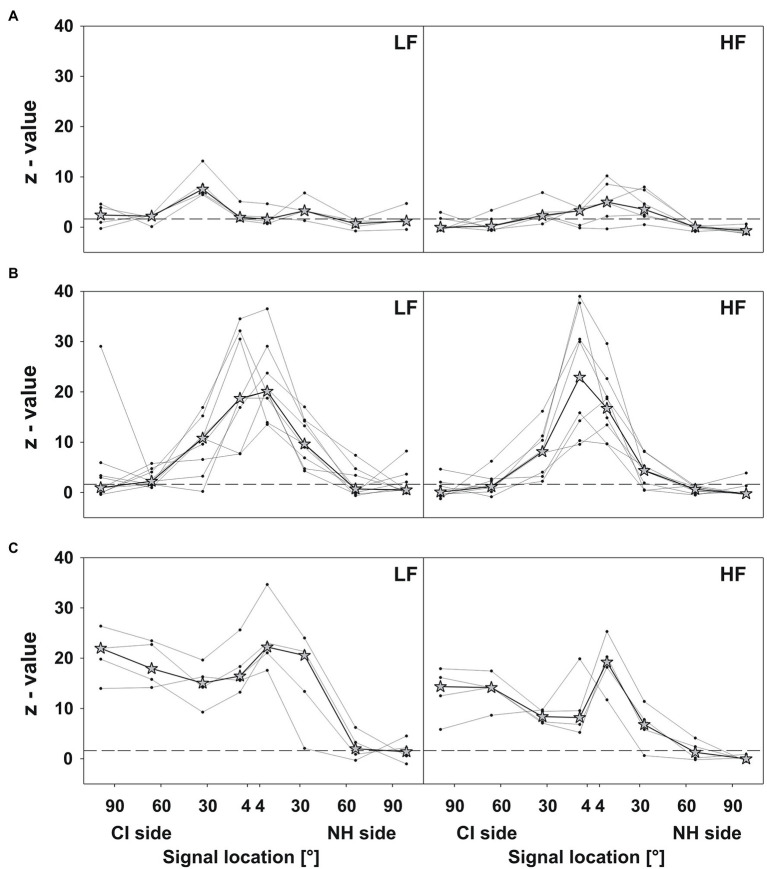
Spatial hearing is crucial in real life but deteriorates in participants with severe sensorineural hearing loss or single-sided deafness. This ability can potentially be improved with a unilateral cochlear implant (CI). The present study investigated measures of sound localization in participants with single-sided deafness provided with a CI. Sound localization was measured separately at eight loudspeaker positions (4°, 30°, 60°, and 90°) on the CI side and on the normal-hearing side. Low- and high-frequency noise bursts were used in the tests to investigate possible differences in the processing of interaural time and level differences. Data were compared to normal-hearing adults aged between 20 and 83. In addition, the benefit of the CI in speech understanding in noise was compared to the localization ability. Fifteen out of 18 participants were able to localize signals on the CI side and on the normal-hearing side, although performance was highly variable across participants. Three participants always pointed to the normal-hearing side, irrespective of the location of the signal. The comparison with control data showed that participants had particular difficulties localizing sounds at frontal locations and on the CI side. In contrast to most previous results, participants were able to localize low-frequency signals, although they localized high-frequency signals more accurately. Speech understanding in noise was better with the CI compared to testing without CI, but only at a position where the CI also improved sound localization. Our data suggest that a CI can, to a large extent, restore localization in participants with single-sided deafness. Difficulties may remain at frontal locations and on the CI side. However, speech understanding in noise improves when wearing the CI. The treatment with a CI in these participants might provide real-world benefits, such as improved orientation in traffic and speech understanding in difficult listening situations.
空间听觉在现实生活中至关重要,但在重度感音神经性听力损失或单侧耳聋的参与者中会有所退化。这种能力有可能通过单侧人工耳蜗植入(CI)得到改善。本研究调查了接受CI的单侧耳聋参与者的声音定位测量情况。在CI侧和正常听力侧的八个扬声器位置(4°、30°、60°和90°)分别测量声音定位。测试中使用了低频和高频噪声脉冲,以研究双耳时间和电平差异处理方面可能存在的差异。将数据与年龄在20至83岁之间的正常听力成年人进行比较。此外,还将CI在噪声中言语理解方面的益处与定位能力进行了比较。18名参与者中有15名能够在CI侧和正常听力侧定位信号,尽管不同参与者的表现差异很大。三名参与者总是指向正常听力侧,而不管信号的位置如何。与对照数据的比较表明,参与者在额叶位置和CI侧定位声音时存在特别困难。与大多数先前的结果不同,参与者能够定位低频信号,尽管他们对高频信号的定位更准确。与不使用CI进行测试相比,使用CI时在噪声中的言语理解更好,但仅在CI也改善声音定位的位置。我们的数据表明,CI在很大程度上可以恢复单侧耳聋参与者的定位能力。在额叶位置和CI侧可能仍然存在困难。然而,佩戴CI时在噪声中的言语理解会有所改善。对这些参与者进行CI治疗可能会带来现实世界的益处,例如改善在交通中的定向能力以及在困难听力情况下的言语理解能力。