Department of Biotechnology, Yonsei University College of Life Science and Biotechnology, Seoul, South Korea.
Department of Microbiology and Immunology, College of Physicians and Surgeons, Columbia University, New York, NY, United States.
Front Immunol. 2021 Oct 21;12:741938. doi: 10.3389/fimmu.2021.741938. eCollection 2021.
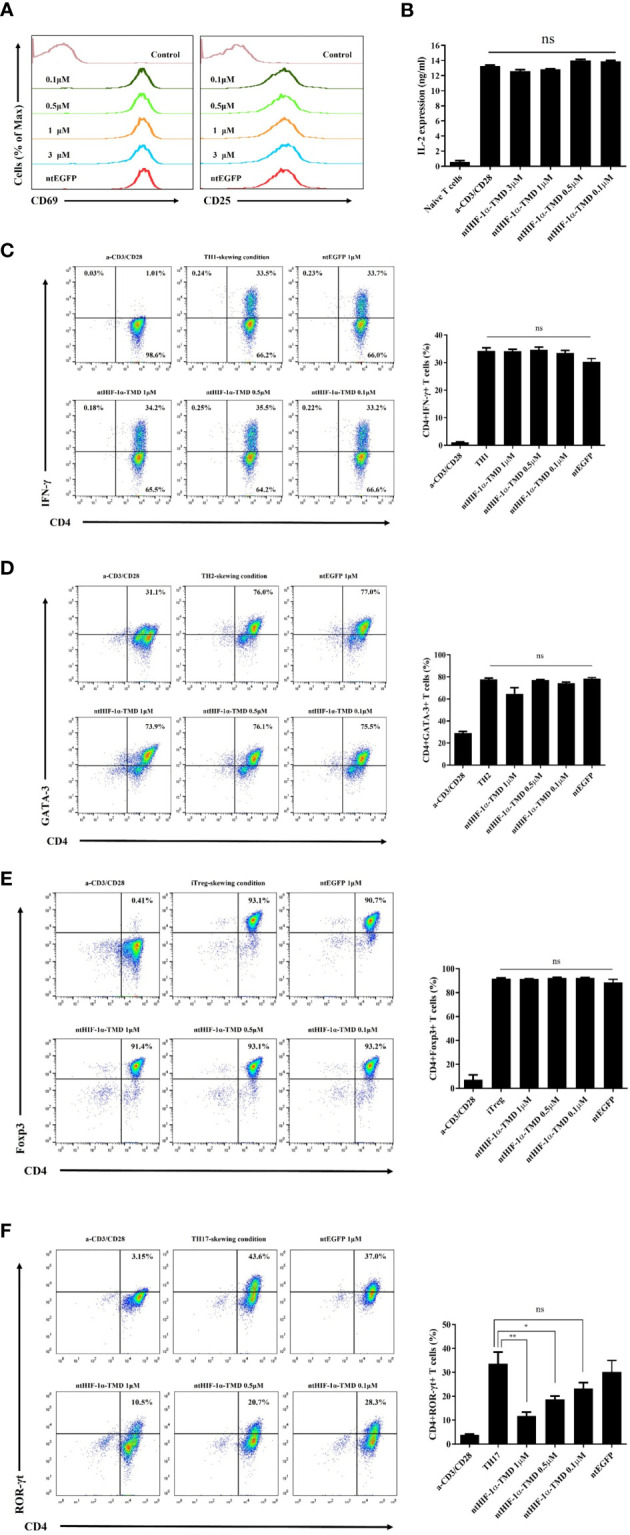
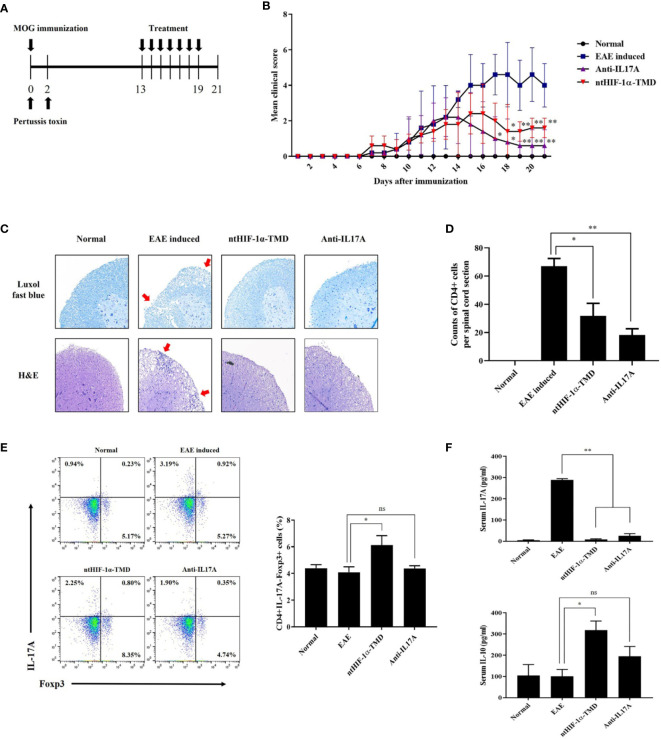
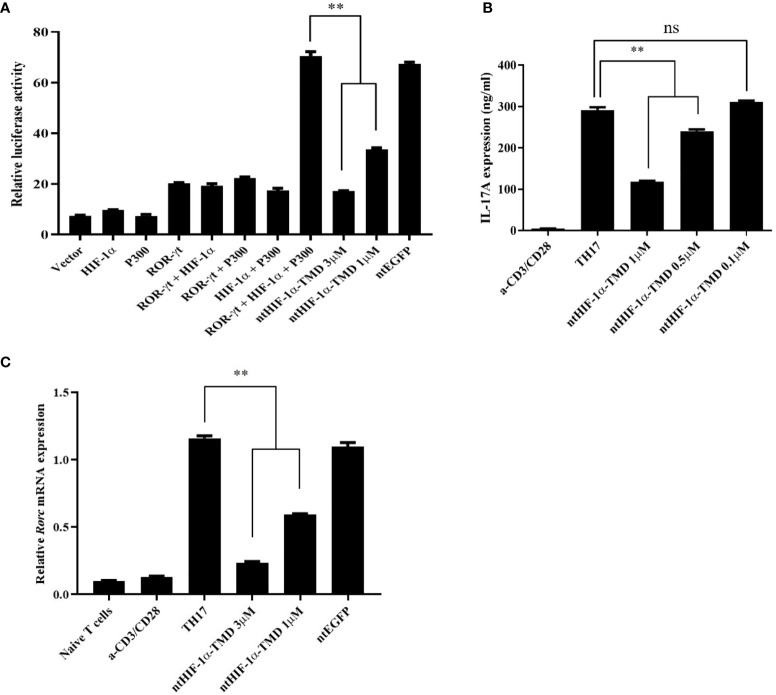
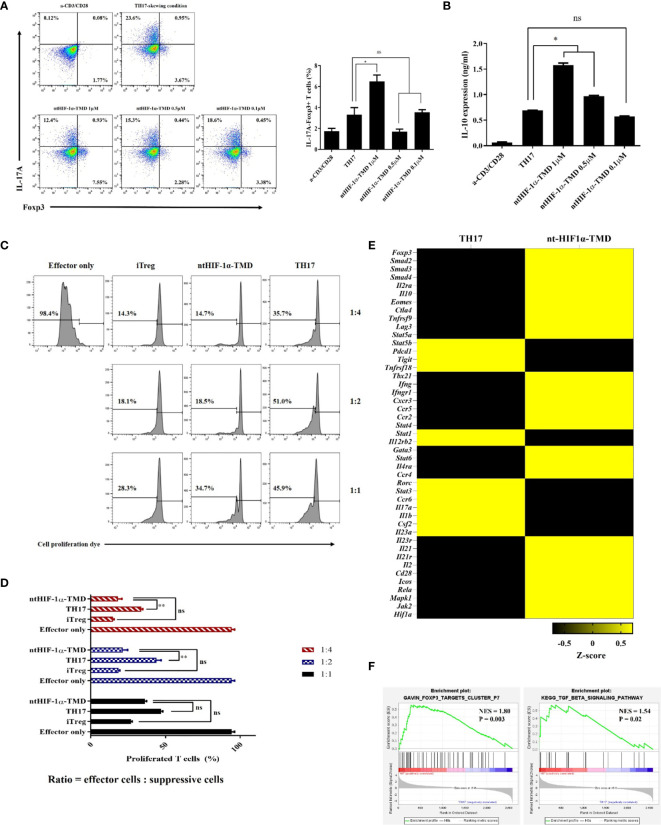
T helper 17 (TH17) cells are involved in several autoimmune diseases such as multiple sclerosis (MS) and rheumatoid arthritis (RA). In addition to retinoic acid receptor-related orphan nuclear receptor gamma t (ROR-γt), hypoxia-inducible factor-1α (HIF-1α) is essential for the differentiation and inflammatory function of TH17 cells. To investigate the roles of HIF-1α in the functional regulation of TH17 cells under the normal physiological condition without genetic modification, the nucleus-transducible form of transcription modulation domain (TMD) of HIF-1α (ntHIF-1α-TMD) was generated by conjugating HIF-1α-TMD to Hph-1 protein transduction domain (PTD). ntHIF-1α-TMD was effectively delivered into the nucleus of T cells without cellular cytotoxicity. ntHIF-1α-TMD significantly blocked the differentiation of naïve T cells into TH17 cells in a dose-dependent manner IL-17A and ROR-γt expression inhibition. However, T-cell activation events such as induction of CD69, CD25, and IL-2 and the differentiation potential of naïve T cells into TH1, TH2, or Treg cells were not affected by ntHIF-1α-TMD. Interestingly, TH17 cells differentiated from naïve T cells in the presence of ntHIF-1α-TMD showed a substantial level of suppressive activity toward the activated T cells, and the increase of Foxp3 and IL-10 expression was detected in these TH17 cells. When mRNA expression pattern was compared between TH17 cells and ntHIF-1α-TMD-treated TH17 cells, the expression of the genes involved in the differentiation and functions of TH17 cells was downregulated, and that of the genes necessary for immune-suppressive functions of Treg cells was upregulated. When the mice with experimental autoimmune encephalomyelitis (EAE) were treated with ntHIF-1α-TMD with anti-IL-17A mAb as a positive control, the therapeutic efficacy of ntHIF-1α-TMD was comparable with that of anti-IL-17A mAb, and ntHIF-1α-TMD-mediated therapeutic effect was contributed by the functional conversion of TH17 cells into immune-suppressive T cells. The results in this study demonstrate that ntHIF-1α-TMD can be a new therapeutic reagent for the treatment of various autoimmune diseases in which TH17 cells are dominant and pathogenic T cells.
辅助性 T 细胞 17(TH17)细胞参与多种自身免疫性疾病,如多发性硬化症(MS)和类风湿性关节炎(RA)。除了维甲酸受体相关孤儿核受体γ t(ROR-γt)之外,缺氧诱导因子-1α(HIF-1α)对于 TH17 细胞的分化和炎症功能也是必需的。为了在没有遗传修饰的正常生理条件下研究 HIF-1α 在 TH17 细胞功能调节中的作用,通过将 HIF-1α-TMD 与 Hph-1 蛋白转导结构域(PTD)缀合生成细胞核可转导的转录调节结构域(TMD)形式的 HIF-1α(ntHIF-1α-TMD)。ntHIF-1α-TMD 可有效地递送入 T 细胞的细胞核而没有细胞毒性。ntHIF-1α-TMD 以剂量依赖性方式显著阻断初始 T 细胞向 TH17 细胞的分化,抑制 IL-17A 和 ROR-γt 的表达。然而,ntHIF-1α-TMD 不影响 T 细胞活化事件,如 CD69、CD25 和 IL-2 的诱导,以及初始 T 细胞向 TH1、TH2 或 Treg 细胞的分化潜能。有趣的是,在存在 ntHIF-1α-TMD 的情况下从初始 T 细胞分化而来的 TH17 细胞对活化的 T 细胞具有显著的抑制活性,并且在这些 TH17 细胞中检测到 Foxp3 和 IL-10 表达增加。当比较 TH17 细胞和用 ntHIF-1α-TMD 处理的 TH17 细胞之间的 mRNA 表达模式时,参与 TH17 细胞分化和功能的基因的表达下调,而参与 Treg 细胞免疫抑制功能的基因的表达上调。当用 ntHIF-1α-TMD 与抗 IL-17A mAb 作为阳性对照治疗实验性自身免疫性脑脊髓炎(EAE)小鼠时,ntHIF-1α-TMD 的治疗效果与抗 IL-17A mAb 相当,ntHIF-1α-TMD 介导的治疗效果是由 TH17 细胞向免疫抑制性 T 细胞的功能转化贡献的。本研究结果表明,ntHIF-1α-TMD 可以成为治疗以 TH17 细胞为主导和致病性 T 细胞的各种自身免疫性疾病的新型治疗试剂。