Zhuang Zeyan, Dai Jun, Yu Maoxing, Li Jianqing, Shen Pingchuan, Hu Rong, Lou Xiaoding, Zhao Zujin, Tang Ben Zhong
State Key Laboratory of Luminescent Materials and Devices, Guangdong Provincial Key Laboratory of Luminescence from Molecular Aggregates, South China University of Technology Guangzhou 510640 China
Department of Obstetrics and Gynecology, Tongji Hospital, Tongji Medical College, Huazhong University of Science and Technology Wuhan 430074 China.
Chem Sci. 2020 Mar 2;11(13):3405-3417. doi: 10.1039/d0sc00785d. eCollection 2020 Apr 7.
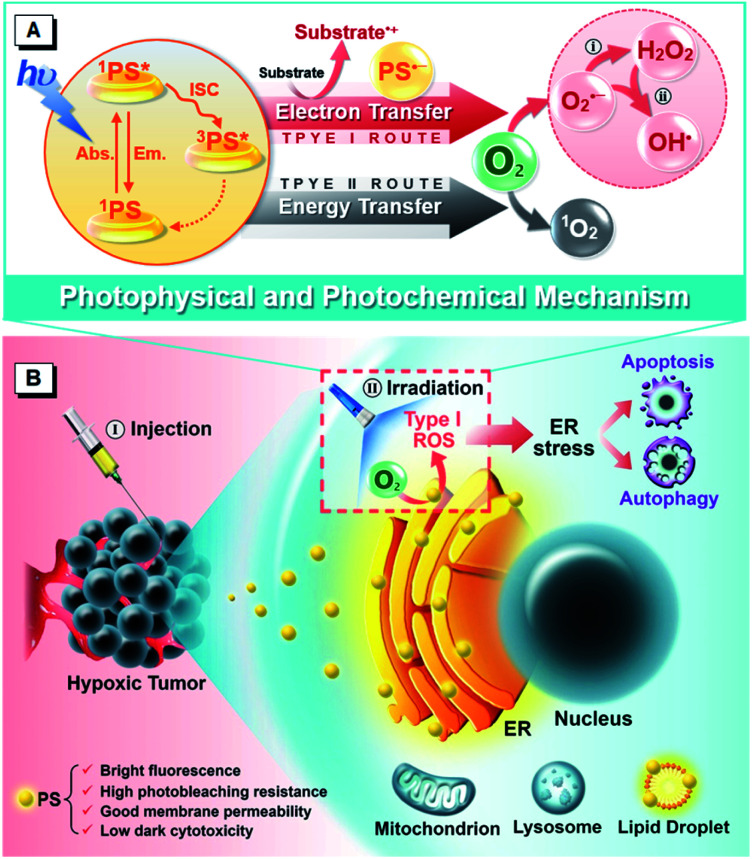
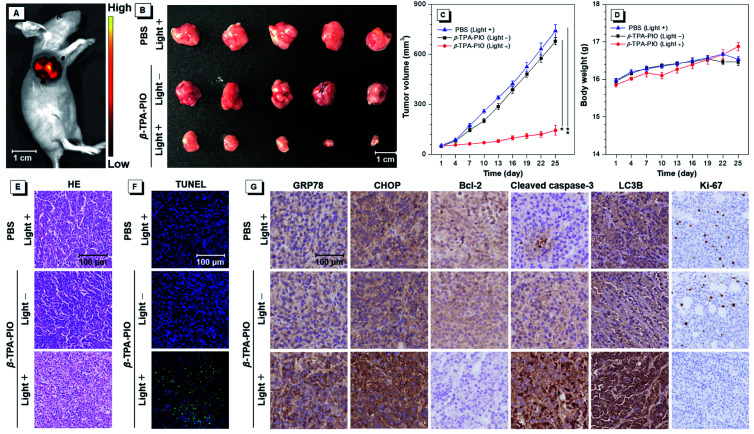
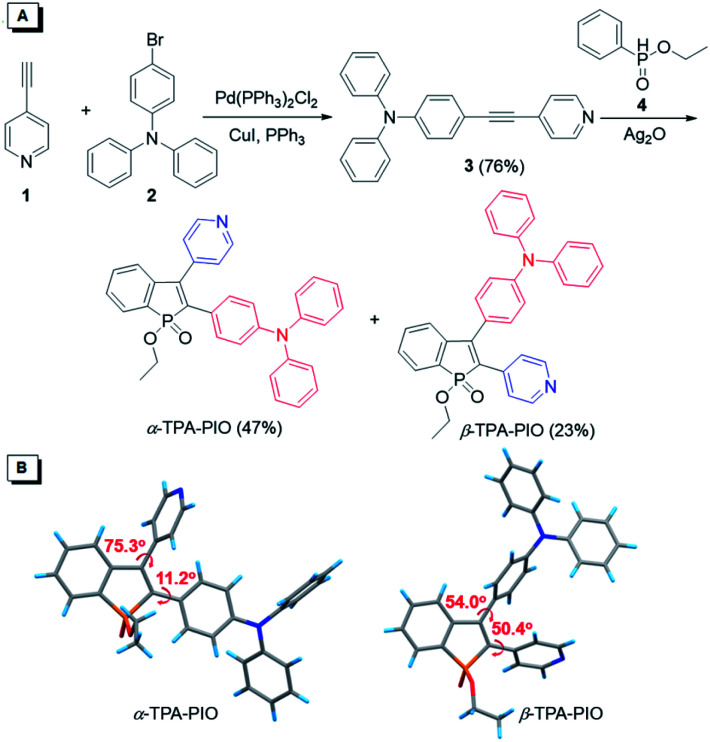
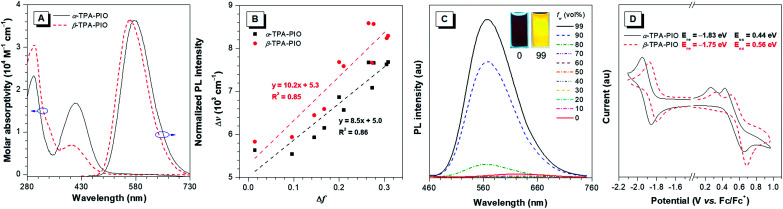
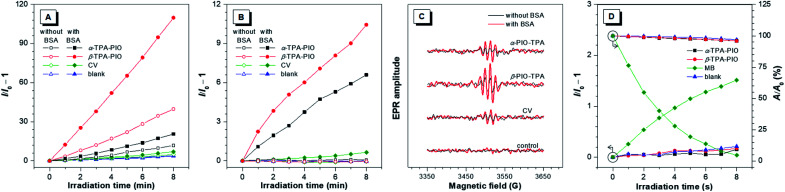
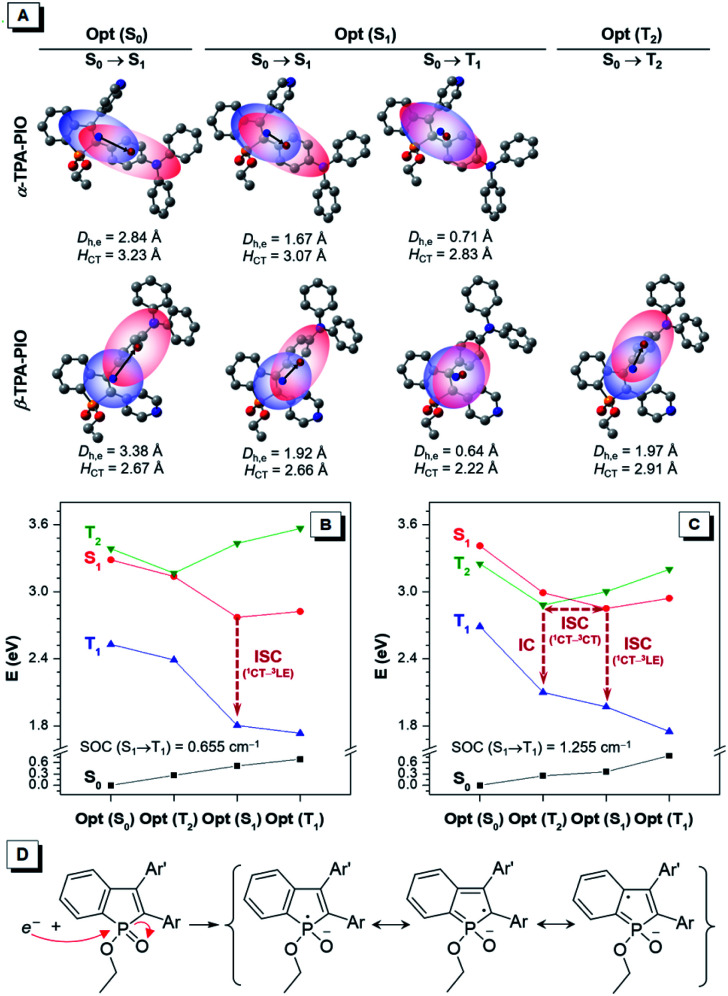
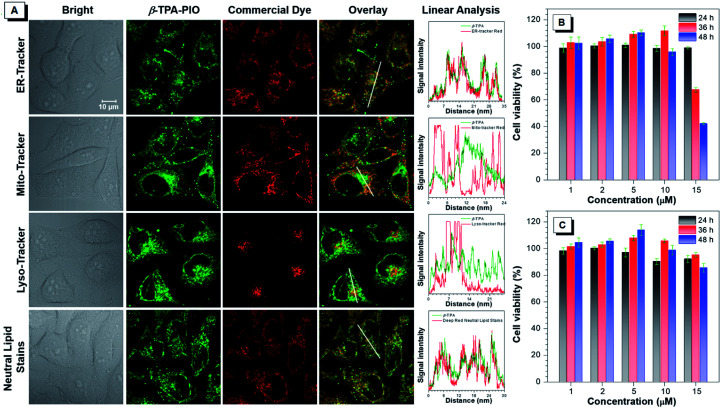
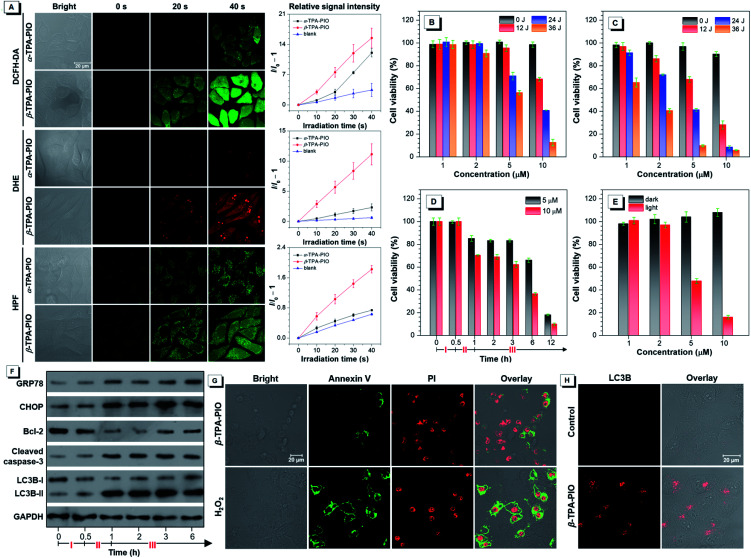
Photodynamic therapy (PDT) is considered a pioneering and effective modality for cancer treatment, but it is still facing challenges of hypoxic tumors. Recently, Type I PDT, as an effective strategy to address this issue, has drawn considerable attention. Few reports are available on the capability for Type I reactive oxygen species (ROS) generation of purely organic photosensitizers (PSs). Herein, we report two new Type I PSs, -TPA-PIO and -TPA-PIO, from phosphindole oxide-based isomers with efficient Type I ROS generation abilities. A detailed study on photophysical and photochemical mechanisms is conducted to shed light on the molecular design of PSs based on the Type I mechanism. The results demonstrate that these two PSs can selectively accumulate in a neutral lipid region, particularly in the endoplasmic reticulum (ER), of cells and efficiently induce ER-stress mediated apoptosis and autophagy in PDT. models indicate that -TPA-PIO successfully achieves remarkable tumor ablation. The ROS-based ER stress triggered by -TPA-PIO-mediated PDT has high potential as a precursor of the immunostimulatory effect for immunotherapy. This work presents a comprehensive protocol for Type I-based purely organic PSs and highlights the significance of considering the working mechanism in the design of PSs for the optimization of cancer treatment protocols.
光动力疗法(PDT)被认为是一种开创性的有效癌症治疗方式,但它仍面临着缺氧肿瘤的挑战。最近,I型光动力疗法作为解决这一问题的有效策略,受到了广泛关注。关于纯有机光敏剂(PSs)产生I型活性氧(ROS)能力的报道很少。在此,我们报道了两种新型I型PSs,-TPA-PIO和-TPA-PIO,它们是基于氧化膦吲哚的异构体,具有高效的I型ROS生成能力。我们对光物理和光化学机制进行了详细研究,以阐明基于I型机制的PSs分子设计。结果表明,这两种PSs可以选择性地积聚在细胞的中性脂质区域,特别是内质网(ER)中,并在光动力疗法中有效地诱导内质网应激介导的凋亡和自噬。模型表明,-TPA-PIO成功实现了显著的肿瘤消融。-TPA-PIO介导的光动力疗法引发的基于ROS的内质网应激作为免疫疗法免疫刺激效应的前体具有很大潜力。这项工作为基于I型的纯有机PSs提供了一个全面的方案,并强调了在设计PSs时考虑作用机制对优化癌症治疗方案的重要性。