Ventura-Carmenate Yendry, Alkaabi Fatima Mohammed, Castillo-Aleman Yandy Marx, Villegas-Valverde Carlos Agustin, Ahmed Yasmine Maher, Sanna Pierdanilo, Almarzooqi Ayesha Abdulla, Abdelrazik Abeer, Torres-Zambrano Gina Marcela, Wade-Mateo Maura, Quesada-Saliba David, Abdel Hadi Loubna, Bencomo-Hernandez Antonio Alfonso, Rivero-Jimenez Rene Antonio
Abu Dhabi Stem Cells Center, Al Misahah Street, Villa No. 25, Rowdhat, Zone-1, POB 4600, Abu Dhabi City, United Arab Emirates.
Sheikh Khalifa Medical City Hospital, POB 51900, Abu Dhabi City, United Arab Emirates.
Transl Med Commun. 2021;6(1):25. doi: 10.1186/s41231-021-00101-5. Epub 2021 Nov 3.
The novel SARS-CoV-2 has caused the coronavirus disease 2019 (COVID-19) pandemic. Currently, with insufficient worldwide vaccination rates, identifying treatment solutions to reduce the impact of the virus is urgently needed.
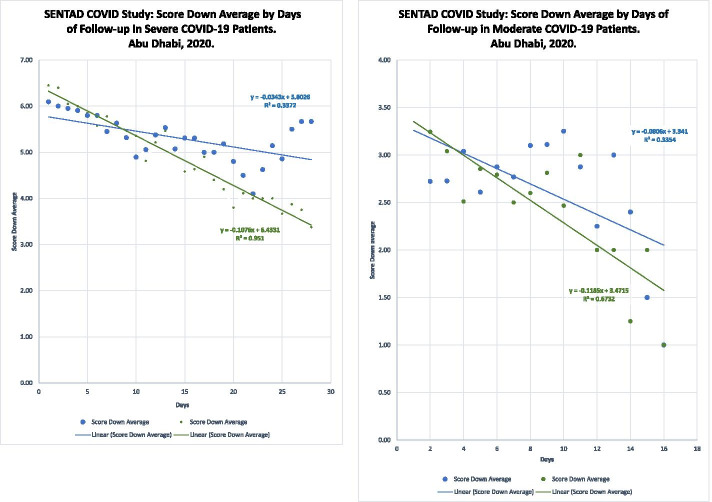
An adaptive, multicentric, open-label, and randomized controlled phase I/II clinical trial entitled the "SENTAD-COVID Study" was conducted by the under exceptional conditional approval by the Emirates Institutional Review Board (IRB) for COVID-19 Research Committee from April 4th to July 31st, 2020, using an autologous peripheral blood non-hematopoietic enriched stem cell cocktail (PB-NHESC-C) administered by compressor (jet) nebulization as a complement to standard care therapy. The primary endpoints include safety and efficacy assessments, adverse events, the mortality rate within 28 days, and the time to clinical improvement as measured by a 2-point reduction on a seven-category ordinal scale or discharge from the hospital whichever occurred first.
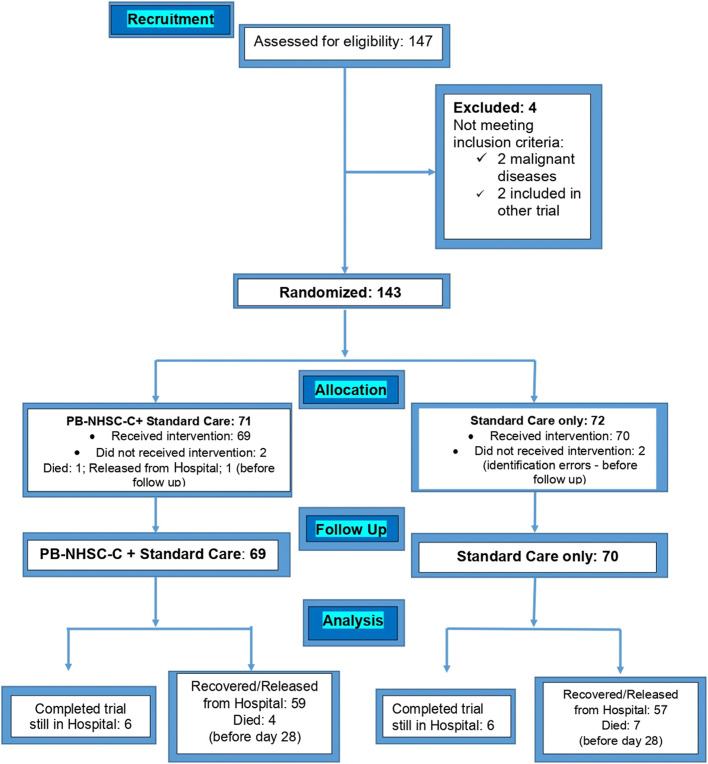
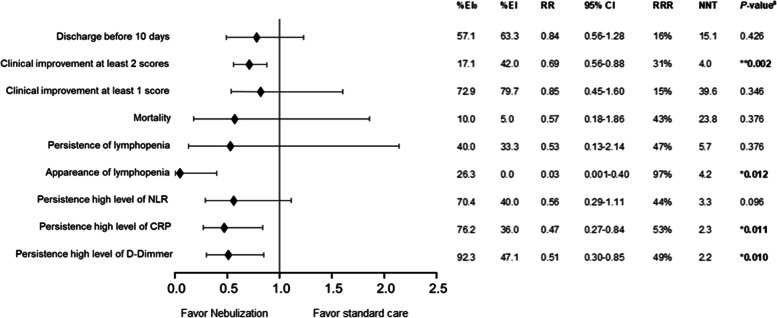
The study included a total of 139 randomized COVID-19 patients, with 69 in the experimental group and 70 in the control group (standard care). Overall survival was 94.20% for the cocktail-treated group vs. 90.27% for the control group. Adverse events were reported in 50 (72.46%) patients receiving PB-NHESC-C and 51 (72.85%) in the control group ( = 0.9590), with signs and symptoms commonly found in COVID-19. After the first 9 days of the intervention, 67.3% of cocktail-treated patients recovered and were released from hospitals compared to 53.1% (RR = 0.84; 95% CI, 0.56-1.28) in the control group. Improvement, i.e., at least a 2-point reduction in the severity scale, was more frequently observed in cocktail-treated patients (42.0%) than in controls (17.0%) (RR = 0.69; 95% CI, 0.56-0.88).
Cocktail treatment improved clinical outcomes without increasing adverse events. Thus, the nebulization of PB-NHESC-C was safe and effective for treatment in most of these patients.
ClinicalTrials.gov. NCT04473170. It was retrospectively registered on July 16th, 2020.
新型严重急性呼吸综合征冠状病毒2(SARS-CoV-2)引发了2019冠状病毒病(COVID-19)大流行。目前,由于全球疫苗接种率不足,迫切需要找到治疗方案以减轻该病毒的影响。
一项名为“SENTAD-COVID研究”的适应性、多中心、开放标签随机对照I/II期临床试验,于2020年4月4日至7月31日在阿联酋机构审查委员会(IRB)的COVID-19研究委员会的特殊条件批准下进行,使用通过压缩机(喷射)雾化给药的自体外周血非造血富集干细胞鸡尾酒(PB-NHESC-C)作为标准护理疗法的补充。主要终点包括安全性和有效性评估、不良事件、28天内的死亡率以及通过七分类有序量表降低2分或出院(以先发生者为准)来衡量的临床改善时间。
该研究共纳入139例随机分组的COVID-19患者,实验组69例,对照组(标准护理)70例。鸡尾酒治疗组的总生存率为94.20%,而对照组为90.27%。接受PB-NHESC-C治疗的50例(72.46%)患者和对照组的51例(72.85%)患者报告了不良事件(P = 0.9590),这些不良事件在COVID-19中较为常见。干预的前9天后,鸡尾酒治疗组67.3%的患者康复出院,而对照组为53.1%(相对危险度RR = 0.84;95%置信区间CI,0.56 - 1.28)。与对照组(17.0%)相比,鸡尾酒治疗组患者(42.0%)更频繁地出现病情改善,即严重程度量表至少降低2分(RR = 0.69;95% CI,0.56 - 0.88)。
鸡尾酒疗法改善了临床结局且未增加不良事件。因此,PB-NHESC-C雾化对大多数此类患者的治疗是安全有效的。
ClinicalTrials.gov。NCT04473170。于2020年7月16日进行回顾性注册。