Department of Critical Care Medicine, The First Medical Centre, Chinese People's Liberation Army General Hospital, 28 Fu-Xing Road, Beijing, 100853, People's Republic of China.
Medical School of Chinese PLA, Beijing, People's Republic of China.
Crit Care. 2020 Nov 16;24(1):647. doi: 10.1186/s13054-020-03374-8.
Coronavirus disease 2019 (COVID-19), a highly infectious disease, has been rapidly spreading all over the world and remains a great threat to global public health. Patients diagnosed with severe or critical cases have a poor prognosis. Hence, it is crucial for us to identify potentially severe or critical cases early and give timely treatments for targeted patients. In the clinical practice of treating patients with COVID-19, we have observed that the neutrophil-to-lymphocyte ratio (NLR) of severe patients is higher than that in mild patients. We performed this systematic review and meta-analysis to evaluate the predictive values of NLR on disease severity and mortality in patients with COVID-19.
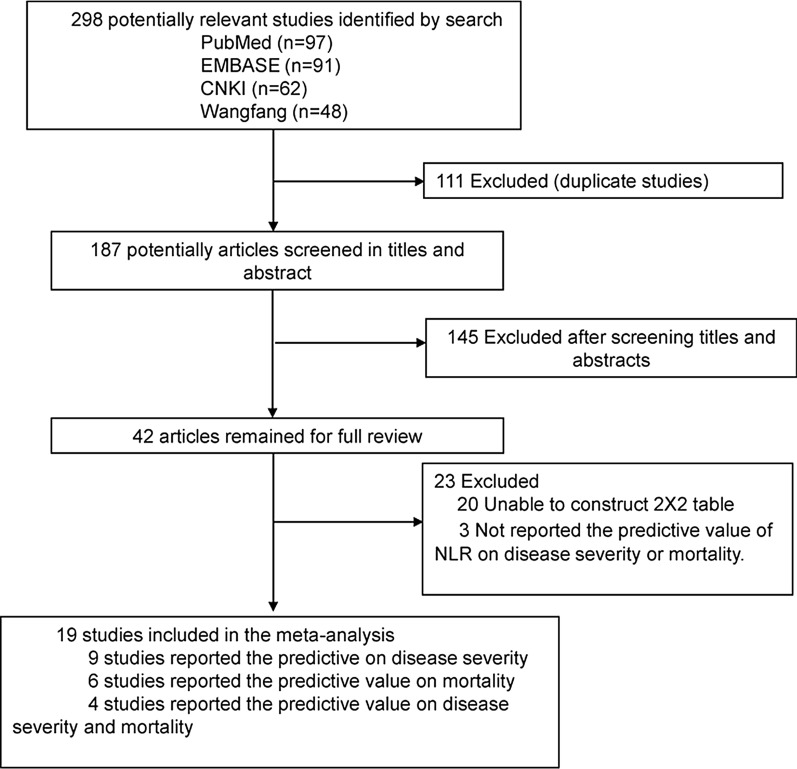
We searched PubMed, EMBASE, China National Knowledge Infrastructure (CNKI) and Wanfang databases to identify eligible studies (up to August 11, 2020). Two authors independently screened studies and extracted data. The methodological quality of the included studies was assessed by Quality Assessment of Diagnostic Accuracy Studies 2 (QUADAS-2).
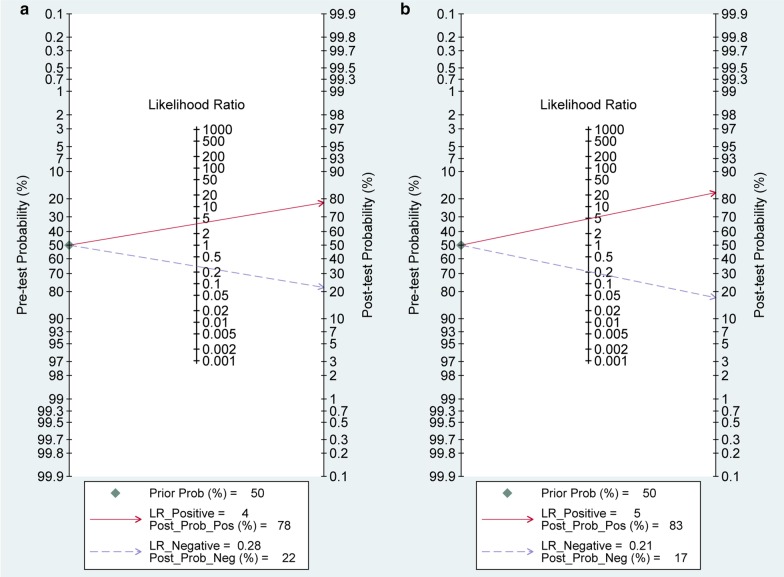
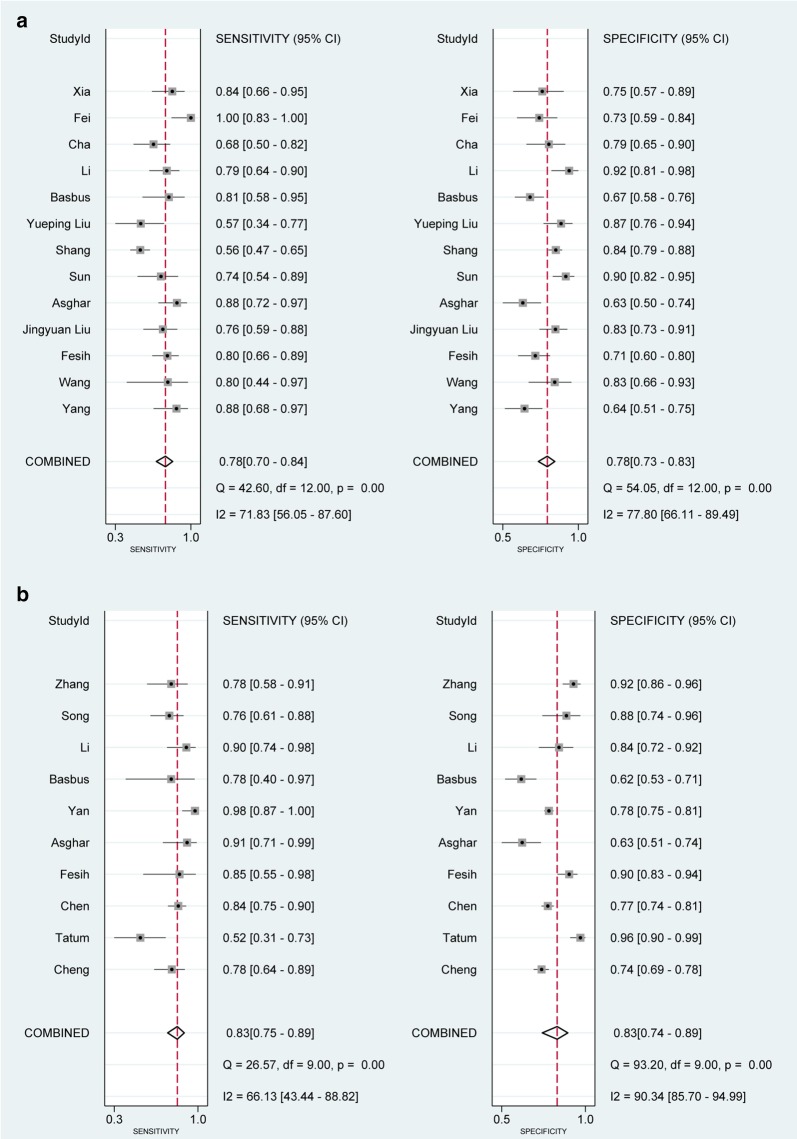
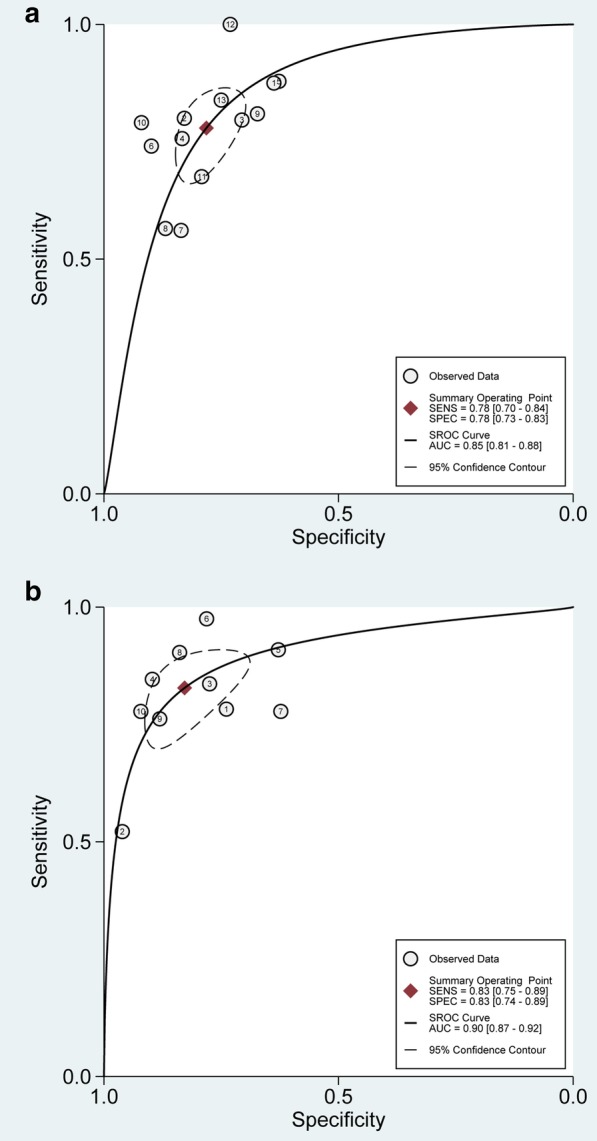
Thirteen studies involving 1579 patients reported the predictive value of NLR on disease severity. The pooled sensitivity (SEN), specificity (SPE) and area under curve (AUC) were 0.78 (95% CI 0.70-0.84), 0.78 (95% CI 0.73-0.83) and 0.85 (95% CI 0.81-0.88), respectively. Ten studies involving 2967 patients reported the predictive value of NLR on mortality. The pooled SEN, SPE and AUC were 0.83 (95% CI 0.75-0.89), 0.83 (95% CI 0.74-0.89) and 0.90 (95% CI 0.87-0.92), respectively.
NLR has good predictive values on disease severity and mortality in patients with COVID-19 infection. Evaluating NLR can help clinicians identify potentially severe cases early, conduct early triage and initiate effective management in time, which may reduce the overall mortality of COVID-19.
This meta-analysis was prospectively registered on PROSPERO database (Registration number: CRD42020203612).
新型冠状病毒病(COVID-19)是一种高度传染性疾病,已在全球迅速蔓延,仍然对全球公共卫生构成巨大威胁。确诊为重症或危重症的患者预后较差。因此,早期识别潜在的重症或危重症病例并对目标患者进行及时治疗至关重要。在 COVID-19 患者的临床治疗中,我们观察到重症患者的中性粒细胞与淋巴细胞比值(NLR)高于轻症患者。我们进行了这项系统评价和荟萃分析,以评估 NLR 对 COVID-19 患者疾病严重程度和死亡率的预测价值。
我们检索了 PubMed、EMBASE、中国知网(CNKI)和万方数据库,以确定符合条件的研究(截至 2020 年 8 月 11 日)。两位作者独立筛选研究并提取数据。使用诊断准确性研究质量评估工具 2(QUADAS-2)评估纳入研究的方法学质量。
纳入的 13 项研究共涉及 1579 例患者,报告了 NLR 对疾病严重程度的预测价值。汇总的敏感性(SEN)、特异性(SPE)和曲线下面积(AUC)分别为 0.78(95%CI 0.70-0.84)、0.78(95%CI 0.73-0.83)和 0.85(95%CI 0.81-0.88)。纳入的 10 项研究共涉及 2967 例患者,报告了 NLR 对死亡率的预测价值。汇总的敏感性(SEN)、特异性(SPE)和 AUC 分别为 0.83(95%CI 0.75-0.89)、0.83(95%CI 0.74-0.89)和 0.90(95%CI 0.87-0.92)。
NLR 对 COVID-19 感染患者的疾病严重程度和死亡率具有良好的预测价值。评估 NLR 有助于临床医生早期识别潜在的重症病例,进行早期分诊,并及时采取有效管理,从而降低 COVID-19 的总体死亡率。
本荟萃分析前瞻性地在 PROSPERO 数据库(注册号:CRD42020203612)注册。