Wu Y, Wei H, van der Mei H C, de Vries J, Busscher H J, Ren Y
University of Groningen, University Medical Center of Groningen, Department of Orthodontics, Hanzeplein 1, 9700 RB, Groningen, the Netherlands.
University of Groningen, University Medical Center Groningen, Department of Biomedical Engineering, Antonius Deusinglaan 1, 9713 AV, Groningen, the Netherlands.
Mater Today Bio. 2021 Oct 15;12:100151. doi: 10.1016/j.mtbio.2021.100151. eCollection 2021 Sep.
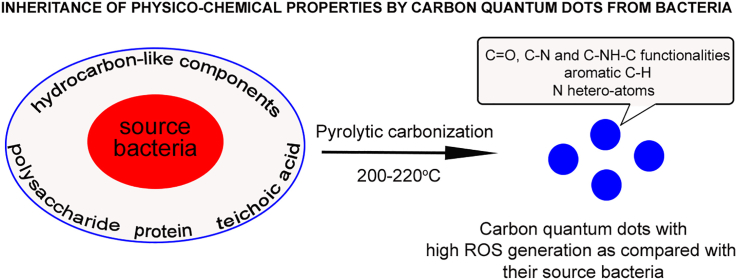
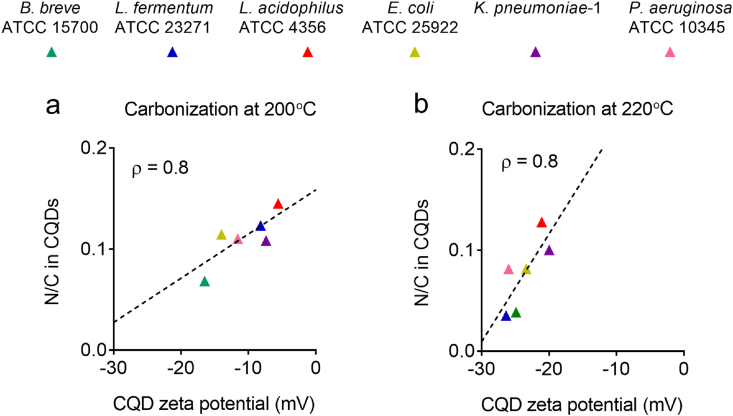
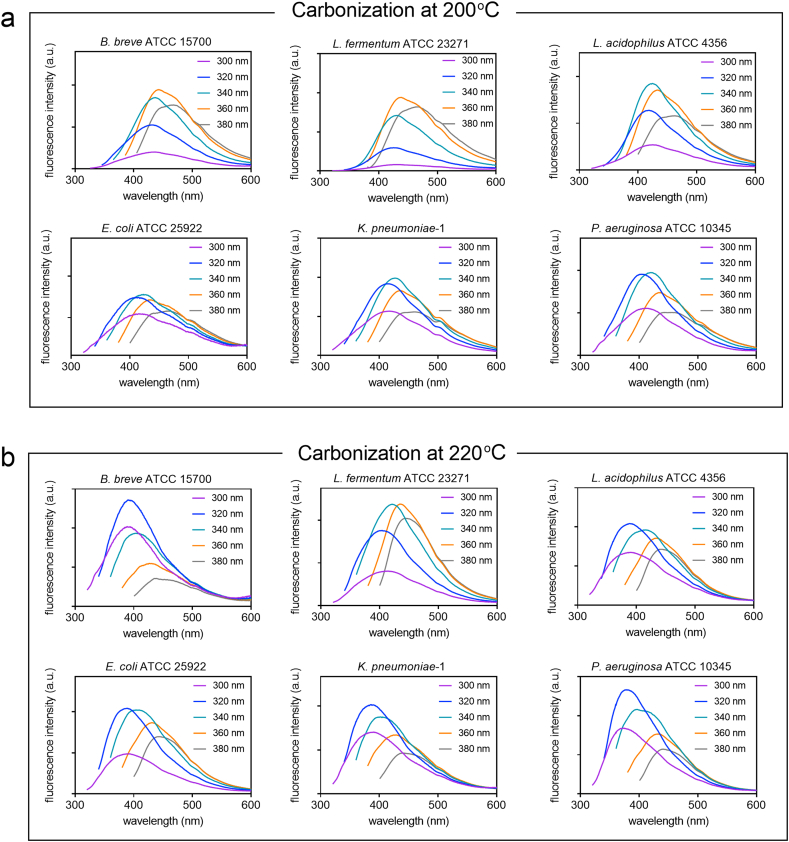
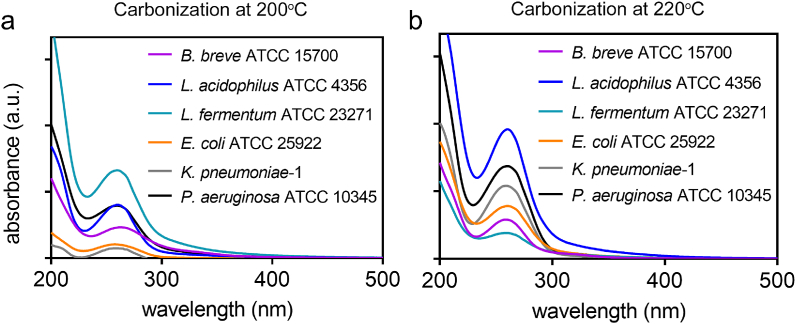
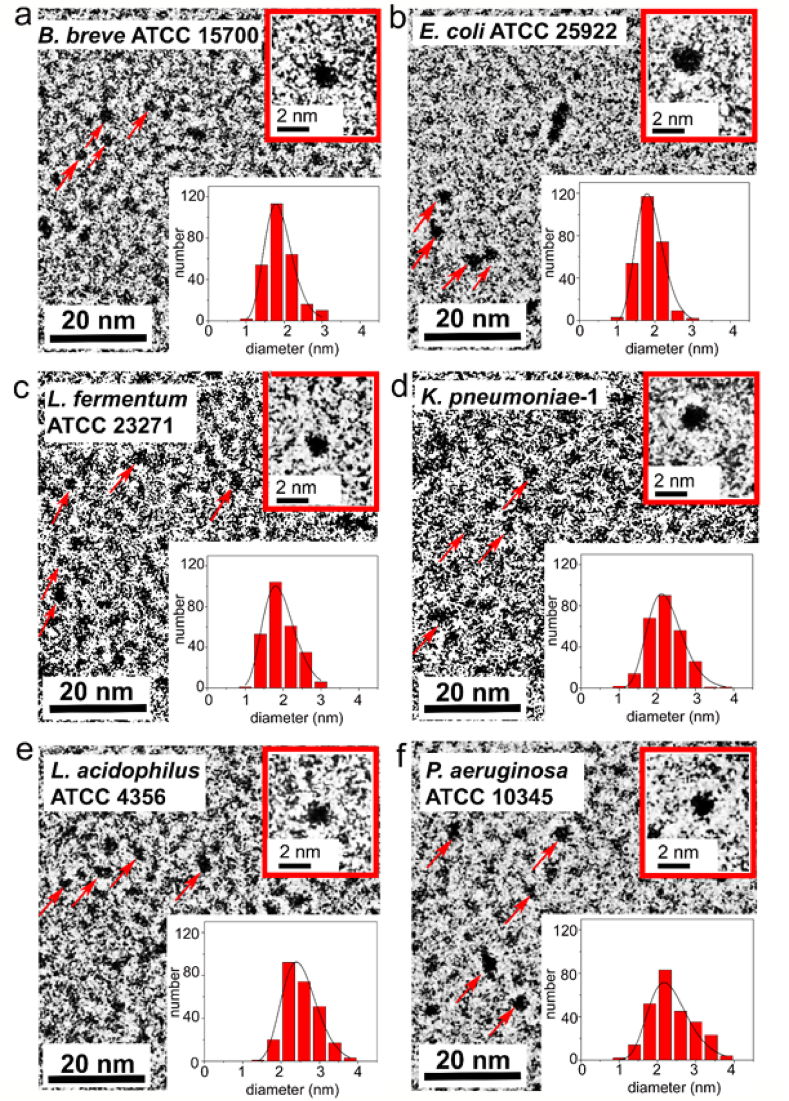
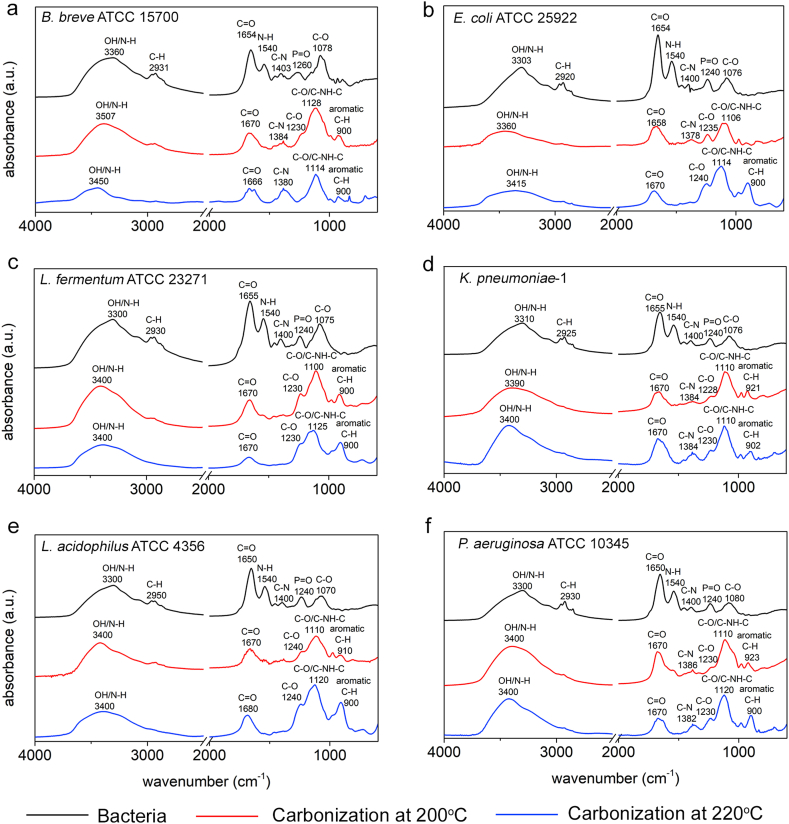
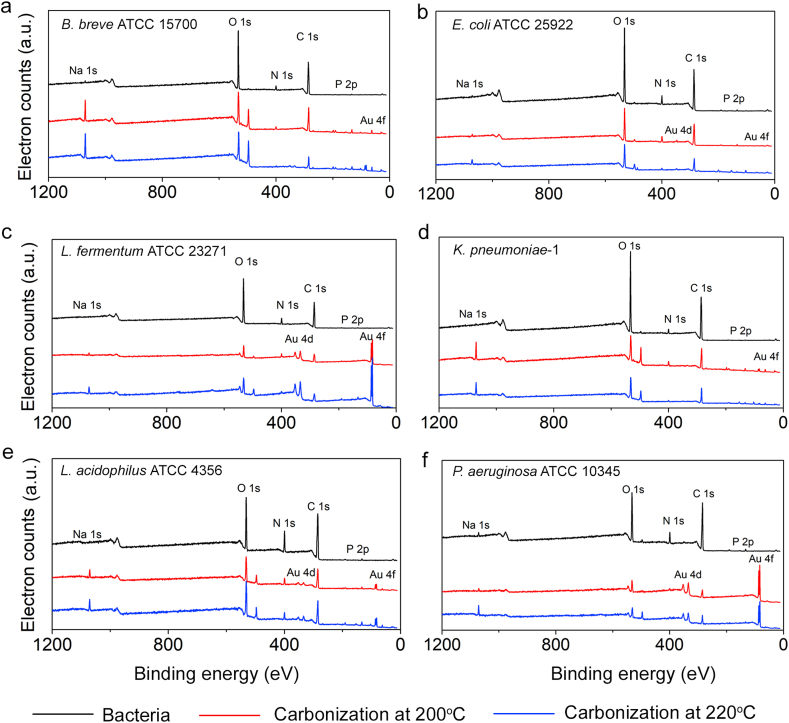
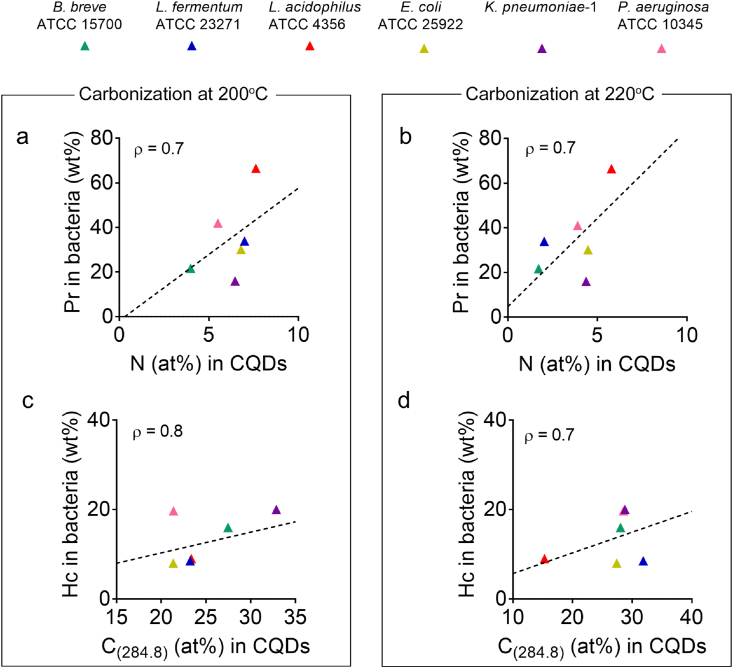
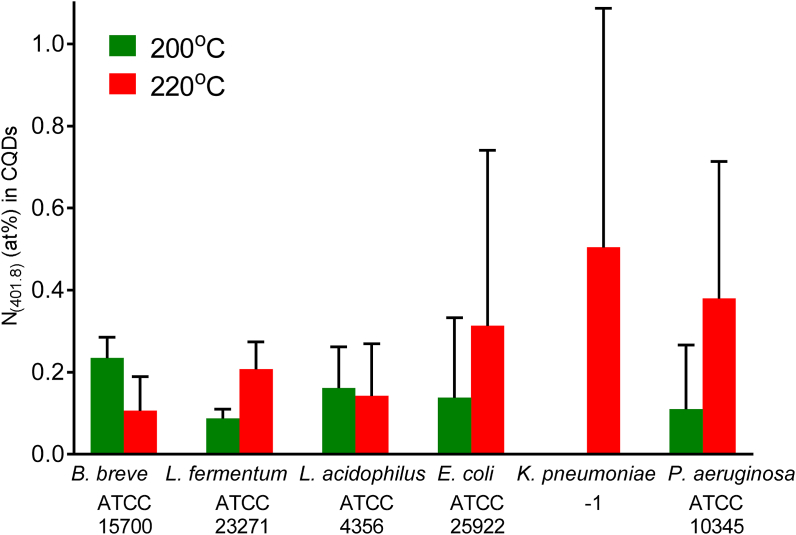
Bacteria are frequently used in industrial processes and nutrient supplementation to restore a healthy human microflora, but use of live bacteria is often troublesome. Here, we hypothesize that bacterially-derived carbon-quantum-dots obtained through pyrolytic carbonization inherit physico-chemical properties from probiotic and pathogenic source-bacteria. Carbon-quantum-dots carbonized at reaction-temperatures below 200 °C had negligible quantum-yields, while temperatures above 220 °C yielded poor water-suspendability. Fourier-transform infrared-spectroscopy demonstrated preservation of amide absorption bands in carbon-quantum-dots derived at intermediate temperatures. X-ray photoelectron-spectroscopy indicated that the at%N in carbon-quantum-dots increased with increasing amounts of protein in source-bacterial surfaces. Carbonization transformed hydrocarbon-like bacterial surface compounds into heterocyclic aromatic-carbon structures, evidenced by a broad infrared absorption band (920-900 cm) and the presence of carbon in C-C functionalities of carbon-quantum-dots. The chemical composition of bacterially-derived carbon-quantum-dots could be explained by the degradation temperatures of main bacterial cell surface compounds. All carbon-quantum-dots generated reactive-oxygen-species, most notably those derived from probiotic lactobacilli, carrying a high amount of surface protein. Concluding, amide functionalities in carbon-quantum-dots are inherited from surface proteins of source-bacteria, controlling reactive-oxygen-species generation. This paves the way for applications of bacterially-derived carbon-quantum-dots in which reactive-oxygen-species generation is essential, instead of hard-to-use live bacteria, such as in food supplementation or probiotic-assisted antibiotic therapy.
细菌常用于工业生产过程和营养补充,以恢复健康的人体微生物群落,但使用活细菌往往很麻烦。在此,我们假设通过热解碳化获得的细菌衍生碳量子点继承了益生菌和病原菌源细菌的物理化学性质。在低于200℃的反应温度下碳化的碳量子点量子产率可忽略不计,而高于220℃的温度则产生较差的水悬浮性。傅里叶变换红外光谱表明,在中间温度下衍生的碳量子点中酰胺吸收带得以保留。X射线光电子能谱表明,碳量子点中的原子百分比氮随着源细菌表面蛋白质含量的增加而增加。碳化将类烃细菌表面化合物转化为杂环芳香碳结构,这由一个宽红外吸收带(920 - 900 cm)和碳量子点C - C官能团中的碳的存在所证明。细菌衍生碳量子点的化学成分可以通过主要细菌细胞表面化合物的降解温度来解释。所有碳量子点都产生活性氧,最显著的是那些源自携带大量表面蛋白的益生菌乳酸菌的碳量子点。总之,碳量子点中的酰胺官能团继承自源细菌的表面蛋白,控制着活性氧的产生。这为细菌衍生碳量子点的应用铺平了道路,在这些应用中,活性氧的产生至关重要,可替代难以使用的活细菌,如在食品补充或益生菌辅助抗生素治疗中。