Department of Chemistry, Johns Hopkins University, Baltimore, Maryland, USA.
Chemistry-Biology Interface Graduate Program, Johns Hopkins University, Baltimore, Maryland, USA.
J Biol Chem. 2021 Dec;297(6):101385. doi: 10.1016/j.jbc.2021.101385. Epub 2021 Nov 6.
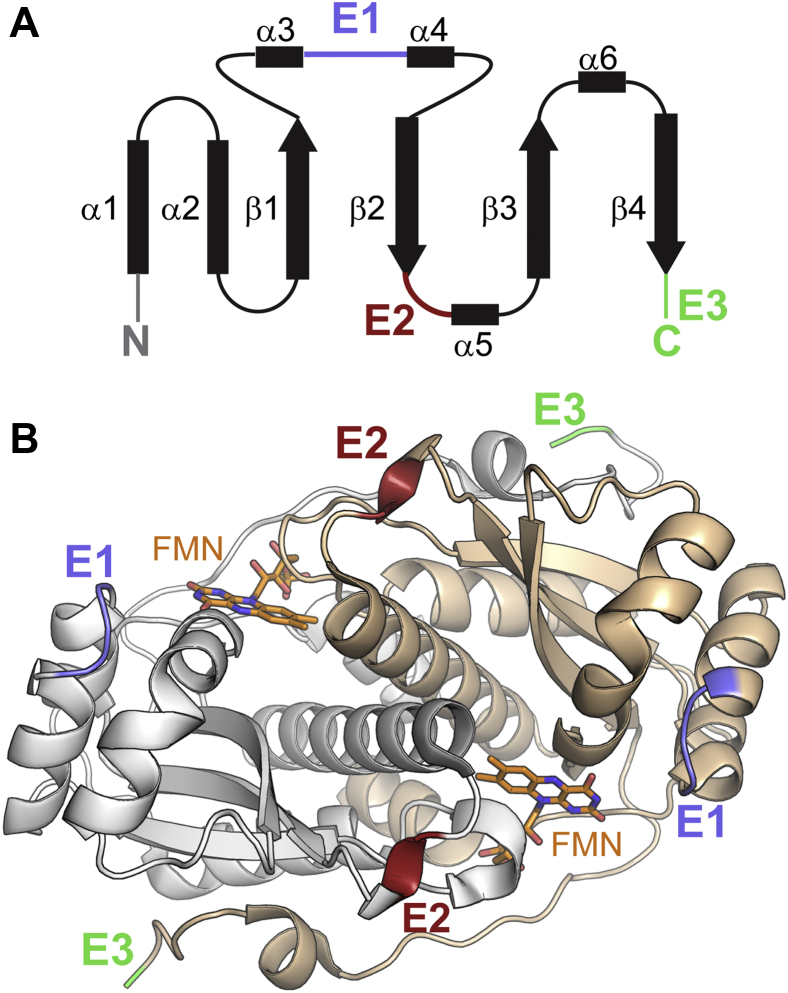
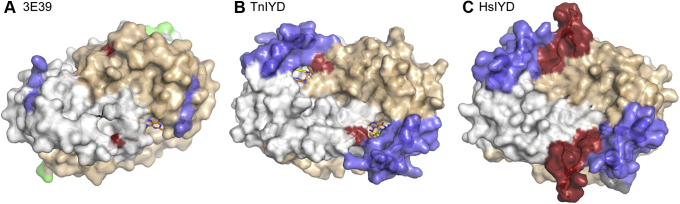
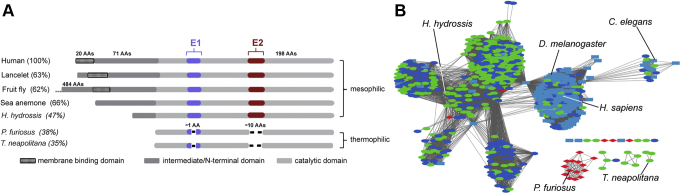
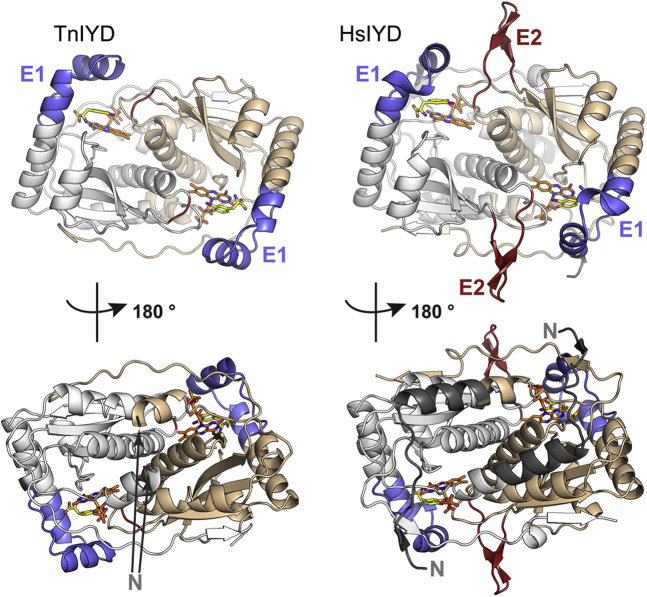
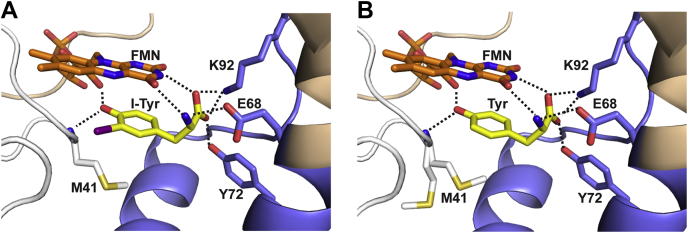
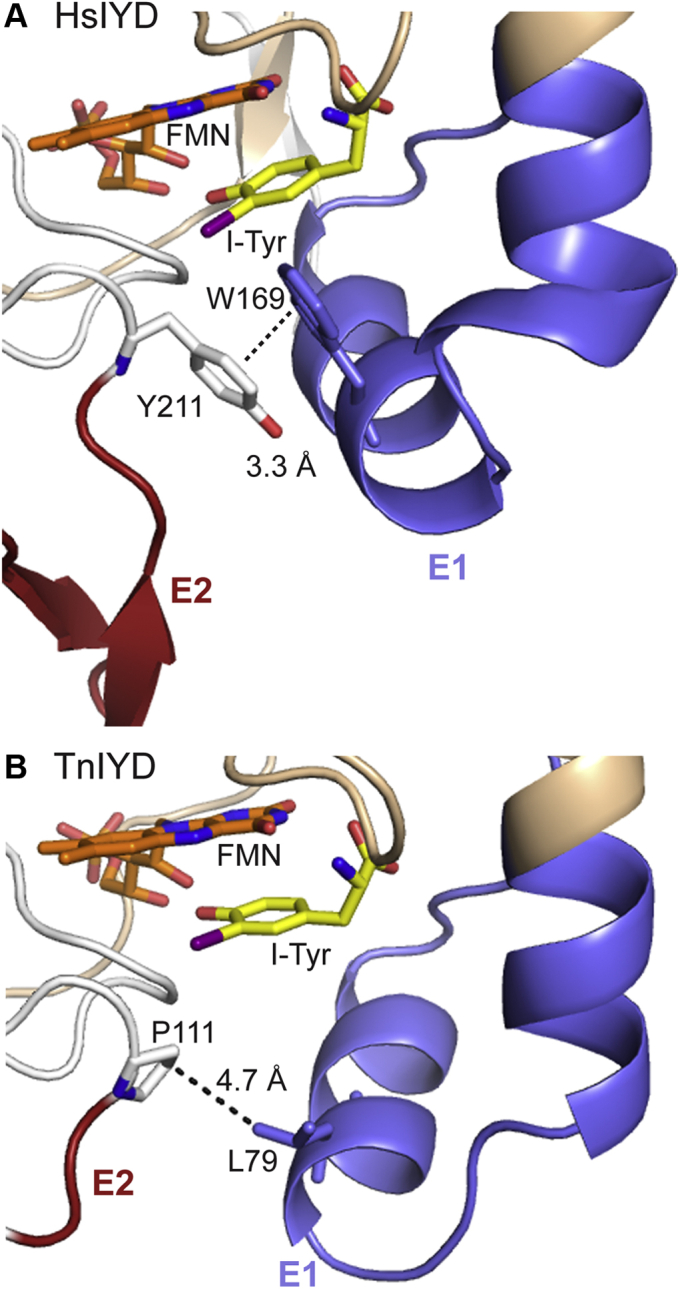
The nitroreductase superfamily of enzymes encompasses many flavin mononucleotide (FMN)-dependent catalysts promoting a wide range of reactions. All share a common core consisting of an FMN-binding domain, and individual subgroups additionally contain one to three sequence extensions radiating from defined positions within this core to support their unique catalytic properties. To identify the minimum structure required for activity in the iodotyrosine deiodinase subgroup of this superfamily, attention was directed to a representative from the thermophilic organism Thermotoga neapolitana (TnIYD). This representative was selected based on its status as an outlier of the subgroup arising from its deficiency in certain standard motifs evident in all homologues from mesophiles. We found that TnIYD lacked a typical N-terminal sequence and one of its two characteristic sequence extensions, neither of which was found to be necessary for activity. We also show that TnIYD efficiently promotes dehalogenation of iodo-, bromo-, and chlorotyrosine, analogous to related deiodinases (IYDs) from humans and other mesophiles. In addition, 2-iodophenol is a weak substrate for TnIYD as it was for all other IYDs characterized to date. Consistent with enzymes from thermophilic organisms, we observed that TnIYD adopts a compact fold and low surface area compared with IYDs from mesophilic organisms. The insights gained from our investigations on TnIYD demonstrate the advantages of focusing on sequences that diverge from conventional standards to uncover the minimum essentials for activity. We conclude that TnIYD now represents a superior starting structure for future efforts to engineer a stable dehalogenase targeting halophenols of environmental concern.
硝基还原酶超家族包含许多黄素单核苷酸 (FMN) 依赖性催化剂,可促进广泛的反应。所有这些酶都具有一个共同的核心,由一个 FMN 结合结构域组成,而各个亚组还额外包含一个到三个从该核心的定义位置辐射出的序列延伸,以支持其独特的催化特性。为了确定该超家族碘酪氨酸脱碘酶亚组中活性所需的最小结构,我们将注意力集中在来自嗜热生物体 Thermotoga neapolitana (TnIYD) 的代表性酶上。选择该代表酶是基于其在亚组中的异常表现,因为它缺乏在所有嗜温生物同源物中都存在的某些标准基序。我们发现 TnIYD 缺乏典型的 N 端序列和两个特征序列延伸中的一个,但这两者都不是活性所必需的。我们还表明,TnIYD 可有效地促进碘代、溴代和氯代酪氨酸的脱卤化,类似于来自人类和其他嗜温生物的相关脱碘酶 (IYDs)。此外,2-碘苯酚是 TnIYD 的弱底物,就像迄今为止所有其他 IYDs 一样。与来自嗜热生物体的酶一致,我们观察到 TnIYD 与来自嗜温生物体的 IYDs 相比,采用紧凑的折叠和低表面积。我们对 TnIYD 的研究获得的见解表明,专注于偏离传统标准的序列以揭示活性的最小要素具有优势。我们得出结论,TnIYD 现在代表了针对环境关注的卤代酚的稳定脱卤酶的未来工程设计的优越起始结构。