Leeds Institute of Rheumatic and Musculoskeletal Medicine, University of Leeds, Leeds, UK
Leeds Institute of Rheumatic and Musculoskeletal Medicine, University of Leeds, Leeds, UK.
Ann Rheum Dis. 2022 Feb;81(2):159-168. doi: 10.1136/annrheumdis-2021-221160. Epub 2021 Nov 8.
There is increasing interest in identifying individuals at-risk of rheumatoid arthritis (RA) and initiating early treatment to prevent or delay the onset of arthritis. We aimed to describe the perceptions and experiences of at-risk individuals and to inform the conduct of clinical trials and studies, and clinical practice.
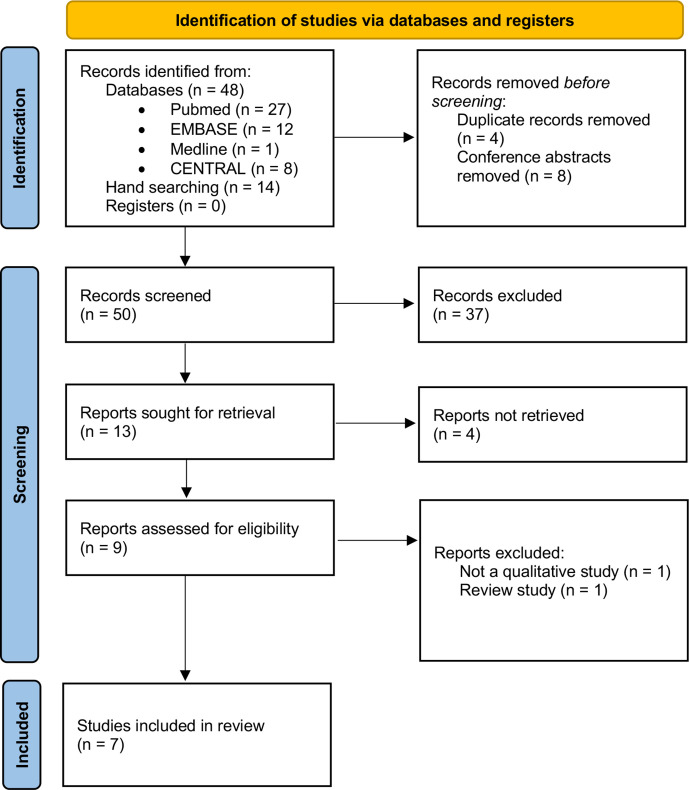
A systematic review and thematic synthesis of qualitative studies was conducted. Two review authors independently screened studies for inclusion, appraised their methodological quality using the Critical Appraisal Skills Programme checklist and assessed confidence in the findings using the Grading of Recommendations Assessment, Development and Evaluation-Confidence in Evidence from Reviews of Qualitative Research approach.
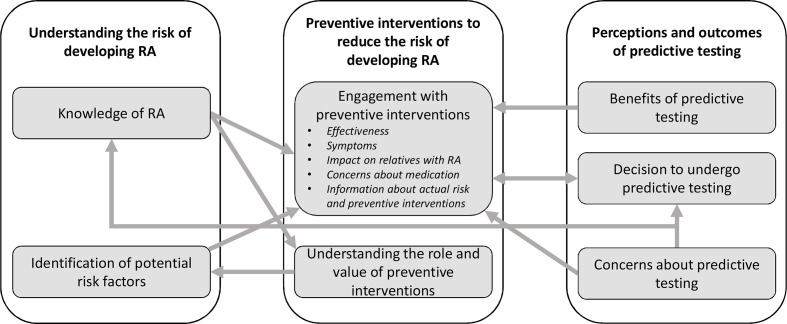
Seven studies involving 115 individuals at-risk of developing RA were included. Three major themes (seven subthemes) were identified: understanding the risk of developing RA (knowledge of RA and identification of potential risk factors); preventive interventions to reduce the risk of developing RA (understanding the value and role of preventive interventions, and engagement with preventive interventions); and perceptions of predictive testing for RA (benefits of predictive testing, decision to undertake predictive testing and concerns about predictive testing). Moderate confidence in most review findings was evident.
While there are clear benefits in informing individuals at-risk of RA about their risk following predictive testing and offering preventive treatment, there are potential barriers to engagement, intensified by the burden of uncertainty. Identification of the optimum approaches for presenting risk information, including the risks and benefits of engaging with preventive interventions, is urgently needed to support individuals at-risk of RA in their decision making.
CRD42021236034.
越来越多的人关注识别类风湿关节炎(RA)高危人群,并进行早期治疗,以预防或延迟关节炎的发生。本研究旨在描述高危人群的认知和体验,为临床试验和研究以及临床实践提供信息。
对定性研究进行系统评价和主题综合。两名综述作者独立筛选纳入研究,使用批判性评估技能计划清单评估其方法学质量,并使用推荐评估、制定和评估-从定性研究综述中评估证据的可信度(Grading of Recommendations Assessment, Development and Evaluation-Confidence in Evidence from Reviews of Qualitative Research approach)评估研究结果的可信度。
纳入了 7 项涉及 115 名 RA 高危人群的研究。确定了 3 个主要主题(7 个子主题):了解患 RA 的风险(了解 RA 和识别潜在危险因素);降低患 RA 的风险的预防干预措施(了解预防干预的价值和作用,以及参与预防干预);对 RA 预测性检测的认知(预测性检测的益处、进行预测性检测的决定以及对预测性检测的担忧)。大多数综述结果的可信度为中等。
虽然在预测性检测后告知 RA 高危人群有关其风险并提供预防性治疗有明显的益处,但参与可能存在障碍,不确定性的负担加剧了这种障碍。迫切需要确定最佳方法来提供风险信息,包括参与预防性干预的风险和益处,以支持 RA 高危人群做出决策。
PROSPERO 注册号:CRD42021236034。