Department of Chemistry and Biochemistry, The Ohio State University, Columbus, OH, United States; Center for RNA Biology, The Ohio State University, Columbus, OH, United States.
Department of Chemistry and Biochemistry, The Ohio State University, Columbus, OH, United States; Center for RNA Biology, The Ohio State University, Columbus, OH, United States; Resource for Native Mass Spectrometry-Guided Structural Biology, The Ohio State University, Columbus, OH, United States.
Methods Enzymol. 2021;659:71-103. doi: 10.1016/bs.mie.2021.07.006. Epub 2021 Sep 25.
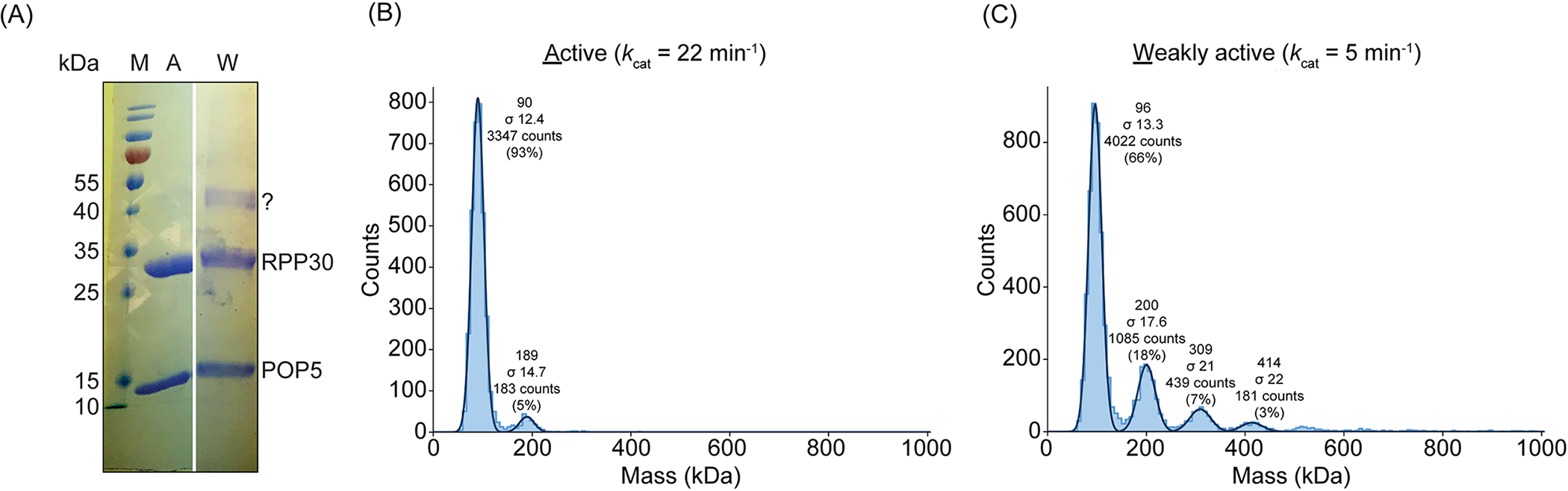
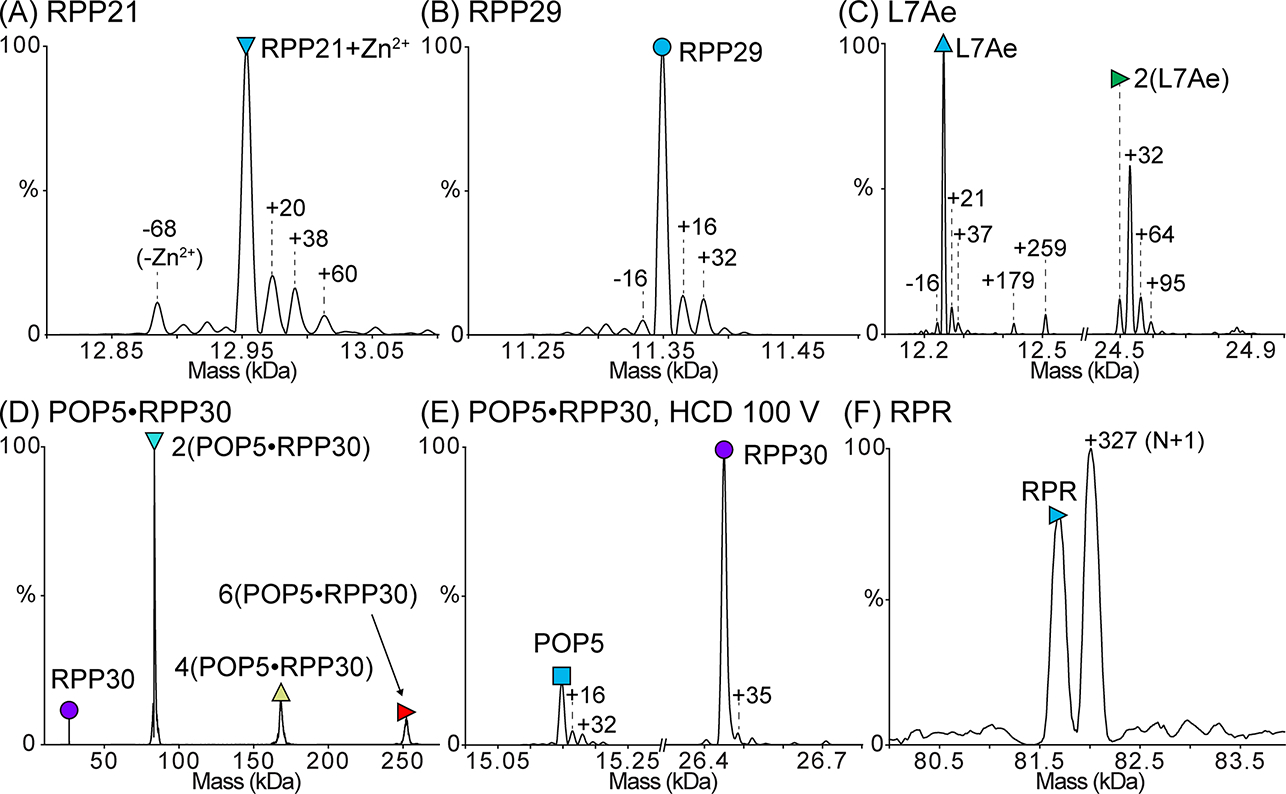
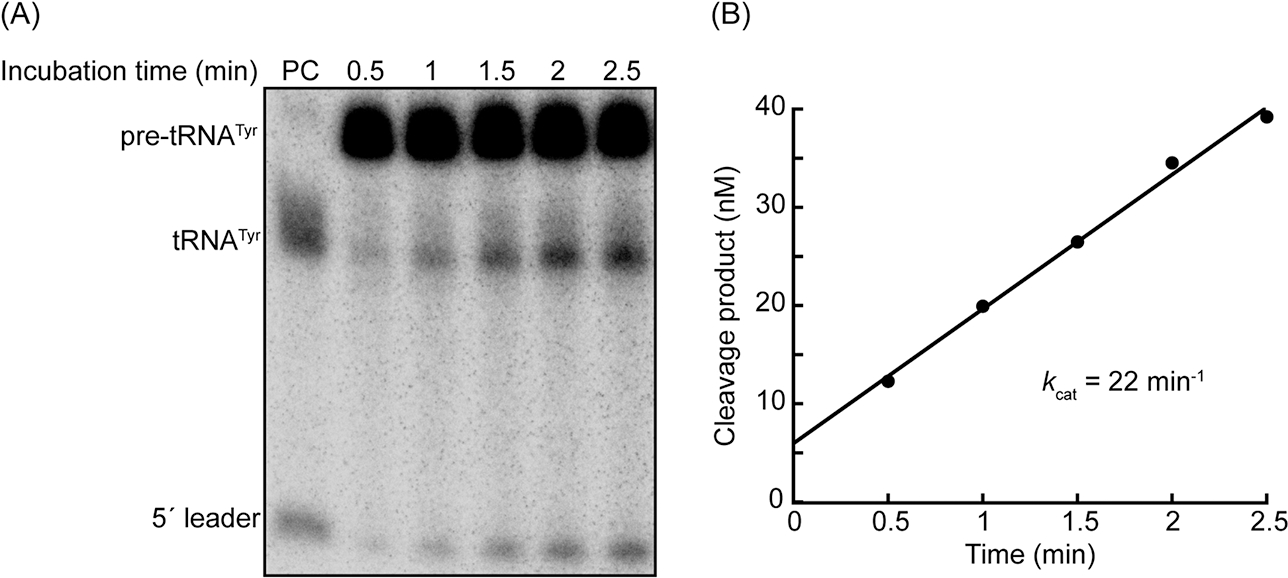
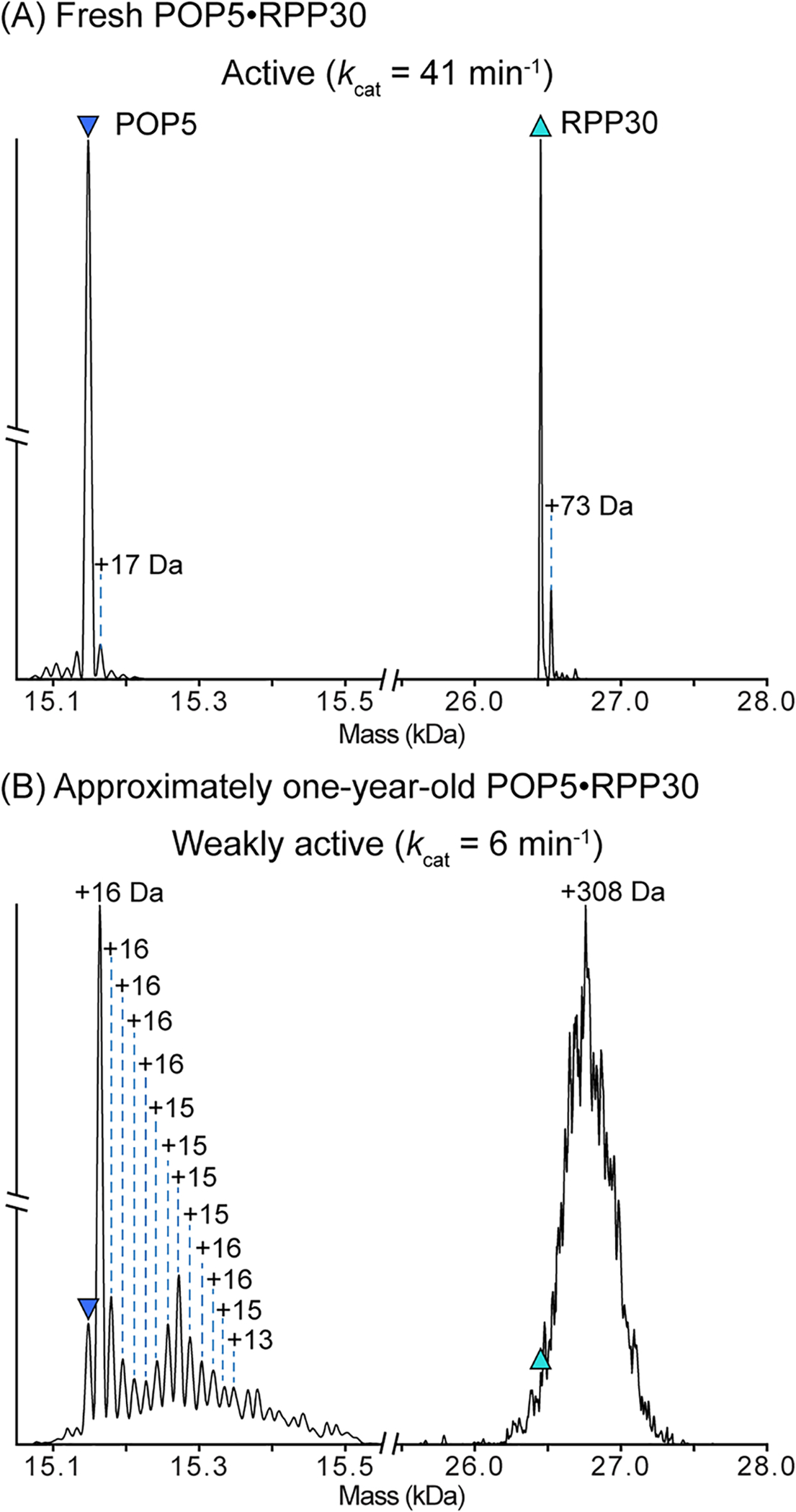
The ubiquitous ribonucleoprotein (RNP) form of RNase P catalyzes the Mg-dependent cleavage of the 5' leader of precursor-transfer RNAs. The rate and fidelity of the single catalytic RNA subunit in the RNase P RNP is significantly enhanced by association with protein cofactors. While the bacterial RNP exhibits robust activity at near-physiological Mg concentrations with a single essential protein cofactor, archaeal and eukaryotic RNase P are dependent on up to 5 and 10 protein subunits, respectively. Archaeal RNase P-whose proteins share eukaryotic homologs-is an experimentally tractable model for dissecting in a large RNP the roles of multiple proteins that aid an RNA catalyst. We describe protocols to assemble RNase P from Methanococcus maripaludis, a methanogenic archaeon. We present strategies for tag-less purification of four of the five proteins (the tag from the fifth is removed post-purification), an approach that helps reconstitute the RNase P RNP with near-native constituents. We demonstrate the value of native mass spectrometry (MS) in establishing the accurate masses (including native oligomers and modifications) of all six subunits in M. maripaludis RNase P, and the merits of mass photometry (MP) as a complement to native MS for characterizing the oligomeric state of protein complexes. We showcase the value of native MS and MP in revealing time-dependent modifications (e.g., oxidation) and aggregation of protein subunits, thereby providing insights into the decreased function of RNase P assembled with aged preparations of recombinant subunits. Our protocols and cautionary findings are applicable to studies of other cellular RNPs.
核糖核酸酶 P 的无处不在的核糖核蛋白 (RNP) 形式催化前体转移 RNA 的 5' 前导序列的 Mg 依赖性切割。在与蛋白质辅因子结合后,单个催化 RNA 亚基在核糖核酸酶 P RNP 中的速率和保真度得到显著提高。虽然细菌 RNP 在接近生理 Mg 浓度下表现出强大的活性,仅需要一个必需的蛋白质辅因子,但古菌和真核生物的 RNase P 分别依赖于多达 5 个和 10 个蛋白质亚基。古菌 RNase P-其蛋白质与真核生物具有同源性-是一个可用于实验的模型,可在大型 RNP 中剖析多个辅助 RNA 催化剂的蛋白质的作用。我们描述了从产甲烷八叠球菌中组装核糖核酸酶 P 的方案,这是一种产甲烷古菌。我们提出了无标签纯化五个蛋白质中的四个(第五个的标签在纯化后去除)的策略,这种方法有助于用近乎天然的成分重新组装核糖核酸酶 P RNP。我们展示了天然质谱 (MS) 在确定产甲烷八叠球菌核糖核酸酶 P 中所有六个亚基的准确质量(包括天然寡聚体和修饰)方面的价值,以及质量光度计 (MP) 作为补充天然 MS 用于表征蛋白质复合物的寡聚状态的优点。我们展示了天然 MS 和 MP 的价值,它们揭示了蛋白质亚基的时变修饰(例如氧化)和聚集,从而深入了解用重组亚基的老化制剂组装的核糖核酸酶 P 的功能降低的原因。我们的方案和警示性发现适用于其他细胞 RNP 的研究。