New York Botanical Garden, Bronx, NY, USA.
The Graduate Center, City University of New York, New York, NY, USA.
Sci Rep. 2021 Nov 9;11(1):21995. doi: 10.1038/s41598-021-01483-0.
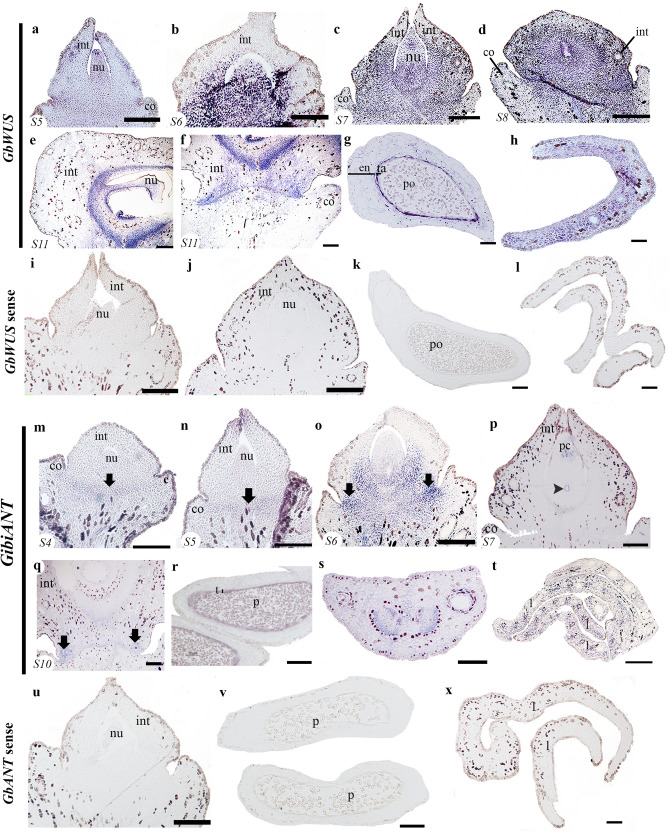
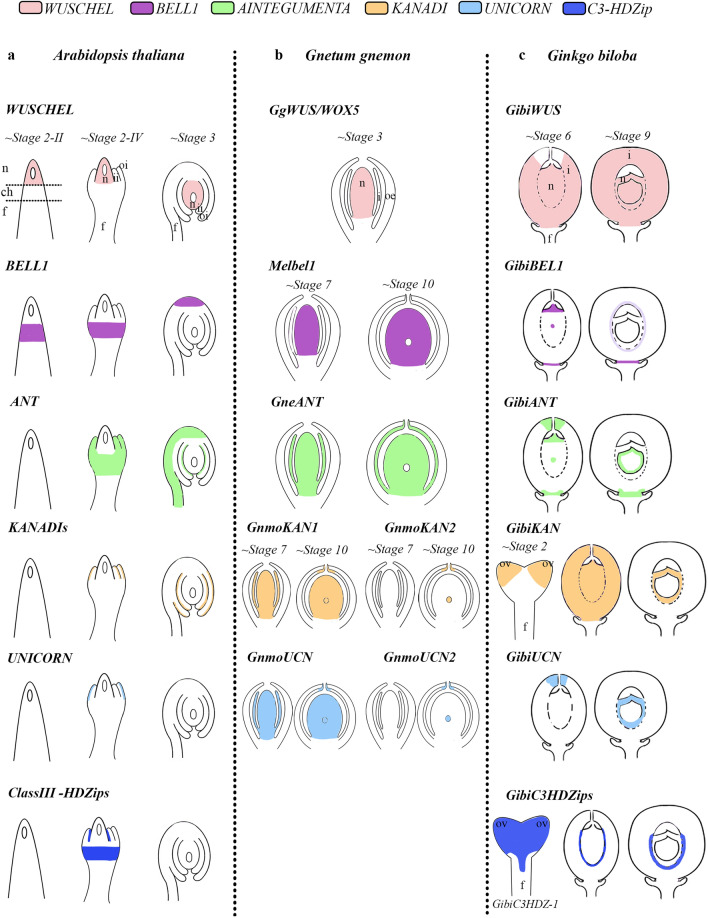
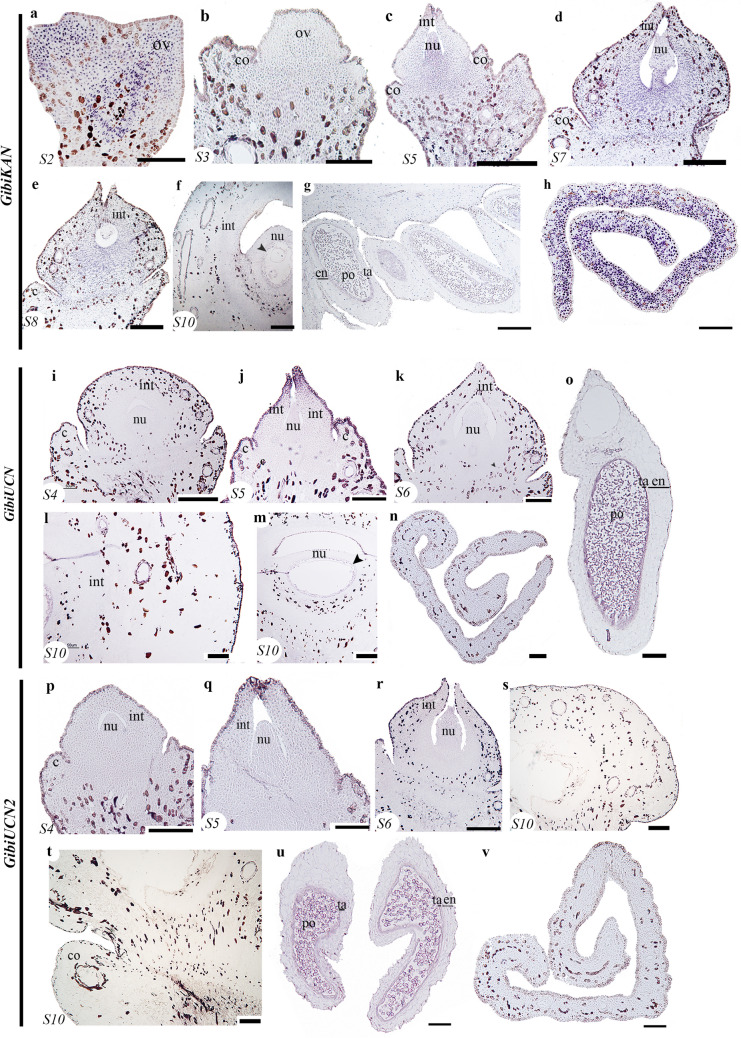
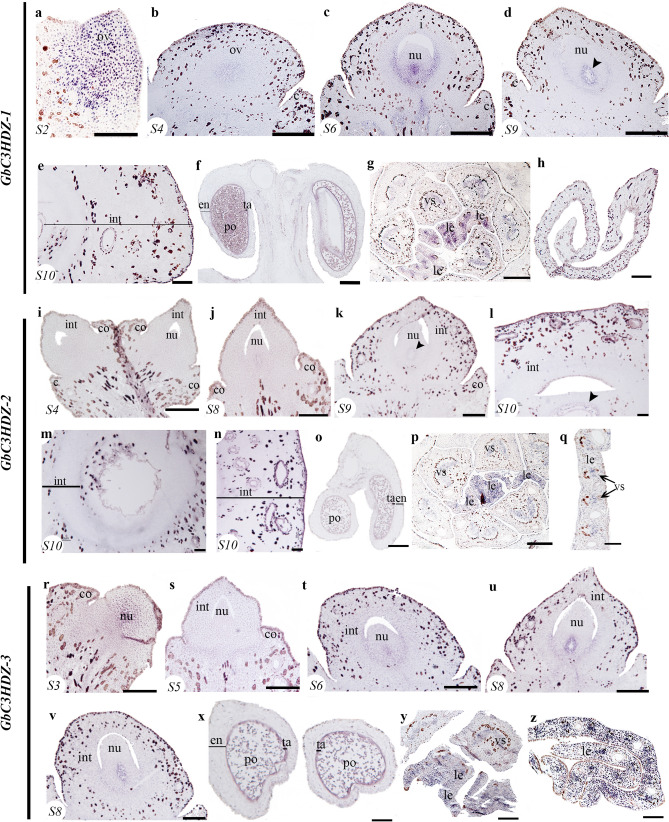
Although the seed is a key morphological innovation, its origin remains unknown and molecular data outside angiosperms is still limited. Ginkgo biloba, with a unique place in plant evolution, being one of the first extant gymnosperms where seeds evolved, can testify to the evolution and development of the seed. Initially, to better understand the development of the ovules in Ginkgo biloba ovules, we performed spatio-temporal expression analyses in seeds at early developing stages, of six candidate gene homologues known in angiosperms: WUSCHEL, AINTEGUMENTA, BELL1, KANADI, UNICORN, and C3HDZip. Surprisingly, the expression patterns of most these ovule homologues indicate that they are not wholly conserved between angiosperms and Ginkgo biloba. Consistent with previous studies on early diverging seedless plant lineages, ferns, lycophytes, and bryophytes, many of these candidate genes are mainly expressed in mega- and micro-sporangia. Through in-depth comparative transcriptome analyses of Ginkgo biloba developing ovules, pollen cones, and megagametophytes we have been able to identify novel genes, likely involved in ovule development. Finally, our expression analyses support the synangial or neo-synangial hypotheses for the origin of the seed, where the sporangium developmental network was likely co-opted and restricted during integument evolution.
尽管种子是一种关键的形态创新,但它的起源仍然未知,并且在被子植物之外的分子数据仍然有限。银杏在植物进化中具有独特的地位,是最早出现的种子进化的裸子植物之一,它可以证明种子的进化和发展。最初,为了更好地了解银杏胚珠中的胚珠发育,我们对早期发育阶段的种子中的六个候选基因同源物进行了时空表达分析:在被子植物中已知的 WUSCHEL、AINTEGUMENTA、BELL1、KANADI、UNICORN 和 C3HDZip。令人惊讶的是,这些胚珠同源物的表达模式表明它们在被子植物和银杏之间并不完全保守。与早期分化的无种子植物谱系、蕨类植物、石松类植物和苔藓植物的先前研究一致,许多这些候选基因主要在大孢子囊和小孢子囊中表达。通过对银杏发育中的胚珠、花粉囊和大配子体进行深入的比较转录组分析,我们能够鉴定出可能参与胚珠发育的新基因。最后,我们的表达分析支持种子起源的合囊或新合囊假说,其中孢子囊发育网络在表皮进化过程中可能被共同利用和限制。