Division of Infection and Immunity, University College London, London, UK.
Blizard Institute, Barts and the London School of Medicine and Dentistry, Queen Mary University of London, London, UK.
Nature. 2022 Jan;601(7891):110-117. doi: 10.1038/s41586-021-04186-8. Epub 2021 Nov 10.
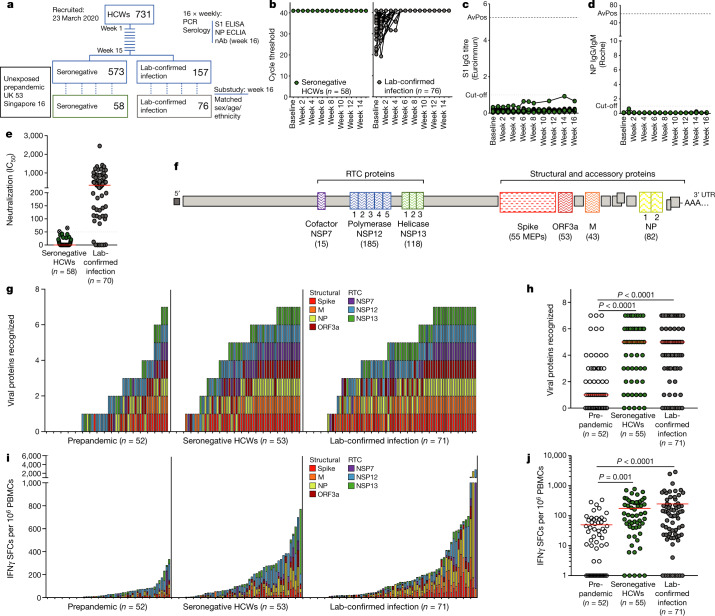
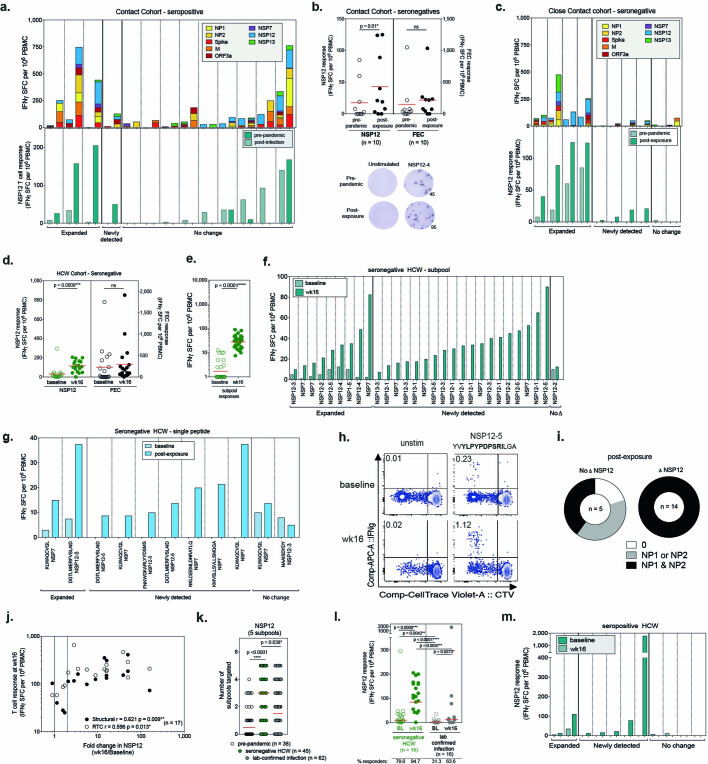
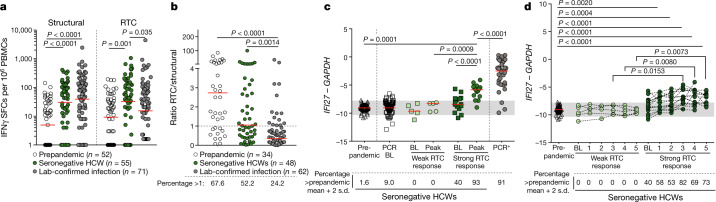
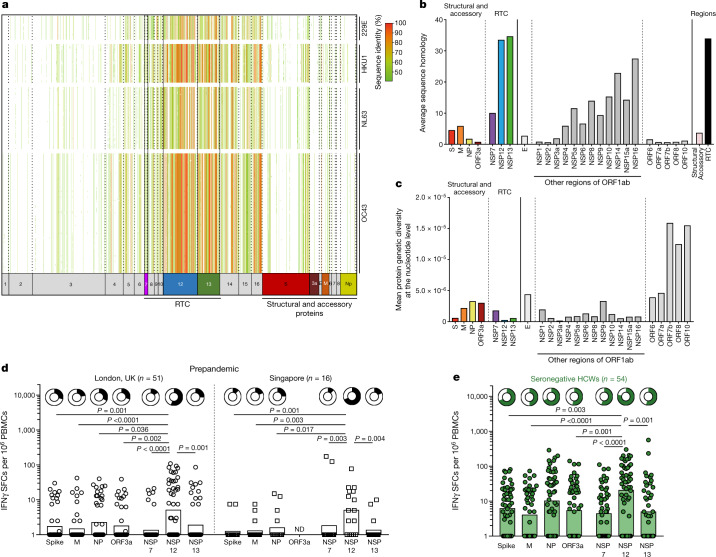
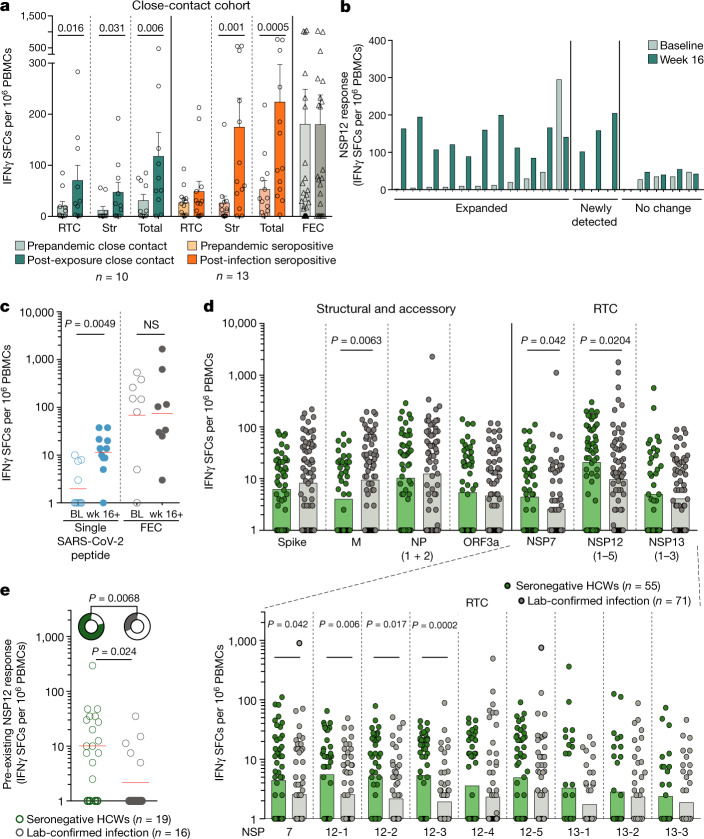
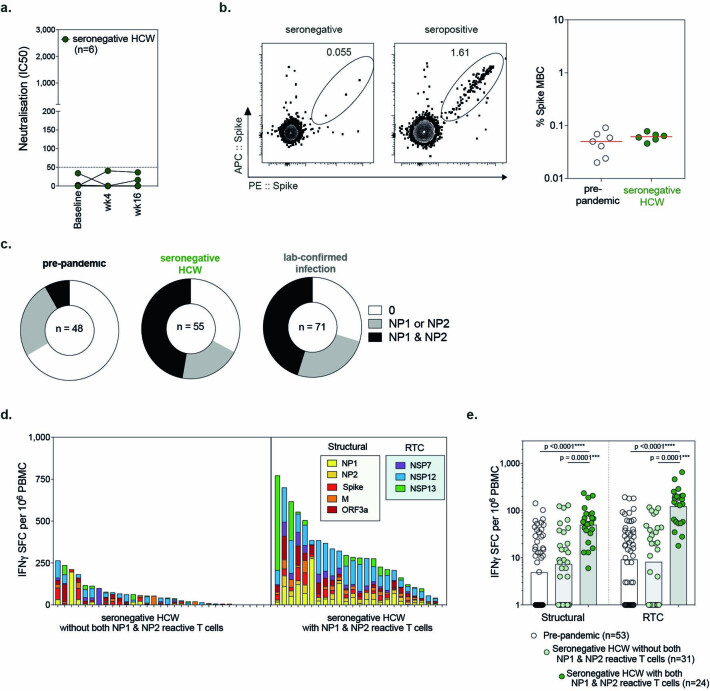
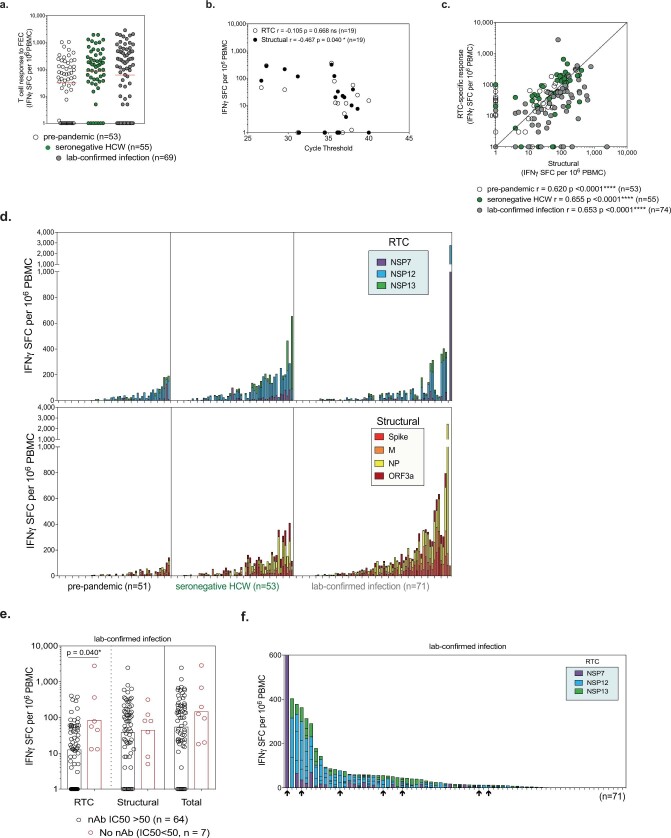
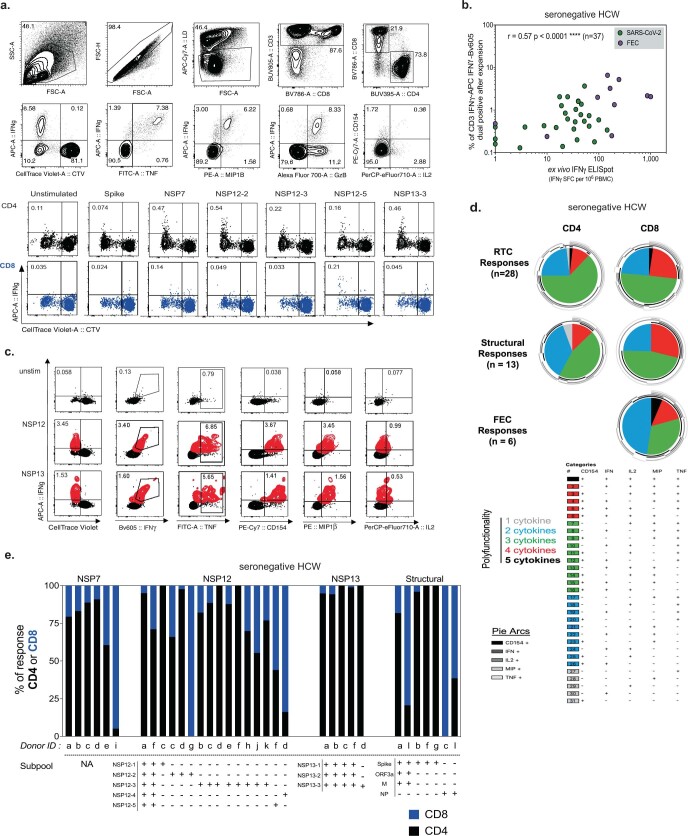
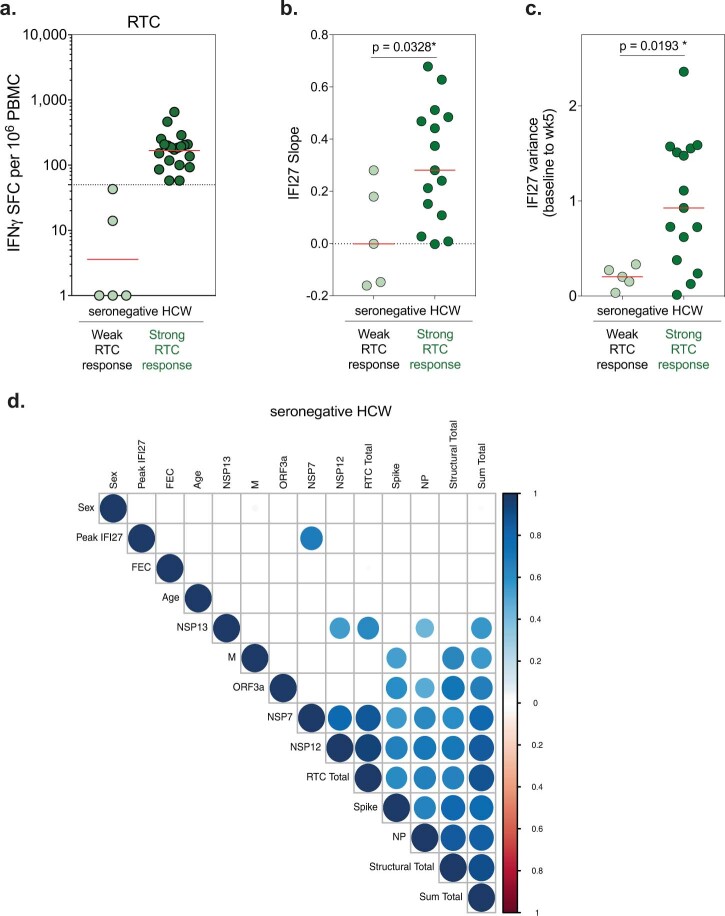
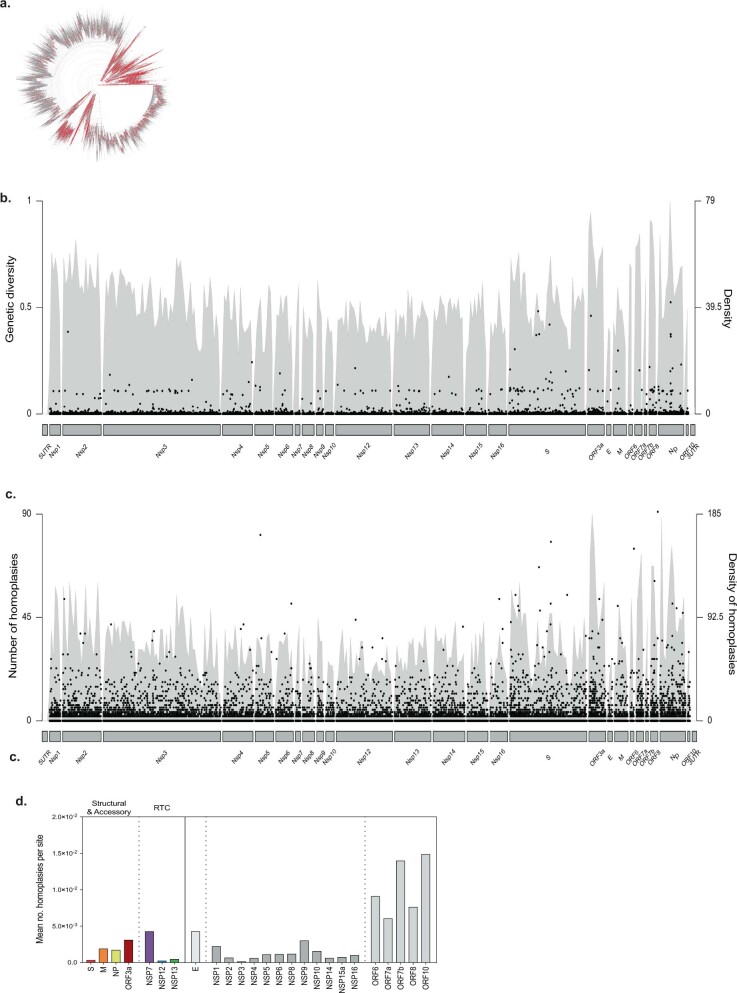
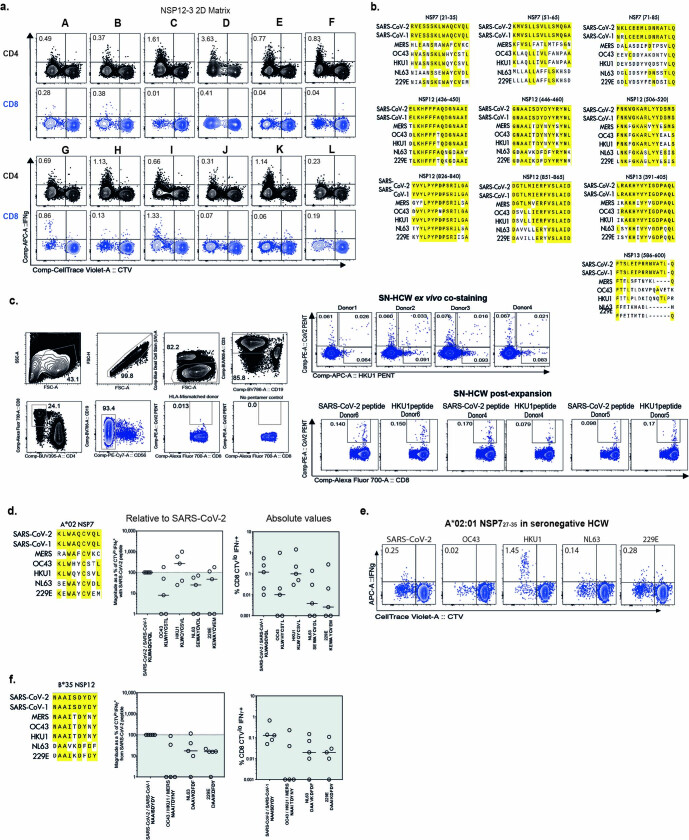
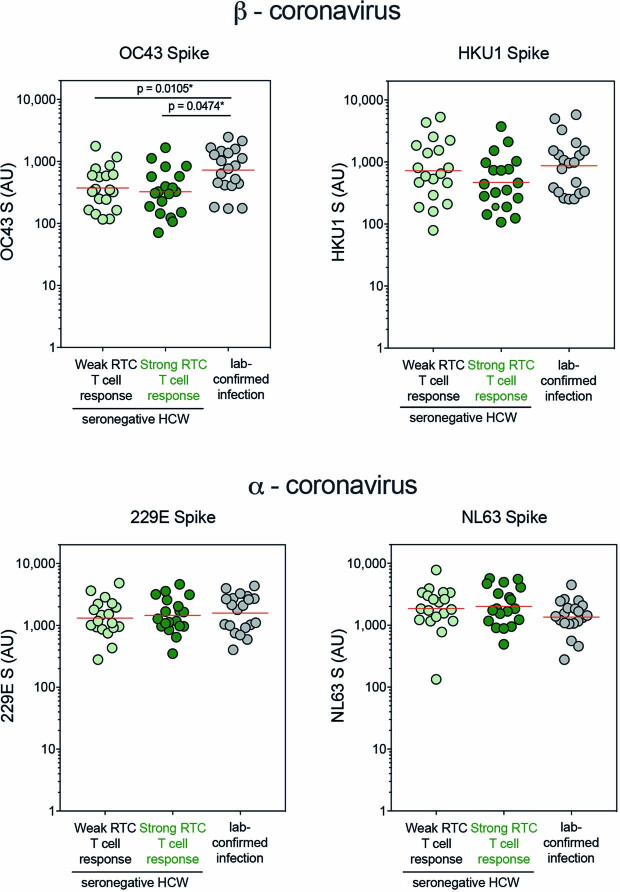
Individuals with potential exposure to severe acute respiratory syndrome coronavirus 2 (SARS-CoV-2) do not necessarily develop PCR or antibody positivity, suggesting that some individuals may clear subclinical infection before seroconversion. T cells can contribute to the rapid clearance of SARS-CoV-2 and other coronavirus infections. Here we hypothesize that pre-existing memory T cell responses, with cross-protective potential against SARS-CoV-2 (refs. ), would expand in vivo to support rapid viral control, aborting infection. We measured SARS-CoV-2-reactive T cells, including those against the early transcribed replication-transcription complex (RTC), in intensively monitored healthcare workers (HCWs) who tested repeatedly negative according to PCR, antibody binding and neutralization assays (seronegative HCWs (SN-HCWs)). SN-HCWs had stronger, more multispecific memory T cells compared with a cohort of unexposed individuals from before the pandemic (prepandemic cohort), and these cells were more frequently directed against the RTC than the structural-protein-dominated responses observed after detectable infection (matched concurrent cohort). SN-HCWs with the strongest RTC-specific T cells had an increase in IFI27, a robust early innate signature of SARS-CoV-2 (ref. ), suggesting abortive infection. RNA polymerase within RTC was the largest region of high sequence conservation across human seasonal coronaviruses (HCoV) and SARS-CoV-2 clades. RNA polymerase was preferentially targeted (among the regions tested) by T cells from prepandemic cohorts and SN-HCWs. RTC-epitope-specific T cells that cross-recognized HCoV variants were identified in SN-HCWs. Enriched pre-existing RNA-polymerase-specific T cells expanded in vivo to preferentially accumulate in the memory response after putative abortive compared to overt SARS-CoV-2 infection. Our data highlight RTC-specific T cells as targets for vaccines against endemic and emerging Coronaviridae.
个体接触严重急性呼吸综合征冠状病毒 2(SARS-CoV-2)不一定会出现 PCR 或抗体阳性,这表明一些个体可能在出现血清转化之前清除亚临床感染。T 细胞可以促进 SARS-CoV-2 和其他冠状病毒感染的快速清除。在这里,我们假设针对 SARS-CoV-2(参考文献)具有交叉保护潜力的预先存在的记忆 T 细胞反应将在体内扩张,以支持快速的病毒控制,从而终止感染。我们测量了 SARS-CoV-2 反应性 T 细胞,包括针对早期转录复制转录复合物(RTC)的 T 细胞,这些 T 细胞存在于反复经 PCR、抗体结合和中和测定(血清阴性 HCWs(SN-HCWs))检测为阴性的密切监测的医护人员(HCWs)中。与大流行前的未暴露个体队列(大流行前队列)相比,SN-HCWs 具有更强、更多多特异性的记忆 T 细胞,并且这些细胞针对 RTC 的定向频率高于可检测感染后观察到的结构蛋白主导的反应(匹配的同期队列)。具有最强 RTC 特异性 T 细胞的 SN-HCWs 中 IFI27 增加,IFI27 是 SARS-CoV-2 的一种强大的早期先天标志物(参考文献),表明感染中止。RTC 内的 RNA 聚合酶是人类季节性冠状病毒(HCoV)和 SARS-CoV-2 谱系之间高序列保守性最大的区域。在测试的区域中,T 细胞优先靶向(包括测试的区域)RNA 聚合酶。在 SN-HCWs 中鉴定到了针对 HCoV 变体具有交叉识别能力的 RTC 表位特异性 T 细胞。在 SN-HCWs 中,优先识别的 RNA 聚合酶特异性 T 细胞在体内扩张,与明显的 SARS-CoV-2 感染相比,在假定的中止感染后优先在记忆反应中积累。我们的数据强调了 RTC 特异性 T 细胞作为针对内源性和新兴冠状病毒科的疫苗的靶标。