Complex Systems Division, Beijing Computational Science Research Center, Haidian, Beijing, 100193, People's Republic of China.
State Key Laboratory of Protein and Plant Gene Research and Biomedical Pioneering Innovation Center (BIOPIC), Peking University, Beijing, 100871, People's Republic of China.
Comput Biol Med. 2022 Feb;141:105017. doi: 10.1016/j.compbiomed.2021.105017. Epub 2021 Nov 3.
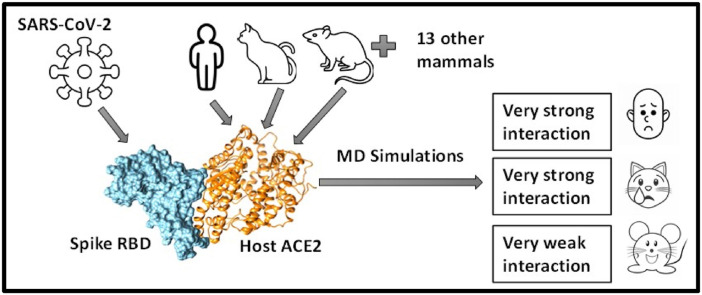
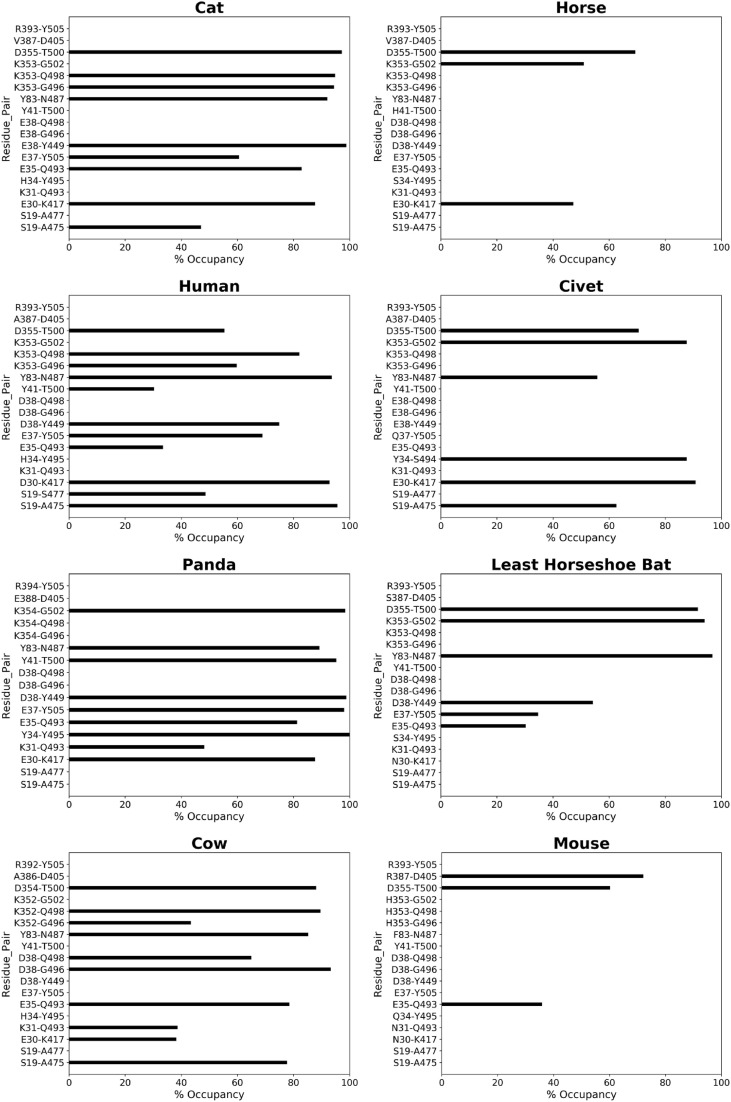
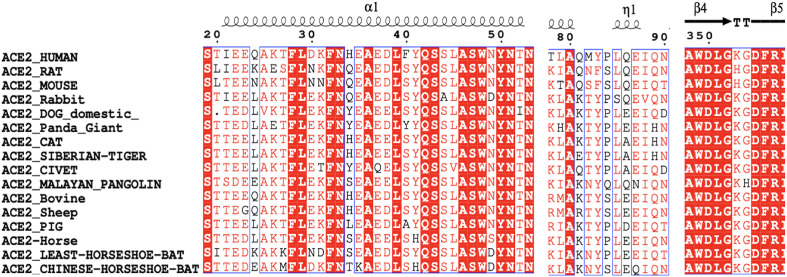
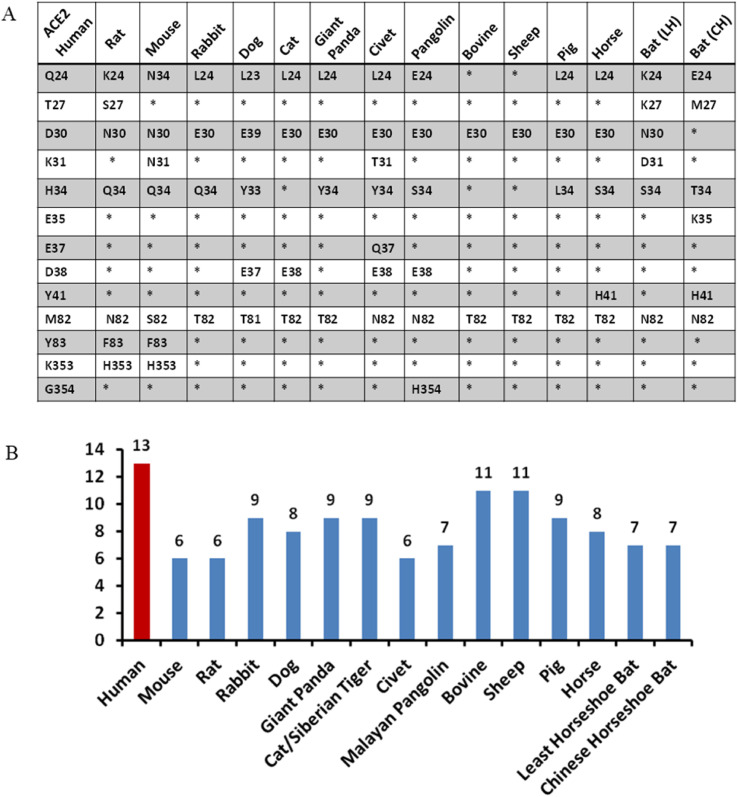
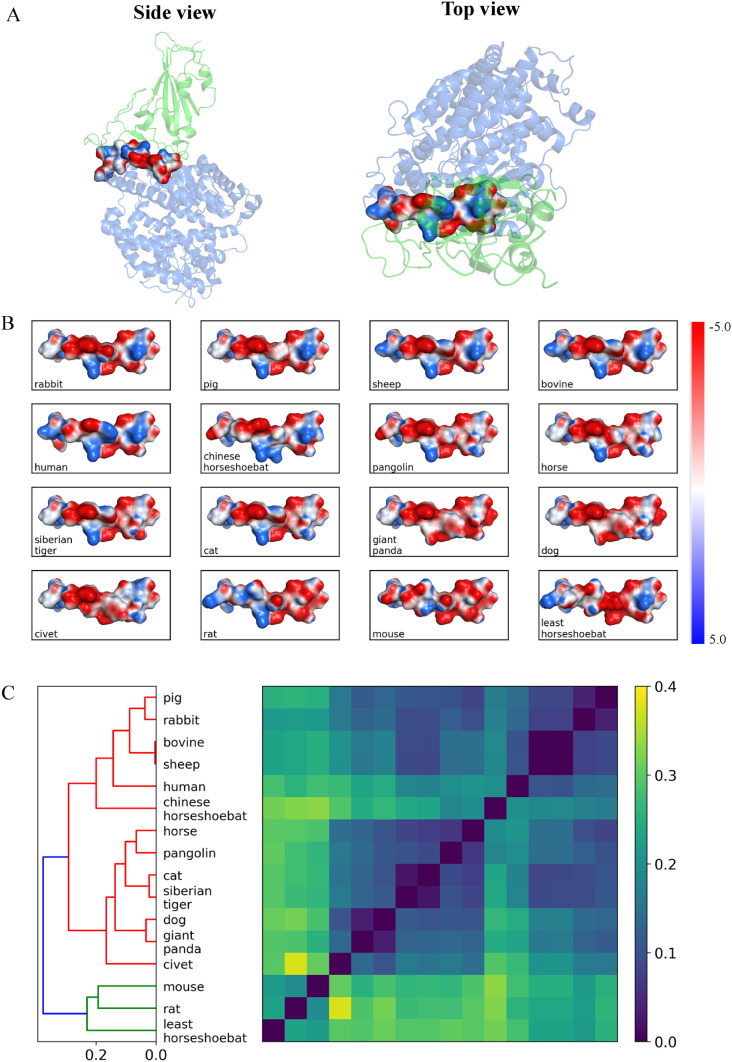
The severe acute respiratory syndrome coronavirus 2 (SARS-CoV-2) is the causative agent of the COVID-19 pandemic. Angiotensin-converting enzyme 2 (ACE2) has been identified as the host cell receptor that binds to the receptor-binding domain (RBD) of the SARS-COV-2 spike protein and mediates cell entry. Because the ACE2 proteins are widely available in mammals, it is important to investigate the interactions between the RBD and the ACE2 of other mammals. Here we analyzed the sequences of ACE2 proteins from 16 mammals, predicted the structures of ACE2-RBD complexes by homology modeling, and refined the complexes using molecular dynamics simulation. Analyses on sequence, structure, and dynamics synergistically provide valuable insights into the interactions between ACE2 and RBD. The analysis outcomes suggest that the ACE2 of bovine, cat, and panda form strong binding interactions with RBD, while in the cases of rat, least horseshoe bat, horse, pig, mouse, and civet, the ACE2 proteins interact weakly with RBD.
严重急性呼吸综合征冠状病毒 2 (SARS-CoV-2) 是 COVID-19 大流行的病原体。血管紧张素转换酶 2 (ACE2) 已被确定为宿主细胞受体,与 SARS-COV-2 刺突蛋白的受体结合域 (RBD) 结合并介导细胞进入。由于 ACE2 蛋白在哺乳动物中广泛存在,因此研究 RBD 与其他哺乳动物 ACE2 之间的相互作用非常重要。在这里,我们分析了来自 16 种哺乳动物的 ACE2 蛋白序列,通过同源建模预测 ACE2-RBD 复合物的结构,并使用分子动力学模拟对复合物进行了细化。序列、结构和动力学的综合分析为 ACE2 与 RBD 之间的相互作用提供了有价值的见解。分析结果表明,牛、猫和熊猫的 ACE2 与 RBD 形成强结合相互作用,而在大鼠、最小蹄蝠、马、猪、鼠和狸猫中,ACE2 蛋白与 RBD 的相互作用较弱。