Department of Cellular Biochemistry, Graduate School of Pharmaceutical Sciences, Kyushu University, 3-1-1 Maidashi, Higashi-ku, Fukuoka 812-8582, Japan.
Nucleic Acids Res. 2021 Dec 2;49(21):12234-12251. doi: 10.1093/nar/gkab1004.
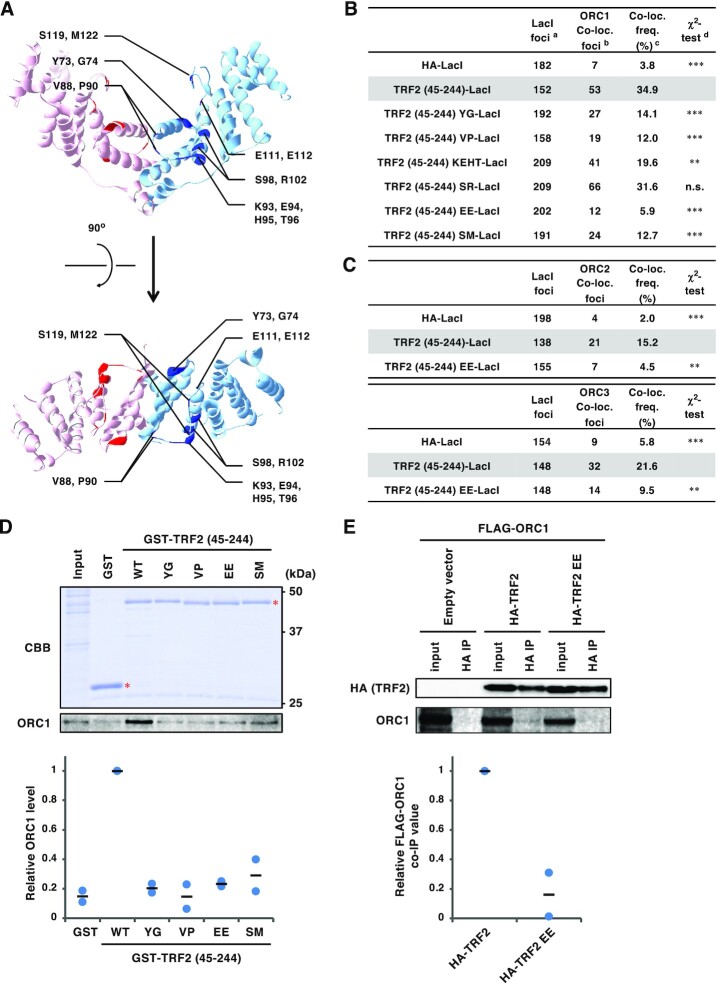
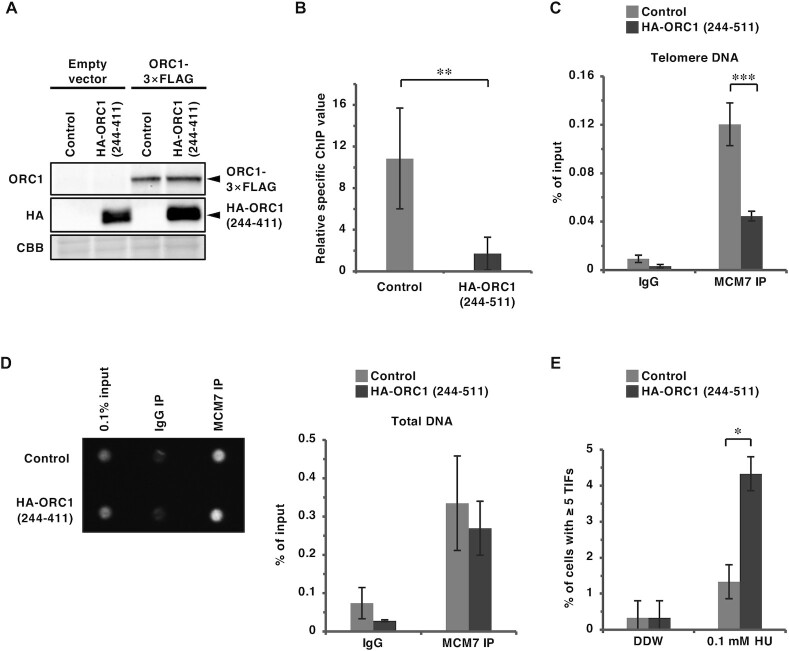
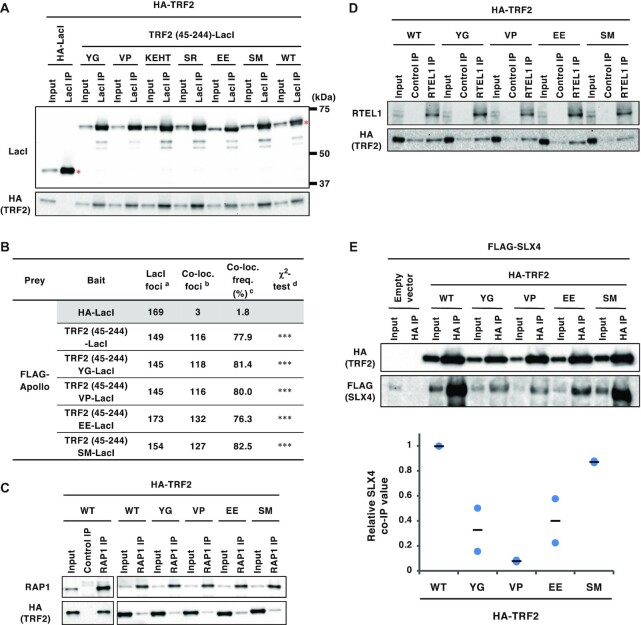
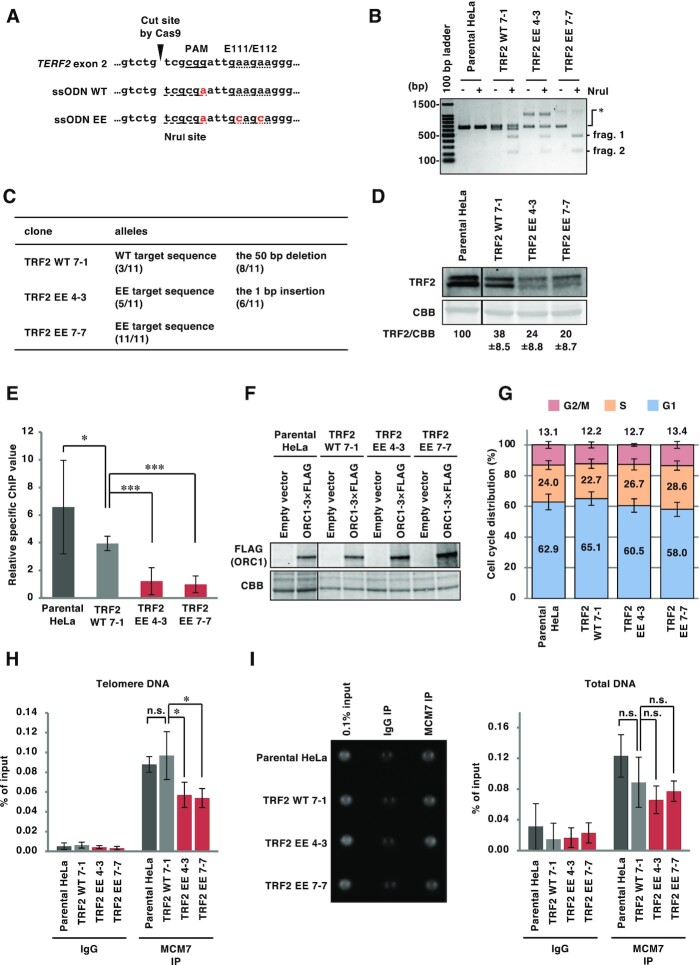
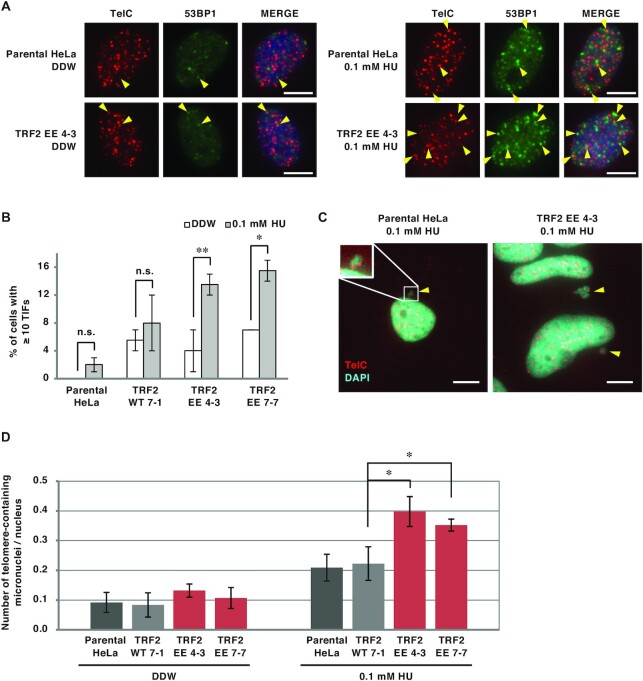
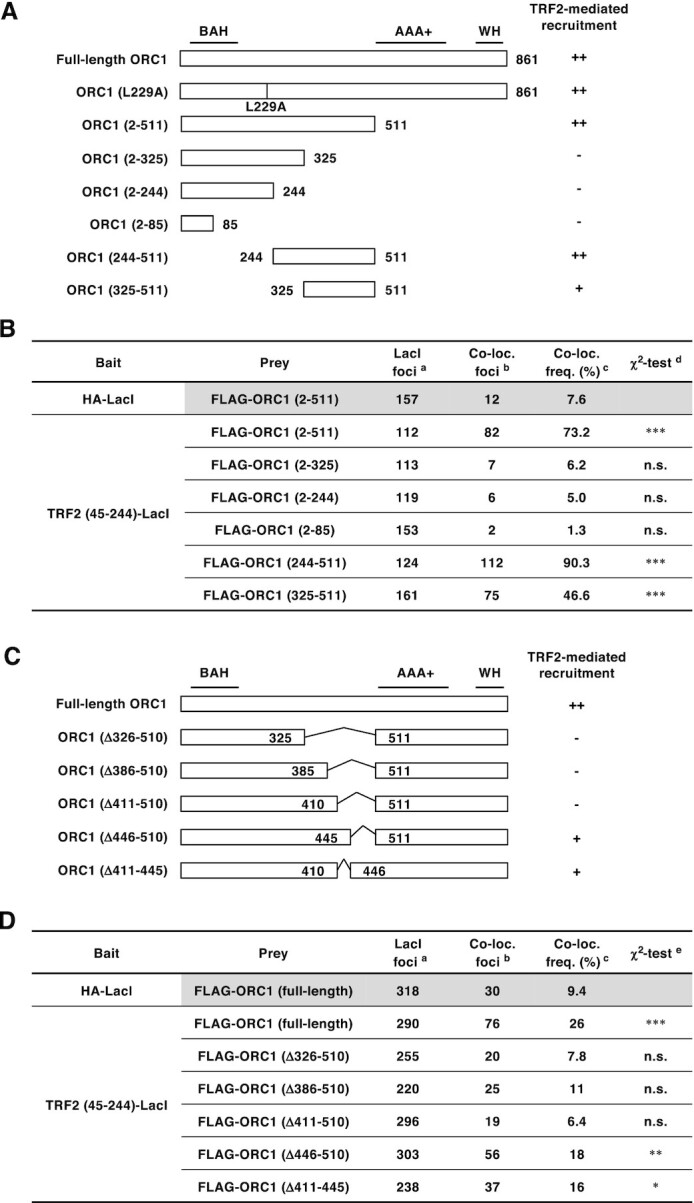
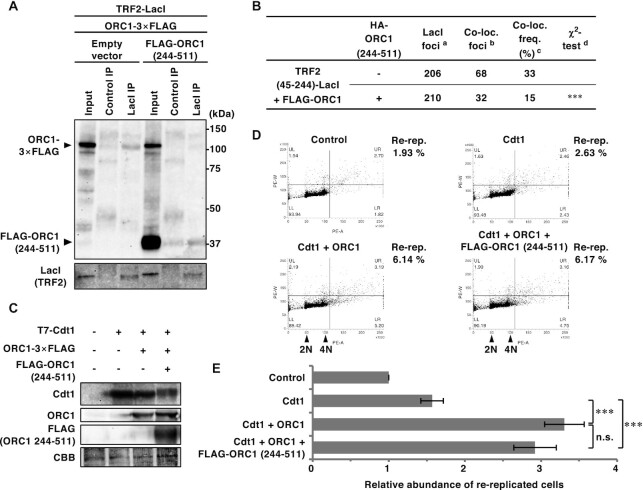
Telomeres are intrinsically difficult-to-replicate region of eukaryotic chromosomes. Telomeric repeat binding factor 2 (TRF2) binds to origin recognition complex (ORC) to facilitate the loading of ORC and the replicative helicase MCM complex onto DNA at telomeres. However, the biological significance of the TRF2-ORC interaction for telomere maintenance remains largely elusive. Here, we employed a TRF2 mutant with mutations in two acidic acid residues (E111A and E112A) that inhibited the TRF2-ORC interaction in human cells. The TRF2 mutant was impaired in ORC recruitment to telomeres and showed increased replication stress-associated telomeric DNA damage and telomere instability. Furthermore, overexpression of an ORC1 fragment (amino acids 244-511), which competitively inhibited the TRF2-ORC interaction, increased telomeric DNA damage under replication stress conditions. Taken together, these findings suggest that TRF2-mediated ORC recruitment contributes to the suppression of telomere instability.
端粒是真核染色体中固有难以复制的区域。端粒重复结合因子 2(TRF2)与起始识别复合物(ORC)结合,有助于 ORC 和复制解旋酶 MCM 复合物加载到端粒上的 DNA。然而,TRF2-ORC 相互作用对于端粒维持的生物学意义在很大程度上仍难以捉摸。在这里,我们在人类细胞中使用了一种具有两个酸性残基(E111A 和 E112A)突变的 TRF2 突变体,该突变体抑制了 TRF2-ORC 相互作用。TRF2 突变体在招募 ORC 到端粒方面存在缺陷,并表现出增加的与复制应激相关的端粒 DNA 损伤和端粒不稳定性。此外,过表达竞争抑制 TRF2-ORC 相互作用的 ORC1 片段(氨基酸 244-511)会在复制应激条件下增加端粒 DNA 损伤。总之,这些发现表明 TRF2 介导的 ORC 募集有助于抑制端粒不稳定性。