
特发性小纤维神经病中的新型自身抗体。
Novel Autoantibodies in Idiopathic Small Fiber Neuropathy.
机构信息
Division of Neurology, Department of Medicine, National University Health System, Singapore.
Department of Medicine, Yong Loo Lin School of Medicine, National University of Singapore, Singapore.
出版信息
Ann Neurol. 2022 Jan;91(1):66-77. doi: 10.1002/ana.26268. Epub 2021 Dec 1.
OBJECTIVE
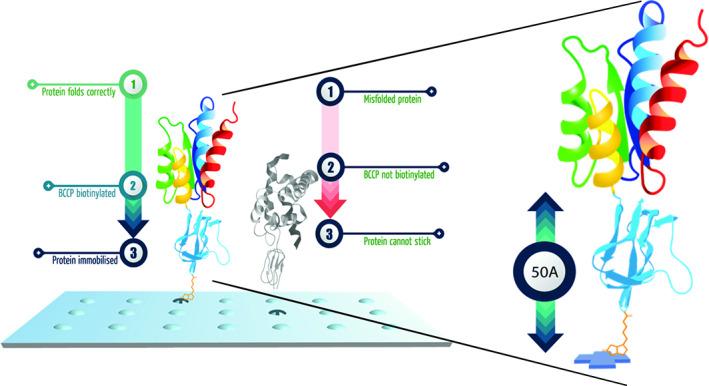
Small fiber neuropathy (SFN) is clinically and etiologically heterogeneous. Although autoimmunity has been postulated to be pathophysiologically important in SFN, few autoantibodies have been described. We aimed to identify autoantibodies associated with idiopathic SFN (iSFN) by a novel high-throughput protein microarray platform that captures autoantibodies expressed in the native conformational state.
METHODS
Sera from 58 SFN patients and 20 age- and gender-matched healthy controls (HCs) were screened against >1,600 immune-related antigens. Fluorescent unit readout and postassay imaging were performed, followed by composite data normalization and protein fold change (pFC) analysis. Analysis of an independent validation cohort of 33 SFN patients against the same 20 HCs was conducted to identify reproducible proteins in both cohorts.
RESULTS
Nine autoantibodies were screened with statistical significance and pFC criteria in both cohorts, with at least 50% change in serum levels. Three proteins showed consistently high fold changes in main and validation cohorts: MX1 (FC = 2.99 and 3.07, respectively, p = 0.003, q = 0.076), DBNL (FC = 2.11 and 2.16, respectively, p = 0.009, q < 0.003), and KRT8 (FC = 1.65 and 1.70, respectively, p = 0.043, q < 0.003). Further subgroup analysis into iSFN and SFN by secondary causes (secondary SFN) in the main cohort showed that MX1 is higher in iSFN compared to secondary SFN (FC = 1.61 vs 0.106, p = 0.009).
INTERPRETATION
Novel autoantibodies MX1, DBNL, and KRT8 are found in iSFN. MX1 may allow diagnostic subtyping of iSFN patients. ANN NEUROL 2022;91:66-77.
目的
小纤维神经病(SFN)在临床上和病因学上具有异质性。尽管自身免疫被认为在 SFN 的病理生理学中很重要,但很少有自身抗体被描述。我们旨在通过一种新的高通量蛋白质微阵列平台来鉴定与特发性 SFN(iSFN)相关的自身抗体,该平台可捕获以天然构象状态表达的自身抗体。
方法
对 58 例 SFN 患者和 20 例年龄和性别匹配的健康对照者(HCs)的血清进行>1600 种免疫相关抗原的筛查。进行荧光单位读数和后检测成像,然后进行复合数据归一化和蛋白质倍数变化(pFC)分析。对 33 例 SFN 患者的独立验证队列进行相同的 20 例 HCs 分析,以鉴定两个队列中均具有可重复性的蛋白质。
结果
在两个队列中,使用统计显著性和 pFC 标准筛选出 9 种自身抗体,血清水平至少有 50%的变化。三个蛋白质在主队列和验证队列中始终显示出较高的折叠变化:MX1(FC分别为 2.99 和 3.07,p=0.003,q=0.076),DBNL(FC 分别为 2.11 和 2.16,p=0.009,q<0.003)和 KRT8(FC 分别为 1.65 和 1.70,p=0.043,q<0.003)。在主队列中,根据次要原因(继发性 SFN)将 iSFN 和 SFN 进一步细分为亚组分析表明,与继发性 SFN 相比,iSFN 中 MX1 更高(FC=1.61 比 0.106,p=0.009)。
解释
在 iSFN 中发现了新型自身抗体 MX1、DBNL 和 KRT8。MX1 可能允许对 iSFN 患者进行诊断亚型分类。神经病学年鉴 2022;91:66-77。



 Zotero 插件