Department of Molecular Biology and Genetics, Aarhus University, Aarhus, Denmark.
Laboratory for Molecular Biology, Wageningen University, Wageningen, Netherlands.
Nat Commun. 2021 Nov 11;12(1):6544. doi: 10.1038/s41467-021-26820-9.
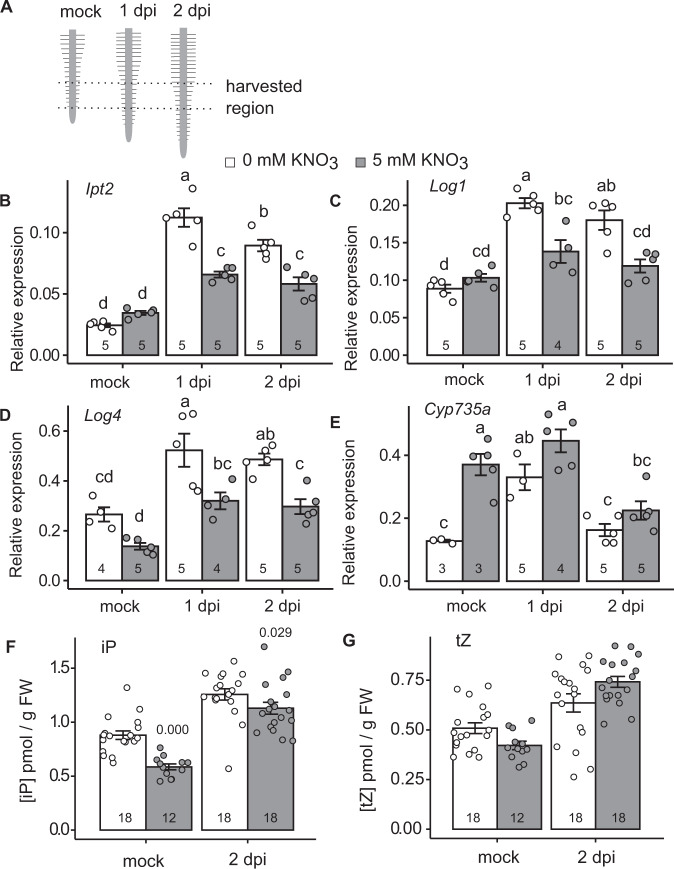
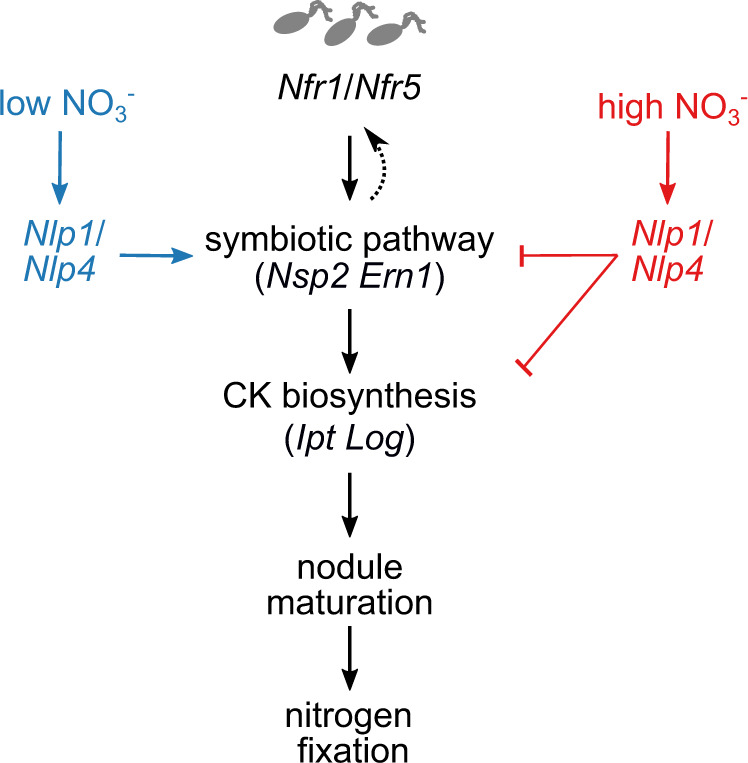
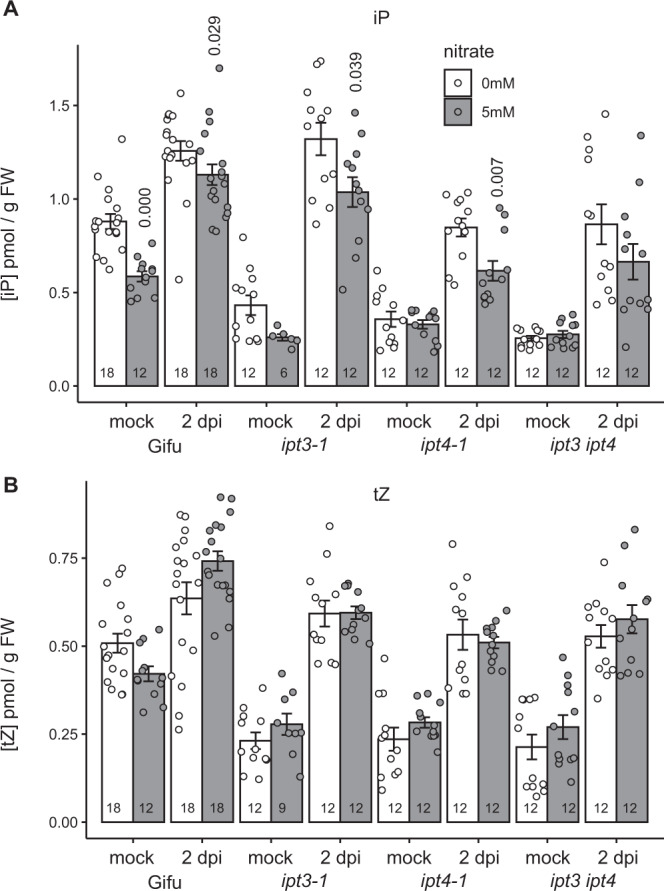
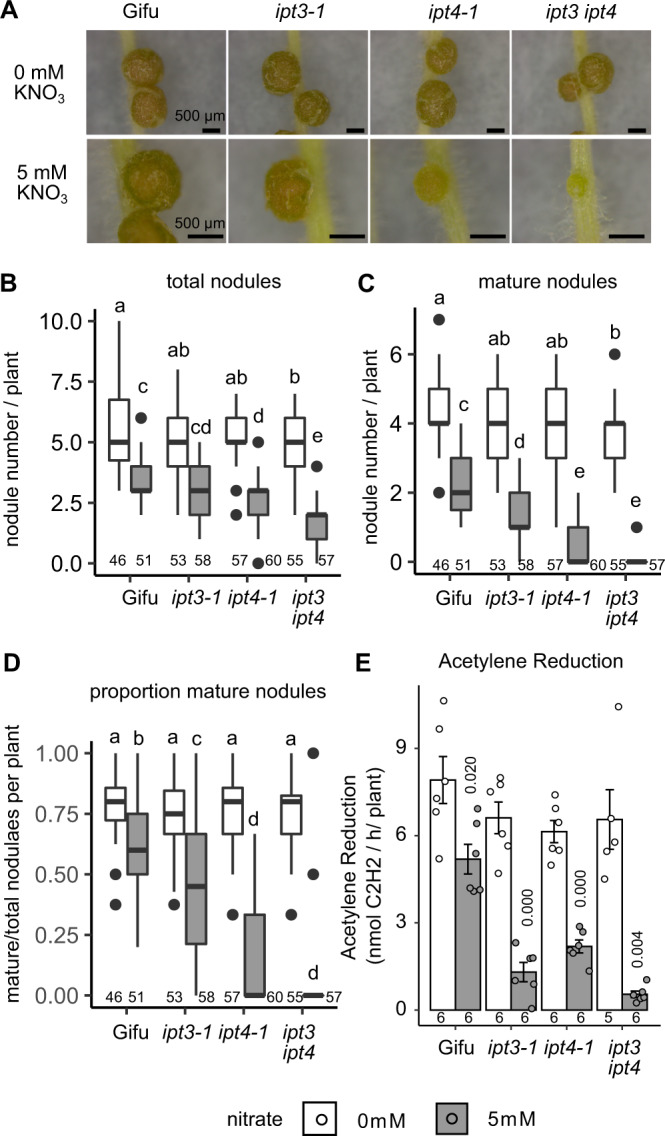
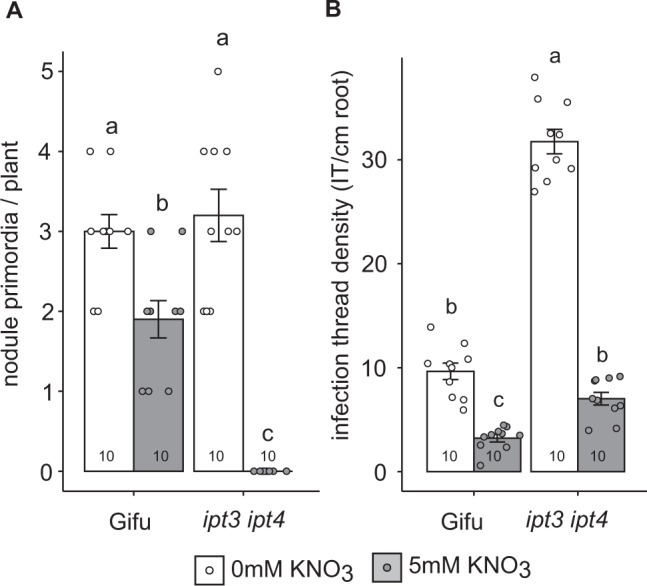
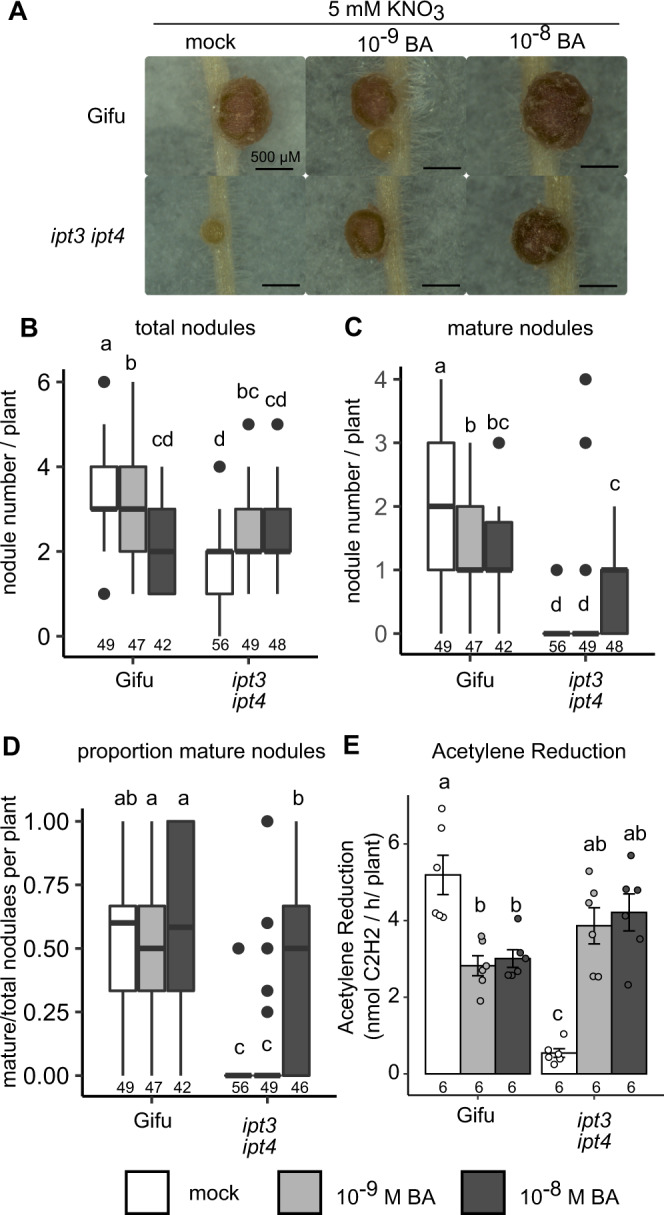
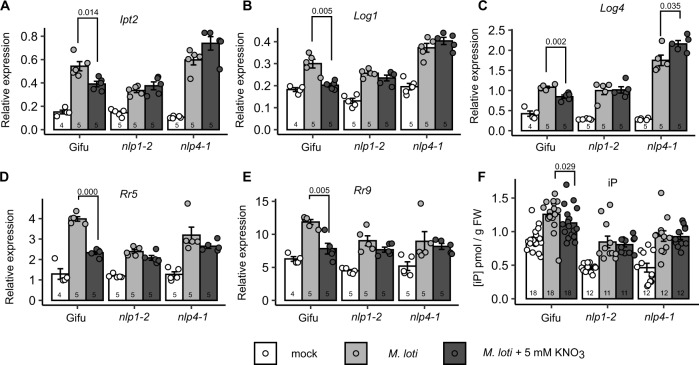
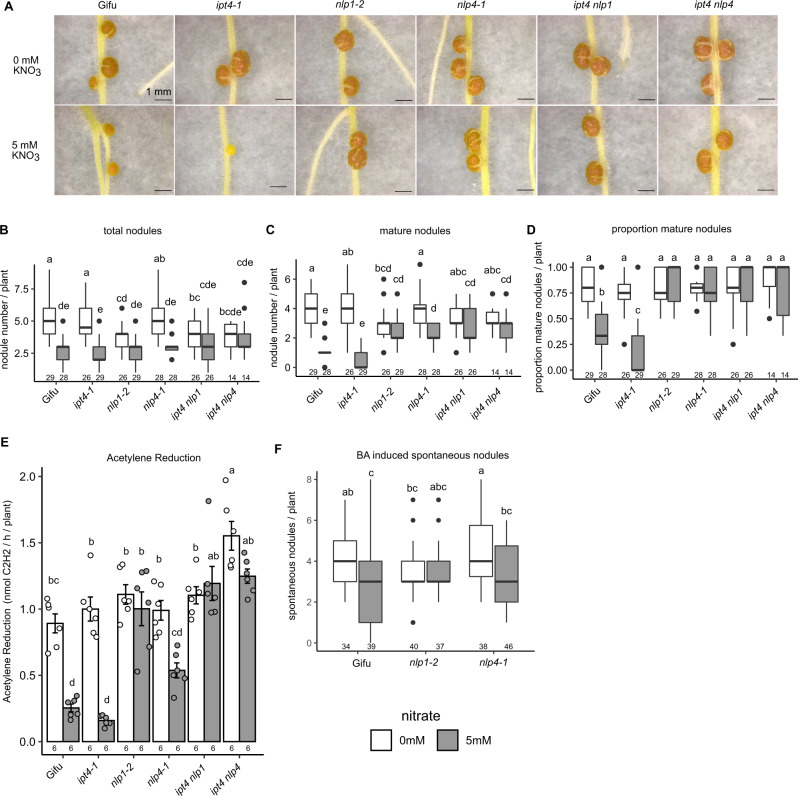
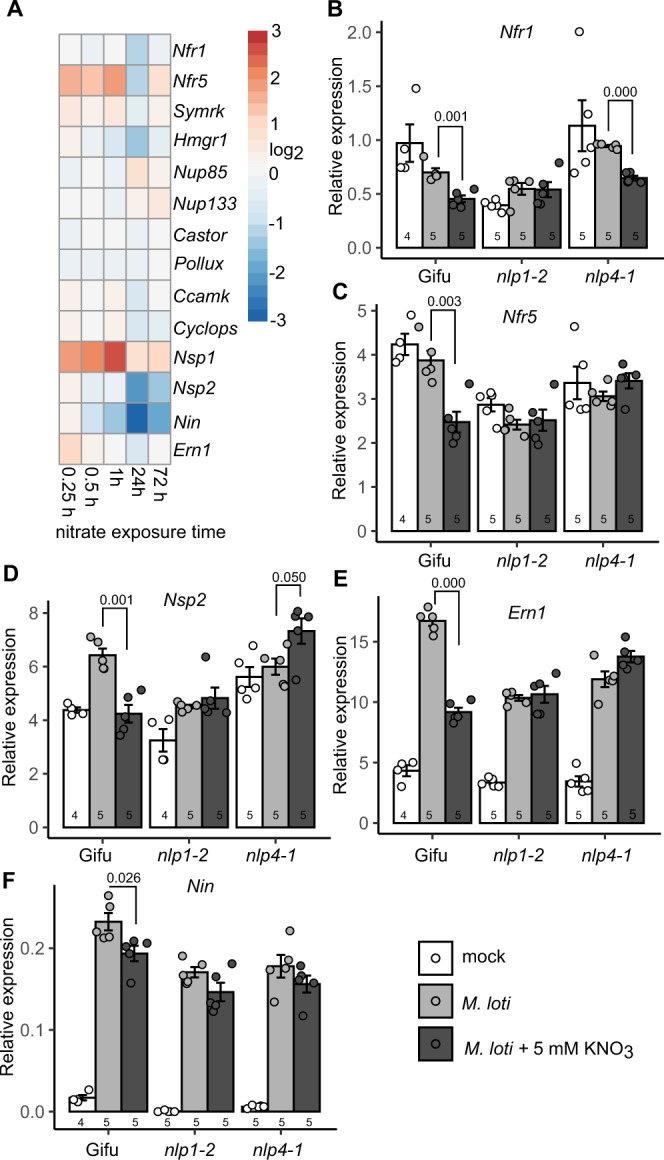
Legumes balance nitrogen acquisition from soil nitrate with symbiotic nitrogen fixation. Nitrogen fixation requires establishment of a new organ, which is a cytokinin dependent developmental process in the root. We found cytokinin biosynthesis is a central integrator, balancing nitrate signalling with symbiotic acquired nitrogen. Low nitrate conditions provide a permissive state for induction of cytokinin by symbiotic signalling and thus nodule development. In contrast, high nitrate is inhibitory to cytokinin accumulation and nodule establishment in the root zone susceptible to nodule formation. This reduction of symbiotic cytokinin accumulation was further exacerbated in cytokinin biosynthesis mutants, which display hypersensitivity to nitrate inhibition of nodule development, maturation and nitrogen fixation. Consistent with this, cytokinin application rescues nodulation and nitrogen fixation of biosynthesis mutants in a concentration dependent manner. These inhibitory impacts of nitrate on symbiosis occur in a Nlp1 and Nlp4 dependent manner and contrast with the positive influence of nitrate on cytokinin biosynthesis that occurs in species that do not form symbiotic root nodules. Altogether this shows that legumes, as exemplified by Lotus japonicus, have evolved a different cytokinin response to nitrate compared to non-legumes.
豆类通过共生固氮来平衡从土壤硝酸盐中获取的氮。固氮需要建立一个新的器官,这是根中依赖细胞分裂素的发育过程。我们发现细胞分裂素的生物合成是一个中央整合器,平衡硝酸盐信号与共生获得的氮。低硝酸盐条件为共生信号诱导细胞分裂素提供了一个许可状态,从而促进了根中的结瘤发育。相比之下,高硝酸盐对根区中结瘤的建立具有抑制作用,而根区容易形成根瘤。在细胞分裂素生物合成突变体中,这种共生细胞分裂素积累的减少进一步加剧,细胞分裂素生物合成突变体对硝酸盐抑制根瘤发育、成熟和固氮表现出超敏性。与此一致的是,细胞分裂素的应用以浓度依赖的方式拯救了生物合成突变体的结瘤和固氮。硝酸盐对共生的这种抑制作用以 Nlp1 和 Nlp4 依赖的方式发生,与硝酸盐对不形成共生根瘤的物种中细胞分裂素生物合成的正向影响形成对比。总的来说,这表明豆科植物,如日本百脉根,与非豆科植物相比,已经进化出了对硝酸盐不同的细胞分裂素反应。