National Engineering Laboratory for Animal Breeding and MOA Key Laboratory of Animal Genetics and Breeding, College of Animal Science and Technology, China Agricultural University, Beijing, 100193, China.
Institute of Animal Husbandry and Veterinary Medicine, Beijing Academy of Agriculture and Forestry Sciences, Beijing, 100097, China.
Sci Rep. 2021 Nov 11;11(1):22100. doi: 10.1038/s41598-021-01718-0.
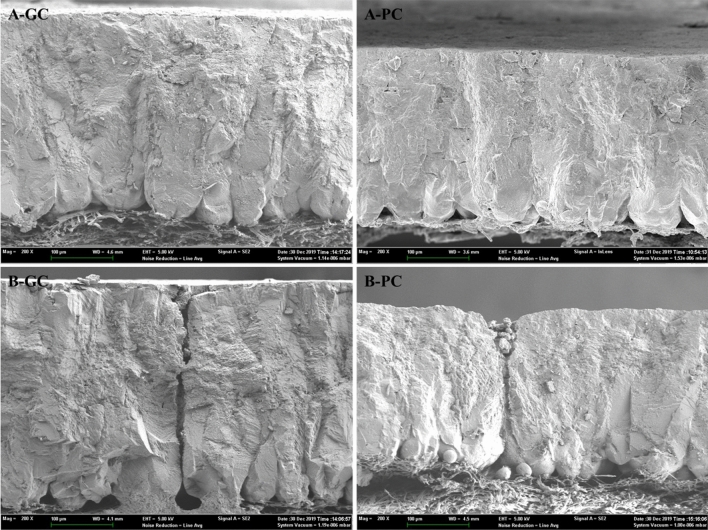
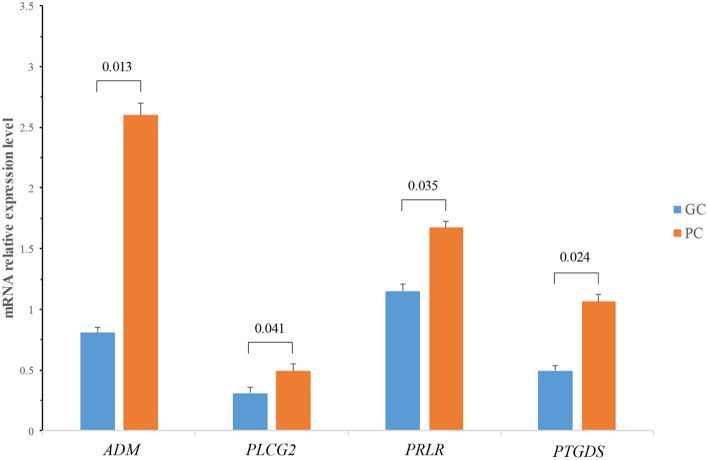
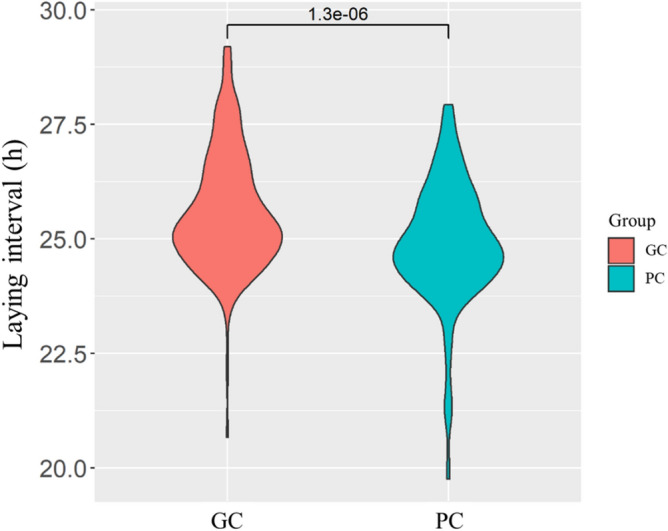
The cuticle formed in the uterus is the outermost layer as the first defense line of eggshell against microbial invasions in most avian species, and analyzing its genetic regulation and influencing factors are of great importance to egg biosecurity in poultry production worldwide. The current study compared the uterine transcriptome and proteome of laying hens producing eggs with good and poor cuticle quality (GC and PC, the top and tail of the cuticle quality distribution), and identified several genes involved with eggshell cuticle quality (ESCQ). Overall, transcriptomic analysis identified 53 differentially expressed genes (DEGs) between PC versus GC group hens, among which 25 were up-regulated and 28 were down-regulated. No differences were found in the uterine proteome. Several DEGs, including PTGDS, PLCG2, ADM and PRLR related to uterine functions and reproductive hormones, were validated by qPCR analysis. Egg quality measurements between GC and PC hens showed GC hens had longer laying interval between two consecutive ovipositions (25.64 ± 1.23 vs 24.94 ± 1.12 h) and thicker eggshell thickness (352.01 ± 23.04 vs 316.20 ± 30.58 μm) (P < 0.05). Apart from eggshell traits, other egg quality traits didn't differ. The result demonstrated eggshell and cuticle deposition duration in the uterus is one of the major factors affecting ESCQ in laying hens. PTGDS, PLCG2, ADM and PRLR genes were discovered and might play crucial roles in cuticle deposition by regulating the uterine muscular activities and secretion function. The findings in the present study provide new insights into the genetic regulation of cuticle deposition in laying hens and establish a foundation for further investigations.
子宫内形成的角质层是蛋壳抵御大多数鸟类物种中微生物入侵的最外层第一道防线,分析其遗传调控和影响因素对全球家禽生产中的蛋品生物安全具有重要意义。本研究比较了产蛋壳质量好(GC,蛋壳质量分布的顶端)和差(PC,蛋壳质量分布的末端)鸡蛋的母鸡的子宫转录组和蛋白质组,并鉴定了几个与蛋壳角质层质量(ESCQ)相关的基因。总体而言,转录组分析在 PC 与 GC 组母鸡之间鉴定出 53 个差异表达基因(DEG),其中 25 个上调,28 个下调。子宫蛋白质组无差异。通过 qPCR 分析验证了几个与子宫功能和生殖激素相关的 DEG,包括 PTGDS、PLCg2、ADM 和 PRLR。GC 和 PC 母鸡之间的蛋品质测量结果表明,GC 母鸡的两次连续产卵之间的产蛋间隔更长(25.64±1.23 比 24.94±1.12 h),蛋壳厚度更厚(352.01±23.04 比 316.20±30.58 μm)(P<0.05)。除蛋壳性状外,其他蛋品质性状无差异。结果表明,蛋壳和角质层在子宫内的沉积时间是影响产蛋母鸡 ESCQ 的主要因素之一。发现了 PTGDS、PLCg2、ADM 和 PRLR 基因,它们可能通过调节子宫肌肉活动和分泌功能在角质层沉积中发挥关键作用。本研究的结果为进一步研究提供了有关产蛋母鸡角质层沉积遗传调控的新见解。