Department of Emergency Medicine, Tri-Service General Hospital, National Defense Medical Center, Taipei, Taiwan.
Division of Nephrology, Department of Internal Medicine, Tri-Service General Hospital, National Defense Medical Center, Taipei, Taiwan.
Front Immunol. 2021 Oct 26;12:740562. doi: 10.3389/fimmu.2021.740562. eCollection 2021.
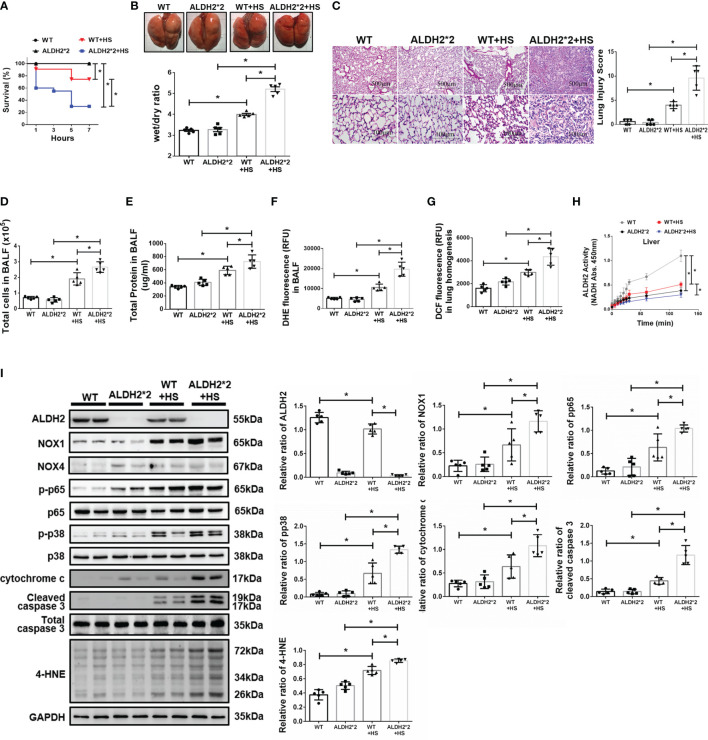
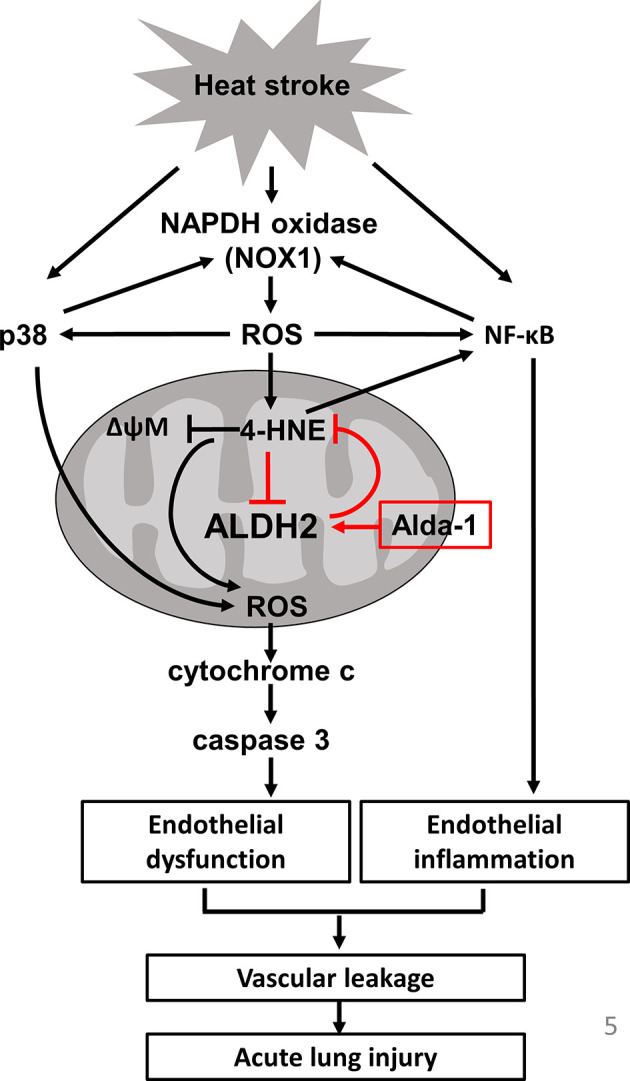
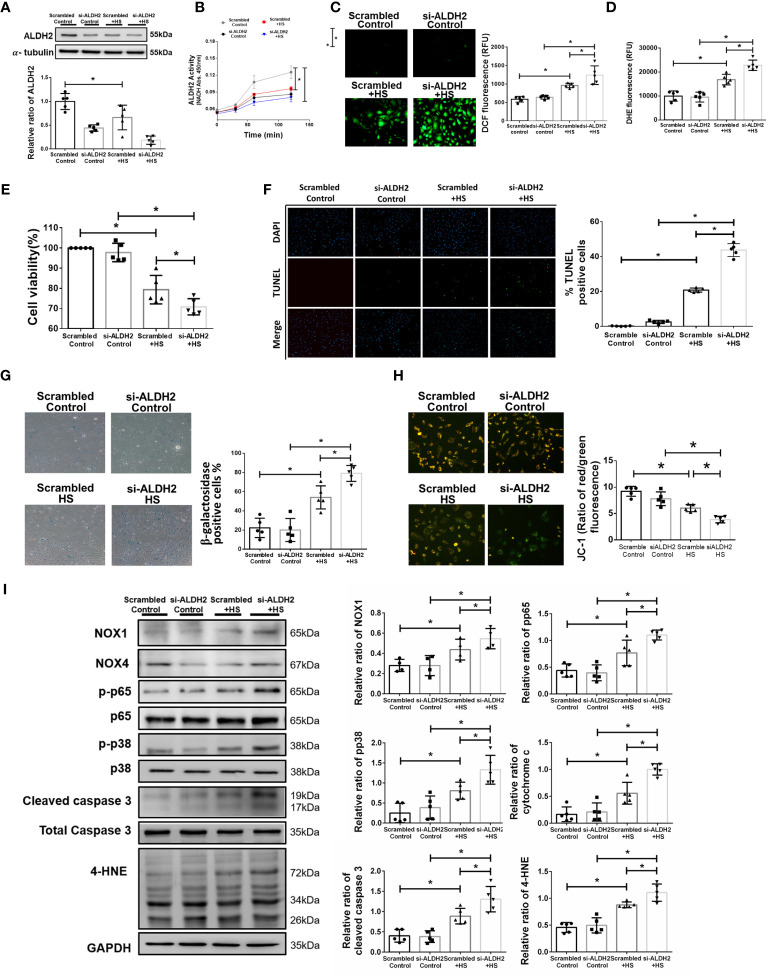
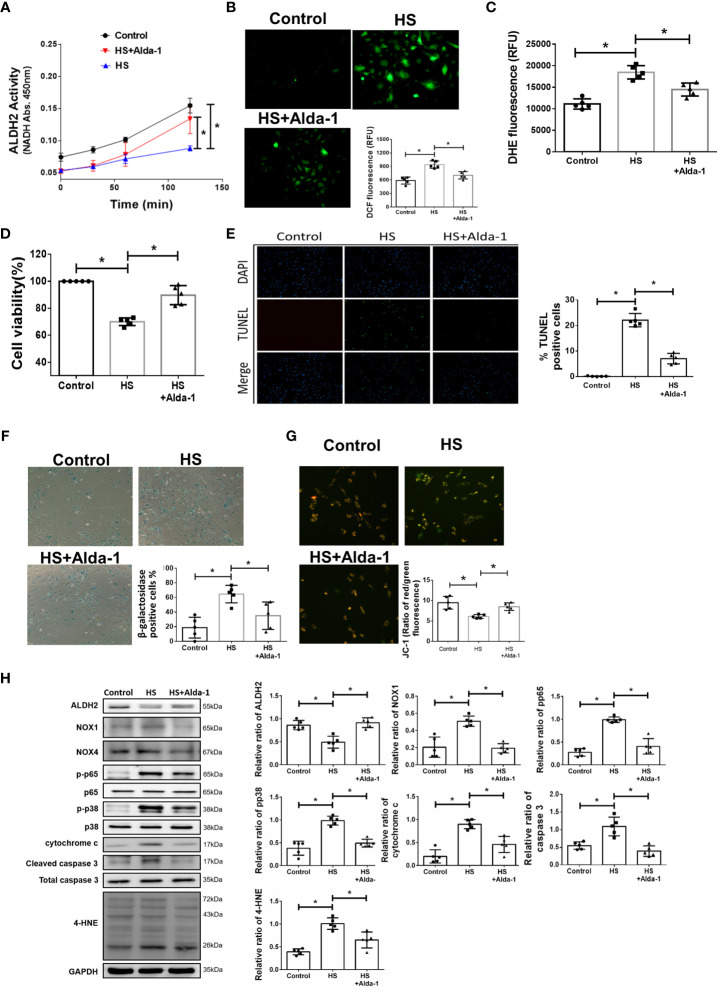
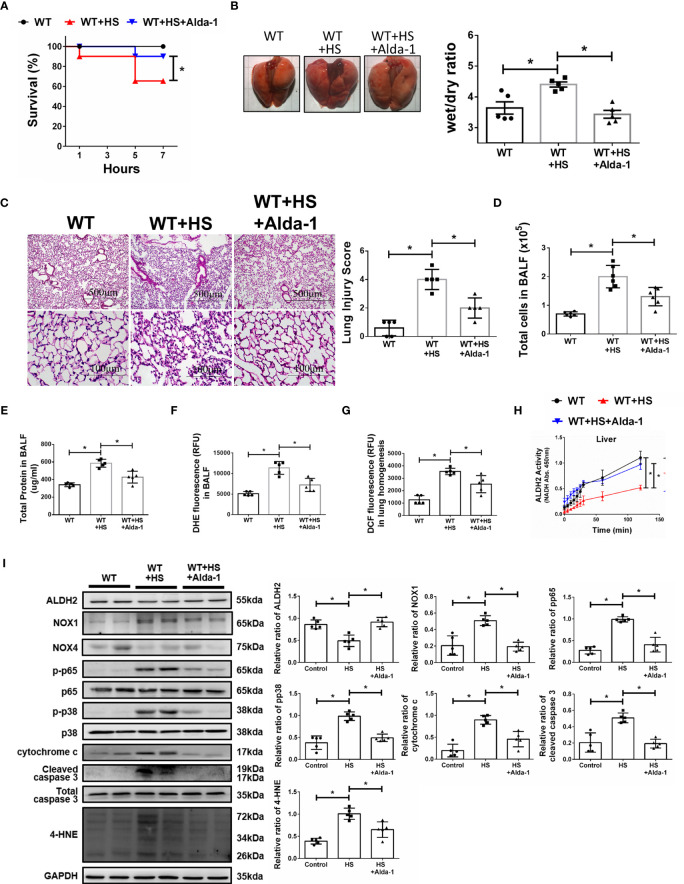
Heatstroke (HS) can cause acute lung injury (ALI). Heat stress induces inflammation and apoptosis reactive oxygen species (ROS) and endogenous reactive aldehydes. Endothelial dysfunction also plays a crucial role in HS-induced ALI. Aldehyde dehydrogenase 2 (ALDH2) is a mitochondrial enzyme that detoxifies aldehydes such as 4-hydroxy-2-nonenal (4-HNE) protein adducts. A single point mutation in ALDH2 at E487K (ALDH22) intrinsically lowers the activity of ALDH2. Alda-1, an ALDH2 activator, attenuates the formation of 4-HNE protein adducts and ROS in several disease models. We hypothesized that ALDH2 can protect against heat stress-induced vascular inflammation and the accumulation of ROS and toxic aldehydes. Homozygous ALDH22 knock-in (KI) mice on a C57BL/6J background and C57BL/6J mice were used for the animal experiments. Human umbilical vein endothelial cells (HUVECs) were used for the experiment. The mice were directly subjected to whole-body heating (WBH, 42°C) for 1 h at 80% relative humidity. Alda-1 (16 mg/kg) was administered intraperitoneally prior to WBH. The severity of ALI was assessed by analyzing the protein levels and cell counts in the bronchoalveolar lavage fluid, the wet/dry ratio and histology. ALDH2*2 KI mice were susceptible to HS-induced ALI . Silencing ALDH2 induced 4-HNE and ROS accumulation in HUVECs subjected to heat stress. Alda-1 attenuated the heat stress-induced activation of inflammatory pathways, senescence and apoptosis in HUVECs. The lung homogenates of mice pretreated with Alda-1 exhibited significantly elevated ALDH2 activity and decreased ROS accumulation after WBH. Alda-1 significantly decreased the WBH-induced accumulation of 4-HNE and p65 and p38 activation. Here, we demonstrated the crucial roles of ALDH2 in protecting against heat stress-induced ROS production and vascular inflammation and preserving the viability of ECs. The activation of ALDH2 by Alda-1 attenuates WBH-induced ALI .
中暑(HS)可导致急性肺损伤(ALI)。热应激会引起炎症和细胞凋亡、活性氧(ROS)和内源性反应性醛。内皮功能障碍在 HS 诱导的 ALI 中也起着关键作用。醛脱氢酶 2(ALDH2)是一种线粒体酶,可解毒 4-羟基-2-壬烯醛(4-HNE)等醛类蛋白加合物。ALDH2 中的一个单点突变 E487K(ALDH22)内在地降低了 ALDH2 的活性。Alda-1 是一种 ALDH2 激活剂,可减轻几种疾病模型中 4-HNE 蛋白加合物和 ROS 的形成。我们假设 ALDH2 可以防止热应激引起的血管炎症以及 ROS 和有毒醛的积累。在 C57BL/6J 背景下的纯合子 ALDH22 敲入(KI)小鼠和 C57BL/6J 小鼠用于动物实验。人脐静脉内皮细胞(HUVEC)用于实验。将小鼠直接置于全身加热(WBH,42°C)中 1 小时,相对湿度为 80%。在 WBH 前腹膜内给予 Alda-1(16 mg/kg)。通过分析支气管肺泡灌洗液中的蛋白水平和细胞计数、湿/干比和组织学来评估 ALI 的严重程度。ALDH2*2 KI 小鼠易患 HS 诱导的 ALI。沉默 ALDH2 可诱导热应激下 HUVEC 中 4-HNE 和 ROS 的积累。Alda-1 可减轻热应激诱导的 HUVEC 中炎症途径、衰老和凋亡的激活。用 Alda-1 预处理的小鼠肺匀浆在 WBH 后显示出 ALDH2 活性显著升高和 ROS 积累减少。Alda-1 显著减少了 WBH 诱导的 4-HNE 和 p65 和 p38 激活的积累。在这里,我们证明了 ALDH2 在防止热应激诱导的 ROS 产生和血管炎症以及维持 EC 活力方面的关键作用。Alda-1 激活 ALDH2 可减轻 WBH 诱导的 ALI。