Ho Chia-Chi, Chen Yu-Cheng, Tsai Ming-Hsien, Tsai Hui-Ti, Weng Chen-Yi, Yet Shaw-Fang, Lin Pinpin
National Institute of Environmental Health Sciences, National Health Research Institutes, Zhunan 53053, Taiwan.
Institute of Cellular and System Medicine, National Health Research Institutes, Zhunan 53053, Taiwan.
Antioxidants (Basel). 2021 May 14;10(5):782. doi: 10.3390/antiox10050782.
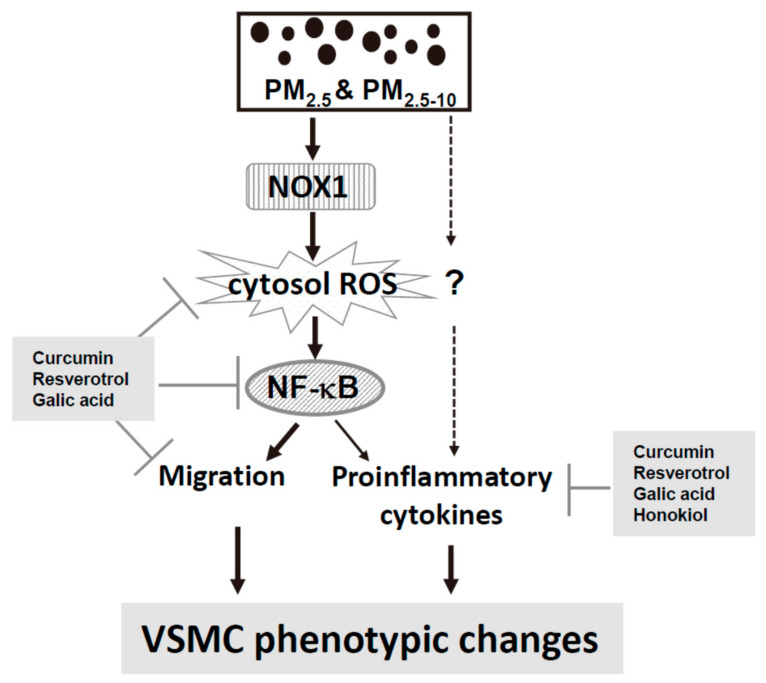
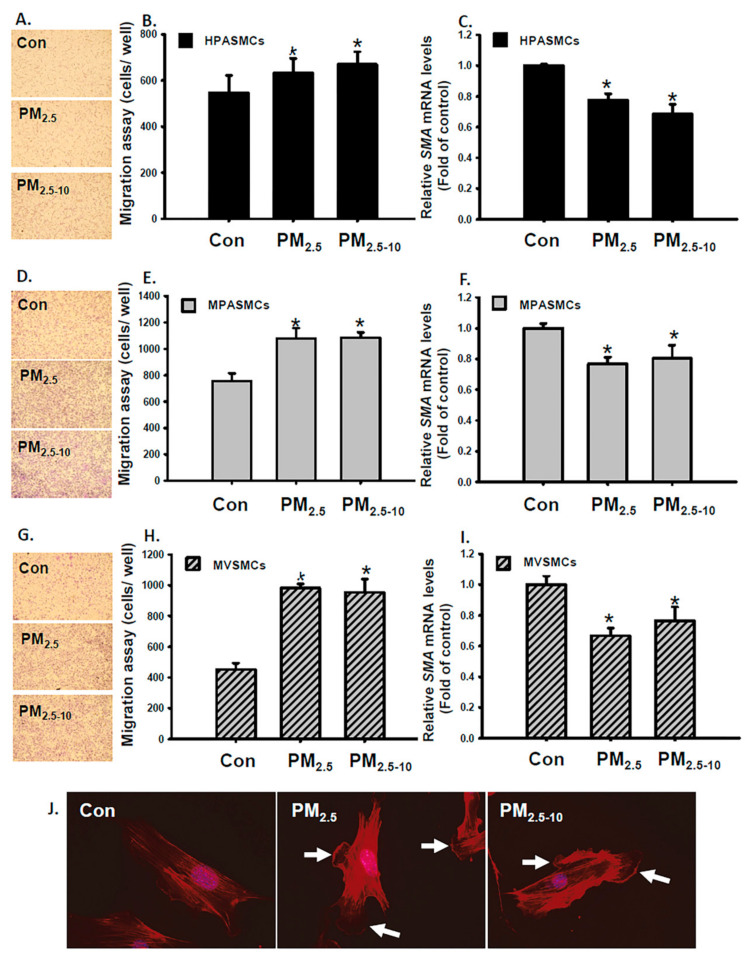
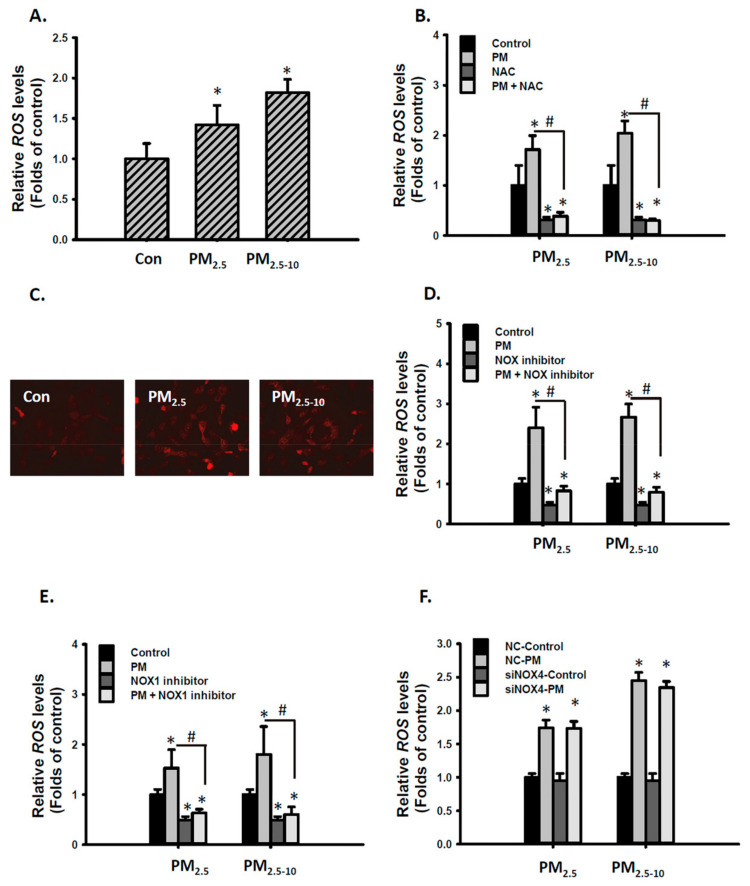
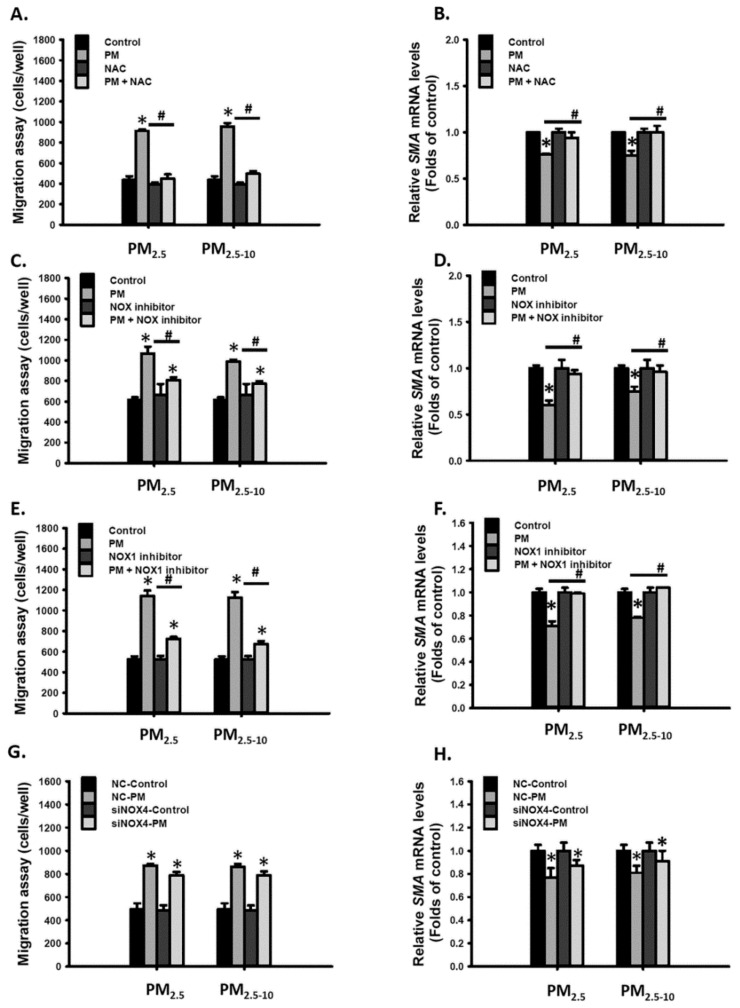
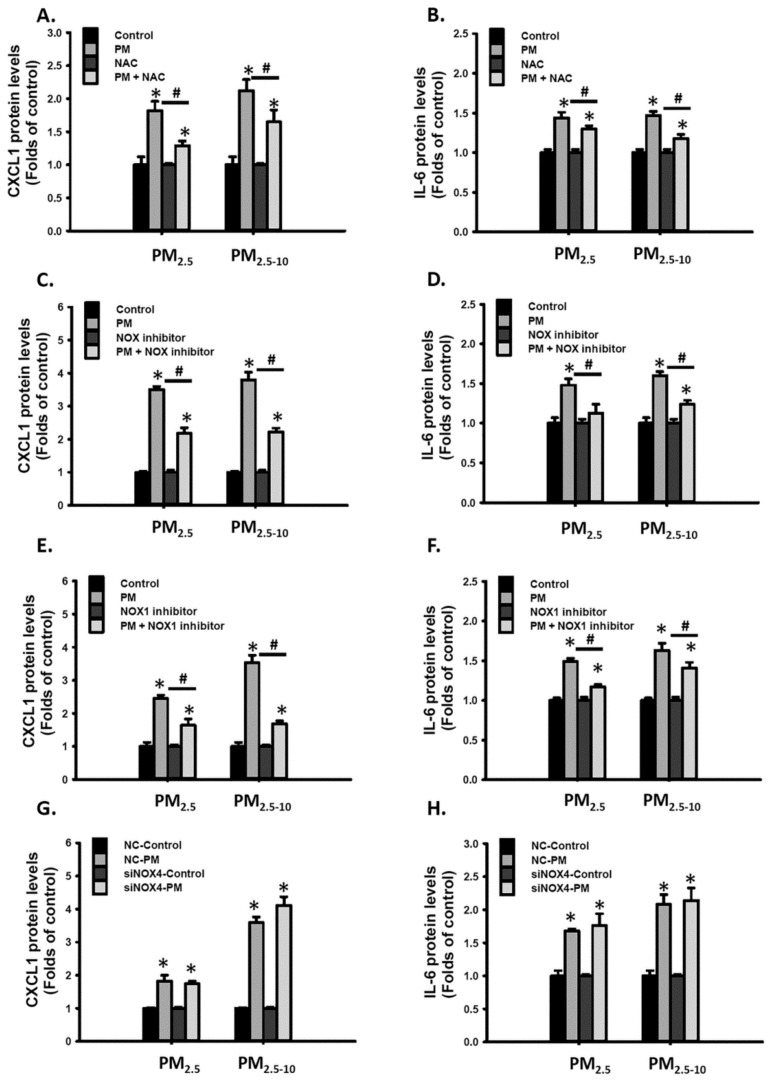
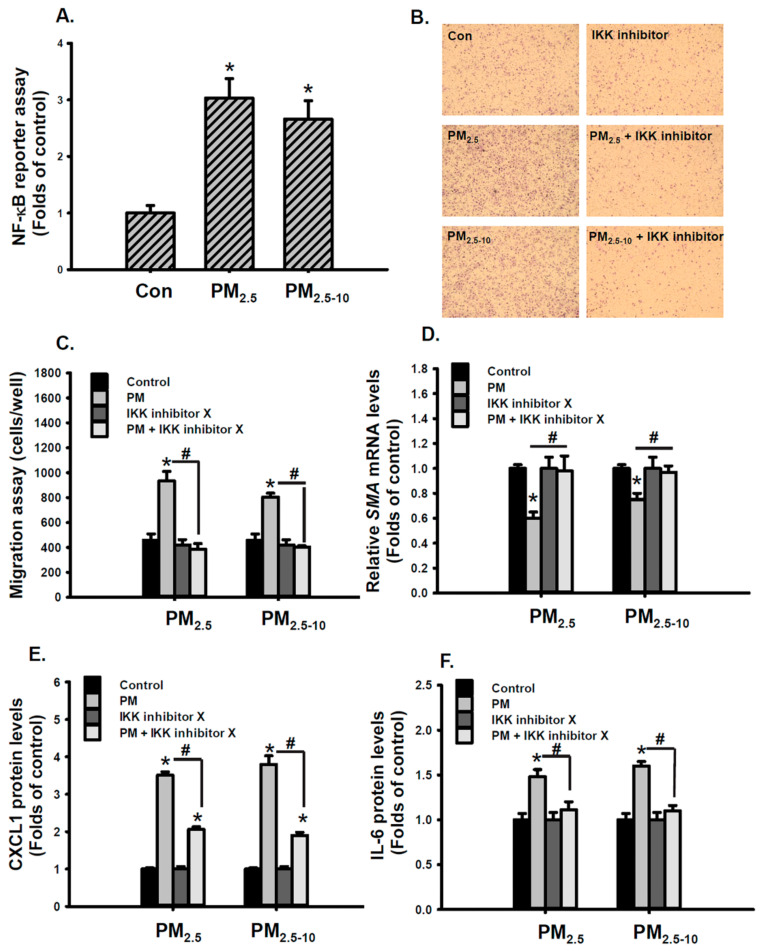
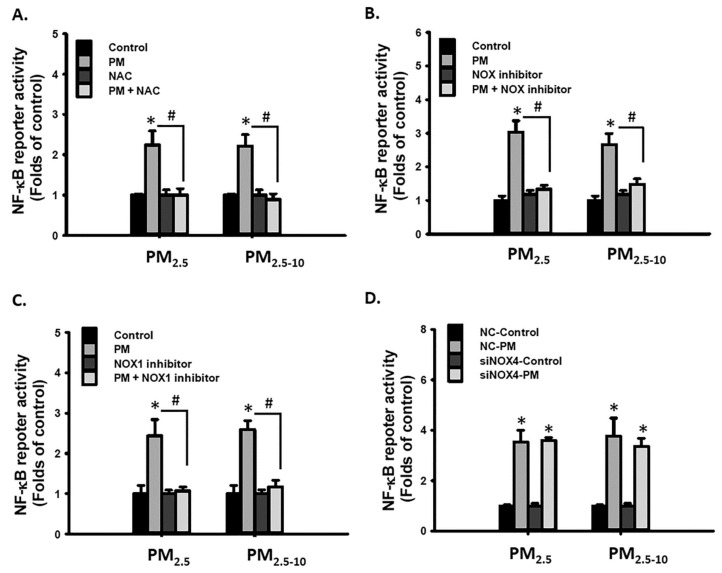
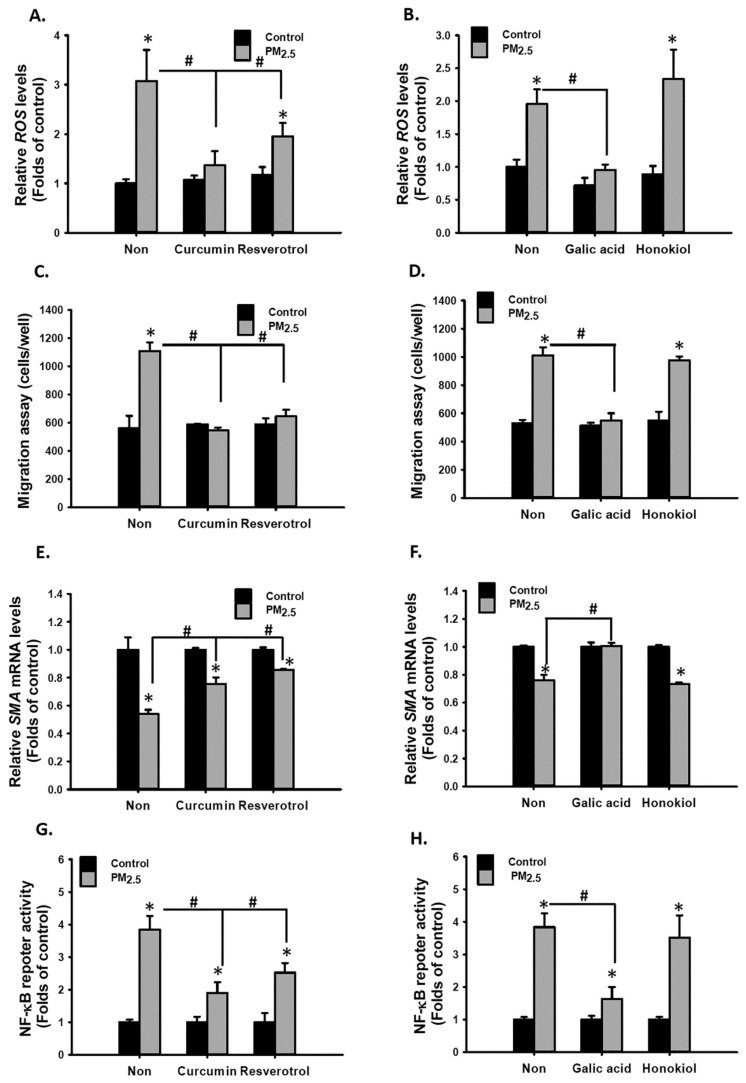
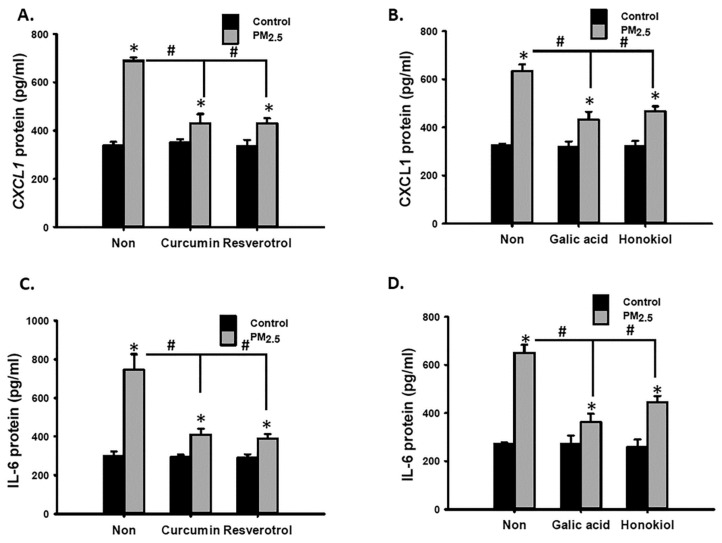
Epidemiological studies have demonstrated an association between ambient particulate matter (PM) exposure and vascular diseases. Here, we observed that treatment with ambient PM increased cell migration ability in vascular smooth muscle cells (VSMCs) and pulmonary arterial SMCs (PASMCs). These results suggest that VSMCs and PASMCs transitioned from a differentiated to a synthetic phenotype after PM exposure. Furthermore, treatment with PM increased intracellular reactive oxygen species (ROS), activated the NF-κB signaling pathway, and increased the expression of proinflammatory cytokines in VSMCs. Using specific inhibitors, we demonstrated that PM increased the migration ability of VSMCs via the nicotinamide-adenine dinucleotide phosphate (NADPH) oxidase 1 (NOX1)/ROS-dependent NF-κB signaling pathway, which also partially involved in the induction of proinflammatory cytokines. Finally, we investigated whether nature polyphenolic compounds prevent PM-induced migration and proinflammatory cytokines secretion in VSMCs. Curcumin, resveratrol, and gallic acid prevented PM-induced migration via the ROS-dependent NF-κB signaling pathway. However, honokiol did not prevent PM-induced migration or activation of the ROS-dependent NF-κB signaling pathway. On the other hand, all polyphenols prevented PM-induced cytokines secretion. These data indicated that polyphenols prevented PM-induced migration and cytokine secretion via blocking the ROS-dependent NF-κB signaling pathway in VSMCs. However, other mechanisms may also contribute to PM-induced cytokine secretion.
流行病学研究表明,环境颗粒物(PM)暴露与血管疾病之间存在关联。在此,我们观察到用环境PM处理可增加血管平滑肌细胞(VSMC)和肺动脉平滑肌细胞(PASMC)的细胞迁移能力。这些结果表明,PM暴露后VSMC和PASMC从分化表型转变为合成表型。此外,PM处理可增加细胞内活性氧(ROS),激活NF-κB信号通路,并增加VSMC中促炎细胞因子的表达。使用特异性抑制剂,我们证明PM通过烟酰胺腺嘌呤二核苷酸磷酸(NADPH)氧化酶1(NOX1)/ROS依赖性NF-κB信号通路增加VSMC的迁移能力,该通路也部分参与促炎细胞因子的诱导。最后,我们研究了天然多酚化合物是否能预防PM诱导的VSMC迁移和促炎细胞因子分泌。姜黄素、白藜芦醇和没食子酸通过ROS依赖性NF-κB信号通路预防PM诱导的迁移。然而,厚朴酚不能预防PM诱导的迁移或ROS依赖性NF-κB信号通路的激活。另一方面,所有多酚都能预防PM诱导的细胞因子分泌。这些数据表明,多酚通过阻断VSMC中ROS依赖性NF-κB信号通路来预防PM诱导的迁移和细胞因子分泌。然而,其他机制也可能导致PM诱导的细胞因子分泌。