Sorlandet Hospital, Department of Cardiology, Arendal, Norway.
Clinic of Cardiology, St. Olavs Hospital, Trondheim, Norway.
J Healthc Eng. 2021 Nov 2;2021:5230947. doi: 10.1155/2021/5230947. eCollection 2021.
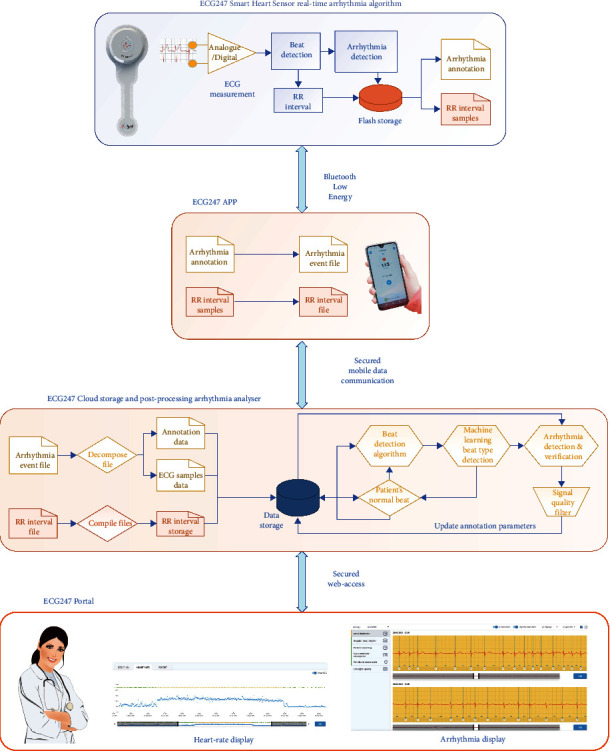
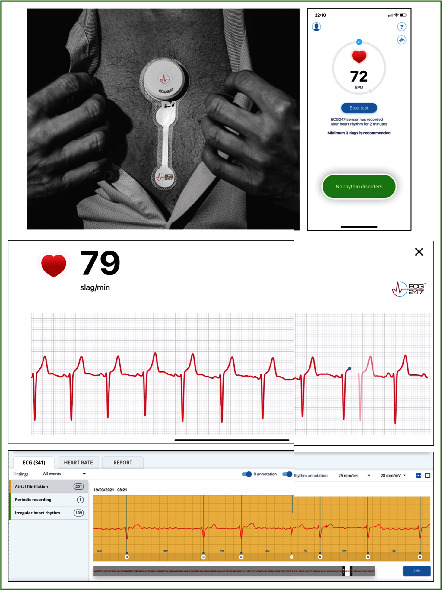
Heart rhythm disorders, especially atrial fibrillation (AF), are increasing global health challenges. Conventional diagnostic tools for assessment of rhythm disorders suffer from limited availability, limited test duration time, and usability challenges. There is also a need for out-of-hospital investigation of arrhythmias. Therefore, the Norwegian ECG247 Smart Heart Sensor has been developed to simplify the assessment of heart rhythm disorders. The current study aimed to evaluate the diagnostic accuracy and usability of the ECG247 Smart Heart Sensor compared to conventional Holter monitors.
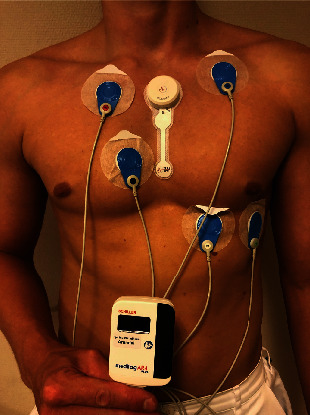
Parallel tests with ECG247 Smart Heart Sensor and a Holter monitor were performed in 151 consecutive patients referred for out-of-hospital long-term ECG recording at Sorlandet Hospital Arendal, Norway. All ECG data were automatically analysed by both systems and evaluated by hospital physicians. Participants were asked to complete a questionnaire scoring usability parameters after the test.
A total of 150 patients (62% men, age 54 (±17) years) completed the study. The ECG quality from both monitors was considered satisfactory for rhythm analysis in all patients. AF was identified in 9 (6%) patients during the period with parallel tests. The diagnostic accuracy for automatic AF detection was 95% (95% CI 91-98) for the ECG247 Smart Heart Sensor and 81% (95% CI 74-87) for the Holter system. The proportion of false-positive AF was 4% in tests analysed by the ECG247 algorithm and 16% in tests analysed by the Holter algorithm. Other arrhythmias were absent/rare. The system usability score was significantly better for ECG247 Smart Heart Sensor compared to traditional Holter technology (score 87.4 vs. 67.5, < 0.001).
The ECG247 Smart Heart Sensor showed at least comparable diagnostic accuracy for AF and improved usability compared to conventional Holter technology. ECG247 allows for prolonged monitoring and may improve detection of AF. This trial is registered with https://clinicaltrials.gov/ct2/show/NCT04700865.
心律紊乱,尤其是心房颤动(AF),是全球性的健康挑战。用于评估节律紊乱的传统诊断工具存在可用性有限、测试持续时间有限和可用性挑战等问题。也需要对心律失常进行院外调查。因此,开发了挪威 ECG247 智能心脏传感器,以简化心律紊乱的评估。本研究旨在评估 ECG247 智能心脏传感器与常规 Holter 监测器相比的诊断准确性和可用性。
在挪威阿伦达尔索尔兰德医院对 151 例连续患者进行了 ECG247 智能心脏传感器与 Holter 监测器的平行试验,这些患者被转诊进行院外长期心电图记录。两个系统均自动分析所有 ECG 数据,并由医院医生进行评估。试验结束后,参与者被要求完成一份评估可用性参数的问卷。
共有 150 例患者(62%为男性,年龄 54(±17)岁)完成了研究。两个监测器的心电图质量在所有患者中均被认为足以进行节律分析。在平行试验期间,有 9 例(6%)患者发现房颤。ECG247 智能心脏传感器自动房颤检测的诊断准确性为 95%(95%CI 91-98),Holter 系统为 81%(95%CI 74-87)。ECG247 算法分析的假阳性房颤比例为 4%,Holter 算法分析的为 16%。其他心律失常少见/罕见。与传统 Holter 技术相比,ECG247 智能心脏传感器的系统可用性评分明显更好(评分 87.4 对 67.5,<0.001)。
与传统 Holter 技术相比,ECG247 智能心脏传感器对 AF 的诊断准确性至少相当,且可用性更高。ECG247 可实现长时间监测,并可能提高 AF 的检测率。本试验在 https://clinicaltrials.gov/ct2/show/NCT04700865 注册。