Ali Farhan, Hu Xiaoyue, Wang Duoqi, Yang Fengying, Guo Hao, Wang Yongmo
Hubei Insect Resources Utilization and Sustainable Pest Management Key Laboratory College of Plant Science and Technology Huazhong Agricultural University Wuhan China.
Ecol Evol. 2021 Oct 11;11(21):15261-15272. doi: 10.1002/ece3.8209. eCollection 2021 Nov.
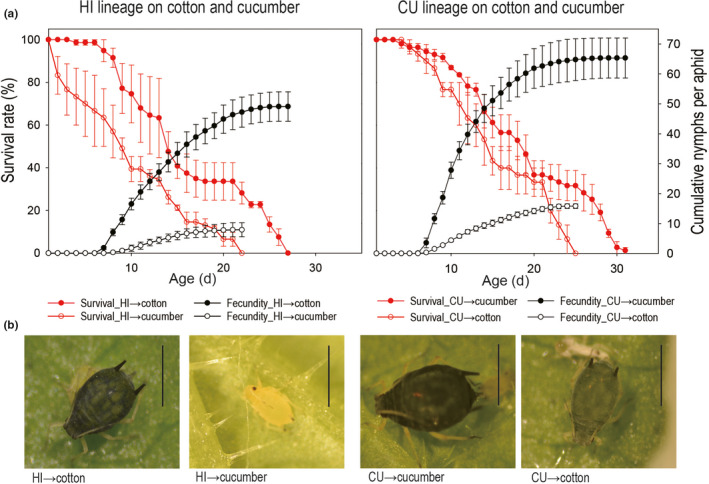
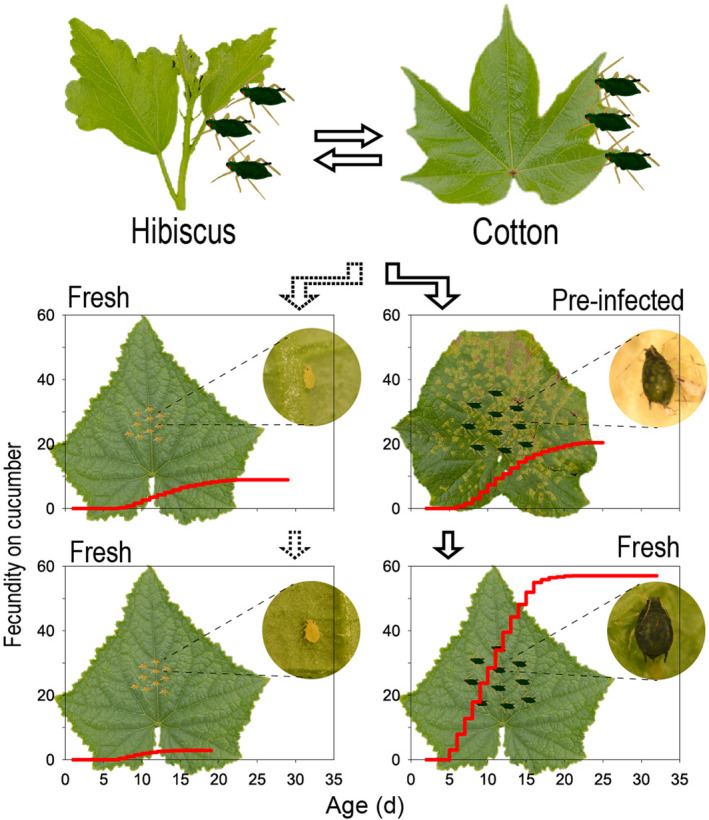
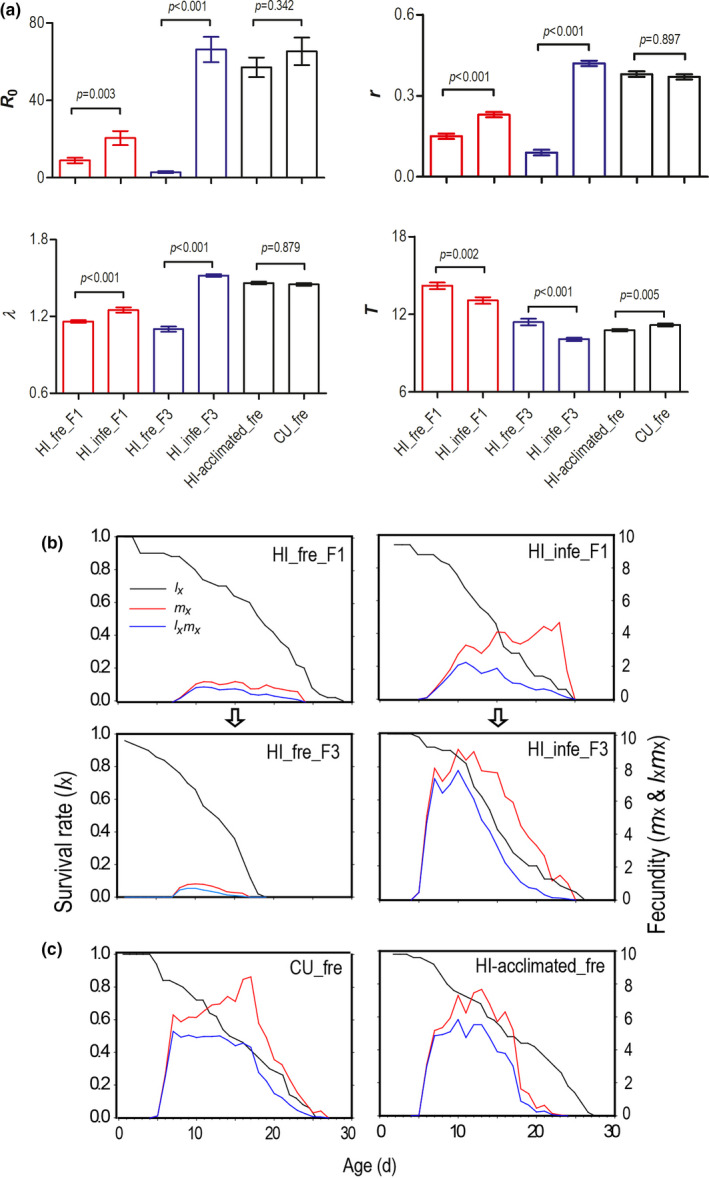
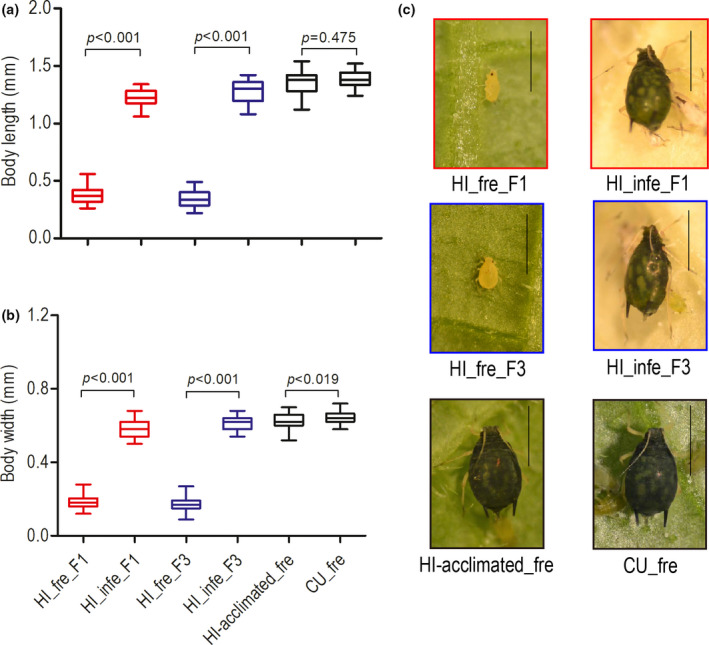
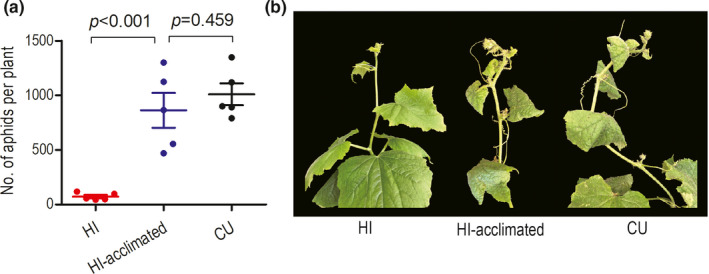
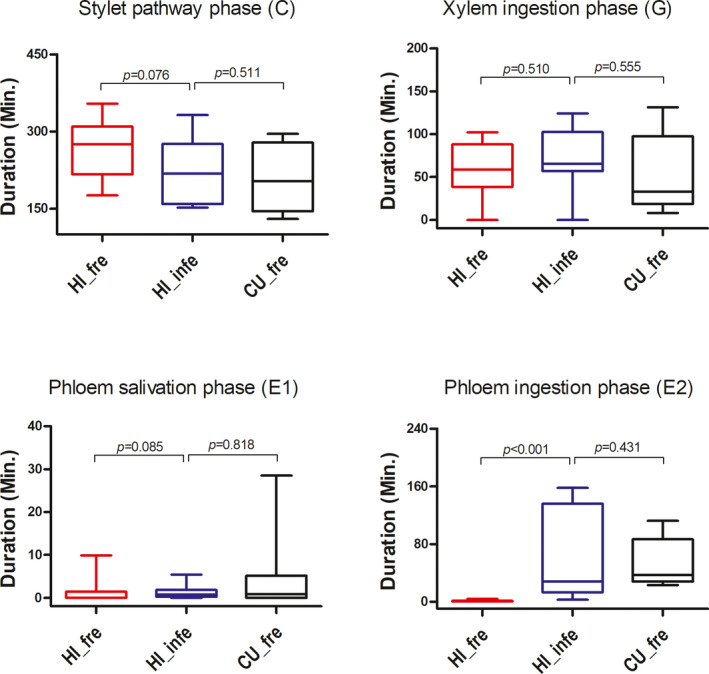
Polyphagous aphids often consist of host-specialized lineages, which have greater fitness on their native hosts than on others. The underlying causes are important for understanding of the evolution of diet breadth and host shift of aphids. The cotton-melon aphid Glover is extremely polyphagous with many strict host-specialized lineages. Whether and how the lineage specialized on the primary host hibiscus shifts to the secondary host cucumber remains elusive. We found that the hibiscus-specialized lineage suffered high mortality and gave birth to very few nymphs developing into yellow dwarfs on fresh cucumber leaves, and did not inflict any damage symptoms on cucumber plants. The poor performance did not improve with prolonged exposure to cucumber; however, it did significantly improve when the cucumber leaves were pre-infected with a biotrophic phytopathogen . More importantly, the hibiscus-specialized lineage with two-generation feeding experience on pre-infected cucumber leaves performed as well as the cucumber-specialized lineage did on fresh cucumber leaves, and inflicted typical damage symptoms on intact cucumber plants. Electrical penetration graph (EPG) indicated that the hibiscus-specialized lineage did not ingest phloem sap from fresh cucumber leaves but succeeded in ingesting phloem sap from pre-infected cucumber leaves, which explained the performance improvement of the hibiscus-specialized lineage on pre-infected cucumber leaves. This study revealed a new pathway for the hibiscus-specialized lineage to quickly acclimate to cucumber under the assistance of the phytopathogen. We considered that the short feeding experience on pre-infected cucumber may activate expression of effector genes that are related to specific host utilization. We suggest to identify host-specific effectors by comparing proteomes or/and transcriptomes of the hibiscus-specialized lineage before and after acclimating to cucumber.
多食性蚜虫通常由宿主特化的谱系组成,这些谱系在其原生宿主上比在其他宿主上具有更高的适应性。其潜在原因对于理解蚜虫食性广度的进化和宿主转移至关重要。棉瓜蚜格洛弗具有极强的多食性,包含许多严格的宿主特化谱系。专门寄生于主要宿主木槿的谱系是否以及如何转移到次要宿主黄瓜上仍然不清楚。我们发现,专门寄生于木槿的谱系在新鲜黄瓜叶片上死亡率很高,产的若虫很少能发育成黄化苗,并且不会对黄瓜植株造成任何损害症状。随着在黄瓜上暴露时间的延长,这种不佳表现并未改善;然而,当黄瓜叶片预先感染一种活体营养型植物病原体时,其表现显著改善。更重要的是,在预先感染的黄瓜叶片上有两代取食经历的木槿特化谱系,其表现与黄瓜特化谱系在新鲜黄瓜叶片上的表现一样好,并且对完整的黄瓜植株造成了典型的损害症状。刺吸电位图谱(EPG)表明,木槿特化谱系不能从新鲜黄瓜叶片中摄取韧皮部汁液,但能成功地从预先感染的黄瓜叶片中摄取韧皮部汁液,这解释了木槿特化谱系在预先感染的黄瓜叶片上表现改善的原因。本研究揭示了木槿特化谱系在植物病原体的帮助下快速适应黄瓜的一条新途径。我们认为,在预先感染的黄瓜上的短暂取食经历可能会激活与特定宿主利用相关的效应基因的表达。我们建议通过比较木槿特化谱系适应黄瓜前后的蛋白质组或/和转录组来鉴定宿主特异性效应因子。