Bruzsik Biborka, Biro Laszlo, Sarosdi Klara Rebeka, Zelena Dora, Sipos Eszter, Szebik Huba, Török Bibiána, Mikics Eva, Toth Mate
Laboratory of Translational Behavioural Neuroscience, Institute of Experimental Medicine, Budapest, Hungary.
Janos Szentagothai Doctoral School of Neurosciences, Semmelweis University, Budapest, Hungary.
Neurobiol Stress. 2021 Oct 29;15:100415. doi: 10.1016/j.ynstr.2021.100415. eCollection 2021 Nov.
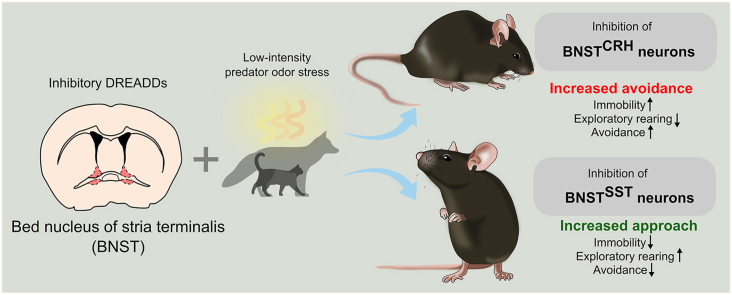
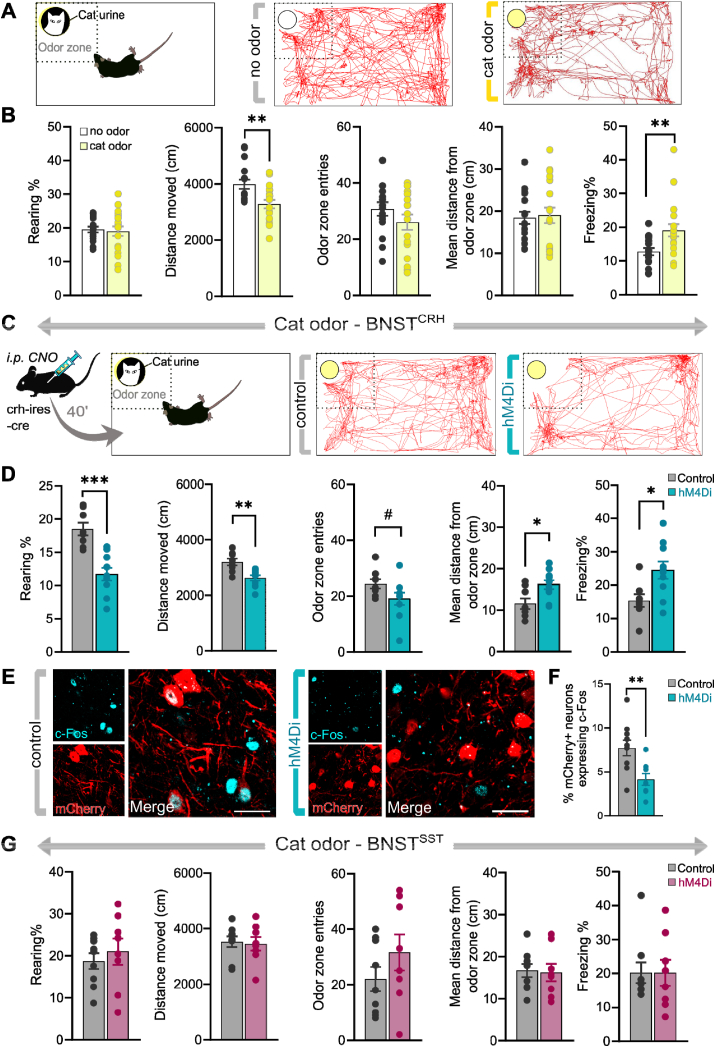
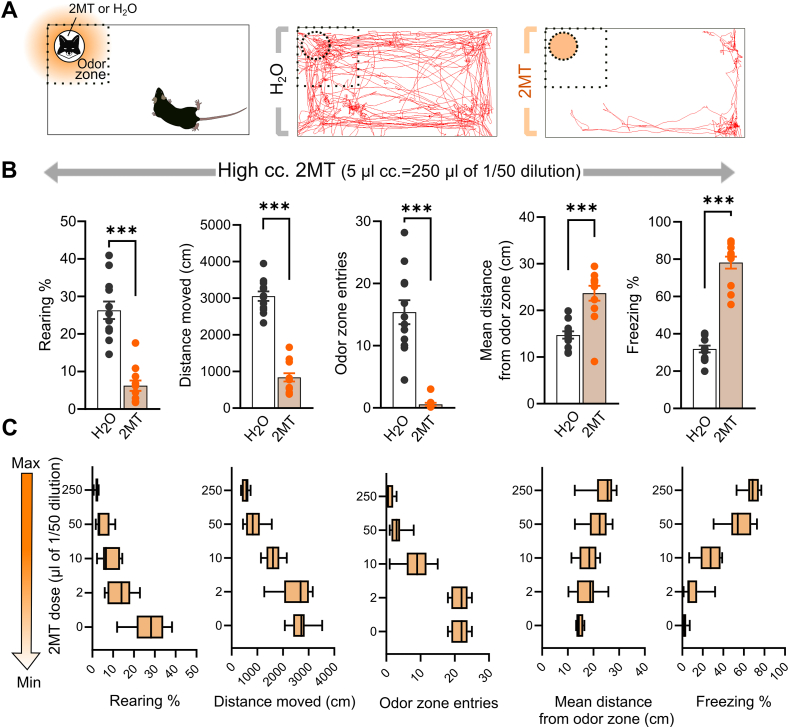
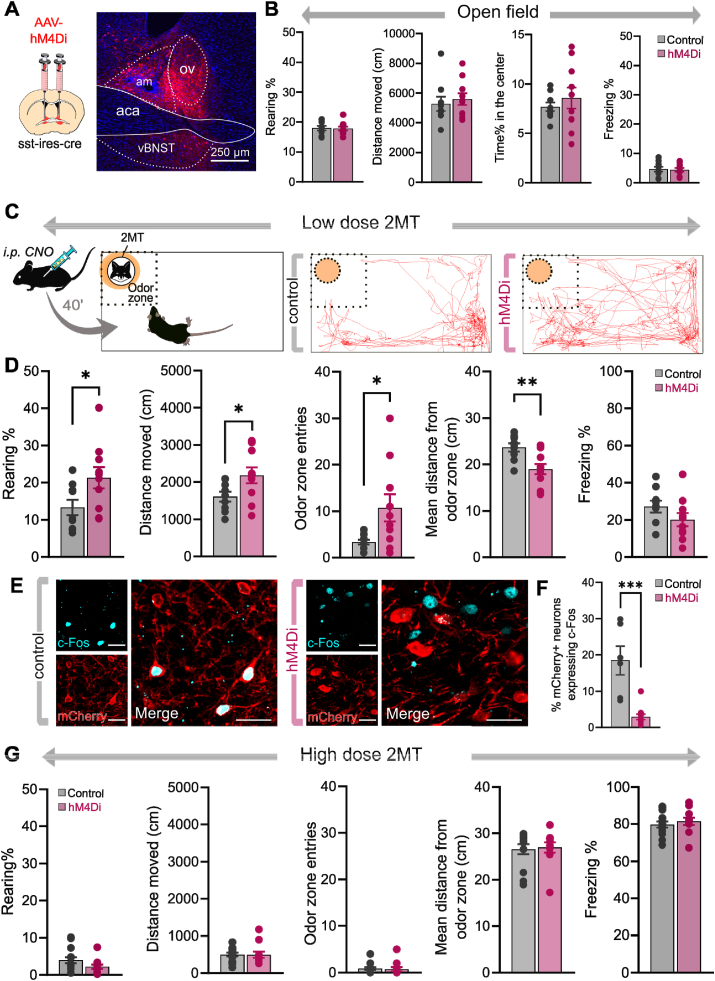
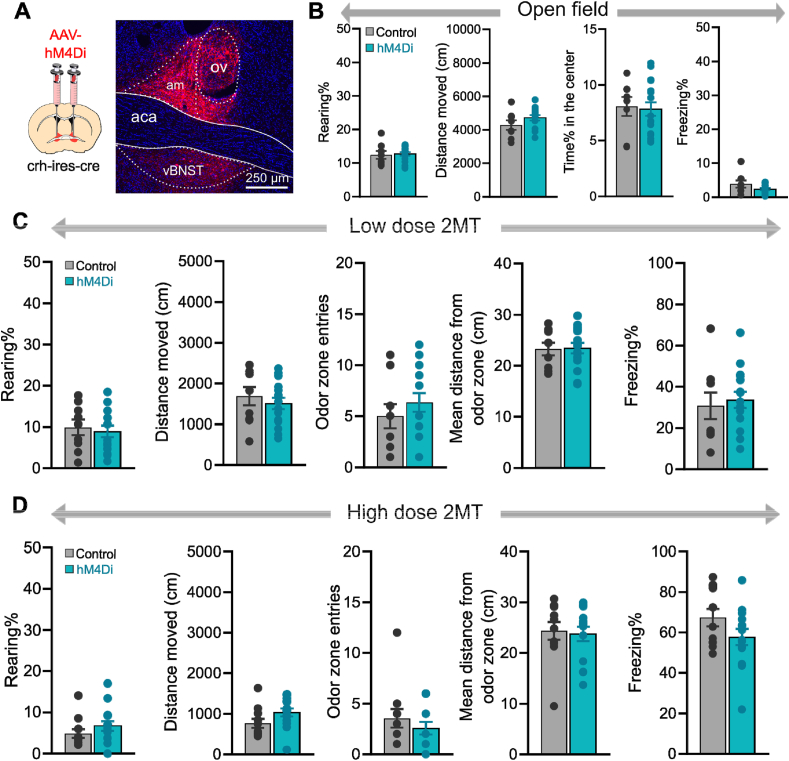
Anxiety and trauma-related disorders are characterized by significant alterations in threat detection, resulting in inadequate fear responses evoked by weak threats or safety stimuli. Recent research pointed out the important role of the bed nucleus of stria terminalis (BNST) in threat anticipation and fear modulation under ambiguous threats, hence, exaggerated fear may be traced back to altered BNST function. To test this hypothesis, we chemogenetically inhibited specific BNST neuronal populations (corticotropin-releasing hormone - BNST and somatostatin - BNST expressing neurons) in a predator odor-evoked innate fear paradigm. The rationale for this paradigm was threefold: (1) predatory cues are particularly strong danger signals for all vertebrate species evoking defensive responses on the flight-avoidance-freezing dimension (conservative mechanisms), (2) predator odor can be presented in a scalable manner (from weak to strong), and (3) higher-order processing of olfactory information including predatory odor stimuli is integrated by the BNST. Accordingly, we exposed adult male mice to low and high predatory threats presented by means of cat urine, or low- and high-dose of 2-methyl-2-thiazoline (2MT), a synthetic derivate of a fox anogenital product, which evoked low and high fear response, respectively. Then, we tested the impact of chemogenetic inhibition of BNST and BNST neurons on innate fear responses using crh- and sst-ires-cre mouse lines. We observed that BNST inhibition was effective only under low threat conditions, resulting in reduced avoidance and increased exploration of the odor source. In contrast, BNST inhibition had no impact on 2MT-evoked responses, but enhanced fear responses to cat odor, representing an even weaker threat stimulus. These findings support the notion that BNST is recruited by uncertain or remote, potential threats, and CRH and SST neurons orchestrate innate fear responses in complementary ways.
焦虑和创伤相关障碍的特征是威胁检测发生显著改变,导致对微弱威胁或安全刺激引发的恐惧反应不足。最近的研究指出终纹床核(BNST)在模糊威胁下的威胁预期和恐惧调节中起重要作用,因此,过度恐惧可能可追溯到BNST功能改变。为了验证这一假设,我们在捕食者气味诱发的先天恐惧范式中,通过化学遗传学方法抑制特定的BNST神经元群体(表达促肾上腺皮质激素释放激素的BNST和表达生长抑素的BNST神经元)。采用该范式的理由有三点:(1)捕食线索对所有脊椎动物物种来说都是特别强烈的危险信号,会在逃跑 - 躲避 - 僵立维度上引发防御反应(保守机制);(2)捕食者气味可以以可扩展的方式呈现(从弱到强);(3)包括捕食者气味刺激在内的嗅觉信息的高级处理由BNST整合。因此,我们让成年雄性小鼠暴露于通过猫尿呈现的低和高捕食威胁下,或暴露于2 - 甲基 - 2 - 噻唑啉(2MT)的低剂量和高剂量下,2MT是狐狸肛门生殖器产物的一种合成衍生物,分别引发低和高恐惧反应。然后,我们使用crh - 和sst - ires - cre小鼠品系,测试BNST和BNST神经元的化学遗传学抑制对先天恐惧反应的影响。我们观察到,BNST抑制仅在低威胁条件下有效,导致对气味源的回避减少和探索增加。相比之下,BNST抑制对2MT诱发的反应没有影响,但增强了对猫气味的恐惧反应,猫气味是一种更弱的威胁刺激。这些发现支持了这样一种观点,即BNST被不确定或遥远的潜在威胁所激活,并且促肾上腺皮质激素释放激素和生长抑素神经元以互补的方式协调先天恐惧反应。