László Kristóf, Vörös Dávid, Correia Pedro, Fazekas Csilla Lea, Török Bibiána, Plangár Imola, Zelena Dóra
Institute of Physiology, Medical School, University of Pécs, 7624 Pecs, Hungary.
Center of Neuroscience, University of Pécs, 7624 Pecs, Hungary.
Biomedicines. 2023 Sep 22;11(10):2603. doi: 10.3390/biomedicines11102603.
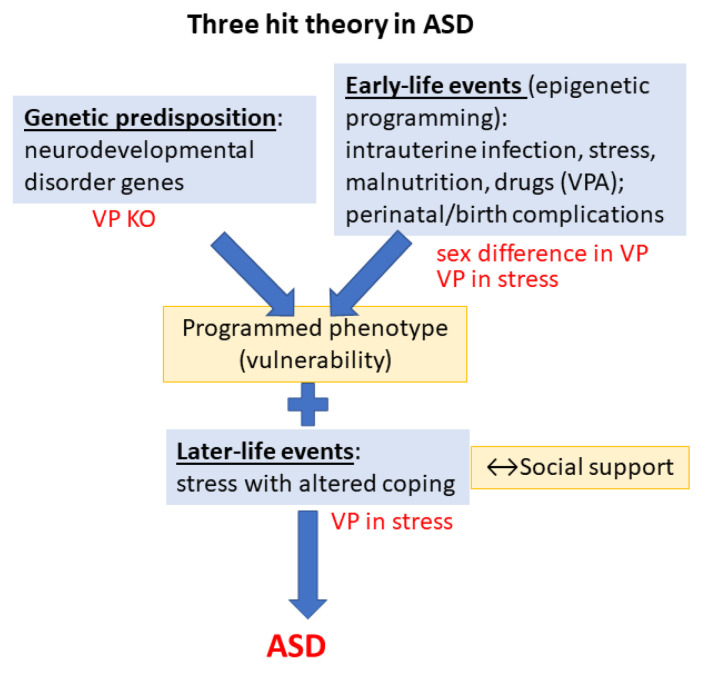
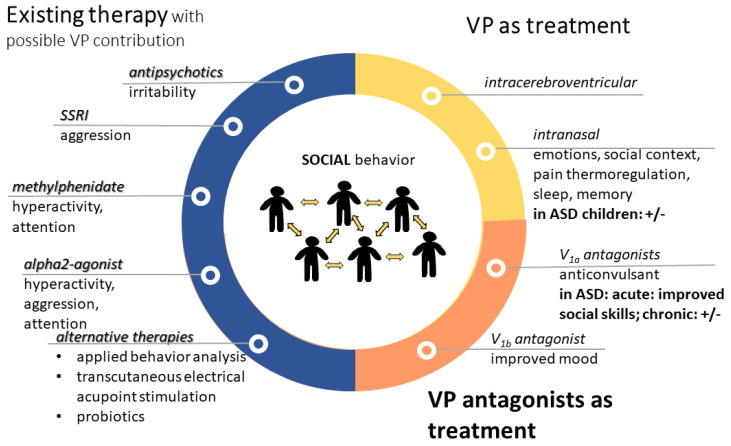
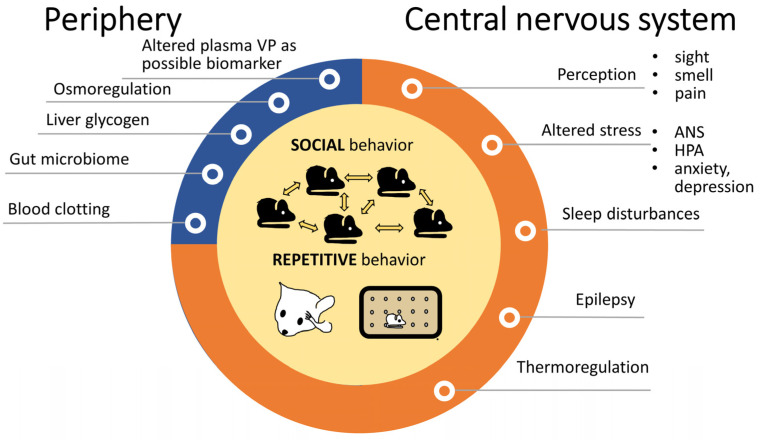
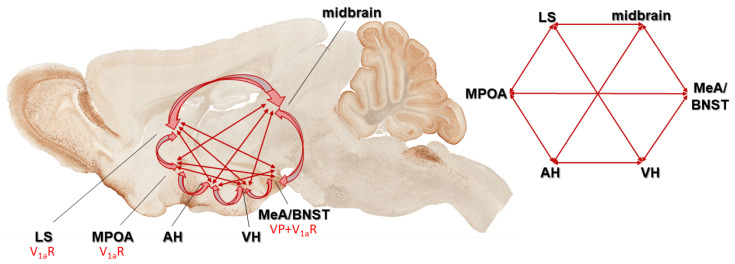
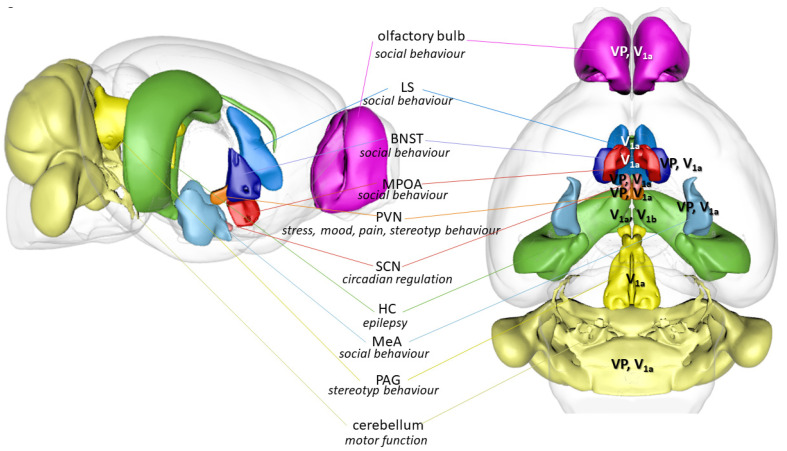
Autism spectrum disorder (ASD) is rather common, presenting with prevalent early problems in social communication and accompanied by repetitive behavior. As vasopressin was implicated not only in salt-water homeostasis and stress-axis regulation, but also in social behavior, its role in the development of ASD might be suggested. In this review, we summarized a wide range of problems associated with ASD to which vasopressin might contribute, from social skills to communication, motor function problems, autonomous nervous system alterations as well as sleep disturbances, and altered sensory information processing. Beside functional connections between vasopressin and ASD, we draw attention to the anatomical background, highlighting several brain areas, including the paraventricular nucleus of the hypothalamus, medial preoptic area, lateral septum, bed nucleus of stria terminalis, amygdala, hippocampus, olfactory bulb and even the cerebellum, either producing vasopressin or containing vasopressinergic receptors (presumably V). Sex differences in the vasopressinergic system might underline the male prevalence of ASD. Moreover, vasopressin might contribute to the effectiveness of available off-label therapies as well as serve as a possible target for intervention. In this sense, vasopressin, but paradoxically also V receptor antagonist, were found to be effective in some clinical trials. We concluded that although vasopressin might be an effective candidate for ASD treatment, we might assume that only a subgroup (e.g., with stress-axis disturbances), a certain sex (most probably males) and a certain brain area (targeting by means of virus vectors) would benefit from this therapy.
自闭症谱系障碍(ASD)相当常见,在社交沟通方面存在普遍的早期问题,并伴有重复行为。由于血管加压素不仅涉及盐水平衡和应激轴调节,还涉及社交行为,因此提示了其在ASD发展中的作用。在本综述中,我们总结了一系列与ASD相关的问题,血管加压素可能在这些问题中发挥作用,包括社交技能、沟通、运动功能问题、自主神经系统改变以及睡眠障碍,还有感觉信息处理改变。除了血管加压素与ASD之间的功能联系外,我们还关注了解剖学背景,强调了几个脑区,包括下丘脑室旁核、视前内侧区、外侧隔、终纹床核、杏仁核、海马体、嗅球甚至小脑,这些脑区要么产生血管加压素,要么含有血管加压素能受体(可能是V受体)。血管加压素能系统的性别差异可能是ASD男性患病率较高的原因。此外,血管加压素可能有助于现有非标签疗法的有效性,并可能成为干预的靶点。从这个意义上说,血管加压素,但矛盾的是V受体拮抗剂,在一些临床试验中也被发现是有效的。我们得出结论,虽然血管加压素可能是ASD治疗的有效候选药物,但我们可能认为只有一个亚组(例如,伴有应激轴紊乱的患者)、特定性别(很可能是男性)和特定脑区(通过病毒载体靶向)会从这种治疗中受益。