Cascio Sandra, Chandler Chelsea, Zhang Linan, Sinno Sarah, Gao Bingsi, Onkar Sayali, Bruno Tullia C, Vignali Dario A A, Mahdi Haider, Osmanbeyoglu Hatice U, Vlad Anda M, Coffman Lan G, Buckanovich Ronald J
Magee-Womens Research Institute, Pittsburgh, PA 15213, USA.
Division of Gynecologic Oncology, Department of Obstetrics, Gynecology, and Reproductive Sciences, University of Pittsburgh, Pittsburgh, PA 15213, USA.
Sci Adv. 2021 Nov 12;7(46):eabi5790. doi: 10.1126/sciadv.abi5790.
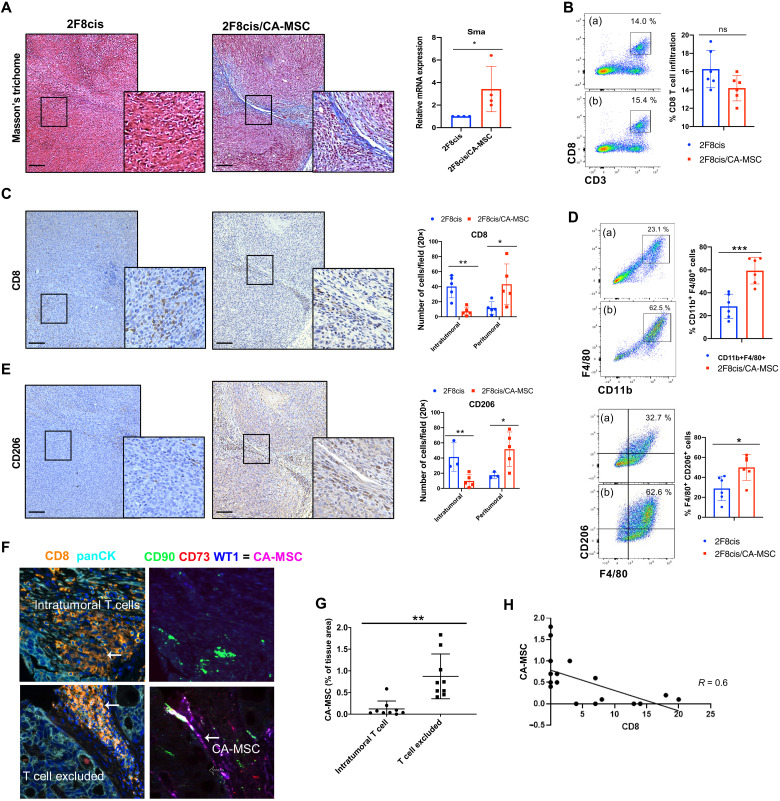
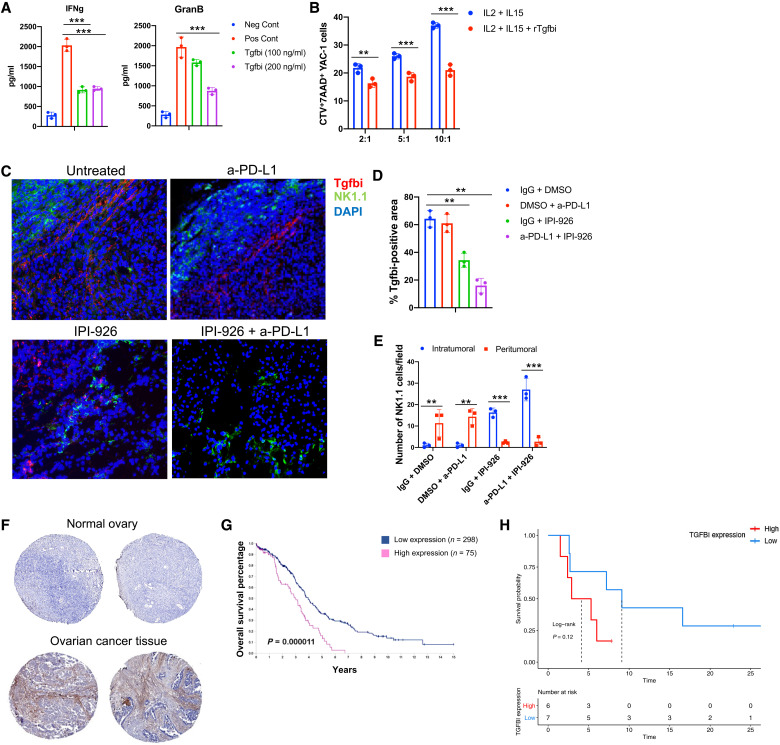
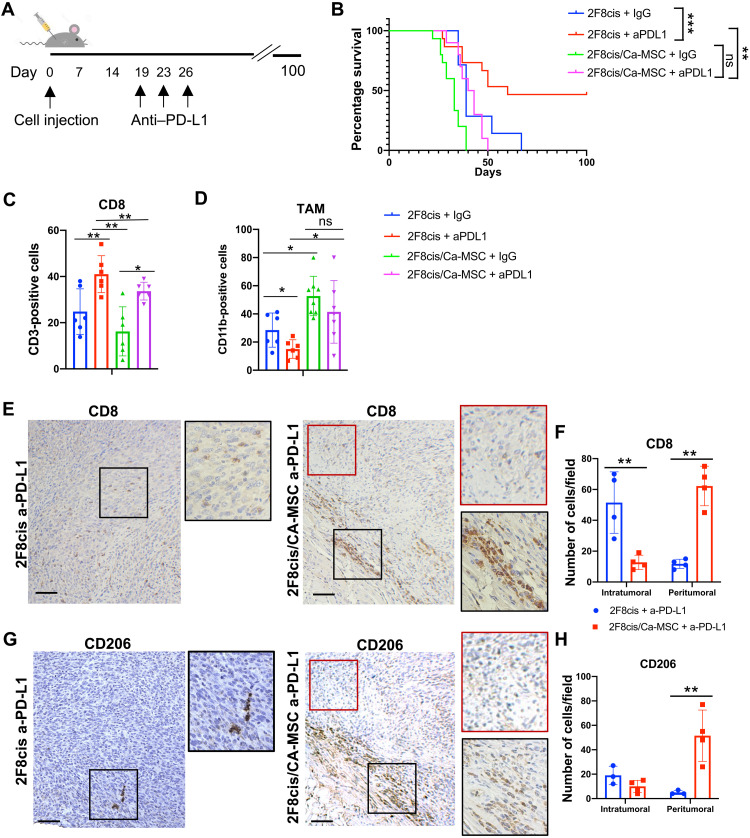
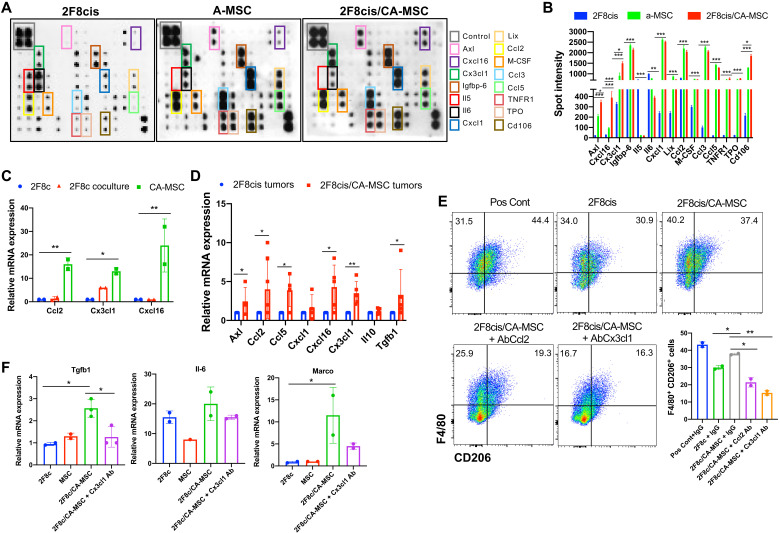
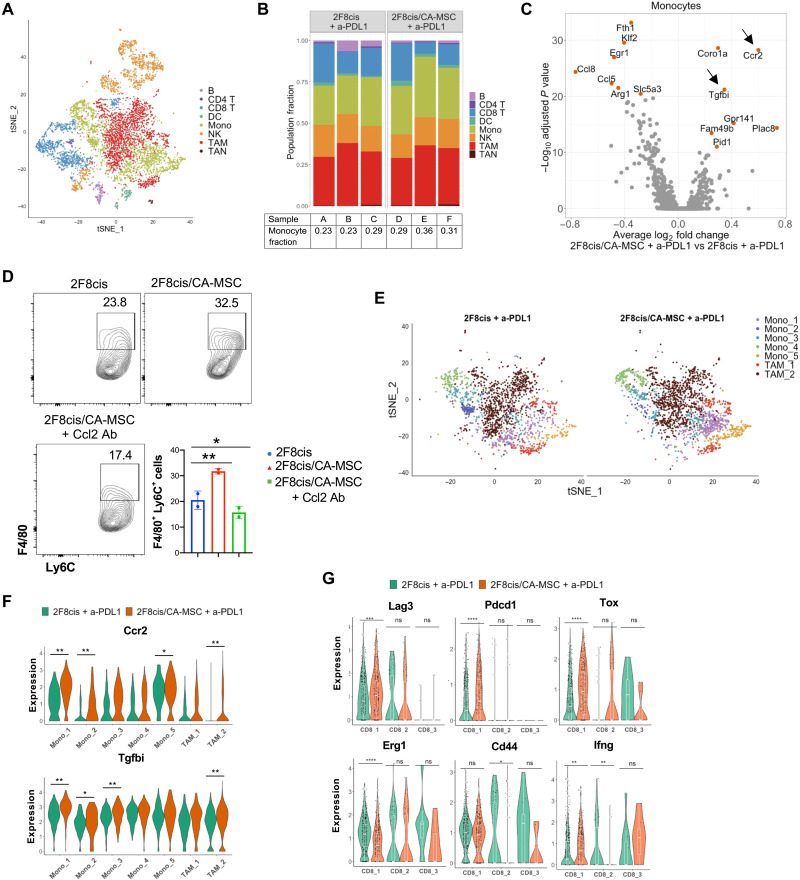
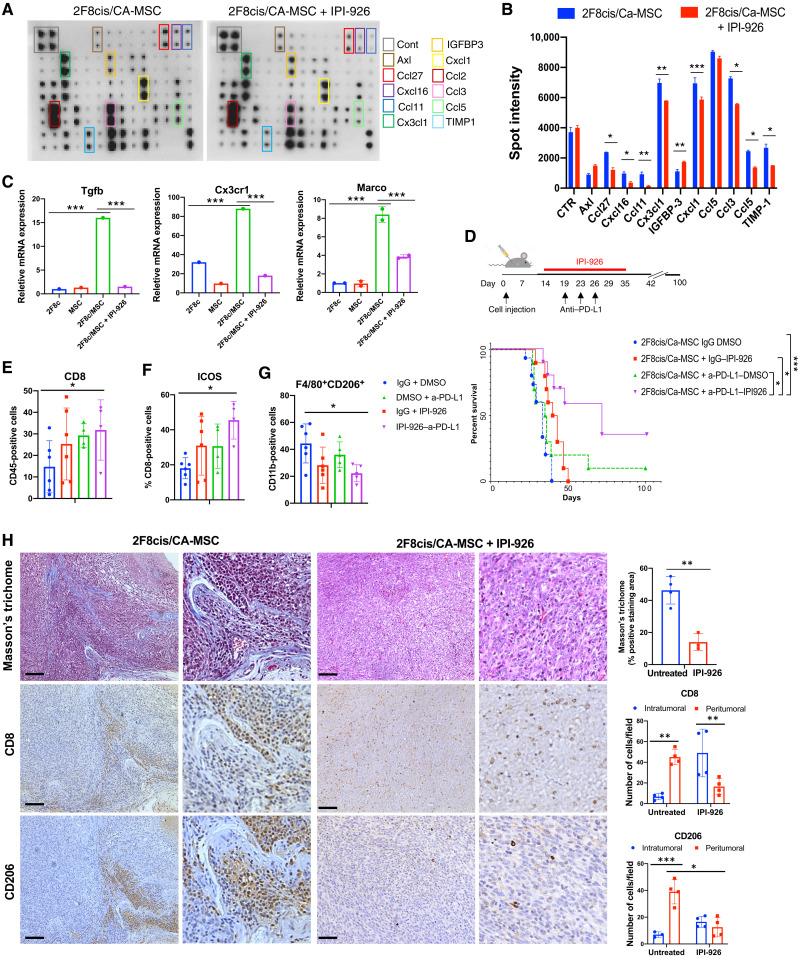
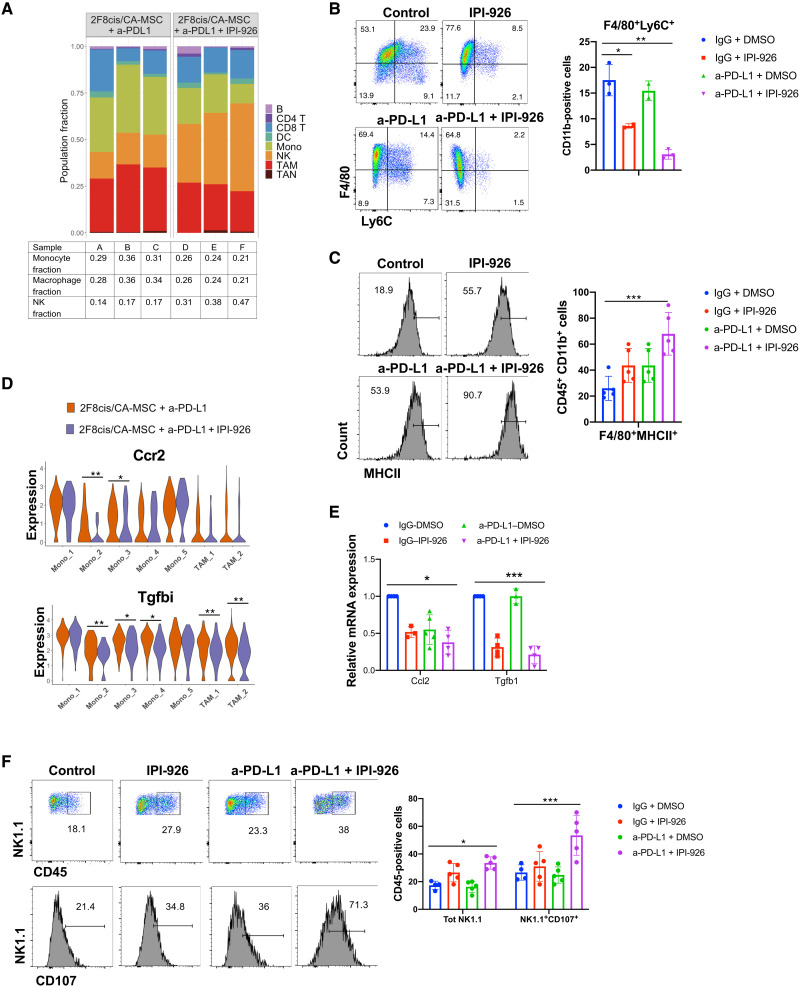
We investigated the impact of cancer-associated mesenchymal stem cells (CA-MSCs) on ovarian tumor immunity. In patient samples, CA-MSC presence inversely correlates with the presence of intratumoral CD8 T cells. Using an immune “hot” mouse ovarian cancer model, we found that CA-MSCs drive CD8 T cell tumor immune exclusion and reduce response to anti–PD-L1 immune checkpoint inhibitor (ICI) via secretion of numerous chemokines (Ccl2, Cx3cl1, and Tgf-β1), which recruit immune-suppressive CD14Ly6CCx3cr1 monocytic cells and polarize macrophages to an immune suppressive Ccr2F4/80Cx3cr1CD206 phenotype. Both monocytes and macrophages express high levels of transforming growth factor β–induced (Tgfbi) protein, which suppresses NK cell activity. Hedgehog inhibitor (HHi) therapy reversed CA-MSC effects, reducing myeloid cell presence and expression of Tgfbi, increasing intratumoral NK cell numbers, and restoring response to ICI therapy. Thus, CA-MSCs regulate antitumor immunity, and CA-MSC hedgehog signaling is an important target for cancer immunotherapy.
我们研究了癌症相关间充质干细胞(CA-MSCs)对卵巢肿瘤免疫的影响。在患者样本中,CA-MSCs的存在与肿瘤内CD8 T细胞的存在呈负相关。使用免疫“热”小鼠卵巢癌模型,我们发现CA-MSCs通过分泌多种趋化因子(Ccl2、Cx3cl1和Tgf-β1)驱动CD8 T细胞肿瘤免疫排斥并降低对抗PD-L1免疫检查点抑制剂(ICI)的反应,这些趋化因子招募免疫抑制性CD14Ly6CCx3cr1单核细胞并将巨噬细胞极化为免疫抑制性Ccr2F4/80Cx3cr1CD206表型。单核细胞和巨噬细胞均表达高水平的转化生长因子β诱导(Tgfbi)蛋白,该蛋白可抑制NK细胞活性。刺猬因子抑制剂(HHi)疗法逆转了CA-MSCs的作用,减少了髓样细胞的存在和Tgfbi的表达,增加了肿瘤内NK细胞数量,并恢复了对ICI疗法的反应。因此,CA-MSCs调节抗肿瘤免疫,并且CA-MSCs刺猬因子信号传导是癌症免疫治疗的重要靶点。