Tobór-Świętek Ewa, Sykut-Cegielska Jolanta, Bik-Multanowski Mirosław, Walczak Mieczysław, Rokicki Dariusz, Kałużny Łukasz, Wierzba Joanna, Pac Małgorzata, Jahnz-Różyk Karina, Więsik-Szewczyk Ewa, Kieć-Wilk Beata
Department of Metabolic Diseases, Jagiellonian University Medical College, 31-008 Cracow, Poland.
Department of Metabolic Diseases, University Hospital, Jakubowskiego 2 Street, 30-688 Cracow, Poland.
J Clin Med. 2021 Oct 22;10(21):4862. doi: 10.3390/jcm10214862.
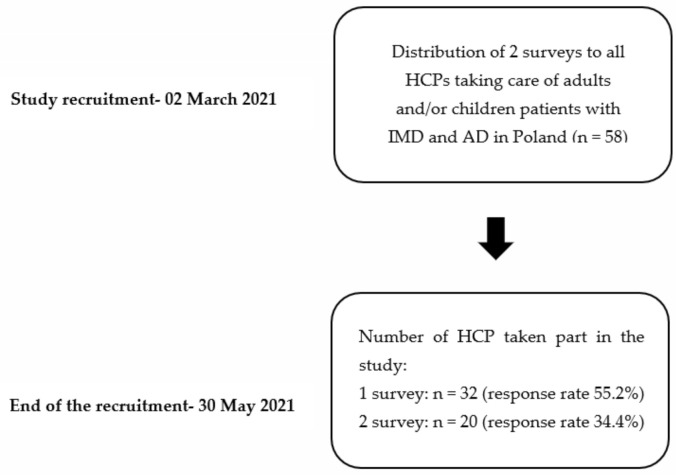
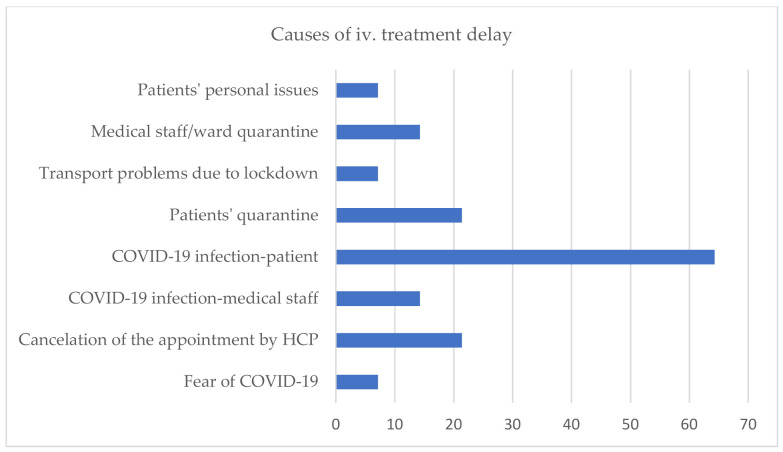
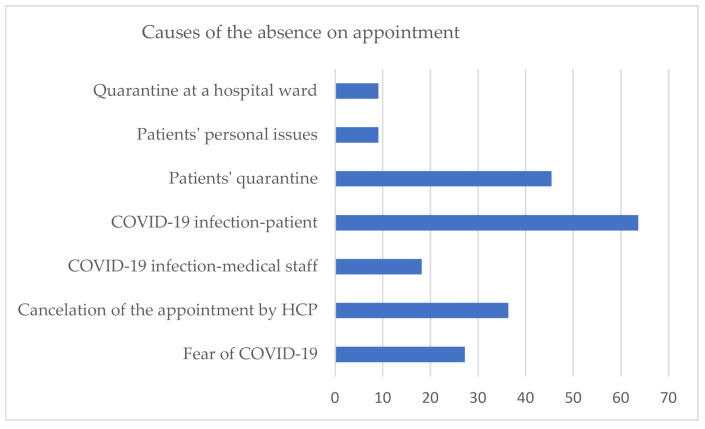
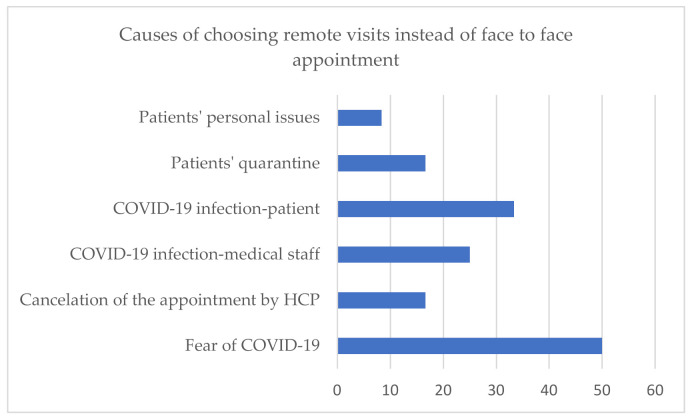
COVID-19 pandemic is an organisational challenge for both healthcare providers and patients. People with rare inherited metabolic disorders (IMD) and rare autoinflammatory diseases (AD) are vulnerable patients whose well-being is deeply connected with regular follow-ups. This study aimed to assess how e one year of coronavirus pandemic has impacted the treatment of patients with IMD and AD in Poland. Surveys were distributed to all healthcare providers that coordinate the treatment of IMD and AD patients. Thirty-two responders (55%) answered the survey. They provide care to 1726 patients with IMD/AD, including 246 patients on dedicated treatment. In 35% of units, the regular appointments were disrupted, primarily because of patient infection. In 18 hospitals, remote visits were implemented, but only 66.6% of patients used this form of consultation. In 14/32 hospitals, administration of the therapy was delayed (median: 17.4 days). Forty-four patients suffered from SARS-COV-2 infection, in majority with mild symptoms. However, four adult patients developed complications, and one died following a SARS-COV-2 infection. Although most hospitals managed to maintain regular visits during the pandemic, more comprehensive implementation of telemedicine and switch to oral therapy or home infusions would be a reasonable solution for the current epidemic situation.
新冠疫情对医疗服务提供者和患者来说都是一项组织方面的挑战。患有罕见遗传性代谢紊乱(IMD)和罕见自身炎症性疾病(AD)的患者属于弱势群体,他们的健康与定期随访密切相关。本研究旨在评估在波兰,新冠疫情的这一年对患有IMD和AD的患者的治疗产生了怎样的影响。调查被分发给所有协调IMD和AD患者治疗的医疗服务提供者。32名受访者(55%)回复了调查。他们为1726名患有IMD/AD的患者提供护理,其中包括246名接受专门治疗的患者。在35%的单位中,常规预约被打乱,主要原因是患者感染。在18家医院实施了远程问诊,但只有66.6%的患者使用了这种问诊形式。在14/32家医院中,治疗的给药被推迟(中位数:17.4天)。44名患者感染了新冠病毒,大多数症状较轻。然而,有4名成年患者出现了并发症,1名患者在感染新冠病毒后死亡。尽管大多数医院在疫情期间设法维持了常规问诊,但更全面地实施远程医疗并转向口服疗法或家庭输液将是应对当前疫情形势的合理解决方案。