Center for Rare Diseases Giessen (ZSEGI), University Hospital Giessen, Giessen, Germany.
Division of Metabolism, Bambino Gesù Children's Hospital, IRCCS, Rome, Italy.
Orphanet J Rare Dis. 2020 Dec 3;15(1):341. doi: 10.1186/s13023-020-01619-x.
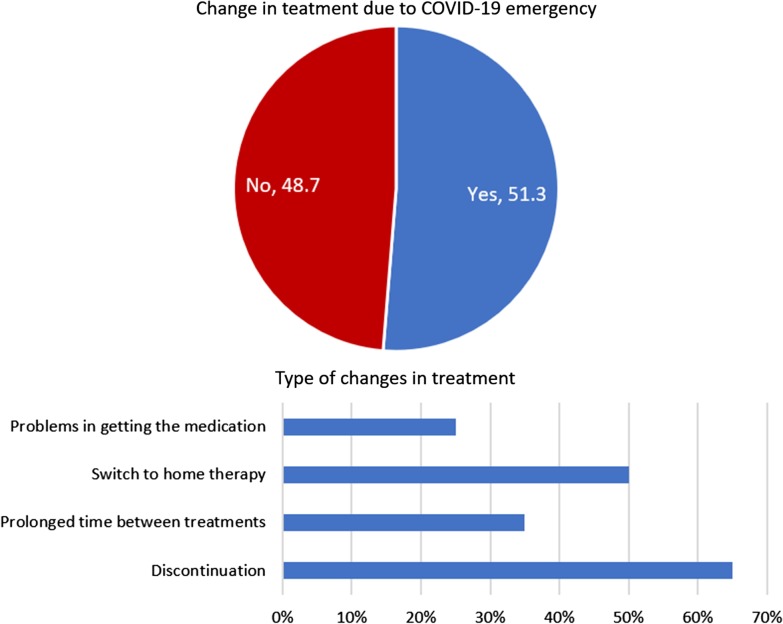
The ongoing coronavirus disease 2019 (COVID-19) pandemic has caused disruption in all aspects of daily life, including the management and treatment of rare inherited metabolic disorders (IMDs). To perform a preliminary assessment of the incidence of COVID-19 in IMD patients and the impact of the coronavirus emergency on the rare metabolic community between March and April 2020, the European Reference Network for Hereditary Metabolic Diseases (MetabERN) has performed two surveys: one directed to patients' organizations (PO) and one directed to healthcare providers (HCPs). The COVID-19 incidence in the population of rare metabolic patients was lower than that of the general European population (72.9 × 100,000 vs. 117 × 100,000). However, patients experienced extensive disruption of care, with the majority of appointments and treatments cancelled, reduced, or postponed. Almost all HCPs (90%) were able to substitute face-to-face visits with telemedicine, about half of patients facing treatment changes switched from hospital to home therapy, and a quarter reported difficulties in getting their medicines. During the first weeks of emergency, when patients and families lacked relevant information, most HCPs contacted their patients to provide them with support and information. Since IMD patients require constant follow-up and treatment adjustments to control their disease and avoid degradation of their condition, the results of our surveys are relevant for national health systems in order to ensure appropriate care for IMD patients. They highlight strong links in an interconnected community of HCPs and PO, who are able to work quickly and effectively together to support and protect fragile persons during crisis. However, additional studies are needed to better appreciate the actual impact of COVID-19 on IMD patients' health and the mid- and long-term effects of the pandemic on their wellbeing.
正在持续的 2019 年冠状病毒病(COVID-19)大流行扰乱了日常生活的方方面面,包括罕见遗传性代谢疾病(IMD)的管理和治疗。为了初步评估 COVID-19 在 IMD 患者中的发病率以及冠状病毒紧急情况对 2020 年 3 月至 4 月间罕见代谢社区的影响,遗传性代谢疾病欧洲参考网络(MetabERN)进行了两项调查:一项针对患者组织(PO),另一项针对医疗保健提供者(HCP)。罕见代谢患者人群中的 COVID-19 发病率低于欧洲普通人群(72.9×100,000 比 117×100,000)。然而,患者经历了广泛的护理中断,大多数预约和治疗被取消、减少或推迟。几乎所有 HCP(90%)都能够通过远程医疗替代面对面就诊,约一半面临治疗改变的患者从医院转为家庭治疗,四分之一的患者报告在获得药物方面存在困难。在紧急情况的头几周,当患者和家属缺乏相关信息时,大多数 HCP 联系他们的患者为他们提供支持和信息。由于 IMD 患者需要持续的随访和治疗调整来控制他们的疾病并避免病情恶化,我们的调查结果与国家卫生系统相关,以确保为 IMD 患者提供适当的护理。调查结果突出了 HCP 和 PO 这一相互关联的社区之间的紧密联系,他们能够迅速有效地共同合作,在危机期间为脆弱人群提供支持和保护。然而,还需要进一步的研究来更好地了解 COVID-19 对 IMD 患者健康的实际影响以及大流行对他们健康的中长期影响。