Division of Pediatric Gastroenterology and Nutrition, Department of Pediatrics, McMaster University, Hamilton, ON L8S 4L8, Canada.
College of Medicine and Health, University College Cork, T12 XF62 Cork, Ireland.
Int J Mol Sci. 2021 Oct 21;22(21):11365. doi: 10.3390/ijms222111365.
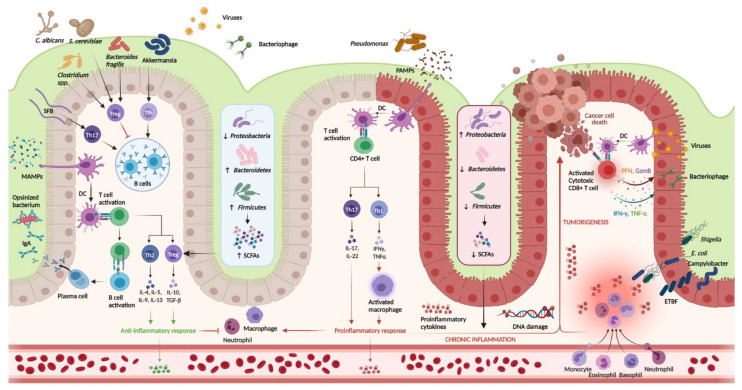
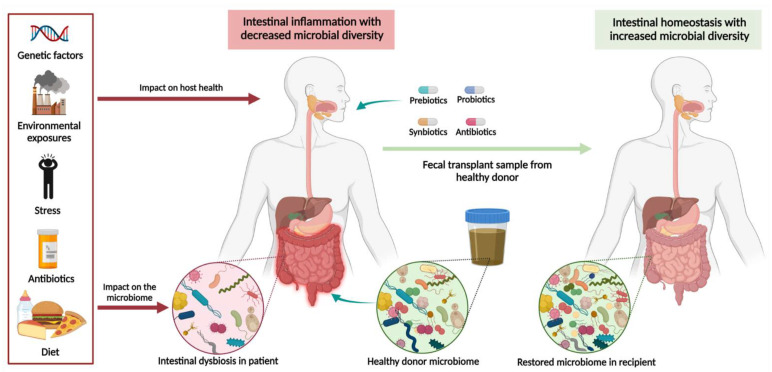
Ulcerative colitis (UC) is a chronic autoimmune disorder affecting the colonic mucosa. UC is a subtype of inflammatory bowel disease along with Crohn's disease and presents with varying extraintestinal manifestations. No single etiology for UC has been found, but a combination of genetic and environmental factors is suspected. Research has focused on the role of intestinal dysbiosis in the pathogenesis of UC, including the effects of dysbiosis on the integrity of the colonic mucosal barrier, priming and regulation of the host immune system, chronic inflammation, and progression to tumorigenesis. Characterization of key microbial taxa and their implications in the pathogenesis of UC and colitis-associated cancer (CAC) may present opportunities for modulating intestinal inflammation through microbial-targeted therapies. In this review, we discuss the microbiota-immune crosstalk in UC and CAC, as well as the evolution of microbiota-based therapies.
溃疡性结肠炎(UC)是一种影响结肠黏膜的慢性自身免疫性疾病。UC 是炎症性肠病(IBD)的一个亚型,与克罗恩病(Crohn's disease)一起表现出不同的肠外表现。目前尚未发现 UC 的单一病因,但怀疑与遗传和环境因素有关。研究集中在肠道菌群失调在 UC 发病机制中的作用,包括菌群失调对结肠黏膜屏障完整性、宿主免疫系统的启动和调节、慢性炎症和肿瘤发生的影响。对关键微生物类群的特征及其在 UC 和结肠炎相关癌症(CAC)发病机制中的意义的研究,可能为通过微生物靶向治疗来调节肠道炎症提供机会。在这篇综述中,我们讨论了 UC 和 CAC 中的微生物群-免疫串扰,以及基于微生物群的治疗方法的发展。