Rudolf Boehm Institute of Pharmacology and Toxicology, Medical Faculty, University of Leipzig, Härtelstr. 16-18, 04107 Leipzig, Germany.
Methods and Development Group Neural Data Analysis and Statistical Computing, Max Planck Institute for Human Cognitive and Brain Sciences, Stephanstraße 1A, 04103 Leipzig, Germany.
Int J Mol Sci. 2021 Oct 28;22(21):11683. doi: 10.3390/ijms222111683.
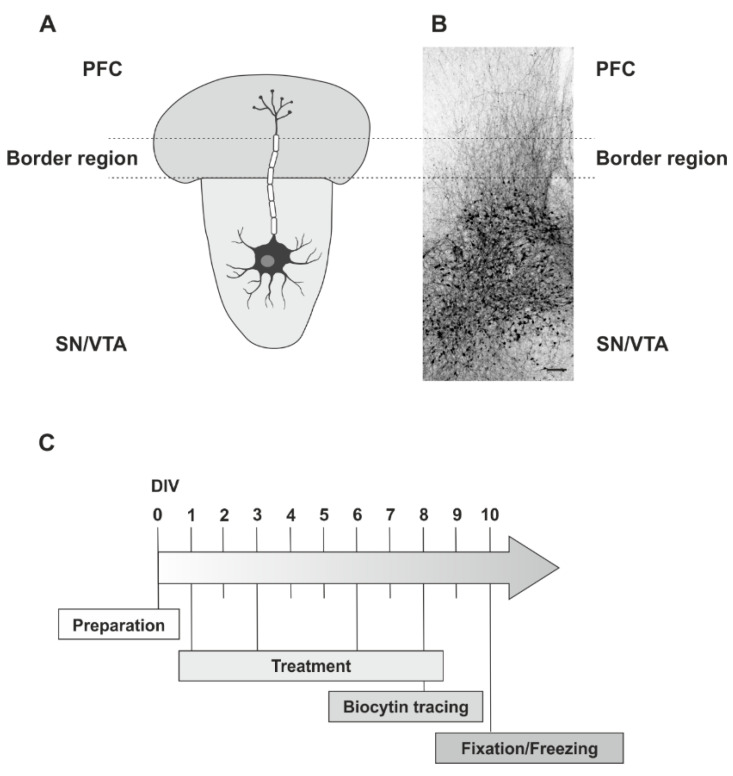
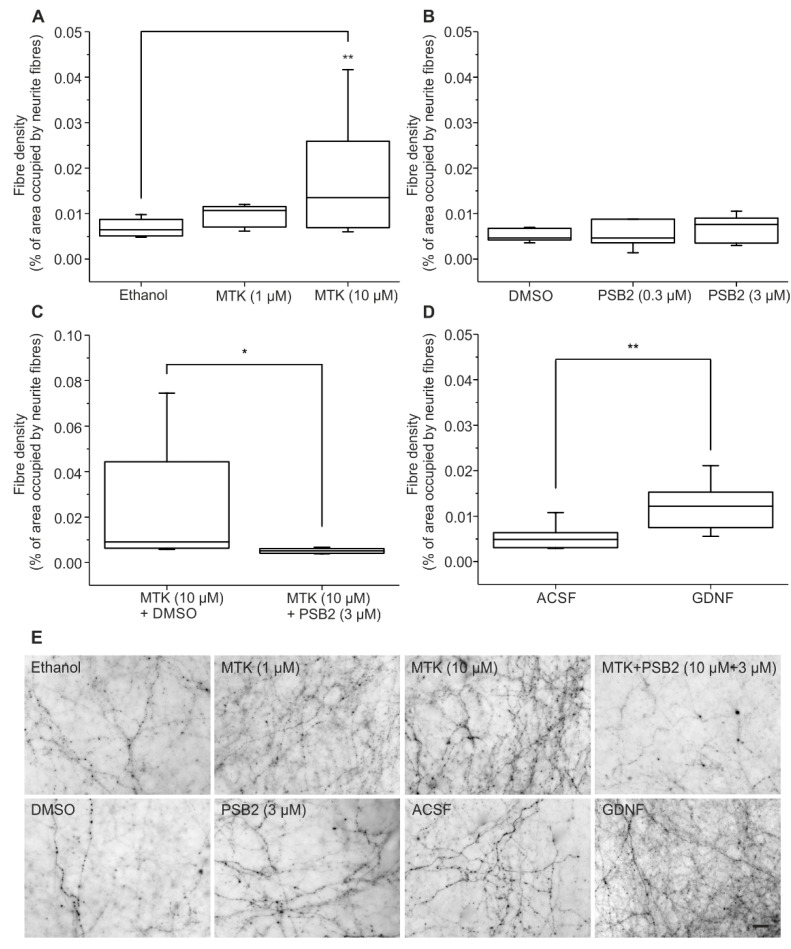
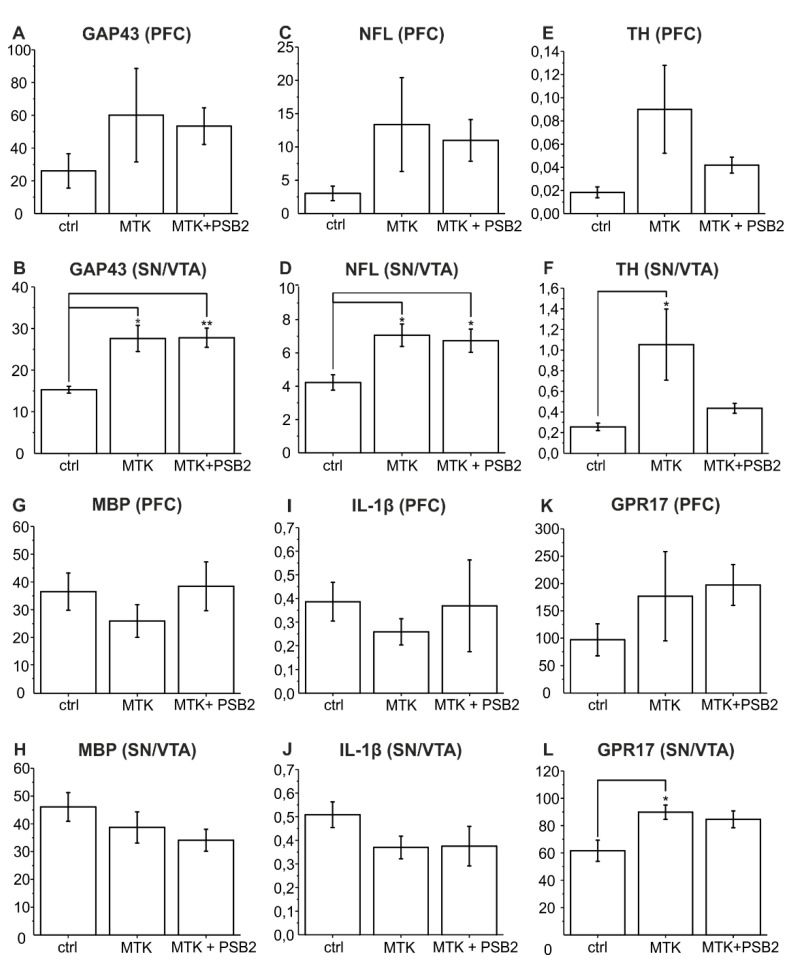
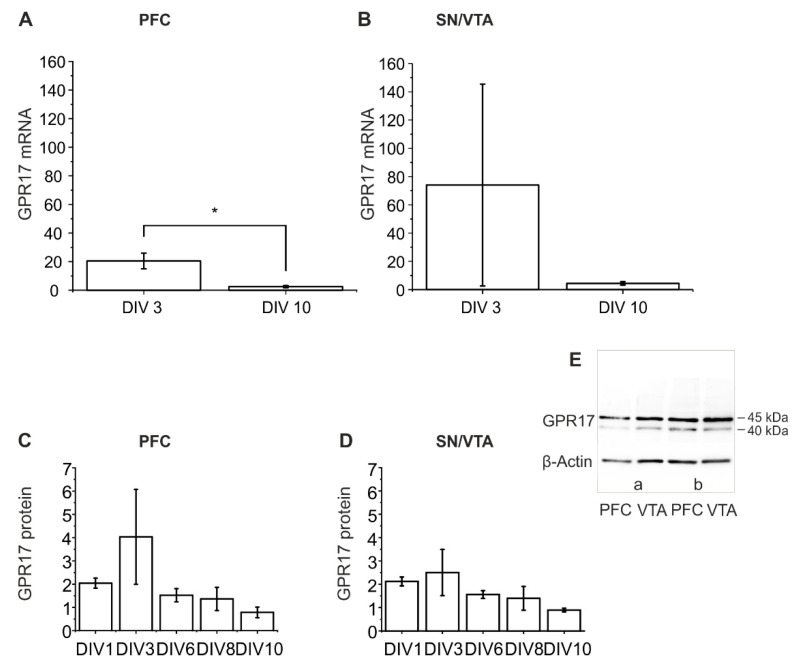
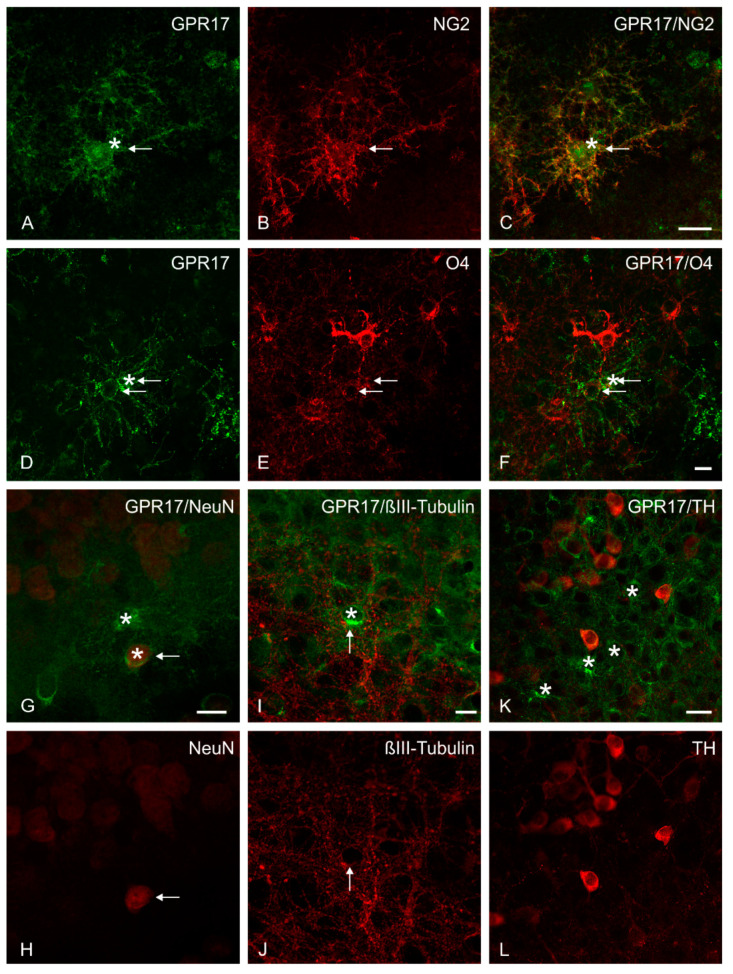
Characterization of new pharmacological targets is a promising approach in research of neurorepair mechanisms. The G protein-coupled receptor 17 (GPR17) has recently been proposed as an interesting pharmacological target, e.g., in neuroregenerative processes. Using the well-established model of organotypic slice co-cultures of the mesocortical dopaminergic system (prefrontal cortex (PFC) and substantia nigra/ventral tegmental area (SN/VTA) complex), the influence of GPR17 ligands on neurite outgrowth from SN/VTA to the PFC was investigated. The growth-promoting effects of Montelukast (MTK; GPR17- and cysteinyl-leukotriene receptor antagonist), the glial cell line-derived neurotrophic factor (GDNF) and of two potent, selective GPR17 agonists (PSB-16484 and PSB-16282) were characterized. Treatment with MTK resulted in a significant increase in mean neurite density, comparable with the effects of GDNF. The combination of MTK and GPR17 agonist PSB-16484 significantly inhibited neuronal growth. qPCR studies revealed an MTK-induced elevated mRNA-expression of genes relevant for neuronal growth. Immunofluorescence labelling showed a marked expression of GPR17 on NG2-positive glia. Western blot and RT-qPCR analysis of untreated cultures suggest a time-dependent, injury-induced stimulation of GPR17. In conclusion, MTK was identified as a stimulator of neurite fibre outgrowth, mediating its effects through GPR17, highlighting GPR17 as an interesting therapeutic target in neuronal regeneration.
鉴定新的药理学靶点是神经修复机制研究中很有前途的方法。G 蛋白偶联受体 17(GPR17)最近被提出作为一个有前途的药理学靶点,例如,在神经再生过程中。本研究使用成熟的器官型脑片共培养模型,研究 GPR17 配体对中脑多巴胺能系统(前额叶皮层(PFC)和黑质/腹侧被盖区(SN/VTA)复合体)神经元突起向 PFC 生长的影响。研究了孟鲁司特(MTK;GPR17 和半胱氨酰白三烯受体拮抗剂)、胶质细胞源性神经营养因子(GDNF)和两种有效的、选择性的 GPR17 激动剂(PSB-16484 和 PSB-16282)对神经突起生长的促进作用。MTK 处理可显著增加平均神经突密度,与 GDNF 的作用相当。MTK 与 GPR17 激动剂 PSB-16484 的联合处理显著抑制神经元生长。qPCR 研究显示 MTK 诱导与神经元生长相关的基因的 mRNA 表达升高。免疫荧光标记显示 NG2 阳性胶质细胞上有明显的 GPR17 表达。未处理培养物的 Western blot 和 RT-qPCR 分析表明,GPR17 随时间推移,在损伤诱导下被激活。综上所述,MTK 被鉴定为神经突纤维生长的刺激物,通过 GPR17 介导其作用,强调 GPR17 是神经元再生中一个有趣的治疗靶点。