Department of Pharmacological and Biomolecular Sciences, Università degli Studi di Milano, 20133 Milan, Italy.
Department of Pharmacy and Center of Excellence for Biomedical Research (CEBR), University of Genoa, 16132 Genoa, Italy.
Int J Mol Sci. 2020 Mar 31;21(7):2395. doi: 10.3390/ijms21072395.
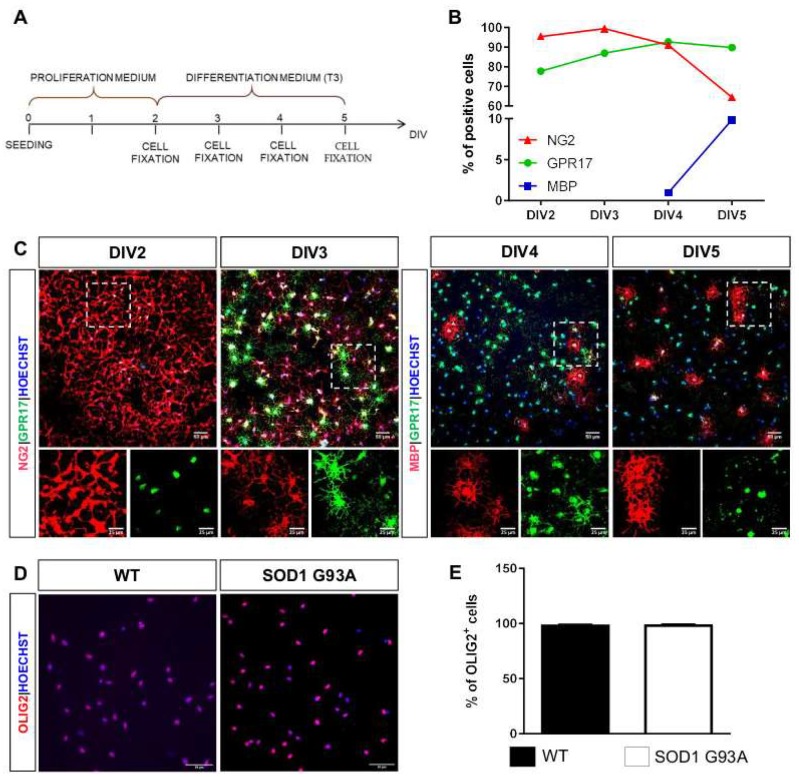
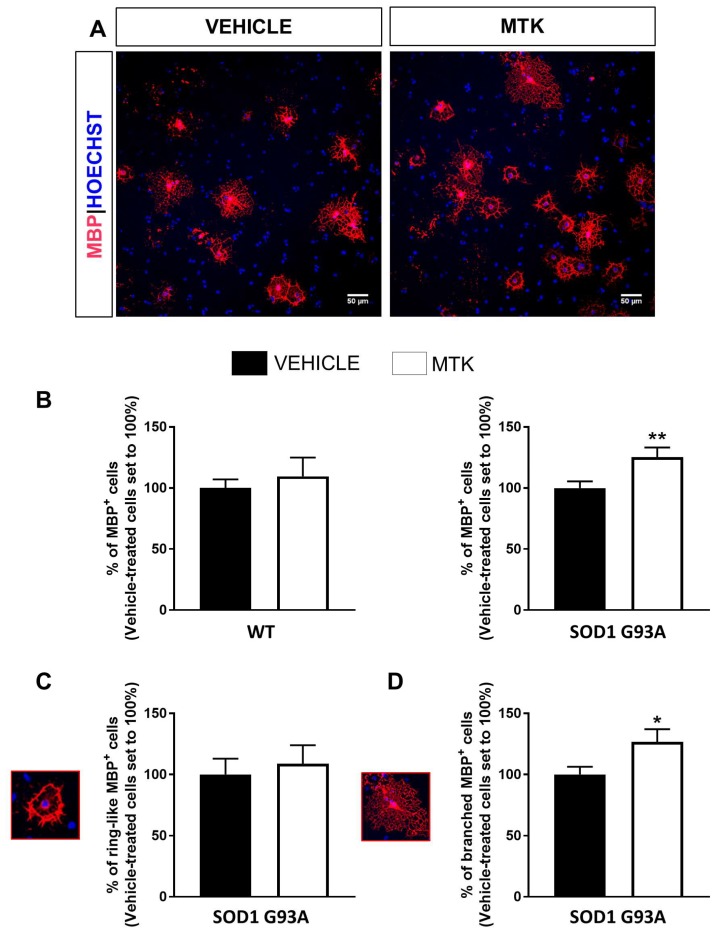
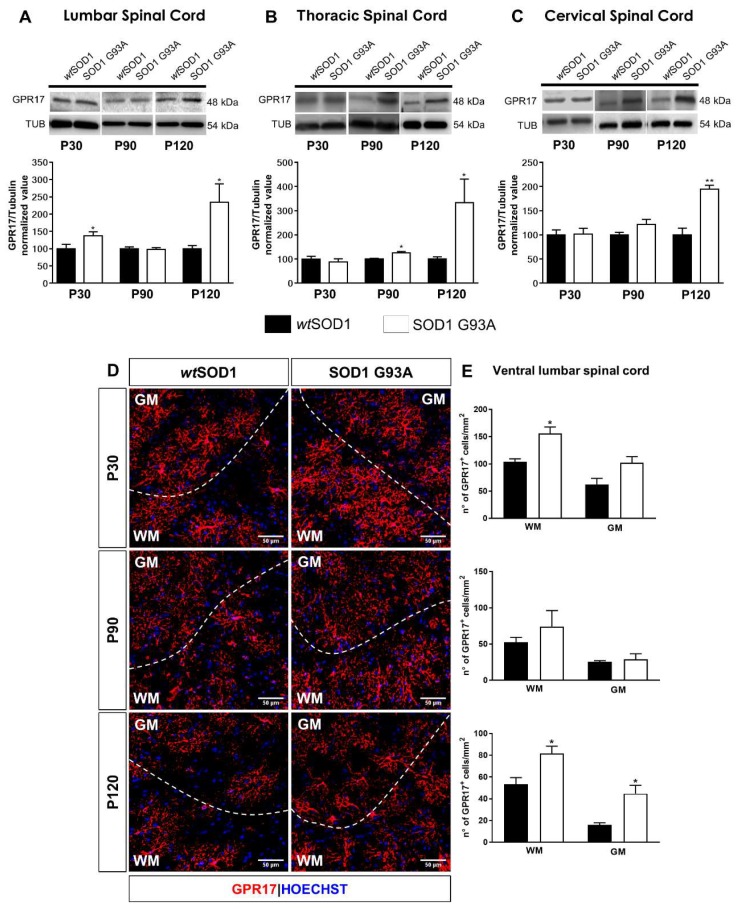
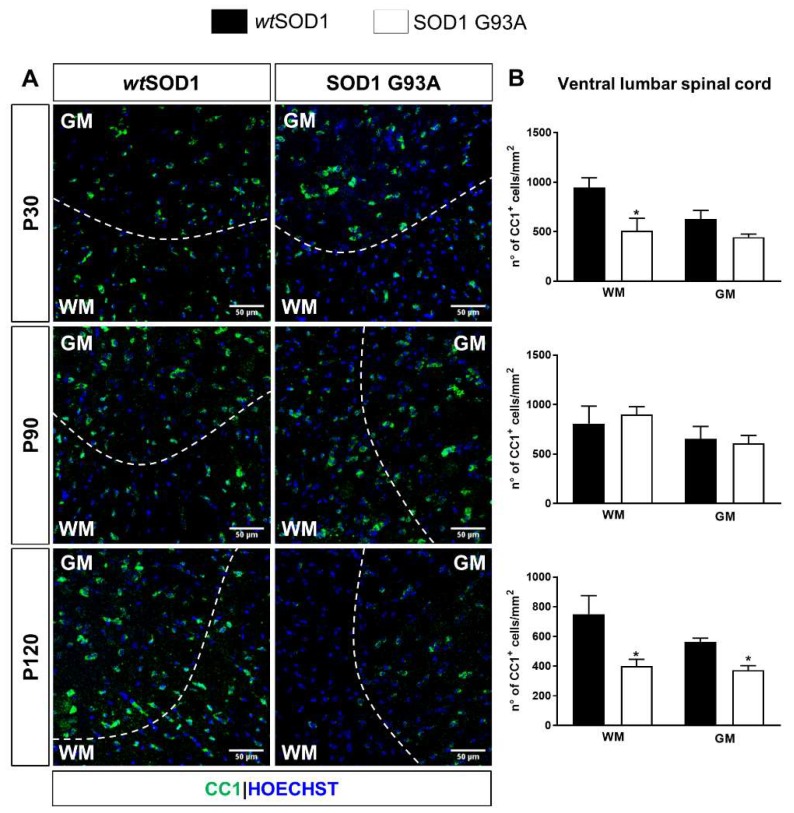
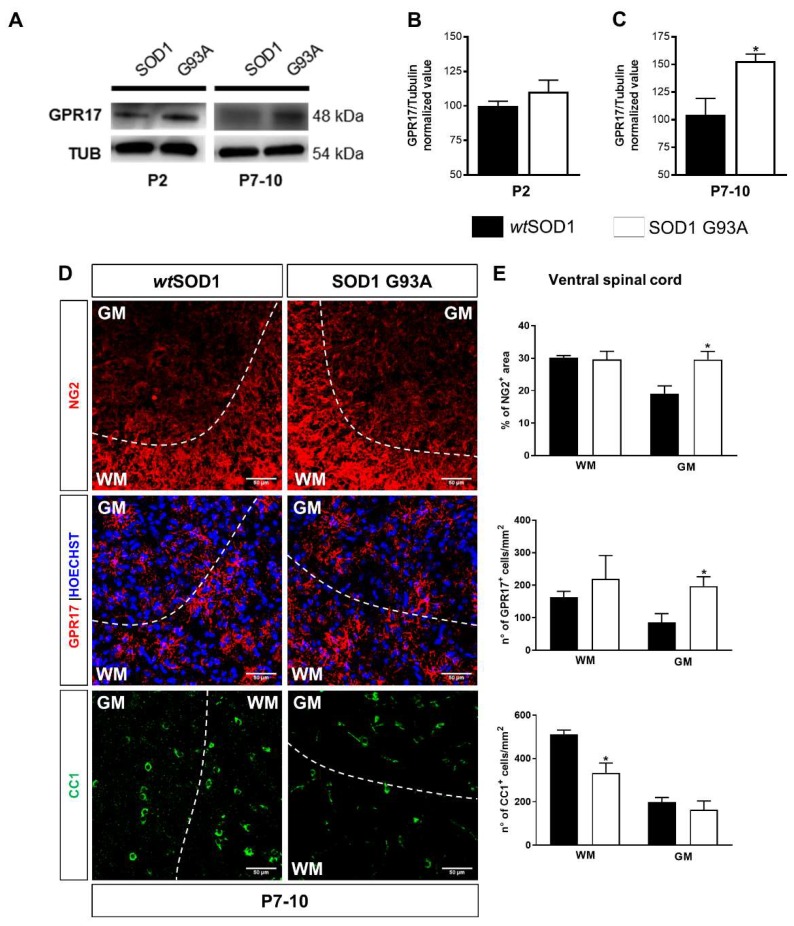
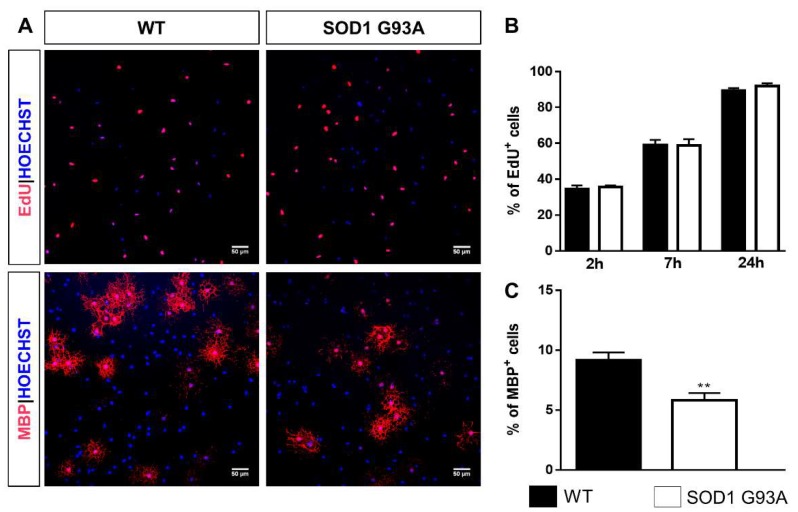
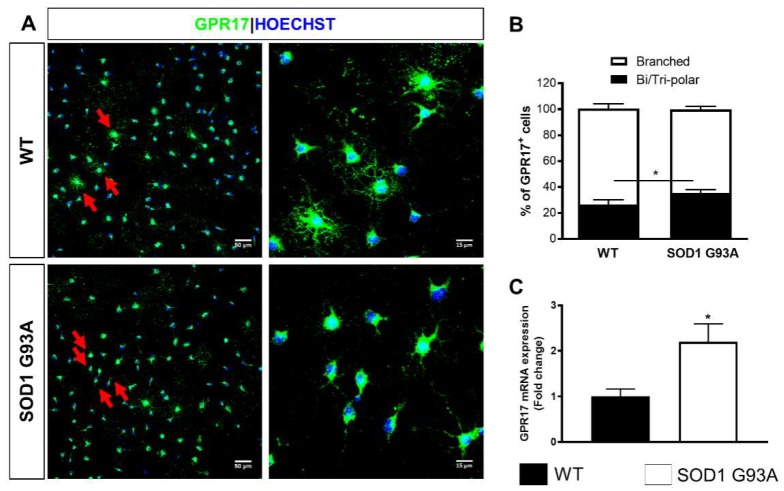
Amyotrophic lateral sclerosis (ALS) is a neurodegenerative disease characterized by progressive loss of motor neurons (MN). Importantly, MN degeneration is intimately linked to oligodendrocyte dysfunction and impaired capacity of oligodendrocyte precursor cells (OPCs) to regenerate the myelin sheath enwrapping and protecting neuronal axons. Thus, improving OPC reparative abilities represents an innovative approach to counteract MN loss. A pivotal regulator of OPC maturation is the P2Y-like G protein-coupled receptor 17 (GPR17), whose role in ALS has never been investigated. In other models of neurodegeneration, an abnormal increase of GPR17 has been invariably associated to myelin defects and its pharmacological manipulation succeeded in restoring endogenous remyelination. Here, we analyzed GPR17 alterations in the SOD1 ALS mouse model and assessed in vitro whether this receptor could be targeted to correct oligodendrocyte alterations. Western-blot and immunohistochemical analyses showed that GPR17 protein levels are significantly increased in spinal cord of ALS mice at pre-symptomatic stage; this alteration is exacerbated at late symptomatic phases. Concomitantly, mature oligodendrocytes degenerate and are not successfully replaced. Moreover, OPCs isolated from spinal cord of SOD1 mice display defective differentiation compared to control cells, which is rescued by treatment with the GPR17 antagonist montelukast. These data open novel therapeutic perspectives for ALS management.
肌萎缩侧索硬化症(ALS)是一种神经退行性疾病,其特征是运动神经元(MN)进行性丧失。重要的是,MN 退化与少突胶质细胞功能障碍以及少突胶质前体细胞(OPC)再生包裹和保护神经元轴突的髓鞘的能力受损密切相关。因此,提高 OPC 的修复能力是一种对抗 MN 丧失的创新方法。OPC 成熟的关键调节因子是 P2Y 样 G 蛋白偶联受体 17(GPR17),其在 ALS 中的作用从未被研究过。在其他神经退行性模型中,GPR17 的异常增加始终与髓鞘缺陷有关,并且其药理学操作成功地恢复了内源性髓鞘再生。在这里,我们分析了 SOD1 ALS 小鼠模型中 GPR17 的改变,并在体外评估了该受体是否可以作为治疗靶点来纠正少突胶质细胞的改变。Western blot 和免疫组织化学分析表明,GPR17 蛋白水平在 ALS 小鼠的脊髓中在症状前阶段显著增加;这种改变在晚期症状阶段加剧。同时,成熟的少突胶质细胞退化并且不能被成功替代。此外,与对照细胞相比,从 SOD1 小鼠脊髓中分离出的 OPC 显示出分化缺陷,而用 GPR17 拮抗剂孟鲁司特治疗可以挽救这种缺陷。这些数据为 ALS 的治疗提供了新的治疗前景。