Division of Hematology Oncology, Department of Medicine, University of Florida Health Cancer Center, Gainesville, FL 32610, USA.
Department of Chemistry, Brown University, Providence, RI 02912, USA.
Int J Mol Sci. 2021 Oct 30;22(21):11790. doi: 10.3390/ijms222111790.
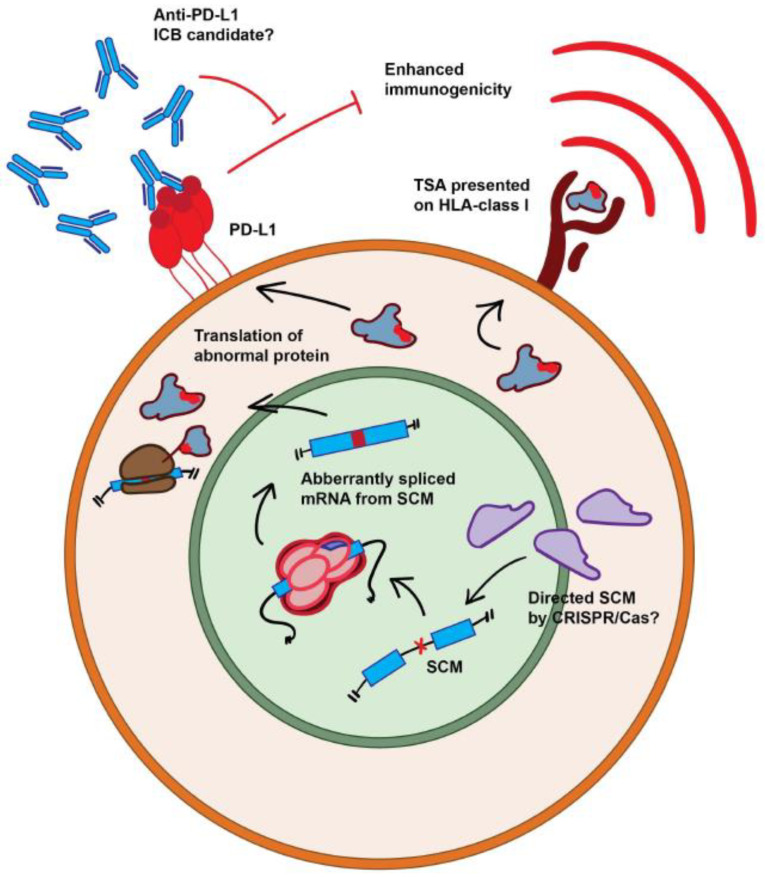
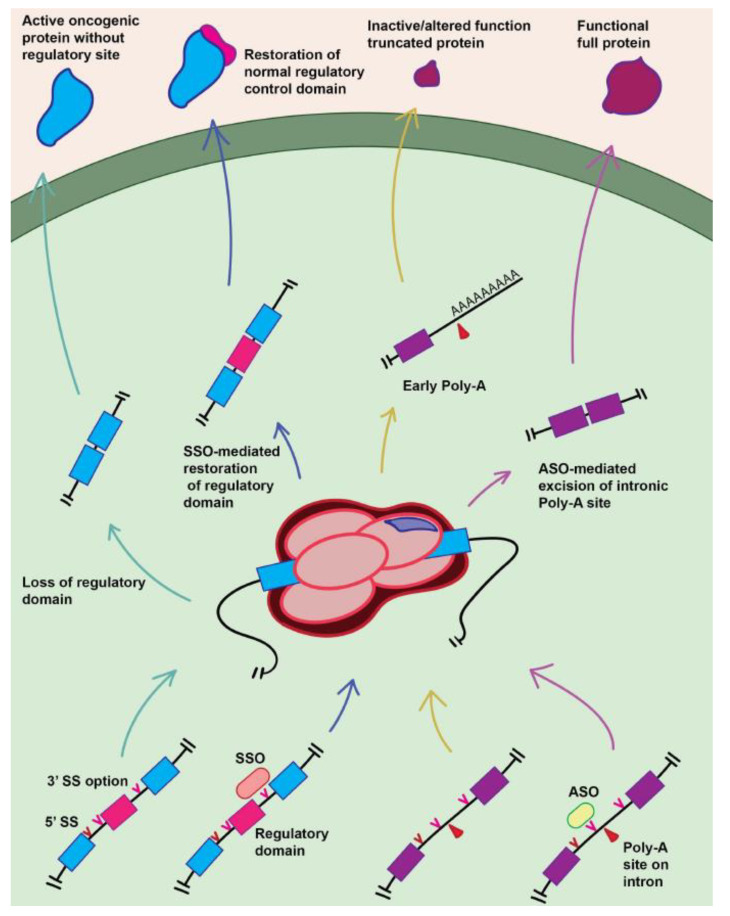
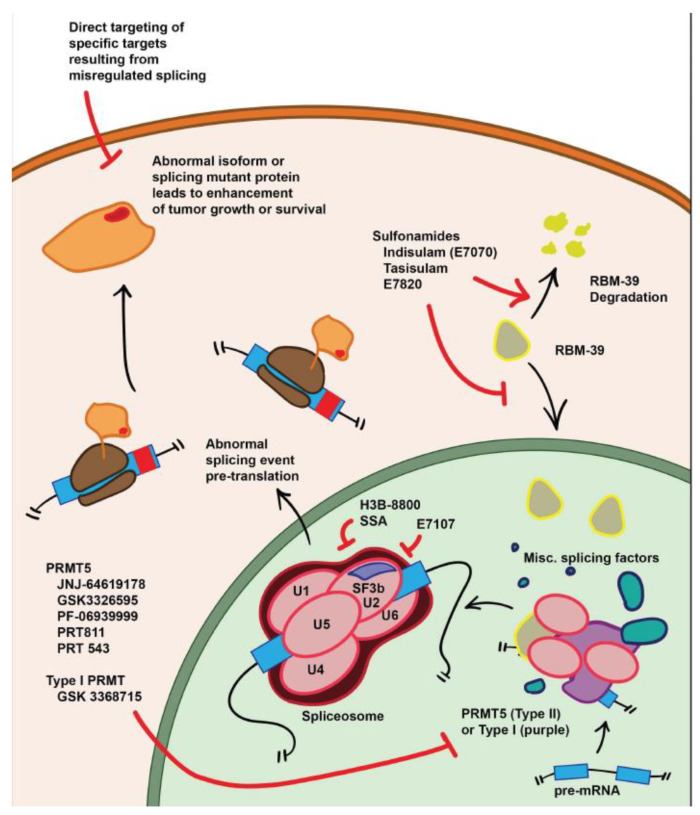
Recent comprehensive genomic studies including single-cell RNA sequencing and characterization have revealed multiple processes by which protein-coding and noncoding RNA processing are dysregulated in many cancers. More specifically, the abnormal regulation of mRNA and precursor mRNA (pre-mRNA) processing, which includes the removal of introns by splicing, is frequently altered in tumors, producing multiple different isoforms and diversifying protein expression. These alterations in RNA processing result in numerous cancer-specific mRNAs and pathogenically spliced events that generate altered levels of normal proteins or proteins with new functions, leading to the activation of oncogenes or the inactivation of tumor suppressor genes. Abnormally spliced pre-mRNAs are also associated with resistance to cancer treatment, and certain cancers are highly sensitive to the pharmacological inhibition of splicing. The discovery of these alterations in RNA processing has not only provided new insights into cancer pathogenesis but identified novel therapeutic vulnerabilities and therapeutic opportunities in targeting these aberrations in various ways (e.g., small molecules, splice-switching oligonucleotides (SSOs), and protein therapies) to modulate alternative RNA splicing or other RNA processing and modification mechanisms. Some of these strategies are currently progressing toward clinical development or are already in clinical trials. Additionally, tumor-specific neoantigens produced from these pathogenically spliced events and other abnormal RNA processes provide a potentially extensive source of tumor-specific therapeutic antigens (TAs) for targeted cancer immunotherapy. Moreover, a better understanding of the molecular mechanisms associated with aberrant RNA processes and the biological impact they play might provide insights into cancer initiation, progression, and metastasis. Our goal is to highlight key alternative RNA splicing and processing mechanisms and their roles in cancer pathophysiology as well as emerging therapeutic alternative splicing targets in cancer, particularly in gastrointestinal (GI) malignancies.
最近的综合基因组研究,包括单细胞 RNA 测序和特征分析,揭示了许多癌症中蛋白质编码和非编码 RNA 加工失调的多个过程。更具体地说,mRNA 和前体 mRNA(pre-mRNA)加工的异常调节,包括通过剪接去除内含子,在肿瘤中经常发生改变,产生多种不同的异构体并使蛋白质表达多样化。这些 RNA 加工的改变导致了许多癌症特异性的 mRNA 和病理性剪接事件,产生了正常蛋白或具有新功能的蛋白的改变水平,导致癌基因的激活或肿瘤抑制基因的失活。异常剪接的 pre-mRNA 也与癌症治疗的耐药性有关,某些癌症对剪接的药理学抑制高度敏感。这些 RNA 加工改变的发现不仅为癌症发病机制提供了新的见解,而且确定了通过各种方式靶向这些异常(例如小分子、剪接转换寡核苷酸(SSO)和蛋白疗法)来调节替代 RNA 剪接或其他 RNA 加工和修饰机制的新的治疗弱点和治疗机会。其中一些策略目前正在向临床开发推进,或者已经在临床试验中。此外,这些病理性剪接事件和其他异常 RNA 过程产生的肿瘤特异性新抗原为靶向癌症免疫治疗提供了潜在广泛的肿瘤特异性治疗抗原(TA)来源。此外,更好地了解与异常 RNA 过程相关的分子机制及其发挥的生物学影响,可能为癌症的发生、进展和转移提供深入的见解。我们的目标是强调关键的替代 RNA 剪接和处理机制及其在癌症病理生理学中的作用,以及癌症中新兴的治疗性替代剪接靶点,特别是在胃肠道(GI)恶性肿瘤中。