Hunan Key Laboratory of Cancer Metabolism, Hunan Cancer Hospital and the Affiliated Cancer Hospital of Xiangya School of Medicine, Central South University, Changsha, 410013 Hunan, China; Cancer Research Institute and School of Basic Medical Science, Central South University, Changsha, China.
Hunan Key Laboratory of Cancer Metabolism, Hunan Cancer Hospital and the Affiliated Cancer Hospital of Xiangya School of Medicine, Central South University, Changsha, 410013 Hunan, China; Hunan Key Laboratory of Translational Radiation Oncology, 283 Tongzipo Road, Changsha 410013, Hunan, China.
Mol Ther. 2022 Mar 2;30(3):1018-1035. doi: 10.1016/j.ymthe.2021.11.010. Epub 2021 Nov 15.
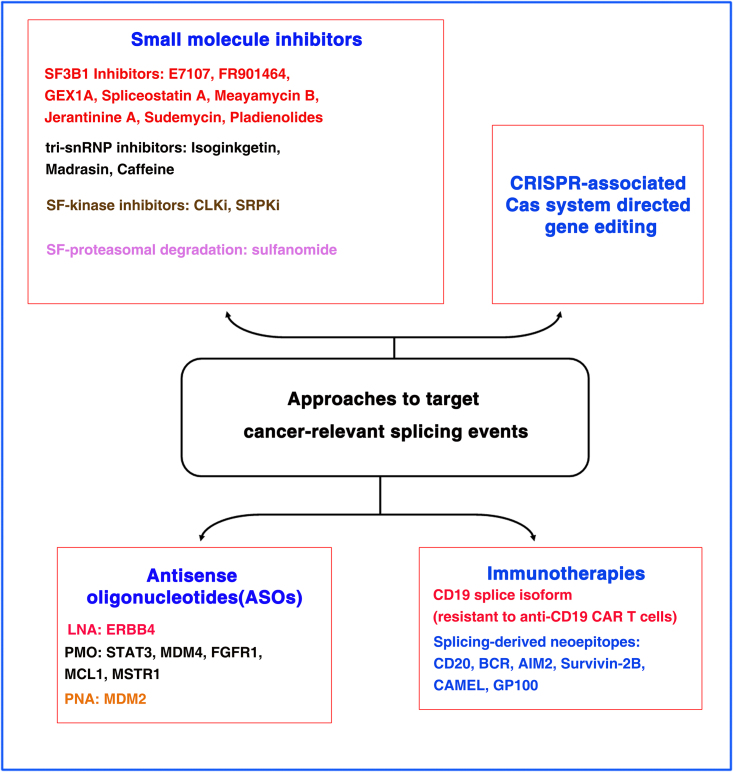
Alternative pre-mRNA splicing (AS) provides the potential to produce diversity at RNA and protein levels. Disruptions in the regulation of pre-mRNA splicing can lead to diseases. With the development of transcriptome and genome sequencing technology, increasing diseases have been identified to be associated with abnormal splicing of mRNAs. In tumors, abnormal alternative splicing frequently plays critical roles in cancer pathogenesis and may be considered as new biomarkers and therapeutic targets for cancer intervention. Metabolic abnormalities and immune disorders are important hallmarks of cancer. AS produces multiple different isoforms and diversifies protein expression, which is utilized by the immune and metabolic reprogramming systems to expand gene functions. The abnormal splicing events contributed to tumor progression, partially due to effects on immune response and metabolic reprogramming. Herein, we reviewed the vital role of alternative splicing in regulating cancer metabolism and immune response. We discussed how alternative splicing regulates metabolic reprogramming of cancer cells and antitumor immune response, and the possible strategies to targeting alternative splicing pathways or splicing-regulated metabolic pathway in the context of anticancer immunotherapy. Further, we highlighted the challenges and discuss the perspectives for RNA-based strategies for the treatment of cancer with abnormally alternative splicing isoforms.
选择性剪接(AS)为 RNA 和蛋白质水平提供了产生多样性的潜力。前体 mRNA 剪接调控异常可导致疾病。随着转录组和基因组测序技术的发展,越来越多的疾病被确定与 mRNA 的异常剪接有关。在肿瘤中,异常的选择性剪接经常在癌症发病机制中发挥关键作用,可被视为癌症干预的新生物标志物和治疗靶点。代谢异常和免疫紊乱是癌症的重要特征。AS 产生多种不同的异构体,使蛋白质表达多样化,免疫和代谢重编程系统利用这些异构体来扩展基因功能。异常剪接事件促进了肿瘤的进展,部分原因是其对免疫反应和代谢重编程的影响。本文综述了选择性剪接在调节癌症代谢和免疫反应中的重要作用。我们讨论了选择性剪接如何调节癌细胞的代谢重编程和抗肿瘤免疫反应,以及在抗肿瘤免疫治疗中靶向选择性剪接途径或剪接调控代谢途径的可能策略。此外,我们还强调了基于 RNA 的策略治疗异常选择性剪接异构体癌症的挑战和前景。