Bijvoet Centre for Biomolecular Research, Structural Biochemistry Group, Utrecht University, Universiteitsweg 99, 3584 CG Utrecht, The Netherlands.
Int J Mol Sci. 2021 Nov 1;22(21):11871. doi: 10.3390/ijms222111871.
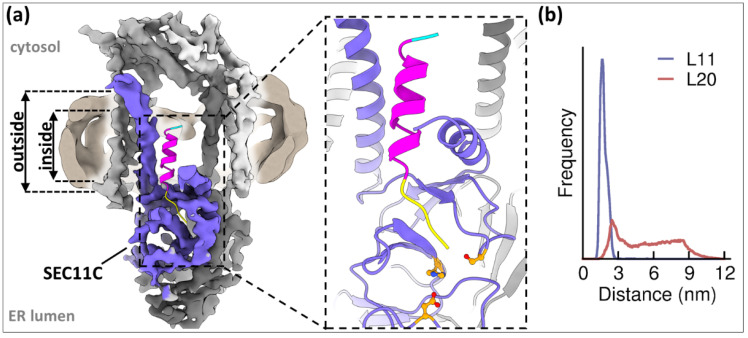
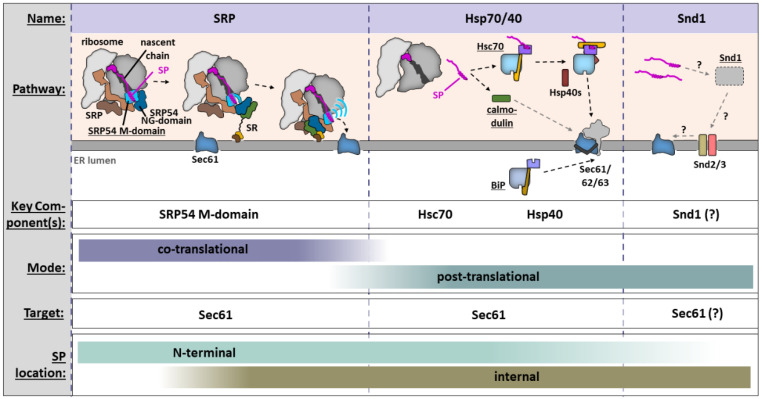
Cleavable endoplasmic reticulum (ER) signal peptides (SPs) and other non-cleavable signal sequences target roughly a quarter of the human proteome to the ER. These short peptides, mostly located at the N-termini of proteins, are highly diverse. For most proteins targeted to the ER, it is the interactions between the signal sequences and the various ER targeting and translocation machineries such as the signal recognition particle (SRP), the protein-conducting channel Sec61, and the signal peptidase complex (SPC) that determine the proteins' target location and provide translocation fidelity. In this review, we follow the signal peptide into the ER and discuss the recent insights that structural biology has provided on the governing principles of those interactions.
可切割内质网(ER)信号肽(SP)和其他不可切割信号序列将人类蛋白质组的大约四分之一靶向到 ER。这些短肽主要位于蛋白质的 N 端,高度多样化。对于大多数靶向 ER 的蛋白质来说,决定蛋白质靶位位置并提供易位保真度的是信号序列与各种 ER 靶向和易位机制(如信号识别颗粒(SRP)、蛋白导通道 Sec61 和信号肽酶复合物(SPC))之间的相互作用。在这篇综述中,我们跟随信号肽进入 ER,并讨论结构生物学提供的关于这些相互作用的控制原则的最新见解。