Wójtowicz Joanna, Grzyb Joanna, Szach Joanna, Mazur Radosław, Gieczewska Katarzyna B
Department of Plant Anatomy and Cytology, Faculty of Biology, Institute of Experimental Plant Biology and Biotechnology, University of Warsaw, I. Miecznikowa 1, PL-02096 Warsaw, Poland.
Department of Biophysics, Faculty of Biotechnology, University of Wrocław, F. Joliot-Curie Street 14a, PL-50383 Wrocław, Poland.
Int J Mol Sci. 2021 Nov 2;22(21):11895. doi: 10.3390/ijms222111895.
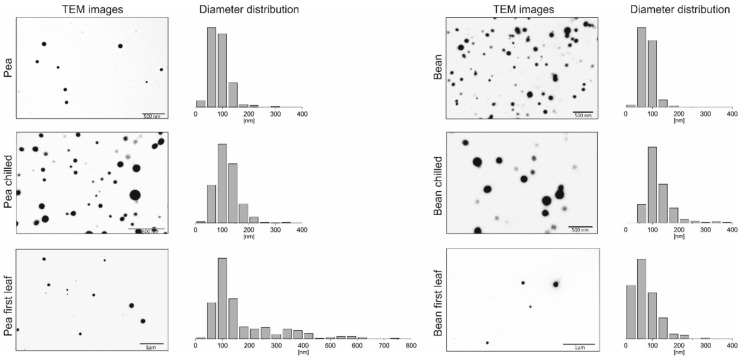
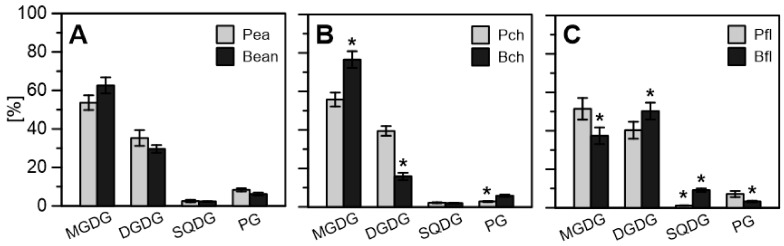
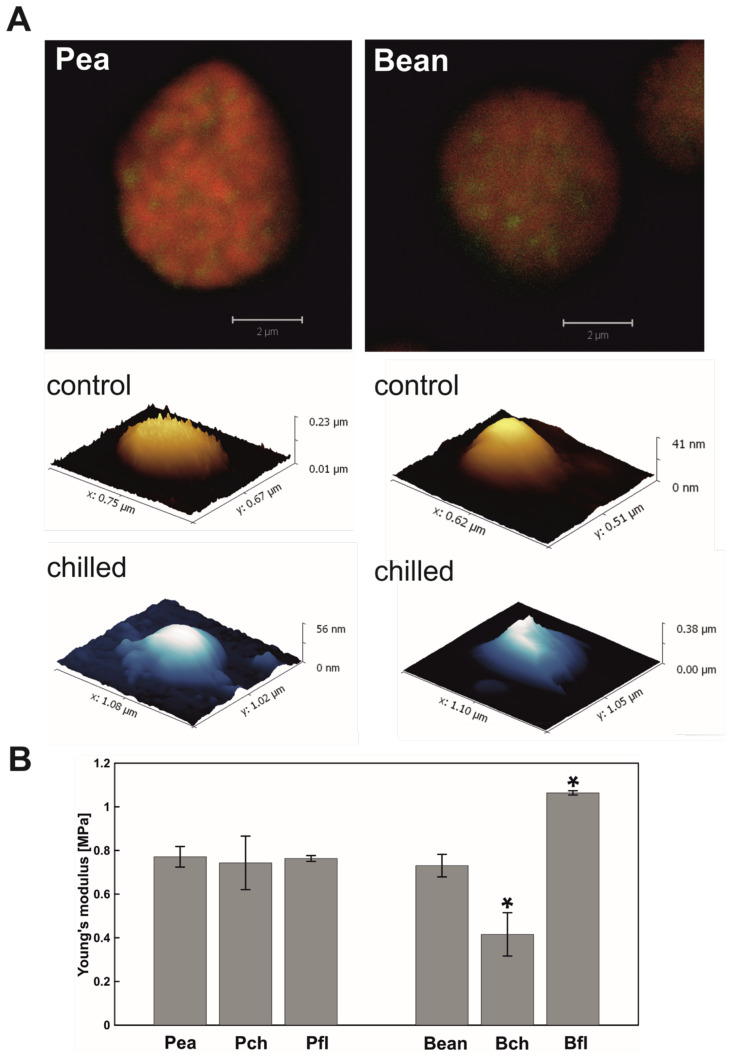
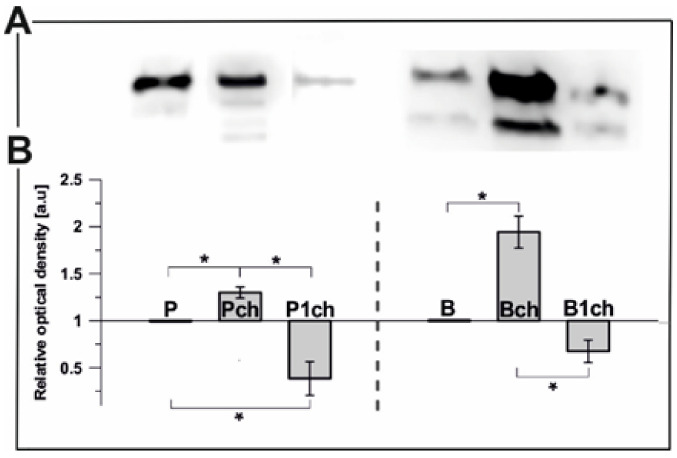
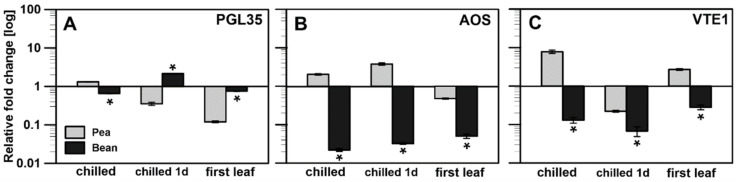
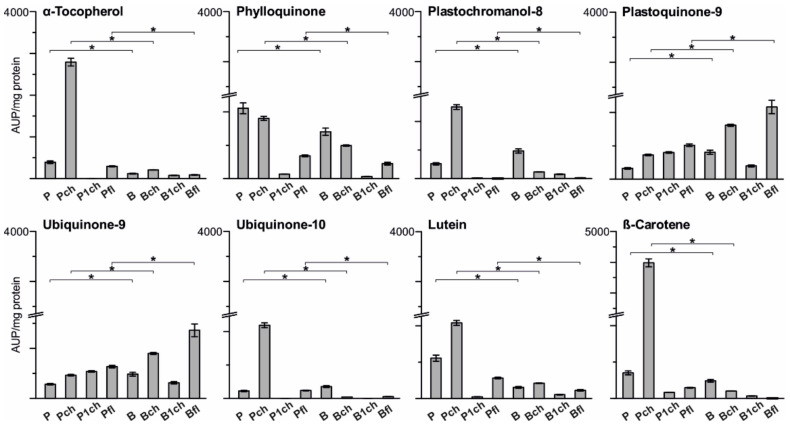
Plastoglobules (PGs) might be characterised as microdomains of the thylakoid membrane that serve as a platform to recruit proteins and metabolites in their spatial proximity in order to facilitate metabolic channelling or signal transduction. This study provides new insight into changes in PGs isolated from two plant species with different responses to chilling stress, namely chilling-tolerant pea () and chilling-sensitive bean (). Using multiple analytical methods, such as high-performance liquid chromatography and visualisation techniques including transmission electron microscopy and atomic force microscopy, we determined changes in PGs' biochemical and biophysical characteristics as a function of chilling stress. Some of the observed alterations occurred in both studied plant species, such as increased particle size and plastoquinone-9 content, while others were more typical of a particular type of response to chilling stress. Additionally, PGs of first green leaves were examined to highlight differences at this stage of development. Observed changes appear to be a dynamic response to the demands of photosynthetic membranes under stress conditions.
质体小球(PGs)可被描述为类囊体膜的微区,它作为一个平台,在空间上招募蛋白质和代谢物,以促进代谢通道或信号转导。本研究为从两种对低温胁迫有不同反应的植物物种(即耐低温豌豆()和低温敏感型菜豆())中分离出的质体小球的变化提供了新的见解。使用多种分析方法,如高效液相色谱法以及包括透射电子显微镜和原子力显微镜在内的可视化技术,我们确定了质体小球的生化和生物物理特性随低温胁迫的变化。一些观察到的变化在两种研究植物物种中都出现了,如粒径增加和质体醌-9含量增加,而其他变化则更典型地体现了对低温胁迫的特定反应类型。此外,还对第一片绿叶的质体小球进行了检查,以突出发育这一阶段的差异。观察到的变化似乎是应激条件下光合膜需求的动态反应。