College of Resources and Environment, Fujian Agriculture and Forestry University, Fuzhou 350002, China.
Int J Mol Sci. 2021 Nov 6;22(21):12023. doi: 10.3390/ijms222112023.
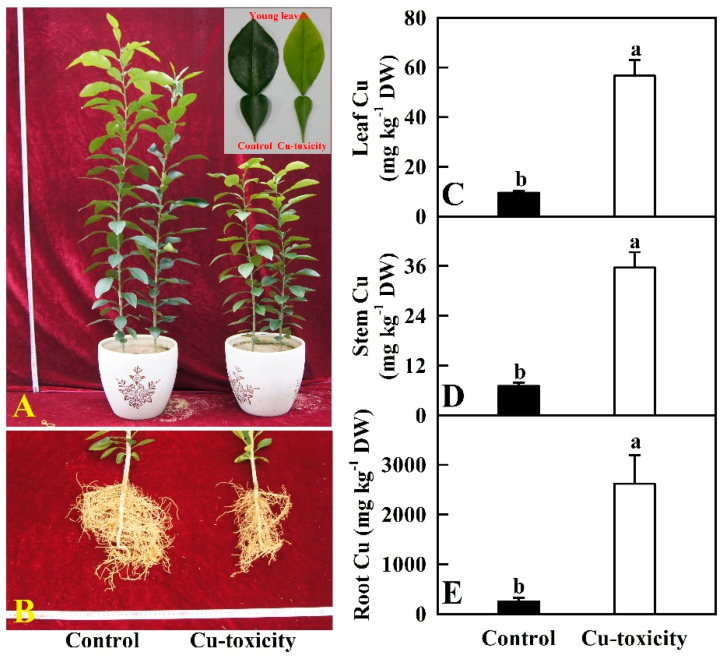
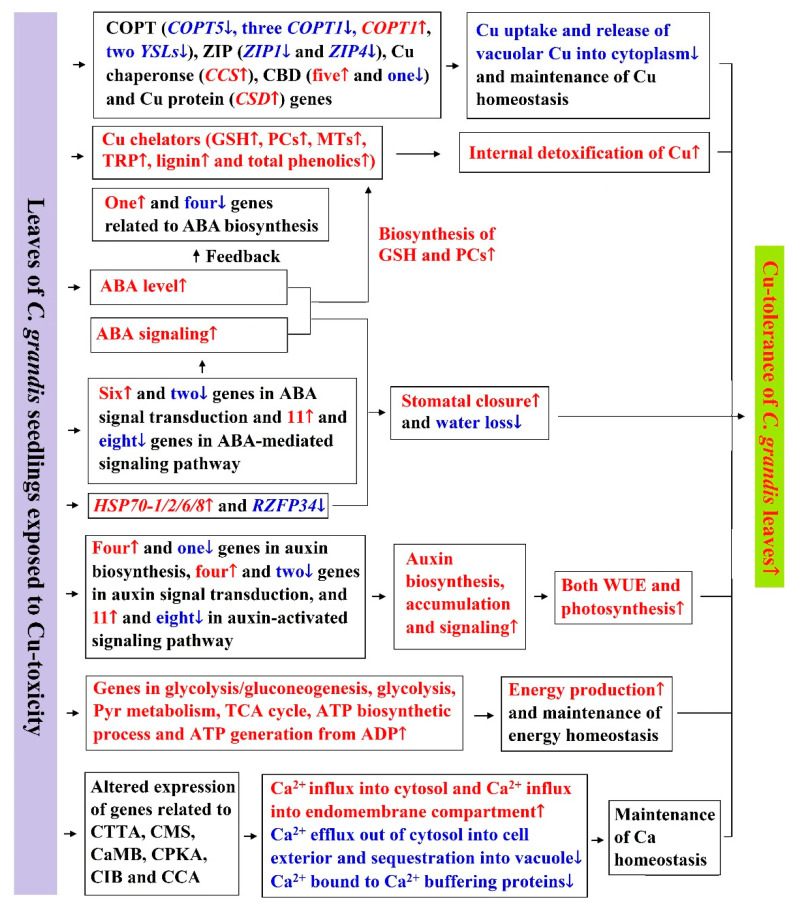
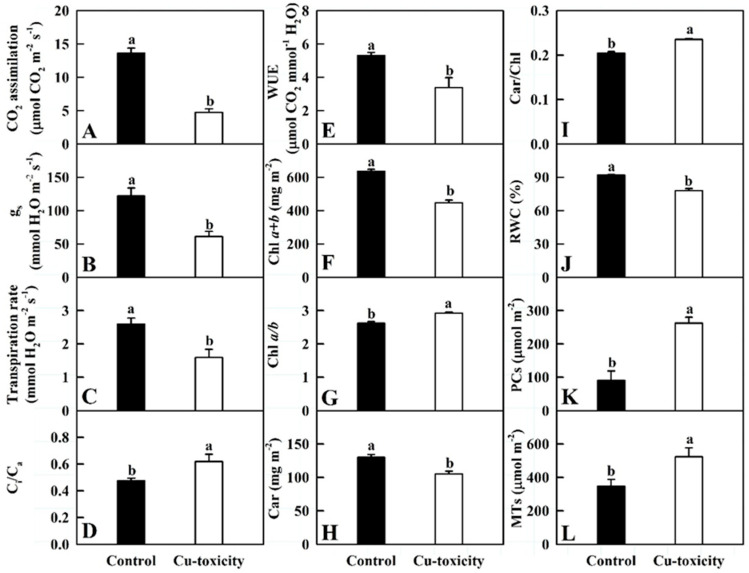
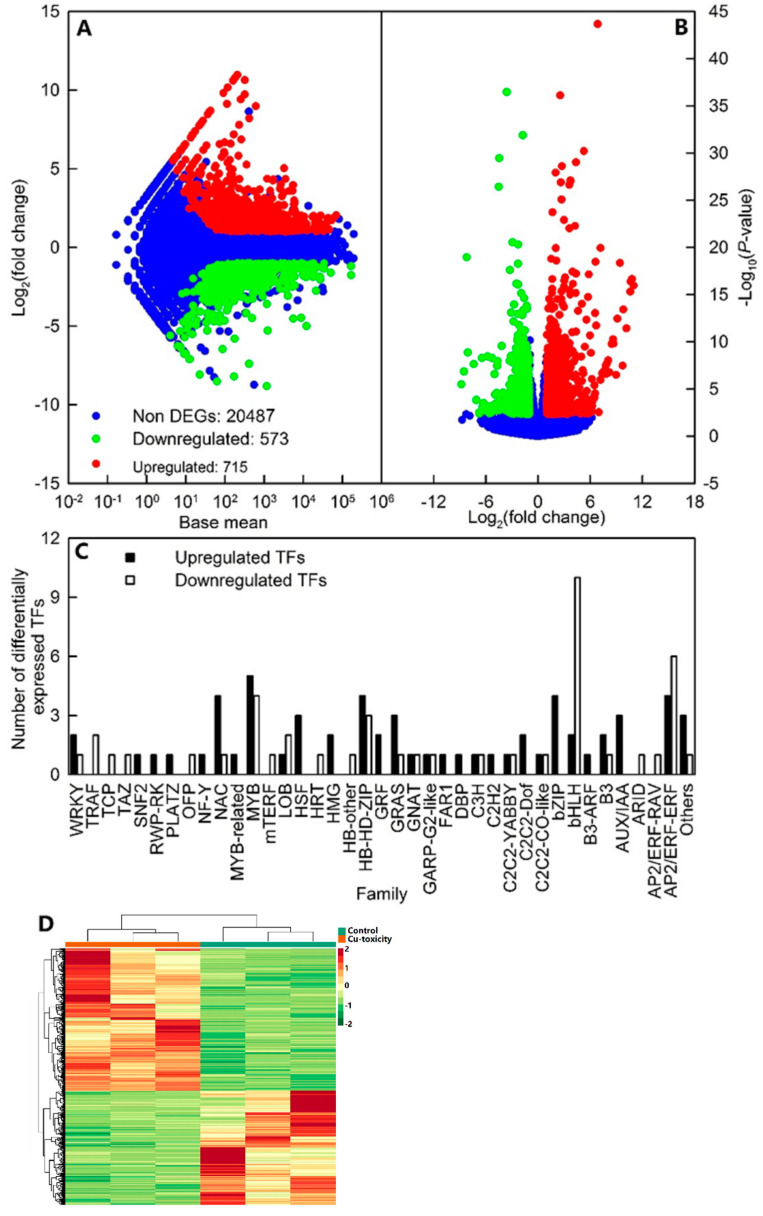
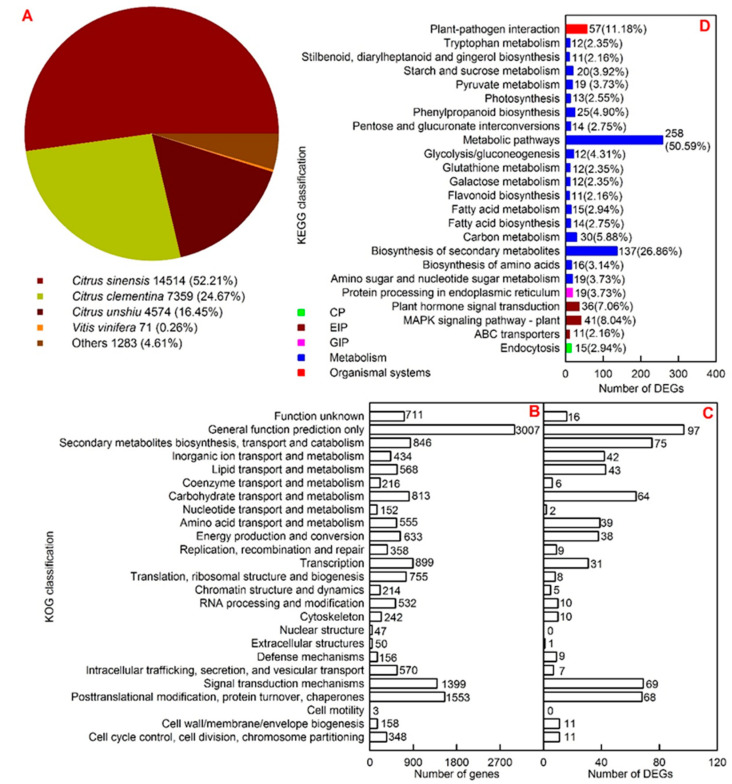
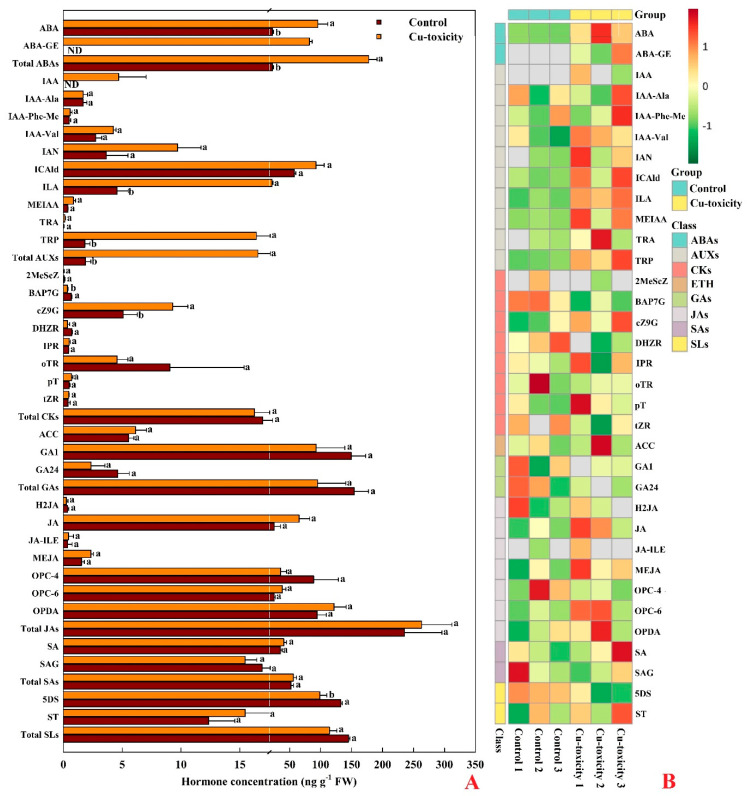
Copper (Cu)-toxic effects on growth and Cu uptake, as well as gene expression and physiological parameters in leaves were investigated. Using RNA-Seq, 715 upregulated and 573 downregulated genes were identified in leaves of seedlings exposed to Cu-toxicity (LCGSEC). Cu-toxicity altered the expression of 52 genes related to cell wall metabolism, thus impairing cell wall metabolism and lowering leaf growth. Cu-toxicity downregulated the expression of photosynthetic electron transport-related genes, thus reducing CO assimilation. Some genes involved in thermal energy dissipation, photorespiration, reactive oxygen species scavenging and cell redox homeostasis and some antioxidants (reduced glutathione, phytochelatins, metallothioneins, l-tryptophan and total phenolics) were upregulated in LCGSEC, but they could not protect LCGSEC from oxidative damage. Several adaptive responses might occur in LCGSEC. LCGSEC displayed both enhanced capacities to maintain homeostasis of Cu via reducing Cu uptake by leaves and preventing release of vacuolar Cu into the cytoplasm, and to improve internal detoxification of Cu by accumulating Cu chelators (lignin, reduced glutathione, phytochelatins, metallothioneins, l-tryptophan and total phenolics). The capacities to maintain both energy homeostasis and Ca homeostasis might be upregulated in LCGSEC. Cu-toxicity increased abscisates (auxins) level, thus stimulating stomatal closure and lowering water loss (enhancing water use efficiency and photosynthesis).
研究了铜(Cu)毒性对生长和 Cu 吸收的影响,以及叶片中的基因表达和生理参数。通过 RNA-Seq,在暴露于 Cu 毒性(LCGSEC)的幼苗叶片中鉴定出 715 个上调和 573 个下调基因。Cu 毒性改变了与细胞壁代谢相关的 52 个基因的表达,从而损害细胞壁代谢并降低叶片生长。Cu 毒性下调了与光合电子传递相关的基因的表达,从而减少 CO 的同化。一些参与热能耗散、光呼吸、活性氧清除和细胞氧化还原稳态以及一些抗氧化剂(还原型谷胱甘肽、植物螯合肽、金属硫蛋白、L-色氨酸和总酚类物质)的基因在 LCGSEC 中上调,但它们不能保护 LCGSEC 免受氧化损伤。LCGSEC 可能发生了几种适应性反应。LCGSEC 显示出通过减少叶片对 Cu 的吸收和防止液泡 Cu 释放到细胞质中来维持 Cu 内稳态的能力,以及通过积累 Cu 螯合剂(木质素、还原型谷胱甘肽、植物螯合肽、金属硫蛋白、L-色氨酸和总酚类物质)来提高内部 Cu 解毒的能力。LCGSEC 中可能上调了维持能量和 Ca 内稳态的能力。Cu 毒性增加了脱落酸(生长素)的水平,从而刺激气孔关闭并降低水分流失(提高水利用效率和光合作用)。